
New at Leuphana: Prof. Dr. Anne Wöhrmann – Good Work for a Lifetime
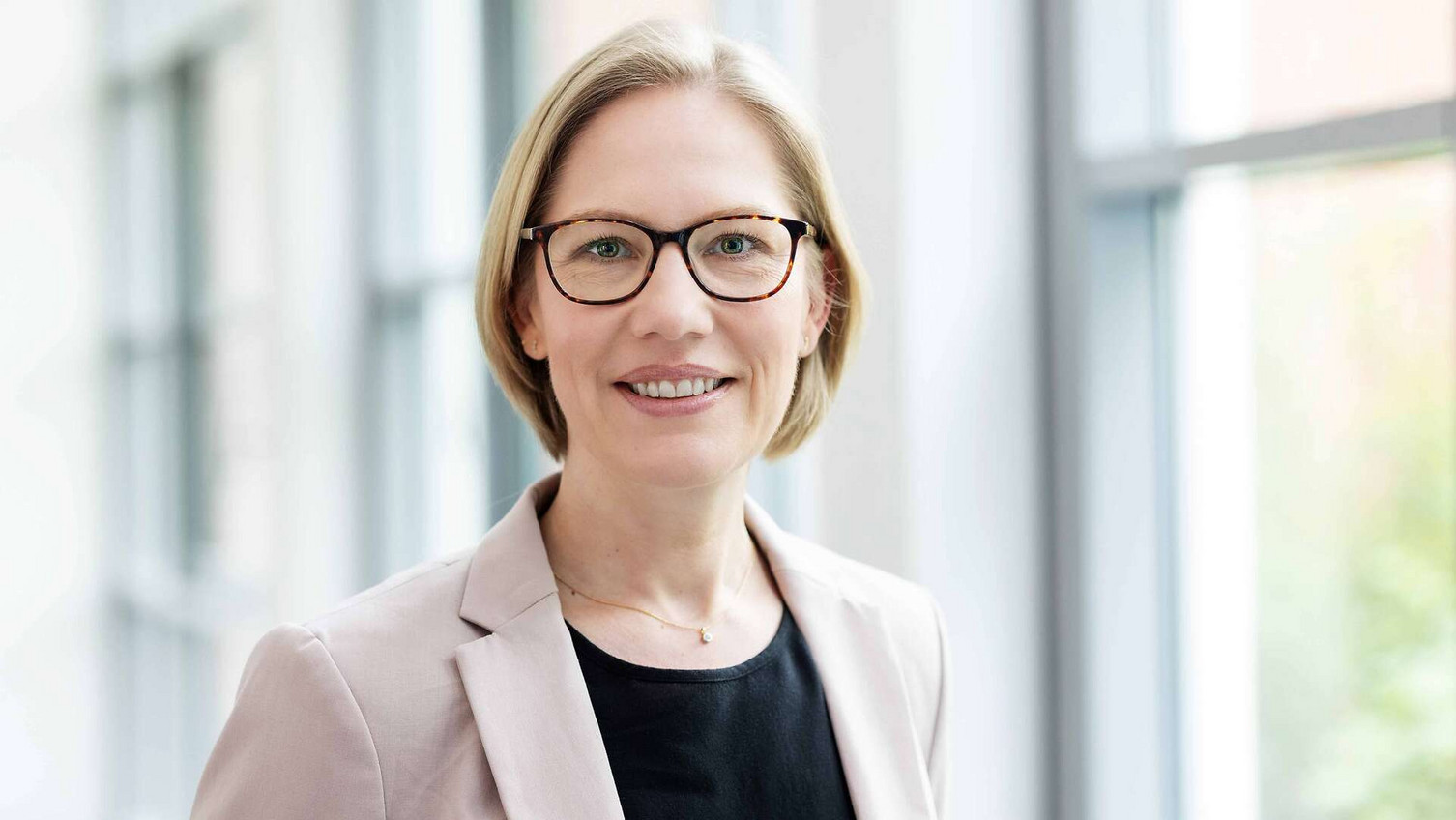
2026-05-11 Her career path took her from earning her doctorate at Leuphana to the Federal Institute for Occupational Safety and Health, where she has now assumed a senior research position in Berlin. Anne Wöhrmann has now been appointed adjunct professor of psychology, specializing in work and health, at Leuphana.
According to the Federal Statistical Office, approximately 1.3 million people are currently continuing to work after retirement. The reasons are varied: “People feel valued, social contacts are maintained, work structures daily life and gives it meaning. Financial aspects also play a role,” explains Anne Wöhrmann.
She had already explored this topic during her doctoral studies: “I was interested in why people want to continue working after retirement and under what conditions that is possible,” she explains. Her research was based on social-cognitive career theory, which had previously been used primarily to predict academic or career decisions. She was the first to apply this theory to career planning for retirement.
At the same time, her findings were incorporated into the development of the “Later Life Workplace Index” (LLWI), which was created by the research team led by Prof. Dr. Jürgen Deller. This tool helps companies systematically assess their working conditions to determine whether they are well-positioned to retain older employees in the workforce over the long term. Factors such as leadership, work environment, health management, knowledge management, and continuing education opportunities are taken into account.
“The index serves as a snapshot for companies,” says the researcher. “It shows where they are already well-positioned and where action is needed.” In light of demographic change, this issue is becoming increasingly important. Many companies face the challenge that a large portion of their workforce will be retiring in the coming years.
After completing her doctorate, she joined the Federal Institute for Occupational Safety and Health (BAuA) in 2013. There, she helped establish research on working hours and, among other things, led the BAuA Working Hours Survey, a large-scale employee study that has been conducted every two years since 2015. She was also responsible for projects on flexible work and mobile work—some of which began even before the COVID-19 pandemic.
At the same time, she continued her research on older workers and ultimately earned her habilitation with work on the design of working conditions in later working life.
In addition to her research, she is also actively involved in practical applications. For several years, she has been a board member of the German-speaking Working Time Society, which connects academia with workplace practice.
After about ten years in Dortmund, she moved to the BAuA in Berlin. There, she assumed the role of scientific director of a department with approximately 80 staff members and more than 20 research projects. In addition to her leadership responsibilities, she remains actively involved in research projects, including at the German Center for Mental Health, where she is helping to advance the topic of “work and mental health.”
Despite her work in Berlin, she maintains close ties to Leuphana. She has been teaching there regularly as a private lecturer since completing her habilitation. This appointment to an adjunct professorship recognizes that commitment.
In her teaching, she focuses on areas such as organizational psychology, empirical research, and the design of work across the life course. She places particular importance on considering different life stages: “Younger and older employees sometimes have different needs. Good work design should take both into account equally.”