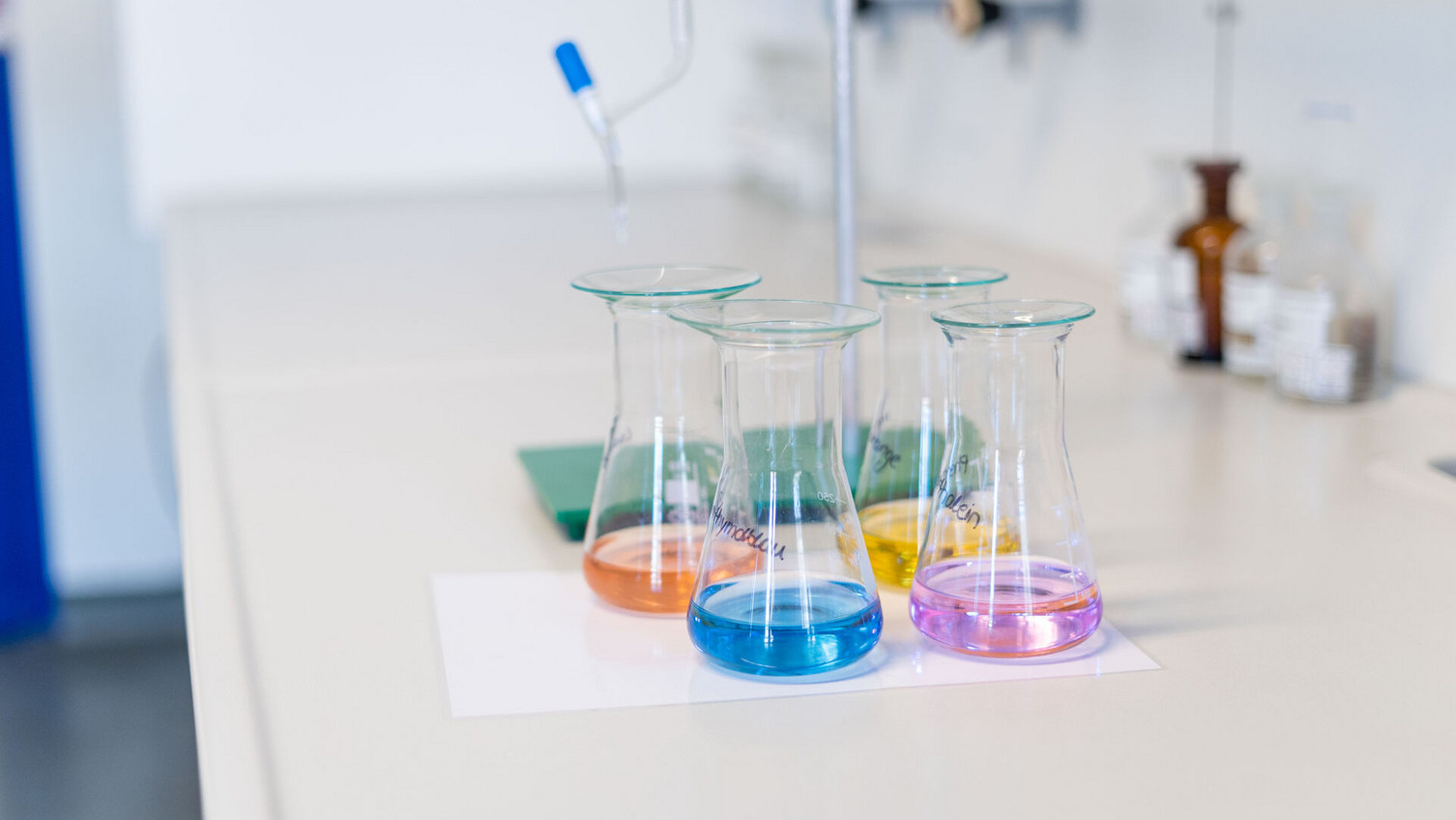
"You can't light a Bunsen burner digitally"
2020-05-11 Natural sciences thrive on experimentation, sensory impressions and practical experience. In times of the Corona pandemic, this is not easy to convey in teaching. Science didactician Prof. Dr. Simone Abels explaines why the "digital crash course" could make classroom teaching better in the future.
Professor Abels, is natural science didactics having a particularly hard time in times of Corona?
Overall, digital teaching is a great success. This semester, for example, the subject didactics module for prospective teachers "Teaching and Learning Natural Science" is running. We have over 60 students in the associated courses and work asynchronously because of the high participation, which means we set weekly seminar tasks on a selected science didactics topic, e.g. inclusive science teaching or working with digital media or models. The students work on the assignments, which we make available in very different formats on the Moodle platform. For example, we use the forums for exchange in small groups, enable video reflections or the joint creation of a glossary. We upload the accompanying lecture as a presentation with audio commentary. This has the great advantage that students are not only free to organise their time, but can also work at their individual learning pace. Unlike in a classroom lecture, the lecture can be stopped or individual passages can be listened to repeatedly. This is quite convincing for us didactically, so that we can imagine working more in the sense of blended learning after the pandemic and using the digitised lectures for this purpose.
In this module future chemistry and biology teachers as well as science teachers with science as a reference subject are trained. Couldn't they take such concepts back to school later, so that pupils with learning difficulties can benefit from the potentials?
We hope that our students will take a lot of this with them into their future careers. Digital media will still be part of teaching after Corona. Students who learn about and use didactically useful apps, online platforms and digital tools today are more likely to use them later in their science lessons. Where there used to be only a text as instructions for experiments, today a podcast and an explanatory video can be added to accompany them. Experiments can be carried out in the form of simulations and documented, for example, as a photo story as an alternative to the classic protocol. In digital textbooks, molecules can be better understood in their spatial structure through virtual or augmented reality, or technical terms can be deposited with explanations via hyperlink. Learners can then choose the form of presentation that best suits their inclinations and abilities. In subject didactics, we speak of universal design for learning, which means that a learning content can be presented and developed in different ways in order to create more than one access to a learning object. We have gained a lot of possibilities through digital teaching to offer access to science to all learners.
But you also want to address difficulties.
Our main concern at the moment is the laboratory exercises in chemistry. Prospective teachers need to become routinised in terms of safety, because they have a lot of responsibility in school when it comes to experimenting. But they can't digitally ignite a Bunsen burner. My colleague Friederike Scheller now broadcasts the experiments live from the lab via video. This helps them understand the procedure and the theory, but it doesn't replace their experimental skills. To ensure that the modules in question can still be completed successfully this semester, we may consider block practicals in September or laboratory exercises under Corona conditions, i.e. reduced group sizes, spacing rules and well-ventilated laboratories with an area of 100 to 120 square metres. In the module "Teaching and Learning Science", we plan to give our students instructions for harmless, real experiments with household objects that they can carry out at home. An example would be making natural indicators from red cabbage or raspberries to measure pH levels of food or household cleaners. This is not a substitute for laboratory exercises, but at least it is something.
As a teacher, what do you learn from this semester?
For many of us it is a digital crash course. Even though I miss the direct exchange with the students in the learning workshop or in the lecture hall and I miss the personal contact; after all, when we experiment together, other discourses and dynamics arise than in video conferences or forums: Based on our current experience, we can improve face-to-face teaching through digital methods. This applies to both schools and universities. The aforementioned module "Teaching and Learning Natural Sciences" is part of the Kolleg Didaktik:digital. My postdoc Dr. Lisa Stinken-Rösner has obtained a funded junior fellowship from the Joachim Herz Foundation so that we can evaluate and analyse the digital competence development of science students and publish the results. This cooperation already existed before Corona. Due to the pandemic, however, digital teaching is being given a completely different status in the subject didactics modules.