
Developing courage. Insights and memories on International Holocaust Remembrance Day
81 years after the liberation of the victims of Auschwitz
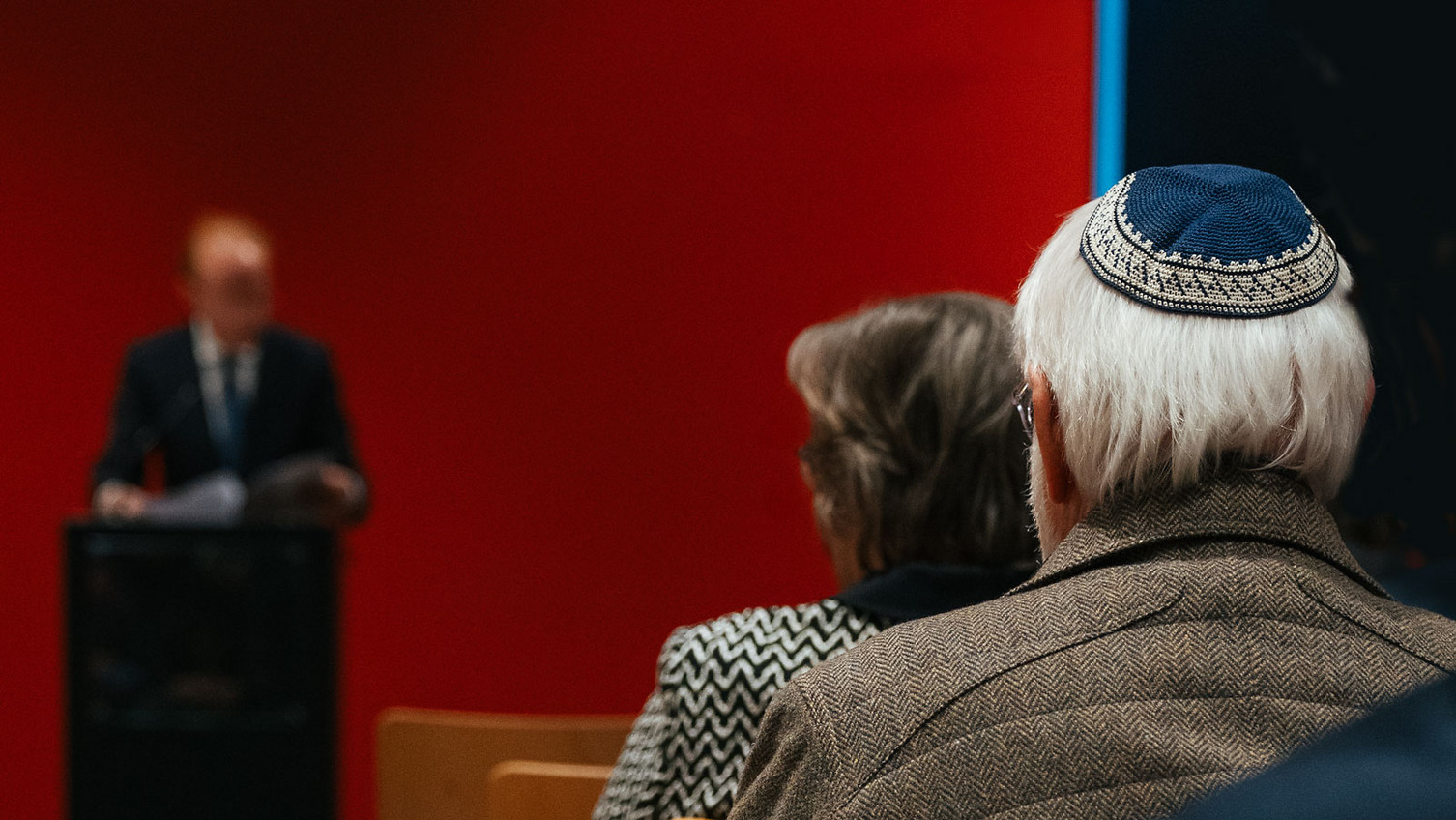
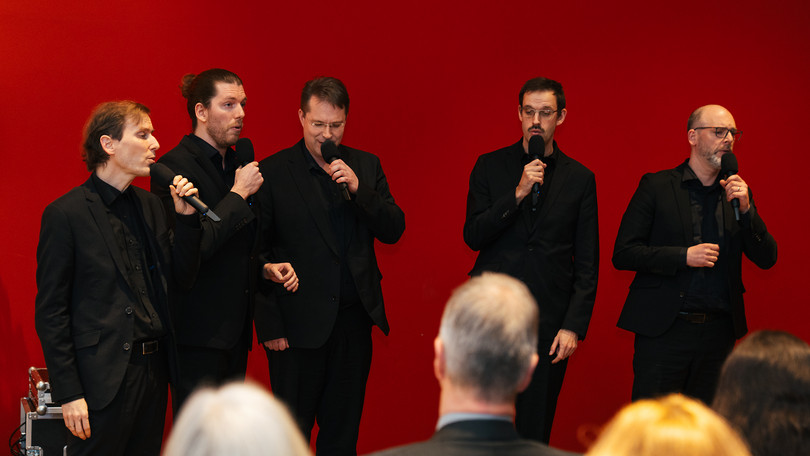
2026-01-30 Leuphana University hosted the central Lower Saxony event for the 81st International Holocaust Remembrance Day. Minister-President Olaf Lies served as patron. The event was jointly organized by the State Association of Jewish Communities of Lower Saxony, the City of Lüneburg, and Leuphana University Lüneburg. Attendees included high-ranking representatives from the State Parliament, the State Government, the judiciary, the police and the German Armed Forces, religious communities, and the Sinti and Roma in Lower Saxony, as well as students, staff, and professors of the university. The evening's musical entertainment was provided by the "Hannover Harmonists," an a cappella group that carries on the traditions of the "Comedian Harmonists," a group banned during the Nazi era.
Students Trace Life Stories
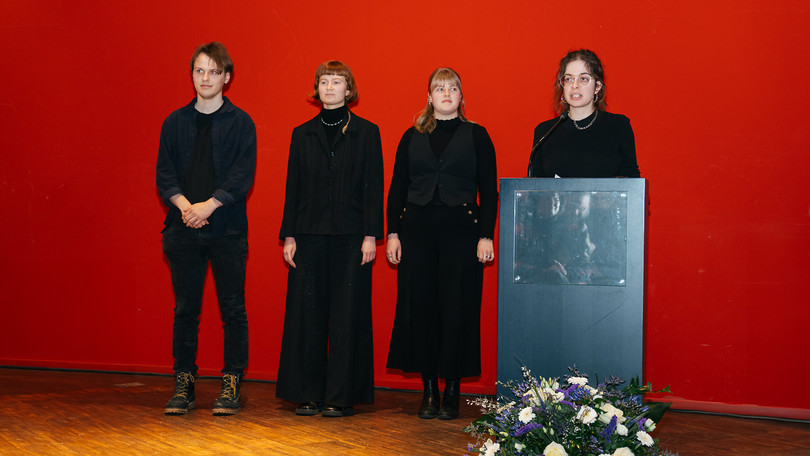
Four student representatives from the AStA's Campus History Working Group, which actively engages with the history of the university location, presented the fates and paths of four Lüneburg citizens who lived in the heart of society as neighbors, merchants, and dedicated individuals in the city, and who were murdered by the National Socialists. One of them was the bookseller Henny Dublon. She was born in 1893 and murdered in Auschwitz in 1943. Henny Dublon lived on Wilschenbrucher Weg, within sight of today's campus at Roten Feld.
The student team set itself the goal of giving a face to the Stolpersteine (stumbling stones) commemorating the bookseller and the other victims by providing in-depth knowledge of individual fates and details from their biographies. They were also able to explain why so many Lüneburg Jews' paths led to Auschwitz. “We are appalled that antisemitism continues to exist and has even increased,” said a representative of the working group. She continued: “We see it as our personal and collective responsibility to advance the work of remembrance. There is still an urgent need for local historical research in Lüneburg.”
A somber reminder in the State Parliament
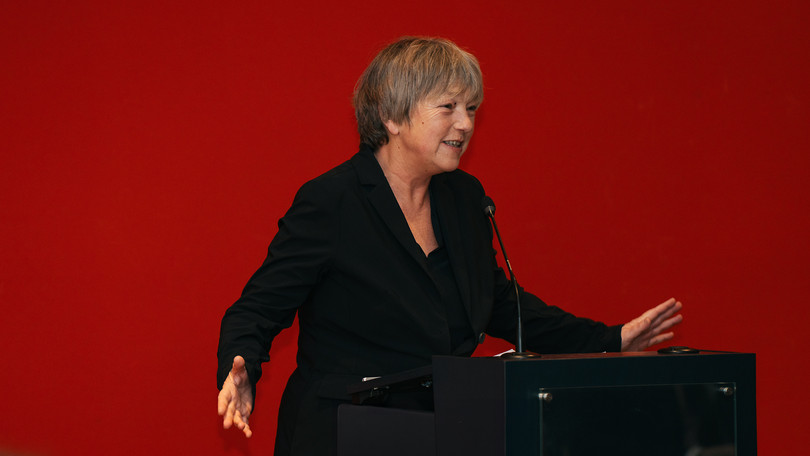
A shift in perspective to Hanover. Opposite the office door of Hanna Naber, President of the Lower Saxony State Parliament, hangs a photograph of the artwork "Object Ramp Bergen-Belsen" by Almut and Hans-Jürgen Breuste. It serves as a somber reminder not only to her but to everyone else of the freight loading ramp where tens of thousands of prisoners arrived at the concentration camp near the Lüneburg Heath. Naber quoted the writer Günter Eich: "Stay with us, you dead, protect us from new guilt." "For me, this sentence is both a warning and a duty," said the President of the State Parliament, "state power must never again be used to degrade people." Naber pointed out that the Holocaust did not begin with concentration camps like Bergen-Belsen, but with exclusion, silence, and prejudice. “There are many people in Lower Saxony,” she concluded her speech, “who work to keep the memory alive. I would like to express my gratitude to them, also on behalf of the state parliament.”
Worldview-shaping effect of language
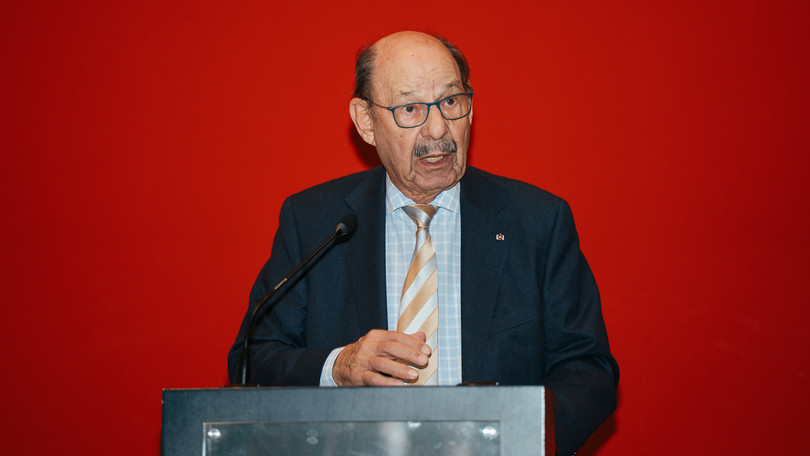
The president of the State Association of Jewish Communities of Lower Saxony, Michael Fürst, read from the activity reports of the Central Council of Jews in Germany and the headlines of the "Nationalzeitung" newspaper – both from the 1960s. Fürst concluded that both could just as easily have appeared today. The same references to prejudices and the uncritically presented prejudices themselves. "It's Groundhog Day again. The same procedure as every year," Fürst pointed out. Antisemitic incidents occur time and again, followed by platitudes of regret, with one hearing "never again," yet nothing improves. "The years and the decades repeat themselves, only the names change," Fürst said. "Terror begins with words that downplay the issue," he continued, referring to the worldview-shaping power of language. In an article about the US businessman Ronald Lauder, a major German daily newspaper—completely without reason and without any connection to the actual topic of the article—pointed out in the last sentence that Lauder is president of the World Jewish Congress. Fürst countered: "I am neither an alarmist nor a pessimist," he emphasized. After all, 75 percent of all Germans support a firewall against right-wing extremist politics. From his father, whose entire family was murdered in the Holocaust, he inherited his fighting spirit: "We will rise again, and we will not be defeated."
(Caption below, from left to right: Student representatives of the Campus History Working Group, President of the Lower Saxony State Parliament Hanna Naber, President of the State Association of Jewish Communities of Lower Saxony Michael Fürst)
Enlightenment in the Digital Space
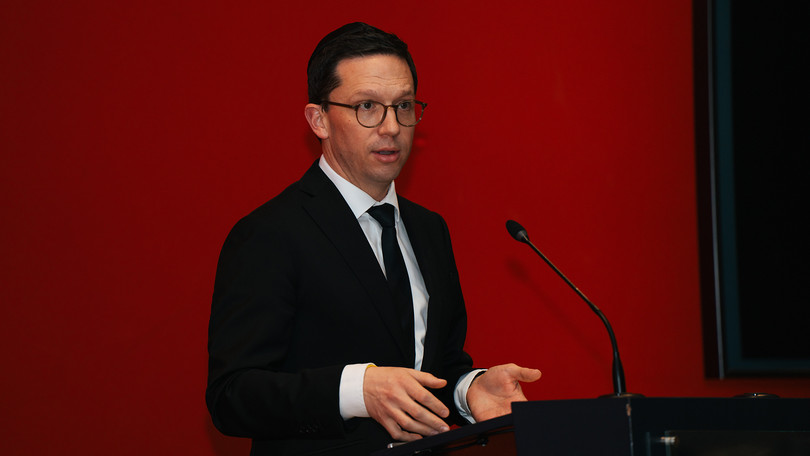
Enlightenment in the digital space. Lower Saxony's Minister for Science and Culture, Falko Mohrs, drew attention to a problem that is growing both insidiously and inexorably: "We are witnessing fabricated stories about concentration camps circulating on social media." Photos and videos generated by artificial intelligence (AI) are being produced en masse, particularly because they generate clicks. These "counter-narratives" are highly questionable, the minister explained. "Remembering the Shoah is not a given. How do we remember the Holocaust? What do we remember? Who will speak for the eyewitnesses in the future?" Mohrs further stated that, sooner or later, AI will be the first and only source of information for most people. The narrowing of our understanding is evident simply from the abbreviated answers that all common AI tools provide to the question, "Which concentration camps were there in Lower Saxony?" "Antisemitic responses often go unchallenged. Making them visible is our task – especially in the digital space."
The Holocaust was a complex social process.
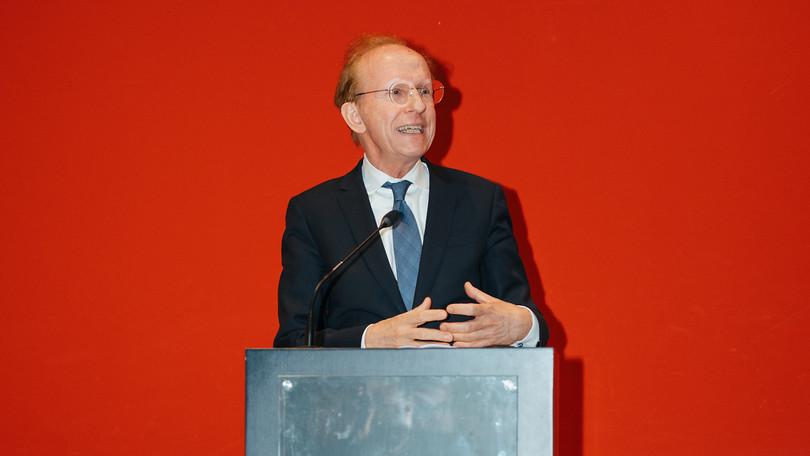
Leuphana President Sascha Spoun posed the question of what, besides remembrance, is needed to prevent a recurrence of the events. This question is particularly relevant today, given that the painstakingly preserved memory of the Holocaust is often relativized in recent times. For Spoun, the challenge lies in the fact that the word "Holocaust" is used almost indiscriminately for a wide variety of violence, while the Holocaust itself is perceived as "so long ago" that the need to take responsibility for it is diminishing. He therefore considers education to be of paramount importance. Spoun stated: "At its core, education is not only about educating the public about what happened as a historical fact; it is also about answering the question of how what happened was even possible. It is about understanding: How was the Holocaust conceivable, and how was it feasible?" Thanks to recent Holocaust research, it has become clear that the planning and execution of the Holocaust was not simply a matter of recruiting enough perpetrators. “Without the complicity of countless individuals, without the standing by, accepting, looking away, repressing, and perhaps even condoning of the Holocaust by the majority of society, the Holocaust would not have been possible. The Holocaust was a complex social process.” Spoun invited people to adopt a specific stance: “So that the entirely justified ‘Stop it before it starts!’ doesn’t remain mere alarmism, but actually sets something in motion – as a form of resistance – something is needed to complement remembrance and education; something is needed that universities and many other educational institutions presume to impart: the courage to use one’s own reason in order to develop, from that, the courage to stand up against the untrue and the unjustified, the unjust and the inhuman.”
Places of Remembrance
“January 27th remains a symbolic day,” stated Jule Grunau, the honorary mayor of Lüneburg. The events are still incomprehensible today. “The history and the stories of the eyewitnesses must be passed on.” Grunau belongs to the last generation whose grandparents experienced National Socialism firsthand, and she regrets not having asked them in detail about their experiences. Grunau explained that the memorial in Lüneburg traces part of the floor plan of the Lüneburg synagogue, which was destroyed during the November Pogroms. She emphasized the importance of redesigning the Jewish cemetery, which had been neglected for decades. “As honorary mayor, I feel it is my responsibility,” she said, “to ensure that we maintain these places of remembrance.”
(Caption below, from left to right: Hannover Harmonists, Lower Saxony Minister for Science and Culture Falko Mohrs, Leuphana University President Sascha Spoun)
The project undertaken by the students of the Campus History Working Group clearly demonstrated the patient, tenacious, and meticulous research undertaken with a high degree of personal commitment; all the more so because the working group not only focused on the biographies of the victims but also uncovered what was happening in the surrounding context at the same time.
In 1939, the same year that Henny Dublon was expelled from Lüneburg and her ordeal began, General Wolfram von Richthofen moved to the Hanseatic city. He bought a villa in the Rotes Feld neighborhood, had a street renamed in his honor, and continued his diverse operations, which included the uninhibited war crime of Wielun at the beginning of the invasion of Poland. There are many photos of Wolfram von Richthofen—but not a single one of Henny Dublon.