
Soccer in the U.S.: It’s Here, but Not Yet King
2026-06-30 Packed stadiums, peaceful fans, and goal celebrations: Sports sociologist and Leuphana honorary doctorate recipient Prof. Dr. Dr. h.c. mult. Andrei S. Markovits explains why the World Cup in the U.S. is generating such excitement, why nationalism in soccer is ambivalent, and why he has remained loyal to Manchester United since 1958.
Professor Markovits, you’ve been studying soccer and the U.S. for decades. Has soccer finally arrived in the U.S. with this World Cup?
Look, “arrived” is a tricky word. If you look at the attendance figures: the two most successful World Cups were both held in the U.S. Right now, the whole country is crazy about soccer: the stadiums are packed, and the World Cup is a national celebration. Scottish fans are enchanting Boston. Germans are celebrating with fans from the Ivory Coast. People are dancing and singing everywhere. But that doesn’t mean soccer has the same status in the daily life of an American sports fan as football, baseball, basketball, or hockey. Whether that same fan will be interested in Major League Soccer come fall is a whole different question. There simply remains a massive chasm between soccer’s current festive presence and its daily existence before and after the World Cup.
Why is soccer so much more prominent today than it used to be?
That has a lot to do with technology and the media. I’m a huge Manchester United fan. In the ’70s and ’80s, I had to call a friend in London to find out the scores. Then I’d hang up right away—phone calls were very expensive then, if you recall. Four or five days later, I’d run to the newsstand in Boston and buy The Guardian or The Times to find out more about the game. Today, I can see everything right away on my phone.
Speaking of technology: What role does the video game FIFA play?
An enormous one. Millions of young Americans play FIFA. When they play, they take on the identity of a club or a player. That has really helped soccer take root here. The internet, smartphones, and video games have brought soccer into everyday American life.
You live in the U.S. Have you seen a World Cup match yet?
Yes, I was at the Brazil vs. Morocco game in New York. The Brazilians were there with their families, and so were the Moroccans. Everyone danced and celebrated together. I have a very good sense of large sporting crowds. I usually sense right away when things might take a turn for the worse. But I never had that concern at this particular match or any other in the tournament thus far.
Why not?
Quite simply: because women are there! In club soccer, ninety percent of the people in the stadium are often men. At a World Cup, families, women, children, and older people are also there. That changes the entire atmosphere.
Political conflicts also seem to be largely absent at this World Cup. Is that impression misleading?
No, I see it the same way. Take Iran, for example. The fact that the Iranian team is booed in Los Angeles has nothing to do with U.S.-Iranian relations. Los Angeles is the largest Iranian city outside of Iran. Hundreds of thousands of Iranians in exile live there. The conflict is taking place within that community. It’s about who supports the government in Tehran and who doesn’t. Other than that, I’m seeing surprisingly little politics at the moment.
So will everything remain peaceful?
Unlike in club soccer, the group stage features teams playing against each other that aren’t rivals. Take matches like Australia versus Paraguay. There are no long-standing rivalries there. No German fan has anything against the Ivory Coast. So it stays peaceful. If Germany were to play England, I can’t guarantee that. Then it’s a do-or-die situation. I don’t know a single Englishman for whom the Wembley goal doesn’t count, nor a single German who acknowledges it. And that applies across all social classes. But usually sporting rivalries are devoid of any politics and are sui generis in their essence and intensity.
You already mentioned Manchester United. Do you prefer club soccer to national team matches?
Yes, actually. First, because the quality of the soccer played is better. A club trains together every day. The players know each other. Jamal Musiala automatically plays better with his teammates at Bayern than on a national team that only gets together for a few days. And second, because national teams always convey nationalism as well. That doesn’t have to be a bad thing, but it can get ugly.
Does this nationalism also show up in the many flags, anthems, and other national symbols at a World Cup?
Yes, that’s certainly another reason why I prefer club soccer. Nationalism is still the strongest form of collective identity in the world. You see it everywhere. In Western Europe, things are much more relaxed today than they used to be. But nation-states remain the most important political order. That’s why I’m not surprised that national teams trigger these feelings. From a scholarly perspective, I’m particularly interested in when this tradition of singing the national anthem before every match actually began. When I was a young man, hardly any team sang along to the anthem. Today, almost all of them do. They simply must, it seems!
If you prefer club soccer: How do you respond to critics who accuse professional clubs of having long since become nothing more than a business?
Of course, it’s also about money. We live in a capitalist society. But in terms of revenue, Bayern München is a small operation compared to many other companies in Munich, let alone German and Europe. Yet the club is an institution, a sanctuary. Just like Manchester United. These clubs create identity, emotions, history, and community. Anyone who thinks soccer is just a business doesn’t understand it.
When did you actually become a Manchester United fan?
I can tell you the exact date. On February 6, 1958, the plane carrying Manchester United from Belgrade to Manchester crashed in Munich. I was just a little boy in Romania at the time. I heard on the radio about this tragedy that claimed 23 lives. I’ve been a Manchester United fan ever since that day. Interestingly, academic research shows that it was precisely this tragedy that turned Manchester United into a global legend. Many people became fans back then—myself included. I didn’t actually get to see one of the team’s games on TV until ten years later.
Finally, your prediction: Who will win the World Cup?
Everyone loves the underdog in tournaments like this. Right now, many people are excited about the smaller nations. But in the end, it’s usually the big teams that win.
France is certainly among the favorites. England, Spain, and Argentina, of course, as well. If you look at the history of the World Cup, you’ll see that there’s a very exclusive circle of World Cup champions—just eight nations.
And how do you assess the U.S.’s chances?
The U.S. certainly won’t win the World Cup. But if they reach the quarterfinals, that’s a major achievement. And that would be an enormous boost for soccer in the U.S.
Thank you very much for the interview!
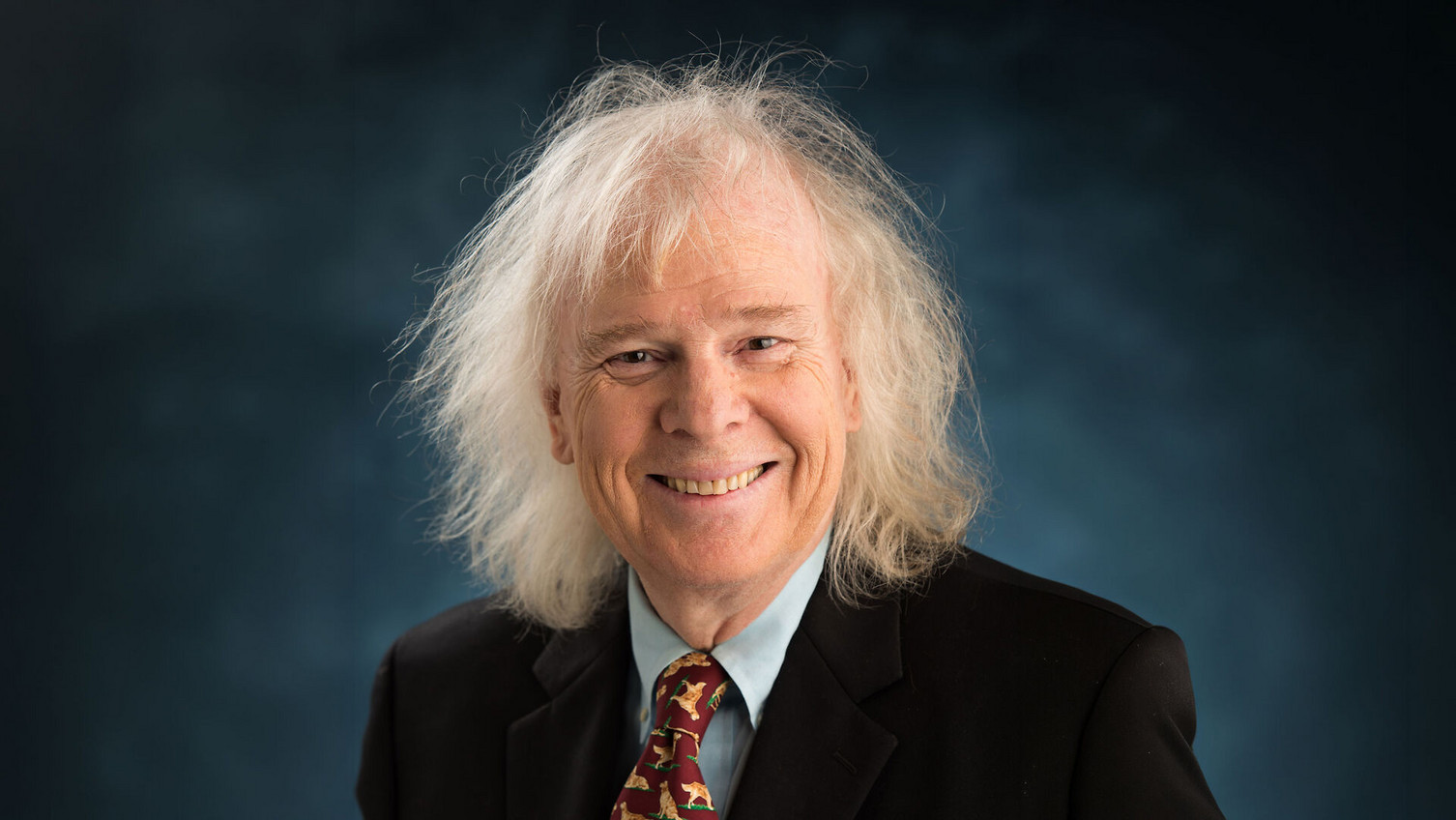
Andrei S. Markovits is professor emeritus of political science and German studies at the University of Michigan. His research focuses on the sociology of sport, soccer, nationalism, and political culture. Among his best-known publications is the book Offside: Soccer and American Exceptionalism published by Princeton University Press. For his internationally recognized research achievements, Markovits has been awarded several honorary doctorates, including one in 2007 from Leuphana University of Lüneburg.