
From the Pilot Phase to Lower Saxony’s Music Scene: Leuphana Concert Lab 2.0
2026-09-04 What does the moor sound like? Does AI enhance the perception of the concert experience? How can music convey social themes such as social cohesion, liminal states, or the pressure to perform? Through concert projects, workshops, field trips—which took participants to Hitzacker and even to Cuba—regional event days, and VR installations, the transdisciplinary pilot project Leuphana Concert Lab brought these themes to life.
Over the past three years, students from all academic departments, musicians, and partner institutions have explored new approaches to concert design, while at the same time these activities were the subject of intensive research and analyzed using various methodological approaches. Now, the Leuphana Concert Lab is entering its second phase. Building on the findings of the pilot project, the focus of “Leuphana Concert Lab 2.0” over the next two years will be on transferring research findings into the musical landscape of Lower Saxony. The central question is how music institutions can be socially valuable to different target groups—and what artistic and organizational approaches are needed to achieve this.
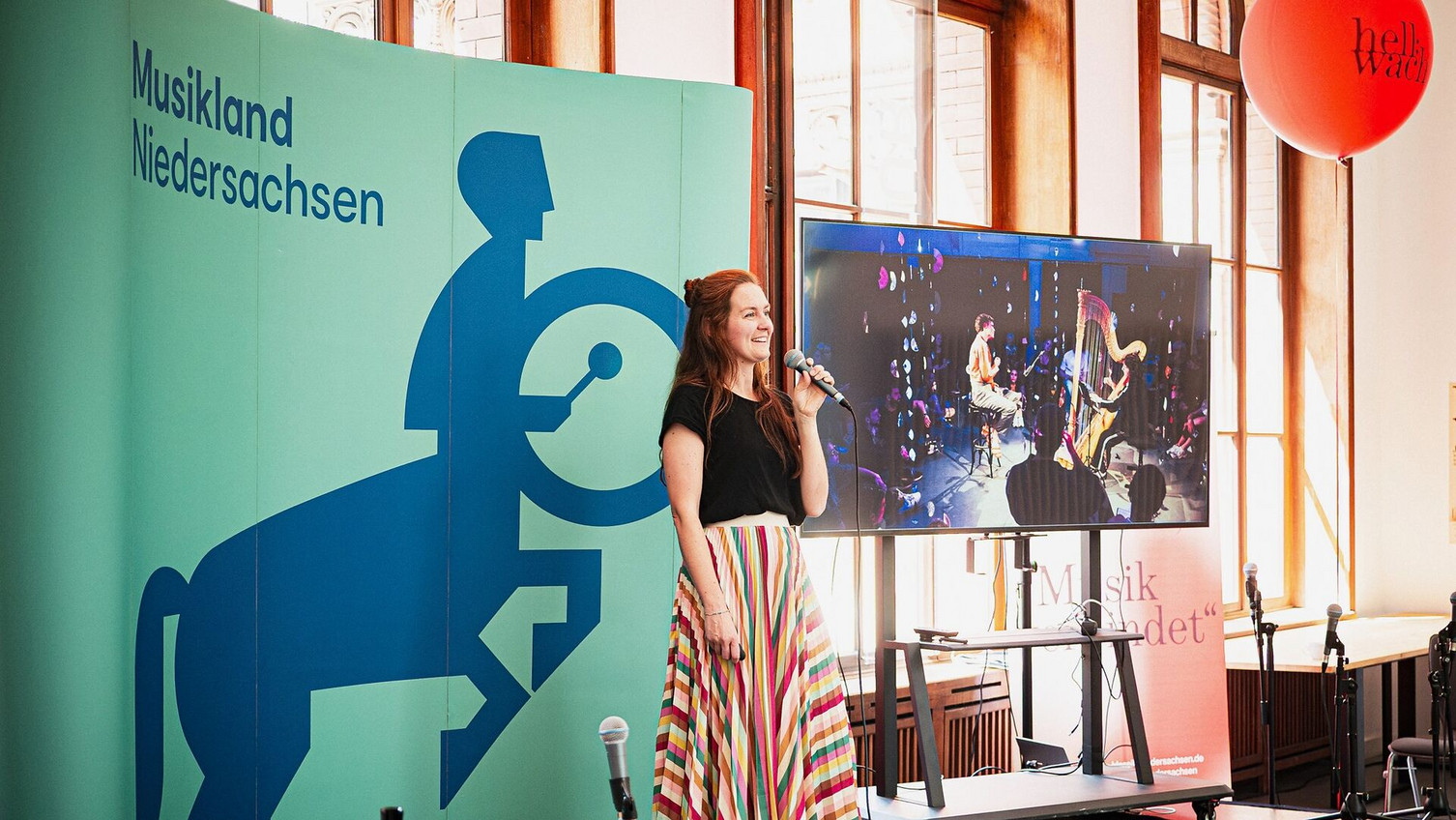
In collaboration with Musikland Niedersachsen, as a strategic partner for practical application, and funded by the Lower Saxony Foundation, Concert Lab 2.0 is developing new formats for music institutions that make the Concert Lab’s research findings understandable, accessible, and directly applicable. The goal is to bring together the perspectives of institutions, artists, and audiences and link them in a practical way.
“Musikland Niedersachsen supports music professionals in a variety of ways as they develop sustainable forms of music-making and event organization. In Concert Lab 2.0, we combine the practical experience from our network with scientific insights from Leuphana University. On this basis, we aim to develop tools that empower music professionals to respond proactively to current challenges—and to gain insights that can be applied to the music landscape in Lower Saxony,” explains Sina Hensel, director of Musikland Niedersachsen.
Dr. Gesa Schönermark of the Lower Saxony Foundation adds: “The Lower Saxony Foundation supports and accompanies the Leuphana Concept Lab 2.0 because we can build on a transdisciplinary pilot project that has, over the past few years at the model university, explored foundational principles which can now lead to many new formats through collaboration with music creators. The involvement of the Musikland institution and its network will help us implement the results in the music scene in Lower Saxony and thereby set new standards.”
Students will also continue to be actively involved in Concert Lab 2.0: The proven teaching formats will be further developed into outreach formats in cooperation with project partners from Lower Saxony, enabling public lectures and discussion sessions with experts from the arts, academia, and the professional field, as well as field trips to innovative concert formats in Lower Saxony.
Alongside the practical development, research activities that go beyond concert design and outreach will also continue. On the one hand, the research will examine how working on transdisciplinary projects and addressing social issues influences the outreach skills of future musicians; on the other hand, it will explore how working methods in ensembles, festivals, or venues change when they are more strongly oriented toward social impact, community work, and outreach.
“At the Leuphana Concert Lab, we’ve learned that there is no single recipe for the concert of the future—the people, places, and conditions under which music is created are far too diverse for that. Our research helps us better understand these differences. With Concert Lab 2.0, we aim to empower music professionals throughout Lower Saxony to develop their own locally viable solutions—and, together with them, gain new insights into how such changes can be successfully implemented,” says Concert Lab project director Prof. Dr. Sigrid Bekmeier-Feuerhahn.