
Complementary studies: When the moor begins to sing
2025-12-19 With the premiere of ‘Cantata for an Ecosystem’ and an experimental exhibition, students at Leuphana University embarked on an adventure combining art, science and climate issues. And it was a success.
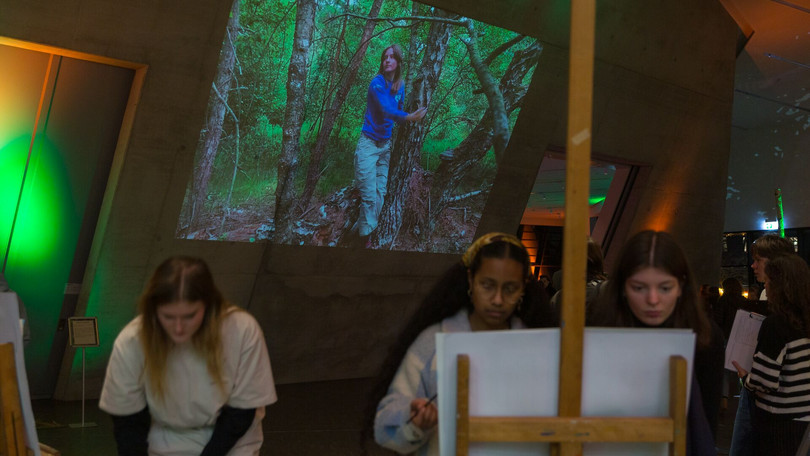
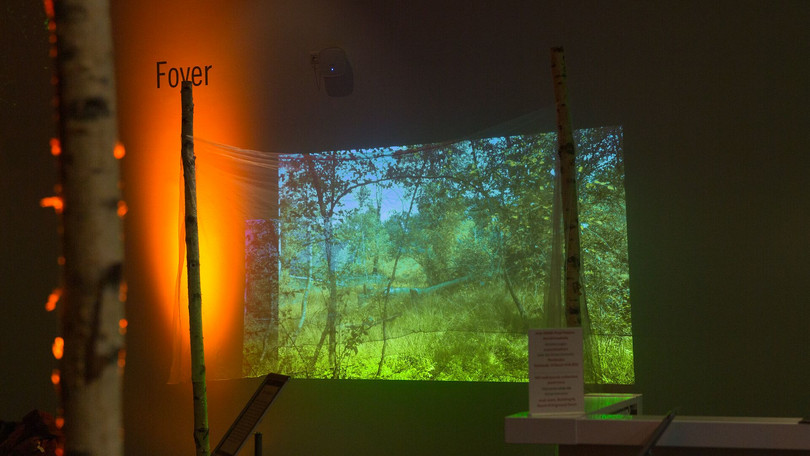
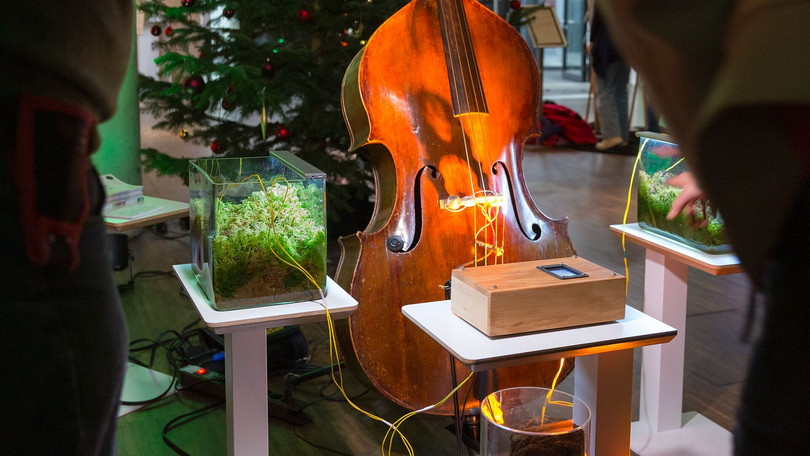
The moor sets the pace: muffled knocking from the depths, birdsong, rustling. Accompanied by complex rhythms, unusual timbres and poetic text fragments about the connection between humans and nature. Under the direction of University Music Director Rebecca Lang, the audience in the central building of Leuphana University experienced the world premiere of ‘Cantata for an Ecosystem’ by Hamburg composer Dominic Wills. The Leuphana Chamber Choir made a fragile ecosystem audible – beyond classical harmonic expectations.
The evening was the highlight of the interdisciplinary project ‘Land schafft Klang’ (Land Creates Sound), which brought together environmental sciences, music, dance, film and cultural studies. The event was prepared by students in two complementary study seminars. In a course led by philosopher Dr Steffi Hobuß, the participants went into the moor together with sound artist Kurt Holzkämper and Potsdam-based environmental scientist Prof. Dr Hubert Wiggering. There they collected sounds, impressions and data – many of which flowed directly into the composition. ‘As a natural scientist, I have learned to listen in a new way,’ admits Hubert Wiggering.
The figures show that this issue is urgent: around 95 per cent of moors in Germany are now considered drained, degraded or destroyed, mainly due to agricultural use and peat extraction. Yet intact moors are among the most effective natural carbon sinks. If they are destroyed – i.e. drained – they release large amounts of greenhouse gases.
In addition to the musical premiere, the students presented their own artistic works in an accompanying exhibition. Rahel Westphal, a student of environmental sciences, developed a dance video with fellow students: ‘We wanted to make the movement of the moor tangible in a different way.’ Other groups presented poetry, sound installations and experimental short films.
The organisation of the evening and the spatial design were in the hands of a second seminar group led by Lea Jakob. Alex Nepomuk Hoffmann, a cultural studies student specialising in cultural management, drew a positive conclusion: ‘I was able to gain important practical experience here – from interior design to event coordination.’
The aim of the two seminars was not only to explain ecological processes from a scientific perspective, but also to make them tangible through the senses. Art made this change of perspective possible.
The evening was rounded off with the presentation of the children's book ‘Alex und Kim Kiebitz entdecken das Moor’ (Alex and Kim Kiebitz discover the moor), presented by student Joanna Knecht, who also sang in the choir. The book, which also emerged from a student project, is aimed at primary school children and combines a narrative story with knowledge about moors and concrete ways to protect them.
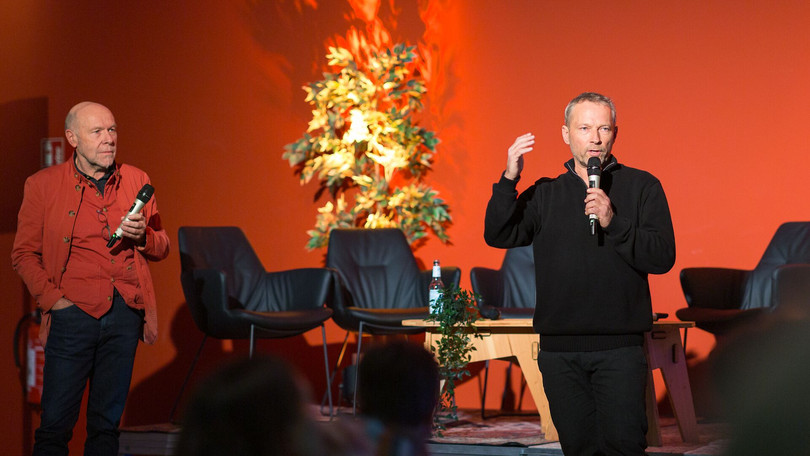
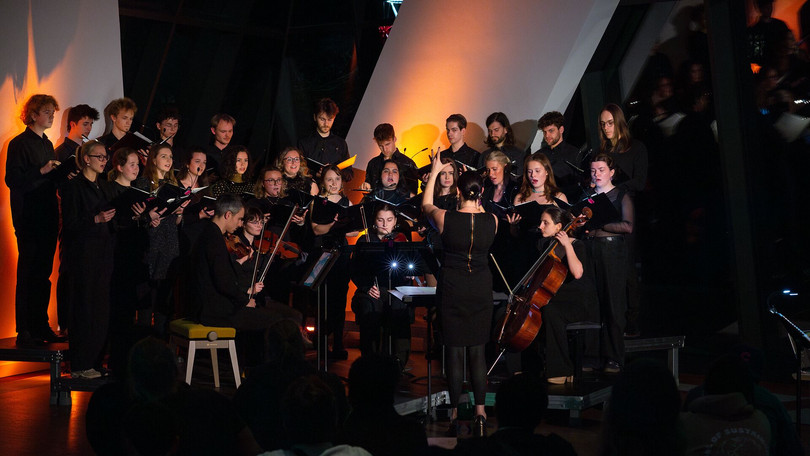
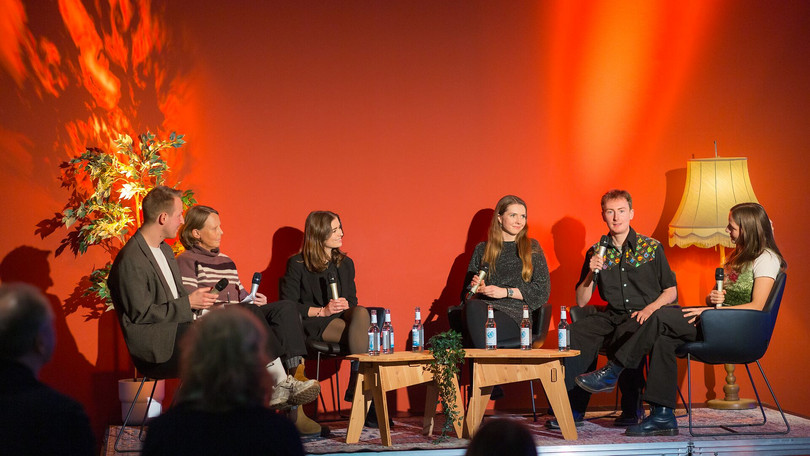
The concluding discussion classified the moor ecosystem from various perspectives. Oliver Mathes, M. Mus. Music Theory, Lecturer for Special Tasks, Leuphana Institute for Art, Music and their Mediation, gave the participants in the ‘Leuphana Living Room’, as the successful interior design in the forum was called, noticeable time. The participants were able to express their views on the title of the discussion, ‘The Acoustics of Moors and Social Transformation.’ This tied in with Hubert Wiggering's opening quote about embracing the slowness of moor development in order to consider ecological consequences and possible behavioural changes. Dr Vicky Temperton, Professor of Ecosystem Functioning & Services, Faculty of Sustainability at Leuphana, took up the theme of time and reported on a 10,000-year-old moor sample that revealed a fresh plant. Within a few hours, the delicate green oxidised in the air and died. This event reminded the scientist once again of the long periods of time over which natural developments take place and are then radically changed by human intervention in the blink of an eye. To put this into perspective, moors grow only one millimetre per year.
The keynote speech „Echoes of the Anthropocene. Listening as a Response to Climate Crisis” was given by Pedro J. S. Vieira de Oliveira, PhD, former fellow at the Leuphana Institute of Advanced Studies.
The other participants were: Maaja Gehde, Leuphana Master of Sustainability Science: Ecosystems, Biodiversity and Society, chamber choir member; Dominic Wills, composer and doctoral student at the University of Music and Theatre, Hamburg; Stella Bosink, member of the complementary seminar ‘Art & Science / Agricultural Science’, Leuphana, and Jasmina Will, Leuphana Master of Education (LHR), Music and German, scholarship holder of the German National Academic Foundation, chamber choir member
Norddeutscher Rundfunk ‘Hallo Niedersachsen’ reported on 18 December 2025.