
Career prospects with Bachelor Global Environmental and Sustainability Studies
At Leuphana College, the interdisciplinary bachelor's program in environmental sciences enables you to acquire not only specialist knowledge but also interdisciplinary skills.
After completing your studies, you will be able to independently develop and convincingly present solution strategies in a national and international working environment.
Already during your studies, you can get to know relevant environmental science fields of employment through qualified internships as well as your own research and practical projects and find out which field of activity you can be enthusiastic about.
Environmental Protection / Research
- Environmental Analyst: Investigating direct and indirect effects of chemicals on the environment
- Waste Officers: Advise operators and staff on matters relevant to waste prevention and waste management
- Environmental Administrator (civil servants): Carry out technical environmental protection measures, e.g. in water and waste management, immission control, noise and soil protection. In doing so, they deal with administrative procedures and examine facts under environmental law
- Water Pollution Control Officer: Control and monitor wastewater facilities and wastewater treatment processes in legally defined companies and advise operators and employees
- Environmental Management Officer: Ensuring that the legal requirements for internal environmental protection are met
- Environmental Scientist: Monitor and analyze environmentally relevant processes, assess ecological risks and carry out environmental impact assessments
- Immission Control Officers: Advise plant operators or their representatives on all issues of significance for immission control, taking into account the respective operational conditions, with the aim of minimizing environmentally harmful immissions through appropriate operating procedures and technical processes
- (Eco)Toxicologist: Responsible for the monitoring of ecotoxicological studies up to the preparation of ecotoxicological risk assessments for chemical substances such as plant protection products
- Environmental Data Analyst: Uses AI algorithms and machine learning to interpret large ecological datasets (e.g., air, water, and soil quality) and develop predictive models
(Renewable) Energies
- Energy Consultant: Inform private households and commercial enterprises about economical and environmentally friendly energy use from an economic and technical perspective
- Climate Protection Manager: Coordinates municipal activities and projects to save energy and emissions and informs the public about climate protection measures
Consulting / Expertise
- Consumer Advisor: Inform, advise and support consumers in questions of consumption
- Waste Management Consultant: Inform companies, private households, authorities and local political committees, clubs, associations, schools and kindergartens about the implementation of measures for waste prevention, recycling and disposal
- Management Consultant: As an external service provider, analyze the processes and structures in companies, e.g. to secure and expand the economic success of the company
- Environmental Auditor: Plan and carry out internal audits in accordance with the European Eco-Management and Audit System (EMAS) In addition, they check compliance with the corresponding requirements with regard to environment-related corporate policy
- Environmental Verifiers: certify organizations according to the European Eco-Management and Audit System (EMAS) and provide expert opinions on the quality of the so-called environmental performance of a company
Public Relations / Foundations & Institutes
- Expert in environment and sustainability in PR departments: Planning, developing and implementing measures that serve to enhance the image of companies, authorities, associations and other institutions
- Project manager for environmental projects of foundations/NGOs: supervise projects from conception to technical and organizational implementation within the framework of defined specifications
Education / Adult Education
- Expert in the field of education/adult education: There are various professional opportunities for environmental scientists in the field of education, for example in the area of school or vocational environmental education. A further focus is on education for sustainable development. In addition to teaching activities, their tasks include developing concepts and organizing and conducting courses and seminars. These posts can be located in both government and private facilities. These include above all:
- public administrations at the various levels of government (including nature conservation and environmental protection agencies),
- Associations, clubs, foundations and corporations,
- research institutions and
- political organizations
- Speaker for Environmental Education for Multipliers: Environmental education by indirectly influencing the population with the help of multipliers who, through their professional or social position, can influence the masses and act as catalysts for environmental education
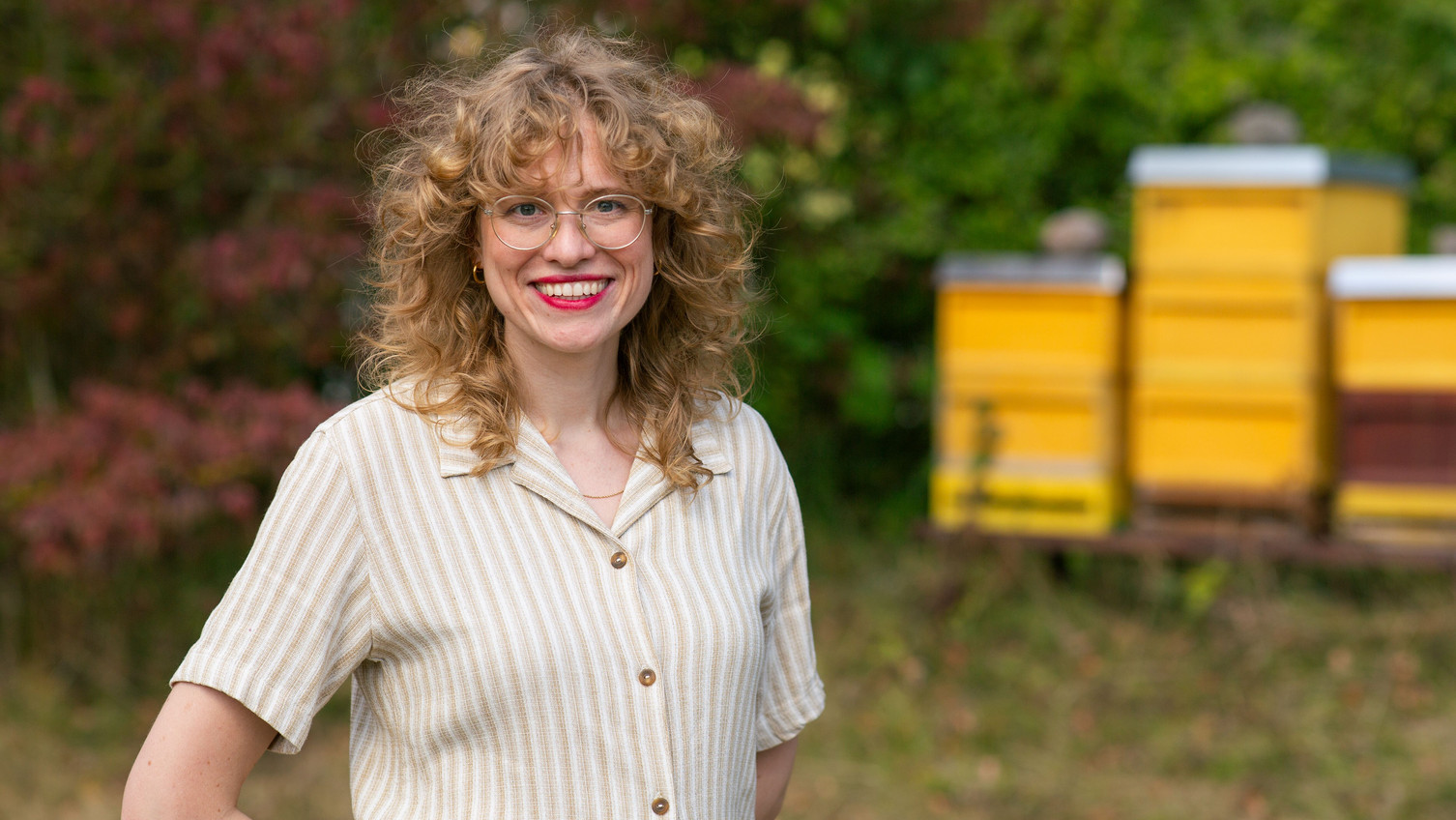 ©Leuphana/Phillip Bachmann
What major and minor did you study, and why did you choose that combination?
I began my studies in 2011 with Environmental Studies as my major and Business Psychology as my minor. While my primary passion has always been environmental science, I have long been fascinated by psychology. I did not initially select this combination with a specific career path in mind. However, during my studies, I quickly recognized how complementary they are. A foundational understanding of psychological principles has proven invaluable in any context involving, for example, collaboration and communication in private and professional settings.
Where and in what position do you currently work, and what are your main responsibilities?
I currently work as a postdoctoral researcher in the international Kili-SES research project (https://kili-ses.de/subprojects/sp3-understanding-social-ecological-transformations-the-role-of-initiatives-values-rules-nd-knowledge/), focusing on understanding social-ecological transformations through the lens of initiatives on Mount Kilimanjaro in Tanzania. My responsibilities span the entire research lifecycle: from conceptualizing and designing studies, to fieldwork, data analysis, and interpreting findings. I also develop implications for research, policy, and practice, publish the works, and lead the dissemination of results to research participants, the broader public, and academic audiences. Additionally, I closely collaborate with two PhD students, maintain strong cross-subproject collaboration due to my involvement in both the first and second phases of the research unit, and serve as an active member of the Kili-SES Equity Working Group.
How did you transition from your studies to work?
Following the successful completion of my undergraduate degree in 2015 and the dual-degree program in Global Sustainability Science in 2017, I completed an internship with the International Climate Initiative (IKI). I then took a deliberate step away from academia to pursue 1.5 years of professional trainings in bodywork. While I no longer offer traditional bodywork sessions, I have integrated the principles and insights from these trainings into my academic practice through, for instance, body-mind workshops and movement breaks. I am also convinced that this training and subsequent one-on-one client work significantly enhanced my facilitation skills for interviews, surveys, and focus groups, while deepening my reflections on researcher responsibility and reinforcing my commitment to ethical research practices (For a detailed reflection on how this training shaped my academic trajectory, see Chapter 1 of my dissertation: pubdata.leuphana.de/entities/publication/8b159f62-18c0-4bcd-9051-20995cdb49a1). Although I remain passionate about bodywork, I sought to integrate my broader professional strengths and interdisciplinary interests. This led me to join the nexus – Institute for Cooperative Management and Interdisciplinary Research in Berlin. After nearly two years at nexus, I transitioned into a PhD position within the Kili-SES research project, where I have since advanced to my current role as a postdoctoral researcher.
Which skills or experiences from your studies are particularly helpful to you in your career today?
The extensive group work and collaborative projects during my studies were crucial for building my confidence and sense of responsibility early in my career, particularly when I first joined the nexus institute and then started my PhD. More importantly, the rigorous inter- and transdisciplinary training I received has been indispensable. It has equipped me with the methodological flexibility and onto-epistemological awareness needed to navigate complex, interdisciplinary research environments. I can now more comfortably engage with diverse research paradigms, bridge disciplinary divides, and facilitate meaningful dialogue between so called natural and social scientists, as I have done throughout my five-plus years in the Kili-SES research project.
Were there any course content, projects, or moments during your studies that had a particularly significant impact on your personal or professional development? What memories do you associate most with your time at Leuphana?
I am most grateful for Leuphana’s unique academic structure, particularly the integration of Studium Generale, major/minor combinations, and complementary studies. These elements fostered a truly holistic educational experience. One of my most formative memories dates back to my first semester, when the entire introductory environmental science lecture initially felt abstract and nebulous. However, by the final session, everything suddenly “clicked.” I was deeply inspired by Niklas Luhmann’s systems theory. It sharpened my understanding of sustainability and our roles as sustainability scientists: rather than aiming to become a disciplinary expert, I learned to appreciate the value of being a generalist who can translate across different disciplinary “languages” and system logics. This mindset has become a cornerstone of my professional identity.
What role did internships, part-time student jobs, or other practical experiences play during your studies?
Practical experiences were pivotal in shaping my research trajectory. As a student research assistant, I joined a transdisciplinary scientific project with a focus on governance and gained invaluable hands-on experience in research. Later, during an internship at the Helmholtz Centre for Environmental Research (UFZ) in Halle, I accompanied a PhD student through fieldwork, collected and analyzed my own samples in the lab, and ultimately wrote my bachelor’s thesis under excellent supervision. Because the researchers were genuinely invested in the outcomes, I experienced a steep but highly rewarding learning curve in ecological field methods and statistical analysis. These experiences solidified my passion for empirical, applied research, including statistics.
Were you involved in extracurricular activities (initiatives, student council, etc.) alongside your studies? If so, how did this involvement shape you?
Alongside my studies, I was actively involved in the departmental student association, where I managed budgets and organized networking events connecting students with the alumni network. Particularly the latter taught me how to build bridges between academic communities and professional networks. It reinforced the importance of community building and peer support in academic and professional life.
Did you gain international experience, for example through a semester abroad or internships abroad?
Yes, I spent a semester abroad at Kristianstad University in Sweden. The experience was profound: I participated in excellent field excursions focused on geology and ecology, took a highly rigorous statistics course, and built lasting friendships with students from diverse backgrounds.
To what extent did these experiences influence your future path?
This international exposure gave me the confidence to write my bachelor’s thesis in English and subsequently pursue my master’s degree in an English-taught program. More importantly, it deepened my commitment to research by providing firsthand insight into both governance-oriented, transdisciplinary, and ecology-focused projects, reinforcing my desire to work in internationally collaborative, interdisciplinary environments.
What advice would you give current students?
I’ve always valued open, expectation-free conversations with alumni and fellow PhD students, hence, highly recommended. If you are drawn to research, I strongly recommend writing your bachelor’s or master’s thesis as part of a research project. This provides not only academic rigor but also valuable real-world research experience. Beyond coursework, view your degree as a unique opportunity for self-discovery and methodological training. Don’t just focus on the “what” you are learning; pay close attention to the “how” you are learning it. Embrace inter- and transdisciplinary exploration, step outside your comfort zone, and allow yourself the space to experiment. The skills you develop in critical thinking, collaboration, and scientific inquiry will serve you far beyond graduation.
What opportunities should students definitely take advantage of during their studies?
Students should actively engage with Leuphana’s diverse extracurricular landscape. Take advantage of programs like SCHUB, the university’s writing center, language courses, and various educational trainings. The opportunities I mentioned were recalled from memory years ago and may no longer be available. I encourage you to explore active offerings that genuinely spark your interest. I am optimistic these offerings complement your academic training and help you develop transferable skills. Additionally, don’t hesitate to request mobility breaks during lectures and seminars.
To whom would you particularly recommend studying at Leuphana College, and why?
I would particularly recommend Leuphana College to students who thrive in non-traditional, inter- and transdisciplinary research environments and actively want to take responsibility in today’s times. The School of Sustainability is highly unique, approaches research and teaching from innovate perspectives, and actively encourages out-of-the-box thinking. It is especially well-suited for curious, broad-minded learners who value inter- and transdisciplinary collaboration and want to explore complex global challenges before eventually specializing in a focused area. If you are looking for a university that prioritizes critical thinking, real-world relevance, and intellectual flexibility, Leuphana College is an exceptional choice.
Three words that best describe your time as a student:
Group work every semester; thinking outside the box; and expanding my comfort zone
Your favorite place on campus or in Lüneburg:
The Biotope Garden
Contact & Counseling
Initial Information
Information Office (Infoportal)
Building 8, ground floor
Universitätsallee 1, 21335 Lüneburg
Phone +49.4131.677-2277
Fax +49.4131.677-1430
studierendenservice@leuphana.de
Opening hours
Term time & term break:
Mon - Thu 9 a.m. - 4 p.m.
Fr 9 - 12 a.m.
Arrange an appointment
College's Student Counselling Service
Building 8, ground floor
Universitätsallee 1, 21335 Lüneburg
Open Consultation Hours
Wed 11 – 13 h (on campus)
Thu 16 – 18 h (via Zoom)
Programme Director
Prof. Dr. Henrik von Wehrden
Universitätsallee 1, C11.005b
21335 Lüneburg
Fon +49.4131.677-1694
studiendekanat.nachhaltigkeit@leuphana.de