
Prof. Dr. Roberto Nigro
Vita
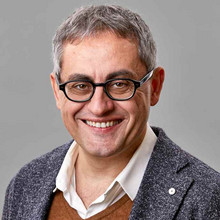
Prof. Dr. Roberto Nigro is Professor of Philosophy, especially Continental Philosophy at the Institute of Philosophy and Art History (IPK) of Leuphana University, as well as Dean of the Faculty of Cultural Studies. He is ancien directeur de program at the Collège international de Philosophie in Paris. His research interests include continental philosophy, aesthetics and political philosophy, French philosophy, Italian cultural philosophy, German philosophy (19th-21st centuries), structuralism/post-structuralism, and operaism/neo-operaism.
- Since 2016: Full Professorship (W3) in Philosophy, in particular continental Philosophy at the Leuphana University, Lüneburg
- March 9-13, 2026: Visiting Professor, Università di Torino, Philosophy Departement (Erasmus +)
- 2024: Visiting Professor, Département de Philosophie, Université de Paris 8.
- 2016: Visiting Professor, Département de Philosophie, Université de Paris Ouest-Nanterre
- Since 2010: Directeur de Programme, Collège international de Philosophie, Paris
- 2009-2016: Lecturer at the Zurich University of the Arts
- 2012: Visiting Professor, École Normale Supérieure (ENS) – Lyon
- 2011: Visiting Professor, École des Hautes Études en Sciences Sociales (EHESS) – Paris
- 2009-2012: Research Associate at the Research Unit „Repräsentative Gewalt“ at the ZHdK, Zurich.
- 2007–2009: Visiting Scholar (Assistant Professor), Department of Philosophy - Michigan State University - USA
- 2006: Visiting Fellow - Eikones – University of Basel
- 2004–2005: Assistant Professor - Department of Film, European Cultural Studies, and Philosophy - The American University of Paris
- 2004: Visiting Scholar – SFB-Kulturen des Performativen, Freie Universität, Berlin
- 2002–2003: Visiting Scholar - „Minda de Gunzburg“ Center for European Studies - Harvard University – Cambridge, MA, USA
- 2001–2004: Research Associate (Assegnista di Ricerca) – Facoltà di Lettere e Filosofia – Università degli Studi di Bari- Italy
- 2000-2001: Archivist - Institut Mémoire de l’édition Contemporaine (IMEC), Paris
- 2000: PhD in Philosophy. "Technologies of Government and Technologies of the Self in Foucault’s unpublished lectures at the Collège de France", Università degli Studi di Bari-Ferrara-Urbino (in cooperation with the University of Paris X-Nanterre).
- 1997-2000: Studies of Philosophy at the University of Paris Ouest-Nanterre
- 1996-1997: Studies of Philosophy at the Goethe University, Frankfurt am Main
- 1994-1996: Studies of Political Science at the University of Paris 8 (Degree: DEA)
- 1990-1994: Studies of Philosophy, History, and Literature at the University of Bari, Italy (Degree: Laurea, M.A. in Philosophy)
FELLOWSHIPS AND AWARDS:
- 2009-2012: SNF Fellowship (Swiss National Science Foundation)
- 2006: SNF Fellowship ((Swiss National Science Foundation)
- 2004: DAAD Fellowship
- 2002-2003: Fulbright Fellowship
- 2000-2002: Postdoc- Fellowship (MURST, Italy)
- 1999-2000: ‚Leonardo’ PhD Fellowship (University of Padua)
- 1996-1999: PhD Fellowship
- 1994-1995: Fellowship for research in France (Italian National Science Foundation)
- 1994: Awards for Excellence in the M.A. Degree Program (University of Bari and Regione Puglia)
- 1992: DAAD Fellowship
REVIEW ACTIVITIES
- Deutsche Forschungsgemeinschaft (DFG)
- Alexander von Humboldt-Foundation
- Materiali Foucaultiani (peer-review e-journal)
EDITORIAL ACTIVITIES/ADVISORY BOARD ACTIVITIES
- Archivio De Feo (Ed.)
- Advisory Board Contributor to the publication of the work of the philosopher Nicola Massimo De Feo
Projects
-
DFG Reserach Training Group 2114: Cultures of Critique - Forms, Media, Effects
Beate Söntgen (Project manager, academic) , Erich Hörl (Project manager, academic) , Timon Beyes (Project manager, academic) , Roberto Nigro (Project manager, academic)
→Project: Research
-
Archivio Nicola Massimo De Feo
Roberto Nigro (Coordination) , Ottavio Marzocca (Coordination) , Rita Casale (Coordination) , Roberto Ciccarelli (Project staff) , Arcangelo Licinio (Project staff) , Ottavio Marzocca (Project staff) , Roberto Nigro (Project staff) , Rita Casale (Project staff) , Claudia Gadaleta (Project staff) , Cristina di Girolamo (Project staff) , Sabrina Papagni (Project staff) , Marco Spagnuolo (Project staff)
Project: Research
-
Archivio Nicola Massimo De Feo
Roberto Nigro (Coordination) , Ottavio Marzocca (Coordination) , Rita Casale (Coordination) , Roberto Ciccarelli (Project staff) , Arcangelo Licinio (Project staff) , Ottavio Marzocca (Project staff) , Roberto Nigro (Project staff) , Rita Casale (Project staff) , Claudia Gadaleta (Project staff) , Cristina di Girolamo (Project staff) , Sabrina Papagni (Project staff) , Marco Spagnuolo (Project staff)
Project: Research
-
Elements of a Critical Theory of Media and Participation
Erich Hörl (Project manager, academic) , Roberto Nigro (Project manager, academic)
→Project: Research
-
Media and Participation. Between demand and entitlement, TP 5: Participatory Critique as Transforming and Transversal "With"
Elke Bippus (Partner) , Roberto Nigro (Partner) , Beate Ochsner (Project manager, academic) , Erich Hörl (Partner) , Christoph Brunner (Project manager, academic)
→Project: Research
Publications
Books and anthologies
- Subversive Negri: From the Refusal of Work to the Multitude
Roberto Nigro (Author) , 2026 , 167 p.Research output: Books and anthologies › Monographs › Research
- Kritische Philosophiegeschichte
Roberto Nigro (Editor) , Till Hahn (Editor) , Charlotte Szasz (Editor) , 2025 Zürich , 293 p.Research output: Books and anthologies › Collected editions and anthologies › Research
- La rivoluzione inquieta. Nicola Massimo de Feo vent'anni dopo
Roberto Nigro (Editor) , Marco Spagnuolo (Editor) , 2025 , 258 p.Research output: Books and anthologies › Collected editions and anthologies › Research
- Dal rifiuto del lavoro alla moltitudine.: La filosofia sovversiva di Toni Negri
Roberto Nigro (Author) , 2024 Rom , 176 p.Research output: Books and anthologies › Monographs › Research › peer-review
- Antonio Negri zur Einführung
Roberto Nigro (Author) , 2024 Hamburg , 202 p.Research output: Books and anthologies › Monographs › Research › peer-review
Journal contributions
- Enjeux de la question anthropologique: Foucault en dialogue avec Kant, Nietzsche et Heidegger
Roberto Nigro (Author) , 01.01.2025 , in: Archives de Philosophie, 88, 1 , p. 27-44 , 18 p.Research output: Journal contributions › Journal articles › Research › peer-review
- L’« effet Nietzsche » sur le discours philosophique et sur l’histoire politique du présent selon Michel Foucault
Roberto Nigro (Author) , Orazio Irrera (Author) , 01.08.2024 , in: Cahiers Philosophiques, 175, 4 , p. 129-141 , 13 p.Research output: Journal contributions › Journal articles › Research › peer-review
- Critique de la morale sacerdotale et pouvoir pastoral
Roberto Nigro (Author) , 01.01.2023 , in: Cahiers Philosophiques, 175 , p. 117-128 , 32 p.Research output: Journal contributions › Journal articles › Research › peer-review
- Genealogia e critica della soggettività neoliberale
Roberto Nigro (Author) , 12.09.2022 , in: Studia Philosophica: Schweizerische Zeitschrift für Philosophie, 2022, 81 , p. 101-113 , 13 p.Research output: Journal contributions › Journal articles › Research › peer-review
- Un nietzschianesimo senza riserve. La volontà di potenza nel dispositivo del potere pastorale
Roberto Nigro (Author) , 01.01.2022 , in: Materiali Foucaultiani, 11, 21-22 , p. 199-224 , 26 p.Research output: Journal contributions › Journal articles › Research › peer-review
Contributions to collected editions/anthologies
- Discomfort in the Italian Operaism: The Nietzschean Legacy in the Work of Nicola Massimo De Feo
Roberto Nigro (Author) , 01.02.2026 , p. 35-54 , 20 p.Research output: Contributions to collected editions/anthologies › Chapter › Research › peer-review
- Furto, violenza e menzogna. La macchina di cattura del capitale
Roberto Nigro (Author) , 01.01.2026 , p. 97-112Research output: Contributions to collected editions/anthologies › Contributions to collected editions/anthologies › Research › peer-review
- Impuls – Wandel kritisch-konstruktiv gestalten lernen: Das neue Modul „Transformation“ im Leuphana Semester
Lina Bürgener (Author) , Daniel Fischer (Author) , Roberto Nigro (Author) , Laura Picht-Wiggering (Author) , 28.05.2025 Nürnberg , p. 5-14 , 10 p.Research output: Contributions to collected editions/anthologies › Article in conference proceedings › Education
- Passagen innerhalb des zeitgenössischen italienischen Marxismus
Roberto Nigro (Author) , 01.01.2025 Zürich , p. 237-264 , 28 p.Research output: Contributions to collected editions/anthologies › Contributions to collected editions/anthologies › Research › peer-review
- Il comunismo nietzscheano di Nicola Massimo De Feo
Roberto Nigro (Author) , 01.01.2025 , p. 88-108Research output: Contributions to collected editions/anthologies › Contributions to collected editions/anthologies › Research › peer-review
Activities
-
What Comes After All Humanisms?
Roberto Nigro (Keynote Speaker)
Activity: Conference Presentations › Research
-
Anarcheology as a Political Method for a History of Knowledge
Roberto Nigro (Speaker)
Activity: Conference Presentations › Research
-
L’estetica dell’esistenza come politica di noi stessi
Roberto Nigro (Speaker)
Activity: Guest lectures › Education
-
Post-Fordism and neo-liberal governmentality
Roberto Nigro (Speaker)
Activity: Conference Presentations › Research
-
Il coraggio della menzogna. Regimi di verità e lotta per l’egemonia
Roberto Nigro (Speaker)
Activity: Conference Presentations › Research
Press / Media
-
Coronavirus. Il principio di prevenzione può essere un serpente che si morde la coda
1 Media contributionPress/Media: Press/Media
-
Reflections on Art in a Fragmented Society on Controll
1 Media contributionPress/Media: Press/Media
-
La guerre civile dans le filigrane du démoniaque
2 Media contributionsPress/Media: Press/Media
-
Subordination réelle et pouvoir bio-politique. Autour de Marx et Foucault
1 Media contributionPress/Media: Press/Media
Courses
These concepts are shaping discussions about our future all over the world today. Addressing them often raises even more questions than are initially answered and can sometimes feel like searching for the Holy Grail. So why make them the subject of a lecture for all first-year students?
Well, why not?
You will quickly realize that these questions come up again and again, regardless of what you study and what you do in your free time. Engaging with them can help you structure your ways of thinking and acting: starting with your own role not only as a student, but as a person who lives and learns, eats and drinks, shops and travels, to the role of science in general: Who is responsible for what? What do we consider fair, how do we imagine a sustainable future?
We will look at contributions that can offer certain approaches, but we will also be happy to cross disciplinary boundaries. We will examine the connections between different levels, systems, and concepts, starting with fundamental approaches to sustainable development and the challenges facing the world in general and young researchers in particular today: What do we really need to know in order to understand what is going on?
Ein solcher Prozess kann als Form der Subjektivierung beschrieben werden. Subjektivierung meint dabei nicht die Hervorbringung von Subjekten aus dem Nichts, sondern jene Bewegung, durch die festgelegte und scheinbar natürliche Identitäten in Orte des Konflikts, des Dissenses und der politischen Erfahrung verwandelt werden. Jede Subjektivierung impliziert daher eine Form der Desidentifikation, also eine Distanzierung von den als natürlich geltenden sozialen Zuschreibungen und Positionen.
Das Subjekt ist hierbei nicht allein als individuelles Bewusstsein zu verstehen, sondern ebenso als kollektive, vielschichtige und relationale Instanz. Subjektivität entsteht in Prozessen gemeinsamer Erfahrung, sozialer Auseinandersetzung und kollektiver Transformation.
Im Zentrum des Seminars steht die Diskussion einer ästhetisch-philosophischen Kategorie: der Ästhetik der Existenz, die in den vergangenen Jahren innerhalb kultureller und philosophischer Debatten besondere Aufmerksamkeit erfahren hat. Darüber hinaus erscheint sie als eine Praxis, die heute zahlreiche gesellschaftliche Bereiche durchzieht: Überall zeigt sich ein gesteigertes Interesse an Fragen der Ästhetik, der Lebensführung und der Gestaltung gemeinsamer Formen des Zusammenlebens.
Das Seminar geht der Frage nach, welche normativen Implikationen mit dieser Entwicklung verbunden sind. Welche Formen der Subjektivität und des Zusammenlebens werden dadurch hervorgebracht? Welche politischen, ethischen und sozialen Konsequenzen ergeben sich aus der Ästhetisierung der Existenz?
Building on the notion of homogeneity as developed in critical social theory, the course examines the sphere of commensurability, utility, production, and measurable value. In this perspective, bourgeois society appears as a homogeneous order structured by stable norms, functional identities, and forms of social regulation based on equivalence and economic rationality.
In contrast, heterogeneity designates everything that escapes this logic of equivalence. It includes sacred forces, taboo elements, affective intensities, excess, waste, violence, and social groups that cannot be fully integrated into the dominant order. This field of heterogeneity also encompasses excluded classes such as the proletariat and subproletariat. At the same time, it is precisely from this domain that certain political formations may draw their force.
The seminar pays particular attention to the way fascism emerges when the unstable relation between homogeneity and heterogeneity is articulated politically. Fascist movements and leaders often mobilize heterogeneous forces—violence, affect, excess, and forms of quasi-sacral authority—and reorganize them into new structures of political cohesion. In this process, fascism does not represent a rupture with capitalist structures, but rather a mode through which capitalist social relations are consolidated in forms increasingly shaped by hierarchical, patriarchal, and racial logics.
Overall, the seminar investigates the ambiguity of these dynamics in order to develop a critical framework for understanding fascism and its contemporary resonances, with the aim of enabling a radical critique of every fascistic political form.
Das Seminar stellt die Frage nach den Technologien und Politiken des Selbst. Es wird die Vorstellung eines natürlichen, ursprünglichen Subjekts grundsätzlich in Frage gestellt. Stattdessen zeigt sich, dass diese Idee selbst ein historisches Konstrukt ist. Gegenwärtig entsteht vielmehr eine neue, „maschinische“ Dimension von Subjektivität. Diese erfordert keine nostalgische Rückkehr zu früheren Formen des Subjekts, sondern eine Analyse der Bedingungen, unter denen diese neue Form entsteht. Nur so lassen sich die Möglichkeiten und Potenziale verstehen, die sich daraus eröffnen.
Dabei werden unterschiedliche Interpretationen des Faschismus analysiert. Gleichzeitig werden zwei gängige Deutungen kritisch hinterfragt: weder wird der Faschismus als bloße historische Abweichung innerhalb der Moderne verstanden, noch als simples Werkzeug des Kapitalismus.
Das Seminar untersucht die Hypothese, dass die Entstehungskraft verschiedener Formen des Populismus in einer grundlegenden Spannung sozialer Ordnungen liegt. Im Zentrum steht dabei die Unterscheidung zwischen zwei Dimensionen des Sozialen. Die erste beschreibt eine homogene Ordnung, die auf Nützlichkeit, Produktion, Vergleichbarkeit und messbarem Wert beruht und damit die Grundlage bürgerlicher Gesellschaften bildet. Sie organisiert soziale Beziehungen über Stabilität, Funktionalität und ökonomische Rationalität.
Demgegenüber steht eine heterogene Dimension, die alles umfasst, was sich dieser Logik entzieht: Exzess, Gewalt, Affekt, das Sakrale, das Ausgeschlossene sowie soziale Gruppen am Rand der Ordnung. Diese Kräfte erscheinen als nicht vollständig integrierbar, können jedoch zugleich politische Wirksamkeit entfalten.
Das Seminar analysiert, wie politische Bewegungen entstehen können, wenn solche heterogenen Kräfte mobilisiert und in neue Formen sozialer Kohäsion überführt werden. Dabei wird insbesondere gefragt, wie sich affektive Intensitäten, Ausnahmezustände und soziale Ausgrenzung politisch organisieren lassen und welche Rolle sie bei der Stabilisierung oder Transformation gesellschaftlicher Ordnungen spielen.