
Doctoral Days: Inken Köhler – When doctoral studies meet the classroom
2026-01-12 While many teacher training students focus primarily on the classroom, the 24-year-old mathematics educator decided early on to pursue a career in research. During her master's degree in elementary school teaching, she entered the so-called Doctoral Track – an opportunity to begin her doctorate before completing her master's degree. Those interested can find out more about this and other paths to a doctorate at the Graduate School's Doctoral Days, starting on January 19, 2026.
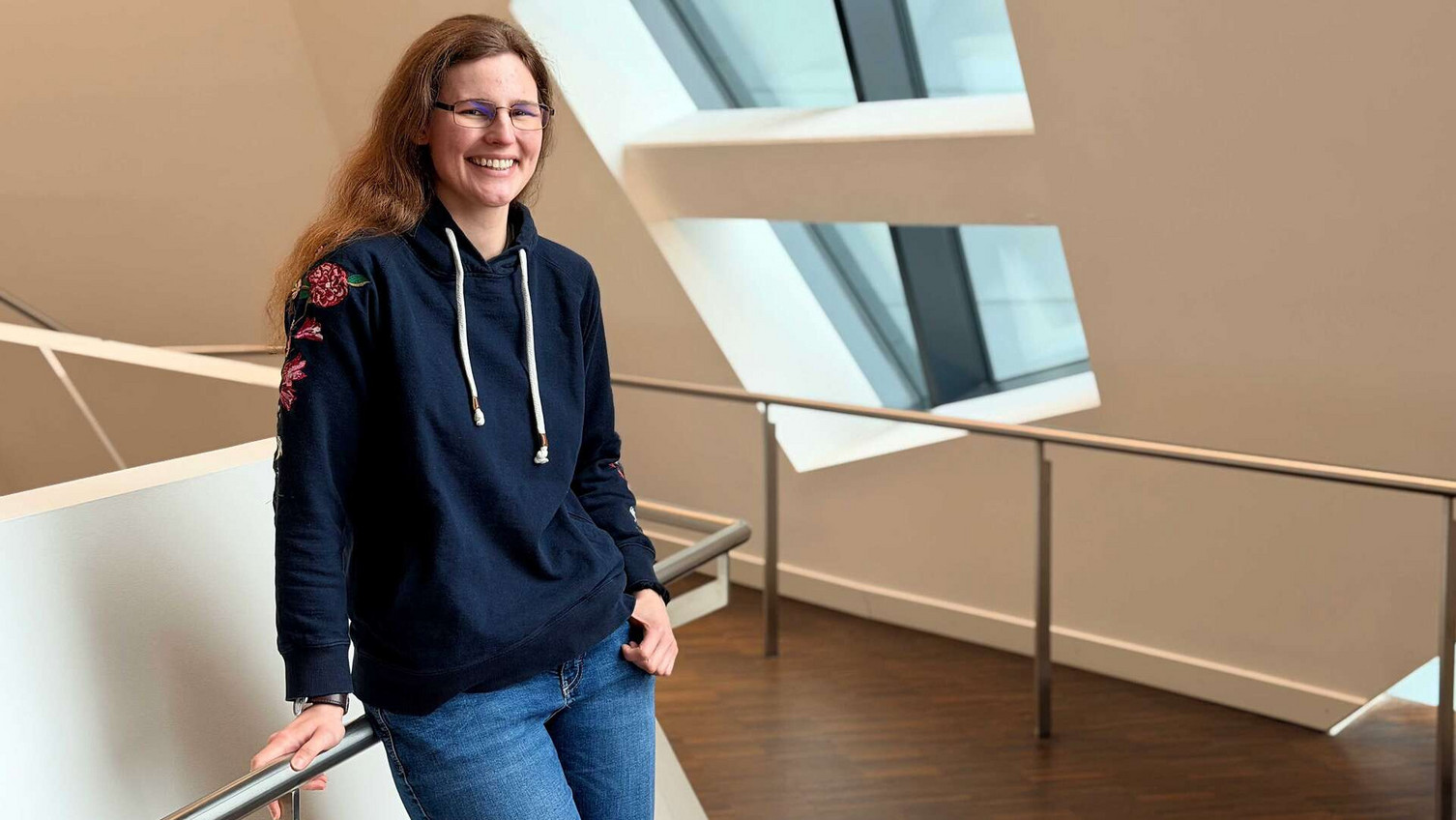
Early on in her studies, Inken Köhler realized that it wasn't just good teaching that appealed to her. Especially in general studies and mathematics education, she discovered her love of literary work, theoretical thinking, and constantly familiarizing herself with new topics: “I was fascinated by what actually goes on in children's minds when they learn – and how this can be researched,” she explains.
The concrete desire to pursue a doctorate arose during the final year of her master's degree. She learned about the Doctoral Track at an information event. It quickly became clear to her that “starting to think about a doctorate while still doing my master's degree is exactly the right path for me.” Feedback from the Institute of Mathematics and its Didactics encouraged her to pursue this path. Inken Köhler applied for the program in her third semester of her master's degree.
A key motivation for her to join the Doctoral Track was the planning perspective. “I knew what I wanted to do next even before I graduated, so I didn't waste any time.” Instead of an abrupt end to student status and a subsequent search for a doctoral thesis topic, the Doctoral Track offers a smooth transition – academically, organizationally, and personally: her master's thesis was geared toward her later doctoral studies from the very beginning. Under the supervision of Prof. Dr. Silke Ruwisch, she compiled an extensive literature review on the topic of “statistical thinking in elementary school” – an area that has been little researched in Germany to date. “The Doctoral Track enabled me to focus on this topic early on and to view my master's thesis not only as a conclusion, but as a starting point.”
Above all, participating in the Leuphana doctoral program's Research Forum reinforced Inken Köhler's decision to pursue a doctorate: while still a master's candidate, she got to know other doctoral students there, listened to project presentations, and gained insights into working methods, time dimensions, and the challenges of academic careers: “You get a realistic picture of what a doctorate entails,” she reports.
Based on her master's thesis, she is now writing her first scientific paper, which she plans to submit to an international journal for statistical education. For her, the idea that statistics should play an important role in elementary school is more than just a theoretical interest. With the new educational standards, the critical handling of data is officially anchored in the curriculum. “Children encounter data all the time: in the media, in their everyday lives. They can learn to question it much earlier than we think.” Simple exercises for collecting data could even be implemented in kindergarten, for example, asking the group about their favorite colors: “We live in the age of AI and big data. Children should learn to deal with data at an early age,” says Inken Köhler.
In parallel with her own research, the doctoral student now also teaches mathematics education: “Suddenly you're standing at the front of the class teaching students who are sometimes older than you are.” Her early involvement in the academic world proved to be an advantage for this challenge as well: “I was able to make a lot of contacts. A network helps with questions and challenges.”
At the same time, she receives close, expert advice in her working group: “The support is even closer than it was during my master's thesis. Every major decision is discussed in depth,” reports Inken Köhler.
And what would she do differently in retrospect? “If I could decide again, I would start the doctoral track even earlier,” she says.
Inken Köhler started in her second year of her master's degree. Starting earlier allows students to tailor their entire master's program to a subsequent doctorate. Topics for term papers, projects, and especially the master's thesis can be chosen from the outset to serve as building blocks for the dissertation project. As a result, much of the work done during the master's program can be incorporated into the doctoral program. At the same time, students have more time to refine their research topic, establish a theoretical foundation, and systematically develop methodological skills. For master's students in Leuphana's M.A., M.Sc., and LL.M. programs, the interlinking of content between the complementary master's program and doctoral studies in the Doctoral Track also offers the opportunity to take up to three modules in the doctoral program during the master's program and have them recognized for the complementary studies.