
New at Leuphana: Prof. Dr. Julia Grauvogel – Sustainable Conflict Management
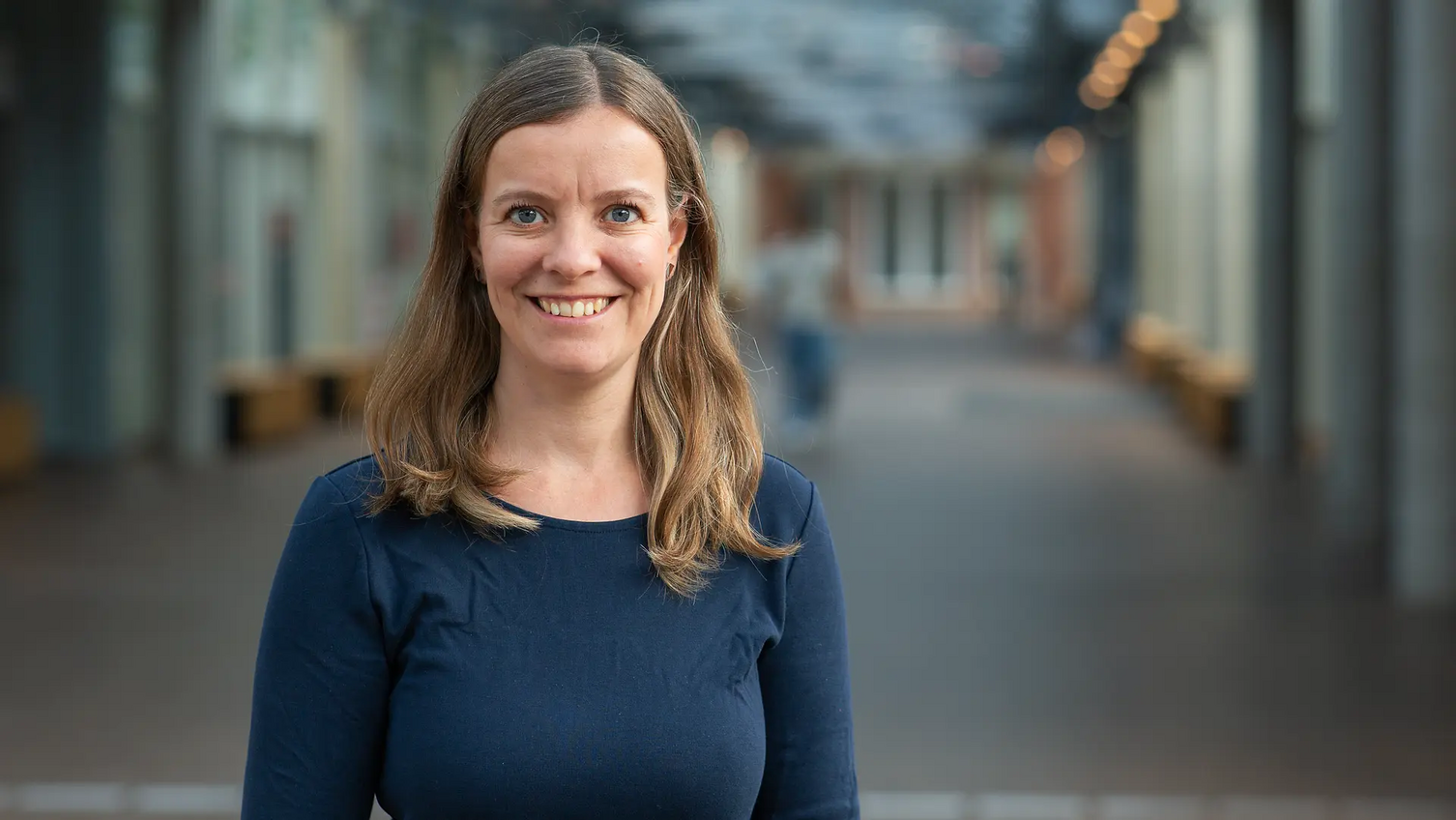
2026-09-05 How can armed conflicts be contained? When are sanctions effective? Why do international peacekeeping missions end? Through her research, the professor of Global Interventions and Conflicts contributes to the debate on peacekeeping. She teaches and conducts research at the Institute of Political Science and is also a Lead Research Fellow at the German Institute for Global and Regional Studies (GIGA) in Hamburg.
Burundi, 1990s. A bloody civil war ravages the landlocked East African nation. More than 300,000 people die, and hundreds of thousands flee. Following a military coup, the countries in the region—Tanzania, Kenya, Uganda, Rwanda, the former Zaire, Zambia, and Ethiopia—imposed nearly complete economic sanctions against Burundi. In addition, Nelson Mandela mediated the process with the support of the UN. Their common goal: to force the conflicting parties to the negotiating table.
For political scientist Julia Grauvogel, Burundi serves as both an example of sanctions that were at least partially successful and an illustration of the complexity of peacebuilding measures: these include not only sanctions, but also political pressure and, in some cases, even military interventions.
For her research in Burundi, Julia Grauvogel conducted interviews with, among others, political decision-makers at the time—such as the president who had seized power in a coup—as well as other key figures in politics and business.
There are many reasons for the success of sanctions, such as Burundi’s geographical location as a landlocked country, she explains: As a coffee exporter, the country was dependent on transportation routes through neighboring countries. But even essentials such as fertilizer could hardly be transported to Burundi at the time: “The sanctions had significant economic consequences, and because of their humanitarian impact, numerous exceptions were quickly granted,” reports Julia Grauvogel.
But even after the sanctions were eased, the political message did not go unheard: Burundi’s neighbors did not recognize the coup government. In fact, the sanctions were successful: In 2000, the parties to the conflict finally signed the Arusha Peace and Reconciliation Agreement.
Russia, on the other hand, is far more difficult to sanction than Burundi—simply because of its size and its military capabilities, including nuclear weapons: “The political message conveyed by the sanctions is nonetheless clear and credible, precisely because many of the sanctioning countries are willing to bear their own costs,” explains Julia Grauvogel.
A key finding of her research is that international interventions need a clear exit strategy from the very beginning—whether they involve sanctions, Blue Helmet missions, or the deployment of armed troops: “Crises require a swift response, but clear criteria and milestones should still be established. This shortens the duration of interventions and increases the likelihood of success,” explains Julia Grauvogel.
In a new five-year research project, she and her team are investigating how sanctions, peacekeeping missions, and other forms of international conflict management come to an end—and what long-term consequences remain: “Mali shows that external interventions do not end with the physical withdrawal. So it’s clear: UN peacekeeping missions, sanctions, and other interventions always have consequences that extend beyond their conclusion. But we still don’t understand enough about how these mechanisms work.”
Julia Grauvogel earned her Ph.D. from the University of Hamburg, where she studied the political effects of international sanctions in sub-Saharan Africa. Since 2012, she has been a researcher at the GIGA Institute for African Studies. From 2018 to 2022, she served as editor of the journal “Africa Spectrum” and, from 2018 to 2024, led two projects funded by the German Research Foundation (DFG) on the termination of international sanctions. From 2016 to 2018, she worked on the “International Diffusion and Cooperation of Authoritarian Regimes – IDCAR Network” project, funded by the Leibniz Competition. In 2026, she was appointed professor of Global Interventions and Conflicts at Leuphana University of Lüneburg.