Future dialogue at the town hall
Hanseatic city and Leuphana discuss sustainability transformation
2026-03-09 At the Future Dialogue between the Hanseatic City of Lüneburg and Leuphana University, representatives from the city administration and academia discussed current challenges in sustainability transformation and prospects for the region – and how the city and university can shape these together.
 ©Leuphana/Tengo Tabatadze
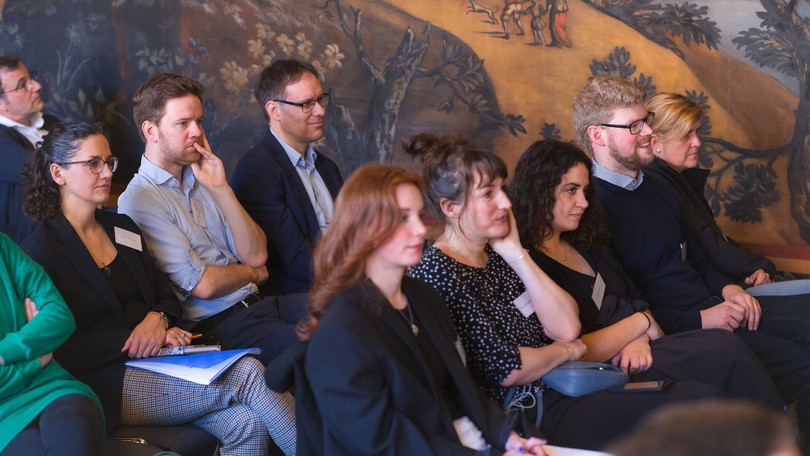
It was a special place for a special event: in the historic homage hall of Lüneburg Town Hall, the Hanseatic City of Lüneburg and Leuphana University invited guests to a joint dialogue on the future for the first time. The occasion was the 15th anniversary of the Faculty of Sustainability. The event focused on the exchange between science and the city on current issues of sustainability transformation. Representatives from the university, city administration, politics, business and civil society were invited.
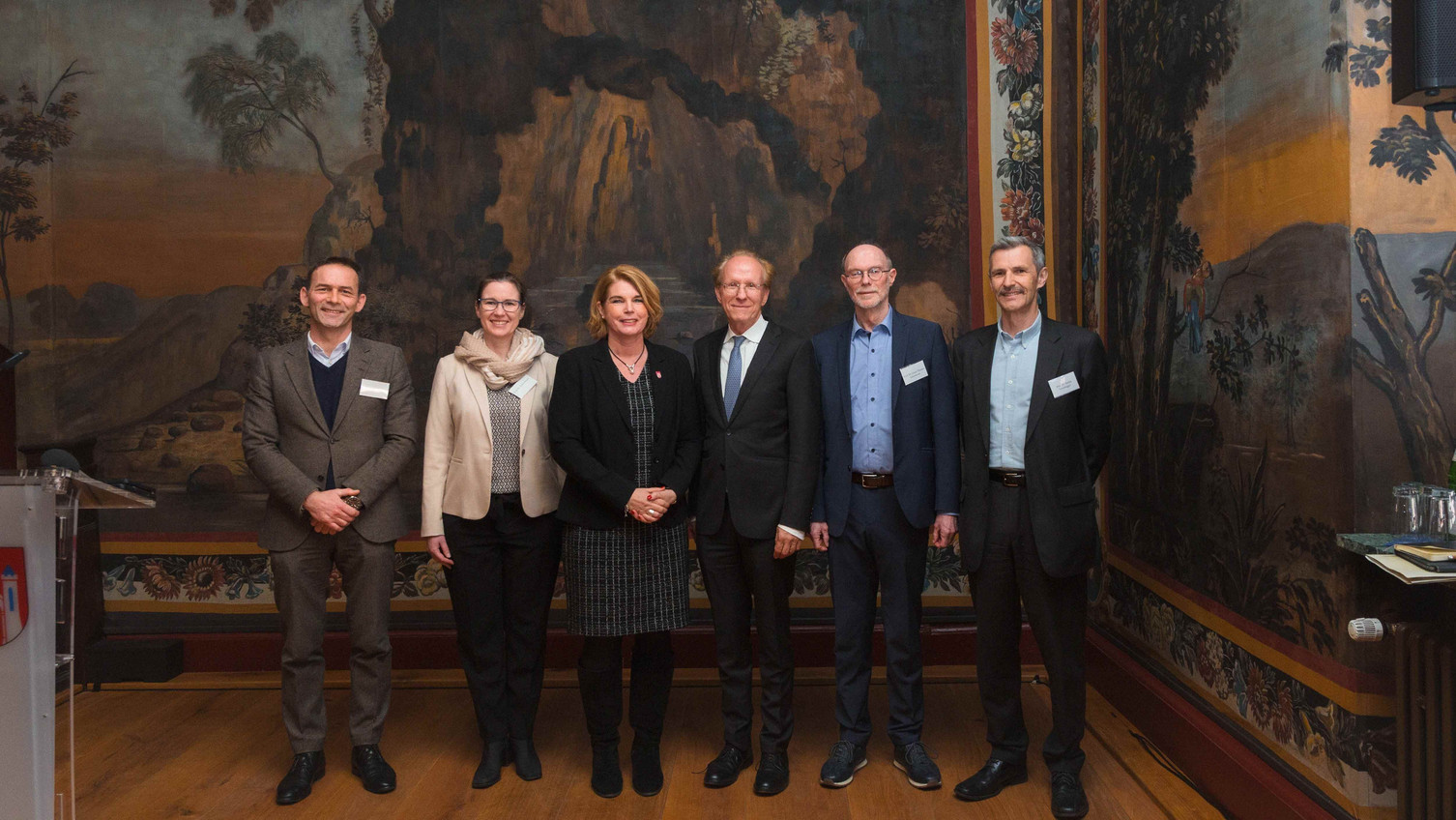
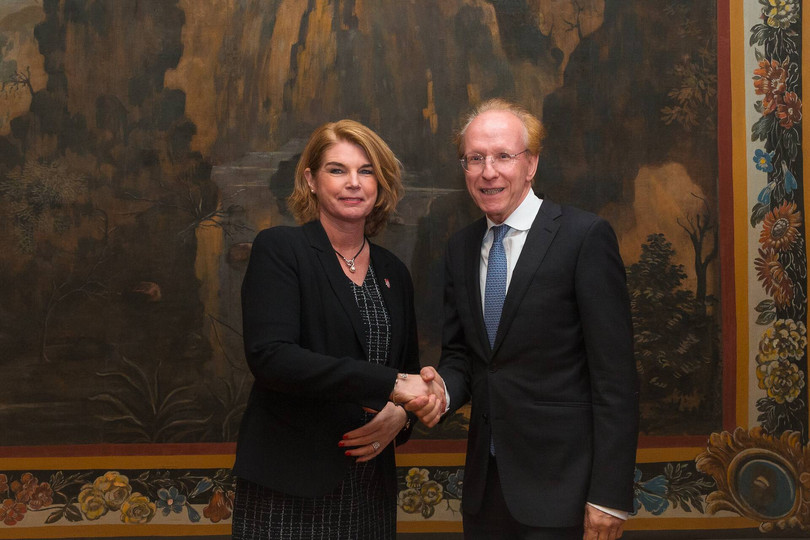
To kick off the event, Lüneburg's Mayor Claudia Kalisch, University President Sascha Spoun and Prof. Dr. Sylvia Haider, Vice-Dean of the Faculty of Sustainability, welcomed the guests. Kalisch emphasised the special connection between the city and the university. ‘We are a university city – and therefore have scientific advice right on our doorstep,’ she said. Especially on issues such as climate protection, mobility and urban development, the city can benefit from the university's expertise, while at the same time research results can be tested directly in practice.
Spoun recalled that the Faculty of Sustainability at Leuphana was the first faculty of its kind in Germany. Its establishment was part of a strategic reorientation of the university and has contributed significantly to its positive development in recent years. This is reflected, among other things, in consistently high student numbers and renowned researchers from Germany and abroad. ‘We are recognised for this topic,’ said Spoun. At the same time, he praised the constructive cooperation with the Hanseatic city and emphasised how important reliable development prospects for the university would continue to be in the future – which would benefit both the city and the region.
Prof. Dr. Sylvia Haider underlined the relevance of cooperation and transdisciplinarity: "Sustainability is not an abstract field of research that is only dealt with in lecture halls or laboratories, but a joint task for the state and science and, of course, for actors from society, business and politics. We want to shape transformation together,‘ said the professor of ecology and vice-dean of the Faculty of Sustainability. She cited as an example the faculty's participation in the university-wide ’Embracing Transformation" programme, which is dedicated to the major transformation processes of the present. Among other things, the project examines how economic actors can take responsibility, how democratic institutions can remain capable of acting in times of great upheaval, and how social development can be shaped within ecological limits.
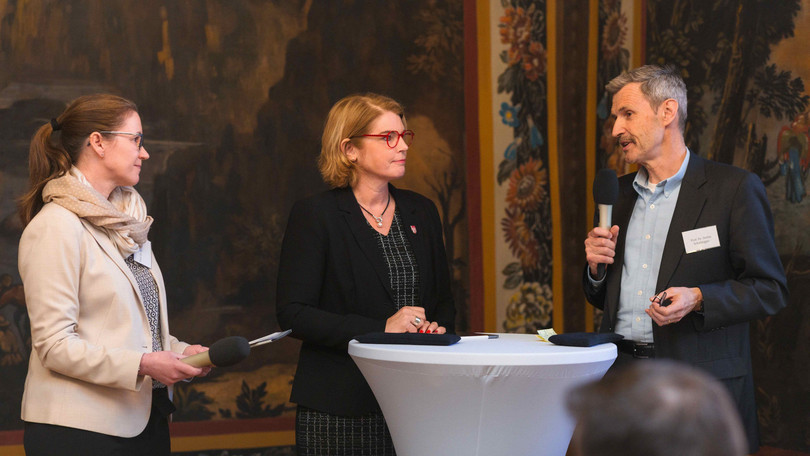
(Caption below: Claudia Kalisch and Sascha Spoun; Sylvia Haider, Claudia Kalisch and Stefan Schaltegger; Markus Moßmann and Thomas Schomerus; from left to right)
![[Translate to Englisch:] Markus Moßmann und Stefan Schaltegger](/fileadmin/_processed_/9/9/csm_Zukunftsdialog-6_15e642112f.jpg)
Under the heading ‘Perspectives on urban sustainability policy and sustainability research’, Mayor Claudia Kalisch and Stefan Schaltegger, Professor of Sustainability Management and founder and director of the world's first MBA in Sustainability Management, discussed the role of local authorities and universities in shaping sustainable development and the importance of close cooperation between cities and universities. Kalisch referred to various formats of cooperation between the city, academia and other actors in the region, such as the ‘Future City Lüneburg 2030+’ project. Stefan Schaltegger emphasised that sustainability was understood as an interdisciplinary challenge from the outset. The ‘Innovation Network Future Factor Sustainability’, a joint project of Leuphana University and the Lüneburg Economic Development Agency, shows how such approaches are also being implemented in practice. In a series of workshops on sustainability management, participants exchange ideas and identify, for example, sustainability potential in their own companies. ‘Environmental problems are so complex, interwoven with social and economic processes, that they must be viewed from different perspectives in order to develop value-adding solutions,’ summarised Stefan Schaltegger.
The second dialogue focused on the municipal heat transition and sustainable urban development. Markus Moßmann, First Councillor and Head of the Department for Sustainability, Security and Law, and Prof. Dr. Thomas Schomerus, Professor of Public Law, specialising in energy and environmental law, discussed the challenges and framework conditions of the energy transition at the municipal level. It became clear that the transformation is not only a technical task, but also a legal and administrative one. As an example of successful cooperation, both referred to the annual Energy Forum at Leuphana, where representatives from science, politics, administration and business discuss current issues relating to the energy transition. ‘Many citizens are regular guests at our university, as are regional companies,’ explains Thomas Schomerus. The next Energy Forum will take place on 15 September 2026.
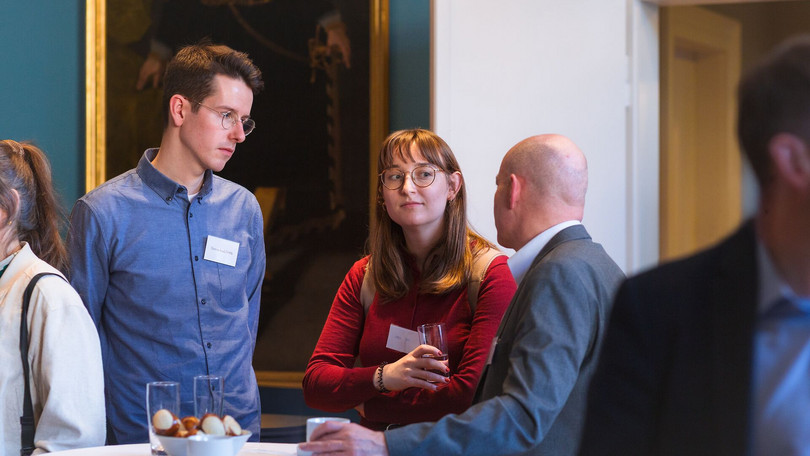
At the reception that followed, the guests continued their discussions – in keeping with the spirit of the Future Dialogue, which brings together academia, the city and regional stakeholders.