
Prof. Dr. Jens Newig
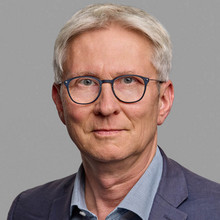
Assoziierte/r, Zentrum für Demokratieforschung
Werdegang
- Direktor, Institut für Nachhaltigkeitssteuerung (INSUGO), Leuphana Universität (11/2019 -)
- W3-Professur an der Leuphana Universität Lüneburg (2014 - )
- Inhaber eines ERC Starting Grants (2011 - 2016)
- W2-Professur an der Leuphana Universität Lüneburg (2010 - 2014)
- Habilitation über „Environmental Governance im Lichte von Partizipation und Effektivität: Fallstudien und Modelle“ an der Universität Osnabrück, venia legendi in Politikwissenschaft und Angewandter Systemwissenschaft (11/2009)
- Verwaltungsprofessur an der Leuphana Universität Lüneburg (10/2008 bis 09/2009)
- Wissenschaftlicher Assistent am Institut für Umweltsystemforschung der Universität Osnabrück, Prof. Dr. Claudia Pahl-Wostl (12/2001 bis 05/2010)
- Promotion (Dr. iur.) mit einer Dissertation über „symbolische Umweltgesetzgebung“ an der Juristischen Fakultät der TU Dresden, Prof. Dr. Martin Schulte, als Stipendiat der VolkswagenStiftung (summa cum laude) (10/1999 bis 05/2002)
- Strategische Management-Beratung Gemini-Consulting, Bad Homburg (1998)
- Studium der Geoökologie an der Universität Bayreuth (Diplom-Geoökologe) (1993 bis 1998)
- Studium Gestion et Génie de l’Environnement an der Université Paris 7 als Stipendiat des DAAD (Abschluss mit Maîtrise und Ingénieur-Maître) (1995 bis 1996)
- Studium Chemie und Geographie an der Universität Tübingen (1991 bis 1993)
- Stipendiat der Studienstiftung des deutschen Volkes (1992 bis 1998)
Downloads zu Publikationen finden Sie unter http://sustainability-governance.net/jens-newig
Besuchen Sie den Blog der Arbeitsgruppe unter http://sustainability-governance.net.
Lehrgebiete
- Umweltwissenschaften
- Sustainability Sciences
- College Studienreflexion
Forschungsgebiete
- Gesellschaftliche Transformationsprozesse in Richtung Nachhaltigkeit
- Umweltpolitik und Governance für Nachhaltige Entwicklung
- Umwelt- und Nachhaltigkeitskommunikation
- Partizipative Governance und deren Effektivität
- Evidenzbasierte Governance
- Lernen und Netzwerke bei der Steuerung komplexer Systeme
- Fallstudienvergleich, Meta-Analyse, Feld-Experimente
- Medienaufmerksamkeit, Aufmerksamkeitszyklen
- Wasserpolitik
- Transdisziplinarität, Wissenschaftskommunkation, Schnittstellen zwischen Natur- und Gesellschaftswissenschaften
Projekte
-
Embracing Transformation: Demokratische Resilienz — Die Nachhaltigkeit der Demokratie im Zeitalter der globalen Polykrise
Jens Newig (Wissenschaftliche Projektleiter*in) , Astrid Séville (Wissenschaftliche Projektleiter*in) , Christian Welzel (Wissenschaftliche Projektleiter*in) , Michael Rose (Koordinator*in) , Lennart Bade (Projektmitarbeiter*in)
→Projekt: Forschung
-
Wissenschaftsraum "Nachhaltigkeitsgovernance globaler Wertschöpfungsketten"
Jens Newig (Wissenschaftliche Projektleiter*in) , Andrea Lenschow (Wissenschaftliche Ko-Projektleiter*in) , Franca Bülow (Koordinator*in) , Barbara Ehbauer (Projektmitarbeiter*in) , Jelto Makris (Projektmitarbeiter*in) , Jelena Bäumler (Wissenschaftliche Ko-Projektleiter*in) , Elke Schüßler (Wissenschaftliche Ko-Projektleiter*in) , Stefan Schaltegger (Wissenschaftliche Ko-Projektleiter*in) , Patrick Velte (Wissenschaftliche Ko-Projektleiter*in) , Frank Teuteberg (Wissenschaftliche Ko-Projektleiter*in) , Alexander Schall (Wissenschaftliche Ko-Projektleiter*in) , Martin Franz (Wissenschaftliche Projektleiter*in) , Christian Busse (Wissenschaftliche Projektleiter*in) , Jann Lay (Wissenschaftliche Projektleiter*in) , Henrike Jost (Projektmitarbeiter*in) , Kathleen Evers (Projektmitarbeiter*in) , Nora Große (Projektmitarbeiter*in) , Finn Jonas Bongert (Projektmitarbeiter*in) , Sofyia Pohurskyy (Projektmitarbeiter*in) , Frederik Kamphues (Projektmitarbeiter*in) , Philip Verfürth (Projektmitarbeiter*in) , Satwant Dahiya (Projektmitarbeiter*in) , Jia Zuo (Projektmitarbeiter*in) , Frauke Steglich (Projektmitarbeiter*in) , Saumya Satishbhai Raval (Projektmitarbeiter*in)
→Projekt: Forschung
-
Planning Land Use Strategies: Meeting biodiversity, climate and social objectives in a Changing world.
Jens Newig (Wissenschaftliche Projektleiter*in) , Xinran Wang (Wissenschaftliche Projektleiter*in)
→Projekt: Forschung
-
Wissenskumulation in der Umwelt- und Nachhaltigkeitsgovernanceforschung
Jens Newig (Wissenschaftliche Projektleiter*in) , Michael Rose (Wissenschaftliche Projektleiter*in)
→Projekt: Forschung
-
Next Water Governance
Jens Newig (Wissenschaftliche Projektleiter*in) , Shahana Bilalova (Projektmitarbeiter*in)
→Projekt: Forschung
-
Operationalising telecouplings for solving sustainability challenges related to land use
Jens Newig (Wissenschaftliche Projektleiter*in) , Johanna Coenen (Projektmitarbeiter*in) , Edward Challies (Projektmitarbeiter*in)
→Projekt: Forschung
-
Governance nachhaltiger Entwicklung in globalen Systemen inter-regionaler Fernwirkungen
Andrea Lenschow (Wissenschaftliche Projektleiter*in) , Jens Newig (Wissenschaftliche Projektleiter*in) , Edward Challies (Wissenschaftliche Projektleiter*in) , Benedetta Cotta (Projektmitarbeiter*in)
→Projekt: Forschung
-
CAPFLO - Local resilience capacity building for flood mitigation
Jens Newig (Wissenschaftliche Projektleiter*in) , Elisa Kochskämper (Projektmitarbeiter*in)
→Projekt: Forschung
-
Leverage Points for Sustainability Transformation: Institutions, People and Knowledge
Jens Newig (Wissenschaftliche Projektleiter*in) , Joern Fischer (Wissenschaftliche Projektleiter*in) , Thomas Schomerus (Wissenschaftliche Projektleiter*in) , Henrik von Wehrden (Wissenschaftliche Projektleiter*in) , David Abson (Wissenschaftliche Projektleiter*in) , Ulli Vilsmaier (Wissenschaftliche Projektleiter*in) , Daniel J. Lang (Wissenschaftliche Projektleiter*in) , Annelie Sieveking (Projektmitarbeiter*in) , Kathleen Theresa Klaniecki (Projektmitarbeiter*in) , Christian Dorninger (Projektmitarbeiter*in) , Elizabeth Anne Clarke (Projektmitarbeiter*in) , Andra Ioana Horcea-Milcu (Projektmitarbeiter*in) , David Lam (Projektmitarbeiter*in) , Ioana Alexandra Patru-Duse (Projektmitarbeiter*in) , Nicolas Wilhelm Jager (Projektmitarbeiter*in) , Pim Derwort (Projektmitarbeiter*in) , Ioana Alexandra Patru-Duse (Projektmitarbeiter*in) , Cristina-Ioana Apetrei (Projektmitarbeiter*in) , Rebecca Claire Freeth (Projektmitarbeiter*in) , Moritz Engbers (Projektmitarbeiter*in) , Daniela Peukert (Projektmitarbeiter*in) , Anne Jo Berkau (Projektmitarbeiter*in) , Lotte Marie Lutz (Koordinator*in) , Julia Leventon (Wissenschaftliche Projektleiter*in)
→Projekt: Forschung
-
Modi nachhaltigkeitsbezogener Forschung im Vergleich (MONA): Forschungsmodi und ihr Einfluss auf wissenschaftliche und gesellschaftliche Projekterträge - IETSR
Jens Newig (Partner*in) , Daniel J. Lang (Wissenschaftliche Projektleiter*in) , Stephanie Jahn (Projektmitarbeiter*in) , Judith Kahle (Projektmitarbeiter*in)
→Projekt: Forschung
-
Governance ländlicher Entwicklung durch Maßnahmen zur multifunktionalen Nutzung landwirtschaftlicher Flächen
Jens Newig (Wissenschaftliche Projektleiter*in) , Joern Fischer (Wissenschaftliche Projektleiter*in) , Alexandra-Maria Klein (Wissenschaftliche Projektleiter*in)
→Projekt: Forschung
-
Evaluating the Delivery of participatory environmental Governance using an Evidence-based research design
Jens Newig (Wissenschaftliche Projektleiter*in) , Nicolas Wilhelm Jager (Projektmitarbeiter*in) , Edward Challies (Wissenschaftliche Projektleiter*in)
→Projekt: Forschung
Publikationen
Bücher und Anthologien
- Knowledge Cumulation in Environmental Governance Research
Michael Rose (Herausgeber*in) , Jens Newig (Herausgeber*in) , Sina Leipold (Herausgeber*in) , 2026Publikation: Bücher und Anthologien › Zeitschriftenhefte › Forschung
Beiträge in Zeitschriften
- Rethinking scientific progress in the social sciences: disruptive or cumulative?
Jens Newig (Autor*in) , Michael Rose (Autor*in) , Zühre Aksoy (Autor*in) , Simon Beaudoin (Autor*in) , Thomas Bolognesi (Autor*in) , Oliver Fritsch (Autor*in) , Dries Hegger (Autor*in) , Benjamin Hofmann (Autor*in) , Nicolas W. Jager (Autor*in) , Elke Kellner (Autor*in) , Sina Leipold (Autor*in) , Åsa Persson (Autor*in) , Hens Runhaar (Autor*in) , Robert Webb (Autor*in) , 01.05.2026 , in: Research Policy, 55, 4 , 11 S.Publikation: Beiträge in Zeitschriften › Zeitschriftenaufsätze › Forschung › begutachtet
- Knowledge Cumulation in Environmental Governance Research
Michael Rose (Autor*in) , Jens Newig (Autor*in) , Sina Leipold (Autor*in) , 01.02.2026 , in: Environmental Policy and Governance, 36, 1 , S. 18-25 , 8 S.Publikation: Beiträge in Zeitschriften › Andere (Vorworte. Editoral u.ä.) › Forschung › begutachtet
- Governing the trade-off between the co-production of actionable knowledge and academic publishing in transdisciplinary sustainability research
Tom Dedeurwaerdere (Autor*in) , Jens Newig (Autor*in) , Stephanie Jahn (Autor*in) , 01.02.2026 , in: Environmental Science and Policy, 176 , 13 S.Publikation: Beiträge in Zeitschriften › Zeitschriftenaufsätze › Forschung › begutachtet
- Paradigms of water governance: a systematic review
Jens Newig (Autor*in) , Dave Huitema (Autor*in) , Johanna K.L. Koehler (Autor*in) , Shahana Bilalova (Autor*in) , Nicolas W. Jager (Autor*in) , 01.01.2026 , in: Ecology and Society, 31, 1 , 20 S.Publikation: Beiträge in Zeitschriften › Zeitschriftenaufsätze › Forschung › begutachtet
- Successful water governance pathways across problem contexts: a global qualitative comparative analysis
Nicolas W. Jager (Autor*in) , Jens Newig (Autor*in) , Sergio Villamayor-Tomas (Autor*in) , Shahana Bilalova (Autor*in) , 01.10.2025 , in: Ecology and Society, 30, 4 , 36 S.Publikation: Beiträge in Zeitschriften › Zeitschriftenaufsätze › Forschung › begutachtet
- Now you see me, now you don’t: the role and relevance of paradigms in water governance
Nina Valin (Autor*in) , Alejandra Francisca Burchard-Levine (Autor*in) , Andrea K. Gerlak (Autor*in) , Dave Huitema (Autor*in) , Nicolas W. Jager (Autor*in) , Dona H. Geagea (Autor*in) , Johanna K.L. Koehler (Autor*in) , Jens Newig (Autor*in) , Radhika Singh (Autor*in) , Hannah Porada (Autor*in) , Javier Rodríguez Ros (Autor*in) , Shahana Bilalova (Autor*in) , 01.10.2025 , in: Ecology and Society, 30, 4 , 17 S.Publikation: Beiträge in Zeitschriften › Zeitschriftenaufsätze › Forschung › begutachtet
- How to Assess Knowledge Cumulation in Environmental Governance Research? Conceptual and Empirical Explorations
Jens Newig (Autor*in) , Michael Rose (Autor*in) , 01.08.2025 , in: Environmental Policy and Governance, 35, 4 , S. 662-681 , 20 S.Publikation: Beiträge in Zeitschriften › Zeitschriftenaufsätze › Forschung › begutachtet
- System capacities and implementation challenges in Germany's electric vehicle policy mix: an actor-centered review of the policy mix
Paul Upham (Autor*in) , Jens Newig (Autor*in) , Lea Gathen (Autor*in) , 01.08.2025 , in: Renewable and Sustainable Energy Reviews, 218 , 12 S.Publikation: Beiträge in Zeitschriften › Zeitschriftenaufsätze › Forschung › begutachtet
- Does participatory governance help address long-term environmental problems?: Conceptualization and evidence from 23 democracies
Michael Rose (Autor*in) , Jens Newig (Autor*in) , Nicolas Wilhelm Jager (Autor*in) , 21.07.2025 , in: Policy Studies , S. 1-25 , 25 S.Publikation: Beiträge in Zeitschriften › Zeitschriftenaufsätze › Forschung › begutachtet
Lehrveranstaltungen
The topics covered in this lecture may include: Governance of the commons; Public and stakeholder participation; Collaborative governance; Evidence-informed governance; Adaptive governance and governance learning; Multi-level and transboundary governance; Private actor and network governance; Risk governance; Policy coherence and policy-mixes; International regimes (e.g., climate, biodiversity); Governance of global value chains; Governing sustainability transitions; Policy and institutional change.