
Prof. Dr. Jens Newig
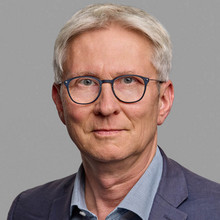
Assoziierte/r, Zentrum für Demokratieforschung
Werdegang
- Direktor, Institut für Nachhaltigkeitssteuerung (INSUGO), Leuphana Universität (11/2019 -)
- W3-Professur an der Leuphana Universität Lüneburg (2014 - )
- Inhaber eines ERC Starting Grants (2011 - 2016)
- W2-Professur an der Leuphana Universität Lüneburg (2010 - 2014)
- Habilitation über „Environmental Governance im Lichte von Partizipation und Effektivität: Fallstudien und Modelle“ an der Universität Osnabrück, venia legendi in Politikwissenschaft und Angewandter Systemwissenschaft (11/2009)
- Verwaltungsprofessur an der Leuphana Universität Lüneburg (10/2008 bis 09/2009)
- Wissenschaftlicher Assistent am Institut für Umweltsystemforschung der Universität Osnabrück, Prof. Dr. Claudia Pahl-Wostl (12/2001 bis 05/2010)
- Promotion (Dr. iur.) mit einer Dissertation über „symbolische Umweltgesetzgebung“ an der Juristischen Fakultät der TU Dresden, Prof. Dr. Martin Schulte, als Stipendiat der VolkswagenStiftung (summa cum laude) (10/1999 bis 05/2002)
- Strategische Management-Beratung Gemini-Consulting, Bad Homburg (1998)
- Studium der Geoökologie an der Universität Bayreuth (Diplom-Geoökologe) (1993 bis 1998)
- Studium Gestion et Génie de l’Environnement an der Université Paris 7 als Stipendiat des DAAD (Abschluss mit Maîtrise und Ingénieur-Maître) (1995 bis 1996)
- Studium Chemie und Geographie an der Universität Tübingen (1991 bis 1993)
- Stipendiat der Studienstiftung des deutschen Volkes (1992 bis 1998)
Downloads zu Publikationen finden Sie unter http://sustainability-governance.net/jens-newig
Besuchen Sie den Blog der Arbeitsgruppe unter http://sustainability-governance.net.
Lehrgebiete
- Umweltwissenschaften
- Sustainability Sciences
- College Studienreflexion
Forschungsgebiete
- Gesellschaftliche Transformationsprozesse in Richtung Nachhaltigkeit
- Umweltpolitik und Governance für Nachhaltige Entwicklung
- Umwelt- und Nachhaltigkeitskommunikation
- Partizipative Governance und deren Effektivität
- Evidenzbasierte Governance
- Lernen und Netzwerke bei der Steuerung komplexer Systeme
- Fallstudienvergleich, Meta-Analyse, Feld-Experimente
- Medienaufmerksamkeit, Aufmerksamkeitszyklen
- Wasserpolitik
- Transdisziplinarität, Wissenschaftskommunkation, Schnittstellen zwischen Natur- und Gesellschaftswissenschaften
Publikationen
Beiträge in Zeitschriften
- Cumulating evidence in environmental governance, policy and planning research: towards a research reform agenda
Jens Newig (Autor*in) , Michael Rose (Autor*in) , 02.09.2020 , in: Journal of Environmental Policy & Planning, 22, 5 , S. 667-681 , 15 S.Publikation: Beiträge in Zeitschriften › Zeitschriftenaufsätze › Forschung › begutachtet
- Pathways to Implementation: Evidence on How Participation in Environmental Governance Impacts on Environmental Outcomes
Jens Newig (Autor*in) , Nicolas Wilhelm Jager (Autor*in) , Edward Challies (Autor*in) , Elisa Kochskämper (Autor*in) , 23.06.2020 , in: Journal of Public Administration Research and Theory, 30, 3 , S. 383-399 , 17 S.Publikation: Beiträge in Zeitschriften › Zeitschriftenaufsätze › Forschung › begutachtet
- Linking modes of research to their scientific and societal outcomes. Evidence from 81 sustainability-oriented research projects
Jens Newig (Autor*in) , Stephanie Verena Jahn (Autor*in) , Daniel J. Lang (Autor*in) , Judith Kahle (Autor*in) , Matthias Bergmann (Autor*in) , 01.11.2019 , in: Environmental Science & Policy, 101 , S. 147-155 , 9 S.Publikation: Beiträge in Zeitschriften › Zeitschriftenaufsätze › Forschung › begutachtet
- Sustainability through institutional failure and decline?: Archetypes of productive pathways
Jens Newig (Autor*in) , Pim Derwort (Autor*in) , Nicolas Wilhelm Jager (Autor*in) , 01.03.2019 , in: Ecology and Society, 24, 1 , 14 S.Publikation: Beiträge in Zeitschriften › Zeitschriftenaufsätze › Forschung › begutachtet
- Learning in participatory environmental governance – its antecedents and effects. Findings from a case survey meta-analysis
Jens Newig (Autor*in) , Edward Challies (Autor*in) , Nicolas Wilhelm Jager (Autor*in) , Elisa Kochskämper (Autor*in) , 01.01.2019 , in: Journal of Environmental Policy & Planning, 21, 3 , S. 213-227 , 15 S.Publikation: Beiträge in Zeitschriften › Zeitschriftenaufsätze › Forschung › begutachtet
- The environmental performance of participatory and collaborative governance: A framework of causal mechanisms
Jens Newig (Autor*in) , Ana Adzersen (Autor*in) , Edward Challies (Autor*in) , Nicolas Wilhelm Jager (Autor*in) , Elisa Kochskämper (Autor*in) , 01.05.2018 , in: Policy Studies Journal, 46, 2 , S. 269-297 , 29 S.Publikation: Beiträge in Zeitschriften › Zeitschriftenaufsätze › Forschung › begutachtet
- Multi-level Governance, Policy Implementation and Participation: The EU’s Mandated Participatory Planning Approach to Implementing Environmental Policy
Jens Newig (Autor*in) , Tomas M. Koontz (Autor*in) , 07.02.2014 , in: Journal of European Public Policy, 21, 2 , S. 248-267 , 20 S.Publikation: Beiträge in Zeitschriften › Zeitschriftenaufsätze › Forschung › begutachtet
- Environmental governance: participatory, multi-level - and effective?
Jens Newig (Autor*in) , Oliver Fritsch (Autor*in) , 01.01.2009 , in: Environmental Policy and Governance, 19, 3 , S. 197-214 , 18 S.Publikation: Beiträge in Zeitschriften › Zeitschriftenaufsätze › Forschung › begutachtet
Auszeichnungen
-
Forschungspreis 2016
Jens Newig (Empfänger/-in) ,Auszeichnung: Leuphana interne Preise, Stipendien, Auszeichnungen, Ernennungen › Forschung
Lehrveranstaltungen
The topics covered in this lecture may include: Governance of the commons; Public and stakeholder participation; Collaborative governance; Evidence-informed governance; Adaptive governance and governance learning; Multi-level and transboundary governance; Private actor and network governance; Risk governance; Policy coherence and policy-mixes; International regimes (e.g., climate, biodiversity); Governance of global value chains; Governing sustainability transitions; Policy and institutional change.