
Earth Overshoot Day: Make do with the resources currently circulating
26. May
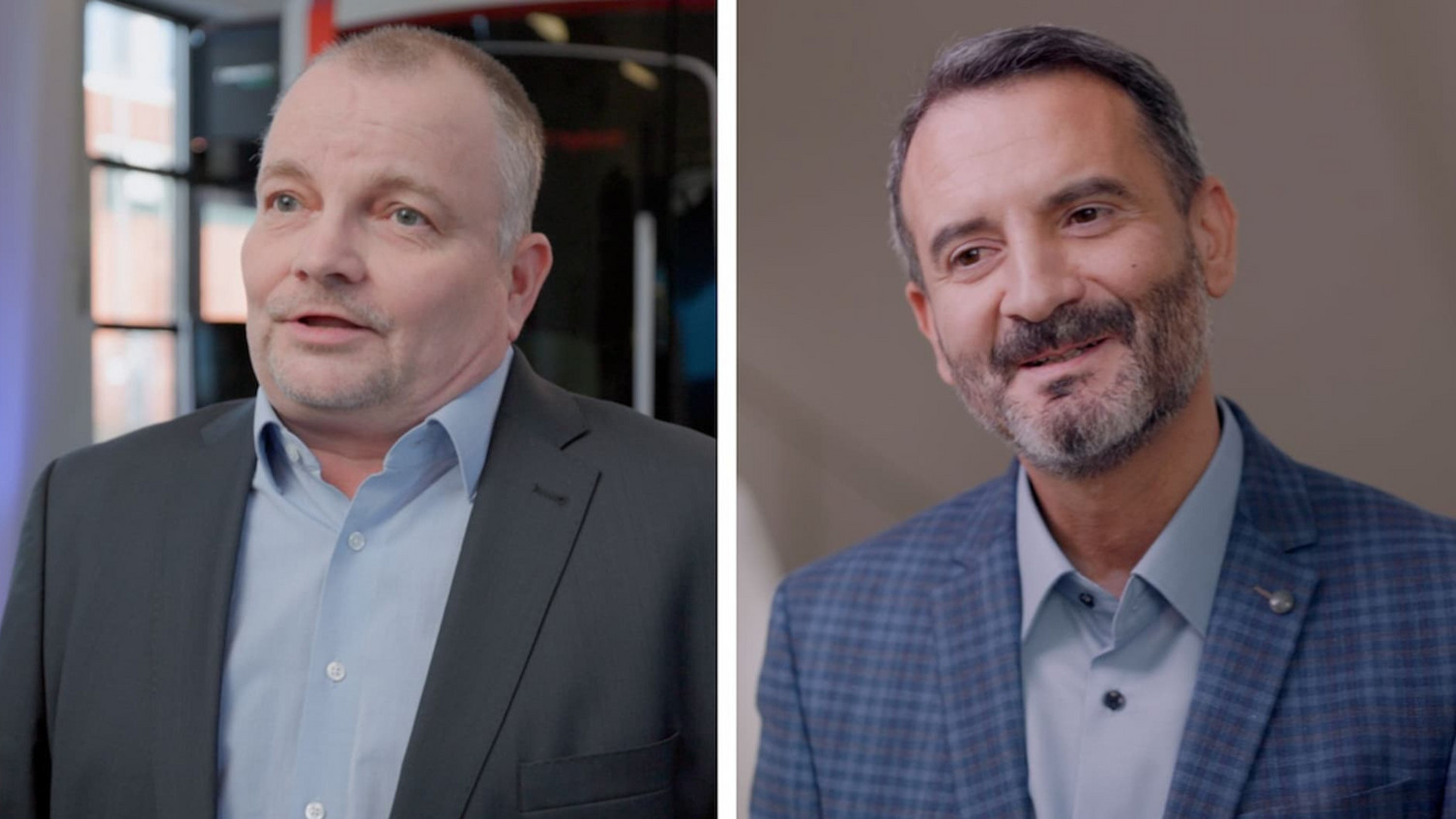
With Earth Overshoot Day, the Global Footprint Network highlights the date by which humanity has consumed more resources than the Earth can regenerate. If all countries acted like Germany, this year’s supply of natural resources would have been exhausted by May 10. In the Leuphana Innovation Community for Sustainable Production, researchers, industrial companies, and trade associations are working to develop and implement methods and technologies to use natural resources more sustainably. In this interview, Noomane Ben Khalifa, professor for Manufacturing Technology at Leuphana, and Hajo Dieringa from Helmholtz-Zentrum Hereon discuss effective opportunities through recycling and the circular economy made in Europe.
Julia Valtwies: According to the Global Footprint Network, in purely mathematical terms Germany has already used up its annual resources for this year. Where do you currently see the greatest opportunities in industrial production to conserve resources and reduce emissions?
Noomane Ben Khalifa: We should start by reviewing the product design. Am I using as much material as necessary, or as much as possible? What materials have I chosen, and can I replace them with more sustainable alternatives? What happens to the product at the end of its life cycle? How can I reuse the materials?
Hajo Dieringa: The greatest potential for conserving resources certainly lies in stepping up recycling efforts. To achieve this, it is necessary, for example, to ensure during the design of new machines that individual components can be disassembled at the end of a machine’s life cycle. Furthermore, a consistent shift toward renewable energy and away from fossil fuels is the only way to meaningfully reduce emissions.
Valtwies: Among other things, you are working on aluminum recycling processes that do not involve remelting the metal. This not only conserves resources but also saves about 98 percent of the energy required for primary production. Why isn’t this potential being fully exploited at this time?
Ben Khalifa: Instead of melting aluminum, we use an extrusion press to create new products directly from aluminum scrap. We are currently investigating unanswered questions, such as: What is the lifespan of these profiles? Do their properties deteriorate over time? However, these products could soon be used in applications where they are not subjected to particularly heavy stress, such as support profiles for photovoltaic modules, window frames, or in certain agricultural applications.
The primary goal should be to make do with the resources currently available. It doesn't matter to us whether we use primary or secondary aluminum. We can apply this to all metallic materials.

Valtwies: Hajo Dieringa, you are researching the potential of magnesium for the manufacturing industry. It is considered a particularly lightweight material and could play an increasingly important role in areas such as automotive manufacturing. What potential do you see in recycling magnesium to reduce resource and energy consumption?
Dieringa: Magnesium was already being used extensively in the automotive industry as early as the 1960s. Its use is currently declining because China has established a virtual monopoly. This is not due to geological factors, but purely economic ones. Magnesium is found everywhere. Establishing a dedicated recycling loop for magnesium in Europe would be crucial to unlocking untapped potential. It could be extracted regionally from existing salt deposits, tailings, or brines. This would require political will and initial funding. Of course, magnesium produced in Germany would be more expensive than that from China.
Valtwies: What added value would this provide?
Dieringa: A higher magnesium content would make cars, buses, trains, and even airplanes lighter. As a result, they would require less fuel, which conserves resources and significantly reduces the vehicles’ carbon footprint.
Valtwies: How can collaboration between academia and manufacturing companies—such as that within the Leuphana Innovation Community Sustainable Production—help drive technological progress toward a more resource-efficient industry?
Ben Khalifa: The scientific community develops and researches methods and technologies to identify ways for companies to use resources efficiently. To do this, however, we need to understand industry requirements and how an application can be implemented and scaled. This is the role of the community, where both worlds come together and learn from one another.