
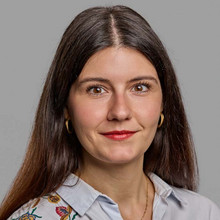
Dr. Bárbara Romero-Ferrón
Fon +49.4131.677-1990 (Sekr.), barbara.romero_ferron@leuphana.de
Projekte
-
Catalogue of Living Saints: Towards the First Model of Counter-Reformation Female Sanctity
Rebeca Sanmartín Bastida (Wissenschaftliche Projektleiter*in) , Bárbara Romero-Ferrón (Projektmitarbeiter*in)
→Projekt: Forschung
-
Study and Interpretation of the Domain of Exhibitions as a Complex Cultural System through Data Analytics and Natural Language Processing
Nuria Rodríguez Ortega (Wissenschaftliche Projektleiter*in) , Bárbara Romero-Ferrón (Projektmitarbeiter*in)
→Projekt: Forschung
-
Modern Migrants: Paintings from Europe in US Museums
Lynn Rother (Wissenschaftliche Projektleiter*in) , Max Koss (Projektmitarbeiter*in) , Bárbara Romero-Ferrón (Projektmitarbeiter*in) , Fabio Mariani (Projektmitarbeiter*in)
→Projekt: Forschung
Publikationen
Beiträge in Zeitschriften
- La red social subyacente a los primeros tomos del Catálogo Monumental de España. Análisis de la correspondencia de Manuel Gómez-Moreno Martínez (1894-1902)
Bárbara Romero-Ferrón (Autor*in) , Nuria Rodríguez Ortega (Autor*in) , Juan Luis Suarez (Autor*in) , 01.01.2021 , in: Universitas Humanística, 90 , 10 S.Publikation: Beiträge in Zeitschriften › Zeitschriftenaufsätze › Forschung › begutachtet
Beiträge in Sammelwerken
- What's in a Name? Measuring the Potential of Provenance Data for Art Market Studies and the History of Collecting
Max Koss (Autor*in) , Bárbara Romero-Ferrón (Autor*in) , Lynn Rother (Autor*in) , 01.01.2026Publikation: Beiträge in Sammelwerken › Kapitel › Forschung
- Curating the Algorithm: An Educational Encounter with AI and Art Exhibitions
Bárbara Romero-Ferrón (Autor*in) , Nuria Rodríguez Ortega (Autor*in) , 01.01.2026Publikation: Beiträge in Sammelwerken › Kapitel › Forschung › begutachtet
- The Politics of Custody and Ownership: Provenance Events as a Modeling Stress Test
Lynn Rother (Autor*in) , Bárbara Romero-Ferrón (Autor*in) , Max Koss (Autor*in) , 01.01.2026 HeidelbergPublikation: Beiträge in Sammelwerken › Kapitel › Forschung › begutachtet
- Baking Critical Understanding: Crafting Impactful Social Science Research in the Anthropocene
Bárbara Romero-Ferrón (Autor*in) , María Paula Espejo (Autor*in) , 01.01.2025Publikation: Beiträge in Sammelwerken › Kapitel › Forschung › begutachtet
- Modelando el presente. Repensar, diseñar y experimentar entornos expositivos digitales
Bárbara Romero-Ferrón (Autor*in) , 01.01.2025 , S. 97-114 , 18 S.Publikation: Beiträge in Sammelwerken › Kapitel › Forschung › begutachtet
Aktivitäten
-
The Epistemologies of Provenance: Textual Practices, Humans, and Artificial Intelligence
Bárbara Romero-Ferrón (Sprecher*in) , Fabio Mariani (Sprecher*in)
Aktivität: Konferenzvorträge › Forschung
-
Ni son todas las que están, ni están todas las que son: Estructuras, márgenes y mujeres artistas en el sistema expositivo andaluz
Bárbara Romero-Ferrón (Sprecher*in) , Nuria Rodríguez Ortega (Sprecher*in)
Aktivität: Konferenzvorträge › Forschung
-
Cartografías entrelazadas: modelar la transnacionalidad en el ecosistema expositivo español (2000-2023) mediante análisis de redes
Bárbara Romero-Ferrón (Sprecher*in) , Nuria Rodríguez Ortega (Sprecher*in)
Aktivität: Konferenzvorträge › Forschung
-
Goya, exposiciones y redes en el siglo XIX: conexiones visibles e invisibles del arte español
Bárbara Romero-Ferrón (Sprecher*in)
Aktivität: Gastvorträge und -vorlesungen › Forschung
-
Más allá del grafo: metodologías colaborativas para la construcción de conocimiento en la web semántica
Bárbara Romero-Ferrón (Sprecher*in)
Aktivität: Gastvorträge und -vorlesungen › Forschung
Lehrveranstaltungen
Students practice core methodological concepts hands-on: identifying bias in AI systems, critically analyzing AI-generated cultural products through specific examples of art, visual culture, and exhibitions, and producing their own outputs through coding.
Students practice core methodological concepts hands-on: identifying bias in AI systems, critically analyzing AI-generated cultural products through specific examples of art, visual culture, and exhibitions, and producing their own outputs through coding.