
Dr. Kai Zhang
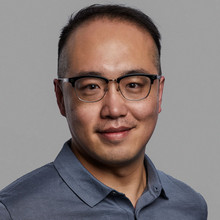
Wiss. Mitarbeiter*in, Professur für Sozial-, Organisations- und Politische Psychologie, insbesondere empirische Verhandlungsforschung
Werdegang
Kai Zhang is a postdoctoral researcher in the Department of Social and Political Psychology (SPP) and a member of the Negotiation Research Group (NRG) at the Institute of Psychology (IfP) at the Leuphana University of Lüneburg. Kai received his doctoral degree in Psychology from the Free University of Berlin.
As the Psychology Program Coordinator, he is responsible for coordinating the teaching contents of the Bachelor & Master study programs in the psychology domain at Leuphana.
Among his research interests, the following list provides a brief overview of the ongoing research on transformation negotiations:
- Social Capital in Transformation Negotiations: Solving Conflicts of Interest at and Beyond the Negotiation Table (PI: Kai Zhang; Co-PI: Roman Trötschel, Hong Zhang, Hillie Aalderling), Funding Applied from the Lower Saxony Ministry for Science and Culture.
- Social capital value in negotiation, particularly the investigation of psychological processes in social-dilemma and transformation negotiations with externalities (e.g., social cost), with the aim of managing the transition towards sustainability.
- The experience and behavior of people in socially relevant negotiation situations, particularly how contextual characteristics (e.g., cultural background, social identity) affect negotiators' preference on economic vs. social capital value.
Kai has also conducted work on the topics of interdependence, social conformity, positivity biases, fear memory, and cultural differences. He is proficient in fMRI (functional Magnetic Resonance Imaging) and TMS (Transcranial Magnetic Stimulation) techniques, which he has used in conjunction with his psychology research. He has presented his work in Asia and Europe, and he is dedicated to realize his research beneficial to society and generalize it to a cross-culture scope.
Publikationen
Beiträge in Zeitschriften
- Thinking Beyond the Bargaining Table: Negotiators’ Perceptions, Behaviours and Outcomes in Negotiations Affecting External Parties
Kai Zhang (Autor*in) , Hong Zhang (Autor*in) , Hillie Aaldering (Autor*in) , Johann M. Majer (Autor*in) , Roman Trötschel (Autor*in) , 01.12.2025 , in: European Journal of Social Psychology, 55, 7 , S. 1152-1170 , 19 S.Publikation: Beiträge in Zeitschriften › Zeitschriftenaufsätze › Forschung › begutachtet
- Present generation’s negotiators realize their interests at the cost of future generations
Marie Treek (Autor*in) , Johann M. Majer (Autor*in) , Hong Zhang (Autor*in) , Kai Zhang (Autor*in) , Roman Trötschel (Autor*in) , 01.11.2023 , in: Journal of Environmental Psychology, 91Publikation: Beiträge in Zeitschriften › Zeitschriftenaufsätze › Forschung › begutachtet
- Give and take frames in shared-resource negotiations
Johann Majer (Autor*in) , Kai Zhang (Autor*in) , Hong Zhang (Autor*in) , Benjamin Höhne (Autor*in) , Roman Trötschel (Autor*in) , 01.06.2022 , in: Journal of Economic Psychology, 90 , 20 S.Publikation: Beiträge in Zeitschriften › Zeitschriftenaufsätze › Forschung › begutachtet
- From Claiming to Creating Value: The Psychology of Negotiations on Common Resource Dilemmas
Roman Trötschel (Autor*in) , Marie Treek (Autor*in) , Caroline Heydenbluth (Autor*in) , Kai Zhang (Autor*in) , Johann Majer (Autor*in) , 01.05.2022 , in: Sustainability, 14, 9 , 26 S.Publikation: Beiträge in Zeitschriften › Zeitschriftenaufsätze › Forschung › begutachtet
- Negotiation complexity: a review and an integrative model
Hong Zhang (Autor*in) , Kai Zhang (Autor*in) , Marco Warsitzka (Autor*in) , Roman Trötschel (Autor*in) , 27.07.2021 , in: International Journal of Conflict Management, 32, 4 , S. 554-573 , 20 S.Publikation: Beiträge in Zeitschriften › Zeitschriftenaufsätze › Forschung › begutachtet
Aktivitäten
-
Managing the present generations’ conflicts on the backs of future generations: How current generation’s negotiators create and claim value for themselves and future others
Marie Treek (Präsentator*in) , Johann Majer (Ko-Autor*in) , Hong Zhang (Ko-Autor*in) , Kai Zhang (Ko-Autor*in) , Roman Trötschel (Ko-Autor*in)
Aktivität: Konferenzvorträge › Forschung
-
Economic Capital and Social Capital in Integrative Negotiations - IACM 2019
Kai Zhang (Sprecher*in) , Hong Zhang (Sprecher*in) , Roman Trötschel (Sprecher*in)
→Aktivität: Konferenzvorträge › Forschung
-
The 18th Annual Meeting of the Organization for Human Brain Mapping - OHBM 2012
Kai Zhang (Sprecher*in) , Sabine Aust (Sprecher*in) , Simone Grimm (Sprecher*in) , Malek Bajbouj (Sprecher*in)
→Aktivität: Konferenzvorträge › Forschung
-
The Second International Symposium on Biology of Decision Making
Christoph Korn (Sprecher*in) , Yan Fan (Sprecher*in) , Kai Zhang (Sprecher*in) , Chenbo Wang (Sprecher*in) , Shihui Han (Sprecher*in) , Hauke Heekeren (Sprecher*in)
→Aktivität: Konferenzvorträge › Forschung
Auszeichnungen
-
Postdoc scholarship/Habilitation scholarship in Leuphana Universität Lüneburg
Kai Zhang (Empfänger/-in) ,Auszeichnung: Leuphana interne Preise, Stipendien, Auszeichnungen, Ernennungen › Forschung
-
DAAD STIBET-Programm
Kai Zhang (Empfänger/-in) ,Auszeichnung: Externe Preise, Stipendien, Auszeichnungen, Ernennungen › Forschung