

How are the effects of environmental pollution gendered? And how can structural injustices be more effectively addressed in pollution policy and research? Dr. Angeliki Balayannis, Wageningen University & Research, and Prof. Dr. Dr. Vânia Zuin Zeidler, Leuphana University Lüneburg, focus their research on the gender-specific impacts of chemical pollution and health gaps.
![[Translate to Englisch:] Prof. Dr. Dr. Vânia Zuin Zeidler und Dr. Angeliki Balayannis](/fileadmin/_processed_/0/f/csm_AB-VZZ_1_9987d9393e.jpg)
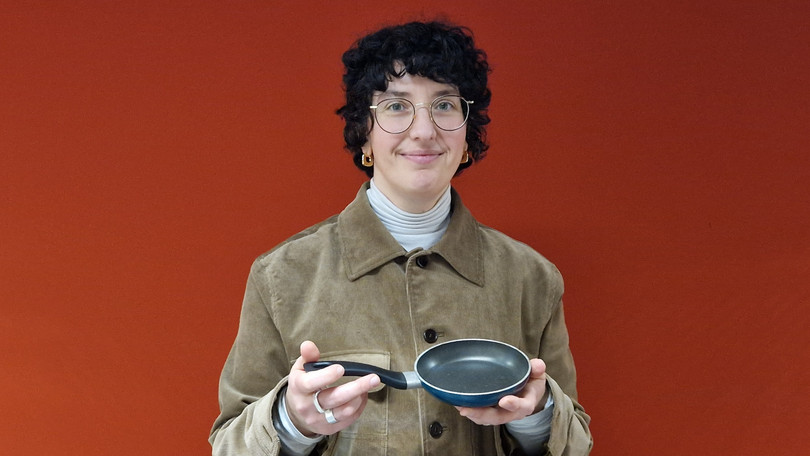
At first glance, it seems entirely out of place in a research context: the small frying pan that Angeliki Balayannis pulls from their bag on the Leuphana campus. Then the social scientist from the Netherlands adds emphatically, “I don’t cook with it—absolutely not,” thus setting the stage for clarification. The pan is coated with PFAS. These per- and polyfluoroalkyl substances are suspected of increasing cancer risk, weakening the immune system, and impairing hormonal balance and fertility. PFAS belong to what are known as “forever chemicals.” They remain unchanged for decades—in soil, groundwater, air, and in our blood, where they accumulate.
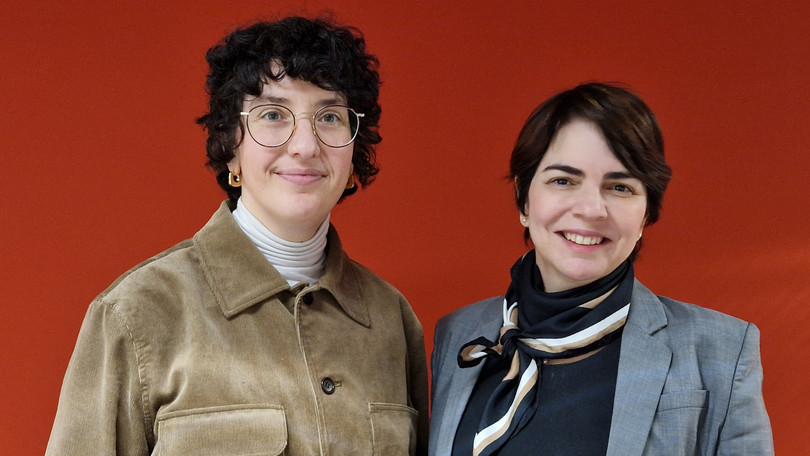
The unevenness of labour in the home, and unevenness of exposure, requires intersectional gender research—and thus to the focus of Leuphana’s Visiting Scholars Program. Through this initiative, the University’s Equal Opportunities Office enables researchers from other institutions to collaborate with scholars in Lüneburg. As a social scientist, Angeliki Balayannis from Wageningen University & Research in the Netherlands examines the impacts of chemicals such as PFAS together with Prof. Dr. Dr. Vânia Zuin Zeidler. “We are investigating the gender-specific dimensions of chemical pollution and health gaps,” says the Professor of Sustainable Chemistry of Renewable Organic Resources.
The two researchers have known each other for some time. “We worked together on an article on gender and chemicals that was published in The Lancet Planetary Health several years ago,” says Angeliki Balayannis, adding: “The Visiting Scholars Program offered us an opportunity to expand our collaboration through teaching, the supervision of theses, and the development of new articles and projects. Vânia therefore invited me to Leuphana.” Vânia Zuin Zeidler emphasizes: “Conducting research together in person has a very different quality than exchanging ideas exclusively online.” At Leuphana, Angeliki Balayannis explains, they can advance their own research while simultaneously contributing expertise to both research and teaching. What do they particularly value here? “The highly interdisciplinary atmosphere in research and teaching.”
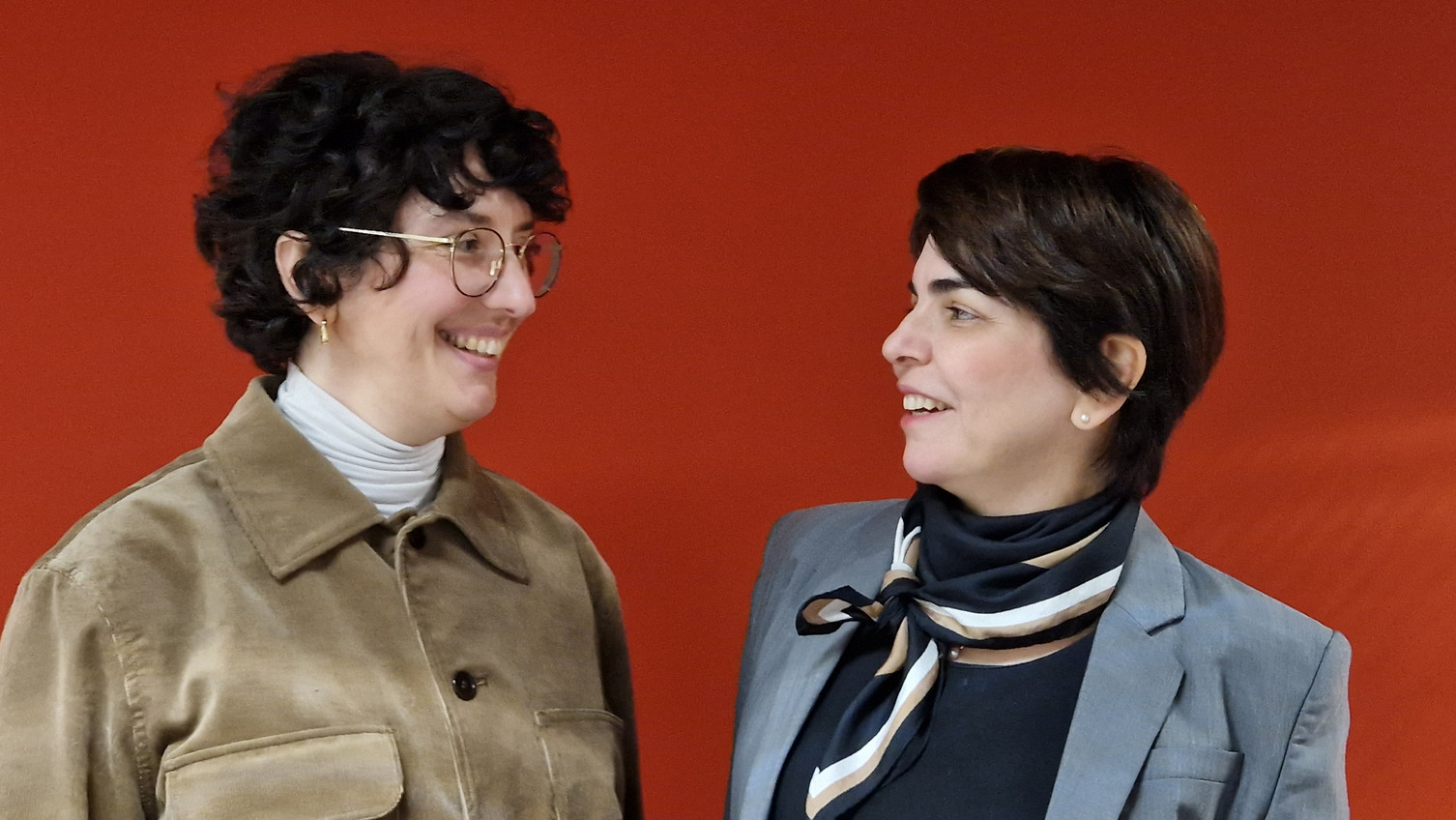
Their expertise is as extensive as it is unusual. Angeliki Balayannis initially studied theater studies and worked in theater for several years. “As a young person, I was a very passionate environmentalist, and after several years in theater studies, I felt the desire to reengage with environmental issues,” they explain. Angeliki subsequently earned a degree in human geography and completed their doctorate in the field. “My work focused on the impacts of environmental pollution on communities, as well as on the regulation and management of pollution—particularly chemical pollution.” This is where the research interests of the two scholars intersect. At the same time, they approach the topic from different disciplinary perspectives: Angeliki Balayannis primarily from the social sciences, Vânia Zuin Zeidler from the natural sciences, and also education. For both, integrating social and natural science perspectives on sustainable chemistry represents a significant enrichment of their research.
“We are aiming at developing a new understanding of how sustainable chemistry can address toxicity. And we want to explore what we can learn from chemistry itself—for example, from non-stick coatings made with PFAS,” says Vânia Zuin Zeidler. On the one hand, this involves materials-science-based solutions. On the other, it is also about decision-making: “Women in particular have to decide how we cook and which materials we use for cookware. But to make informed decisions, we also need access to the right information,” she emphasizes. Through joint studies and publications, the two researchers aim not only to stimulate public debate but also to engage the United Nations Environment Programme (UNEP) to promote open-access scientific, technical and policy resources to support evidence-based publications and legislation that protects both human health and the environment as a whole.
In seeking to facilitate research that meaningfully involves communities affected by pollution, Angeliki Balayannis draws on their background in theater studies, explaining that “At the moment, I am collaborating with an artist at my home university in Wageningen who is exploring the role of art in understanding environmental pollution”.
Further Information
About Angeliki Balayannis: https://www.wur.nl/en/persons/aa-angeliki-balayannis
About Vânia Zuin Zeidler https://www.leuphana.de/en/institutes/insc/persons/vania-zeidler.html
About Diversity at the faculty https://www.leuphana.de/en/institutions/faculty/sustainability/diversity.html