Inspiration for teaching practice
The results of the 11 subprojects of the DigiTaL project show how digital teaching and learning innovations were developed, tested, and sustainably established at Leuphana. On this page, you will find an overview of all subprojects as well as their most important results, developments, and findings.
An overview of all project results of the DigiTaL project can also be found under Events, Results, and Collaborations.
A project led by Prof. Dr. P. Kuhl (Faculty of Education)
and Prof. Dr. D. Loschelder (Faculty of Management and Technology)
Project team: Friederike Knabbe; Yannik Escher, MSc.
Subproject 1 addressed the increasing use of virtual reality in the university context and pursued the sustainable implementation and further development of the technology for the entire university. VR enables Leuphana students to immerse themselves in controlled, computer-programmed, interactive environments in a protected setting. Here, they can expand their declarative knowledge of procedural knowledge elements in a realistic manner and acquire theory-based practical skills. In addition, the technology offers significant potential for intensive reflection with fellow students, lecturers, and experts.
As an interdisciplinary project, two thematic approaches were pursued with regard to the application of VR. This enables students to be trained in their applied skills and abilities as teachers and counselors in a school context and in their negotiation skills as applicants in assessment centers.
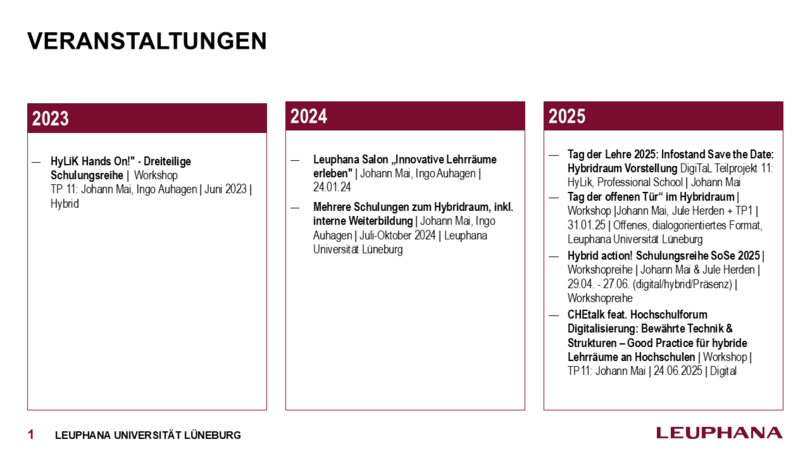
![[Translate to Englisch:] Veranstaltungen und Publikationen](/fileadmin/_processed_/5/8/csm_Grafik_TP1-Ergebnisse1_1ae2b32c80.png)
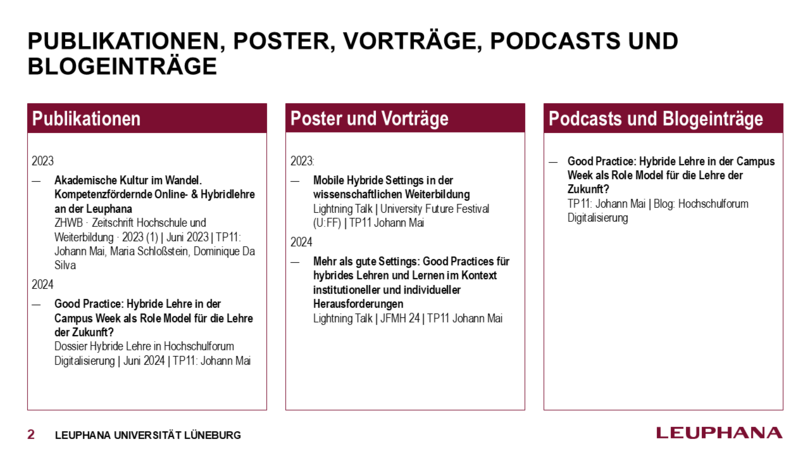
![[Translate to Englisch:] Poster und Vorträge](/fileadmin/_processed_/d/2/csm_Grafik_TP1-Ergebnisse2_b7c2f6168d.png)
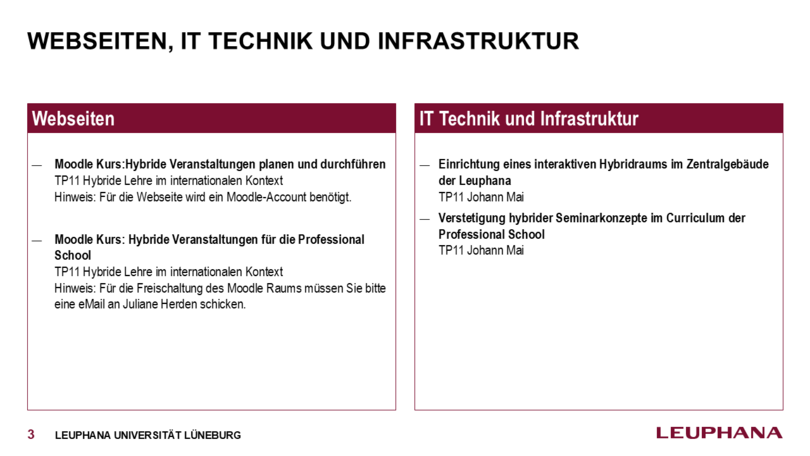
![[Translate to Englisch:] Verstetigungen, Kooperartionen, Blogs](/fileadmin/_processed_/8/8/csm_Grafik_TP1-Ergebnisse3_485dcaa652.png)
A project led by Prof. Dr. M. Kleinknecht (Faculty of Education)
Project team: Lucas Jasper Jacobsen, Neele Tiedemann
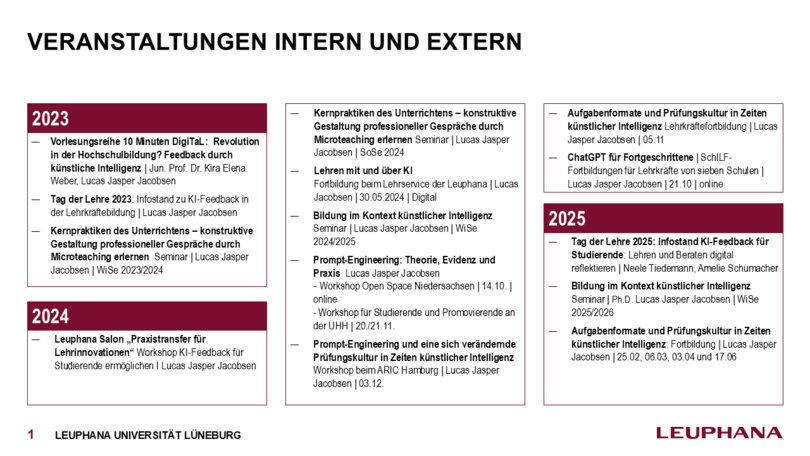
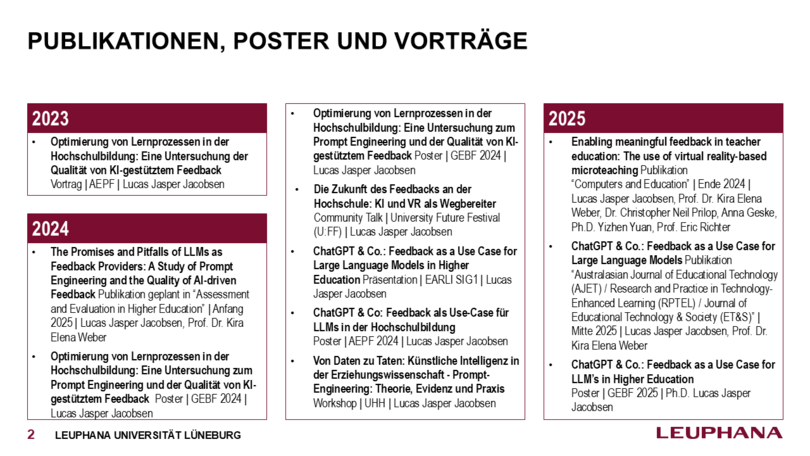
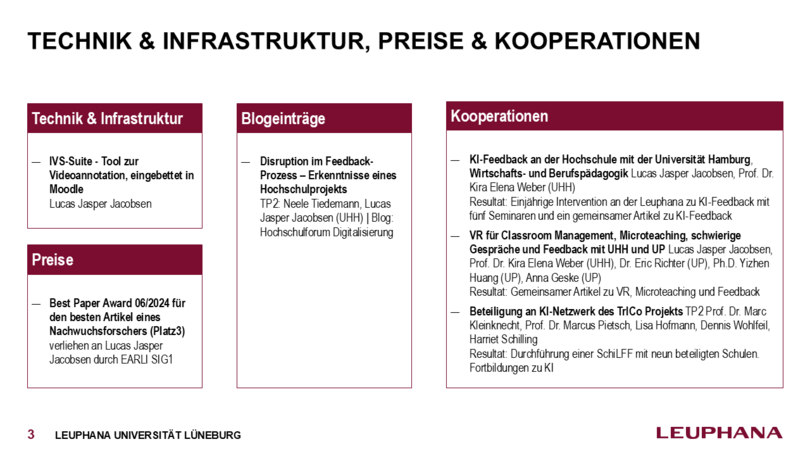
Subproject 2, “Digital Reflection on Teaching and Advising,” was part of the university-wide innovation project “Digital Transformation Lab for Teaching and Learning” (DigiTaL) at Leuphana University Lüneburg. The goal was to develop digital reflection formats that students could use to practice, record, analyze, and improve their professional communication skills. The focus was on video-based simulations, digital feedback systems, and AI-supported feedback mechanisms. The formats developed were used in several modules of teacher training and related degree programs, scientifically evaluated, and integrated into central university teaching infrastructures. TP2 thus made a research-based contribution to the digital transformation of reflection-oriented university teaching.
A project led by Prof. Dr. A. Karber (Faculty of Education)
Project team: Moritz Paesche, Dr. Barbara Hanusa (TZI expert)
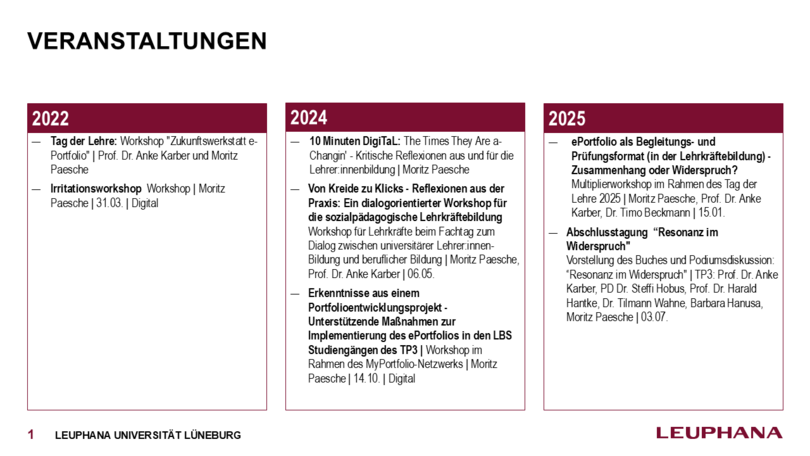
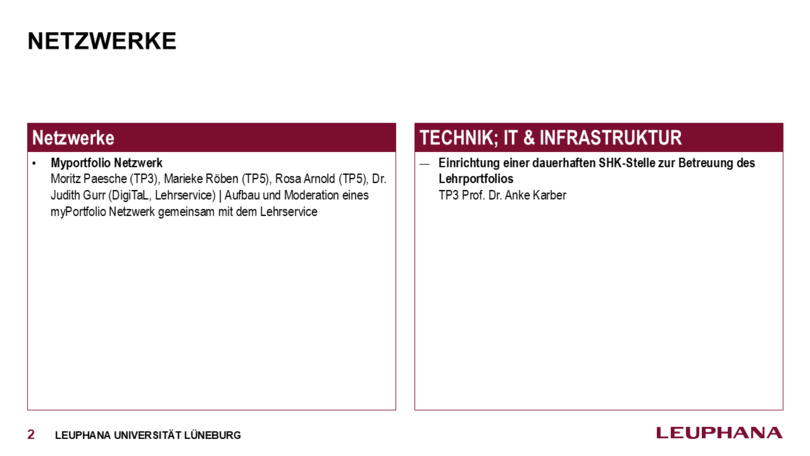
Subproject 3 pursued the goal of strengthening digital teaching and learning processes in the practical phases of teacher training in the vocational field of social pedagogy through the didactically sound further development of the e-portfolio. The starting point was the observation that students should be supported in their individual professionalization during the practical phase by a variety of reflection and documentation requirements, which could not be adequately met with existing (digital) teaching and learning formats. The TP responded to this need by developing a modular e-portfolio concept on the one hand and integrating dialogical peer counseling formats into teaching on the other. The implementation was carried out in close coordination with teachers, students, and those responsible for the modules and degree programs. The TP was accompanied iteratively and developed further in a participatory manner through several evaluation and workshop formats. As a result, seminar-accompanying and dialogical e-portfolio work was sustainably anchored in the BA and M.Ed. degree programs of the teacher training program in the field of social pedagogy. In addition, a comprehensive set of building blocks for e-portfolio templates, a portfolio guideline for teachers, and sustainably anchored portfolio work in the practical phase of the program were developed.
A project led by Prof. Dr. H. von Wehrden (Faculty of Sustainability)
Project team: Neha Chauhan, Max Kretschmer, Christoph Schwenk, Dr. Anna-Lena Rau (on parental leave)
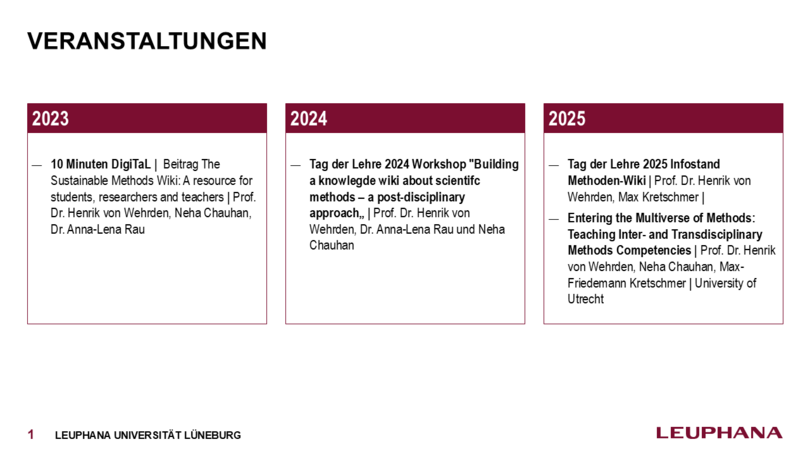
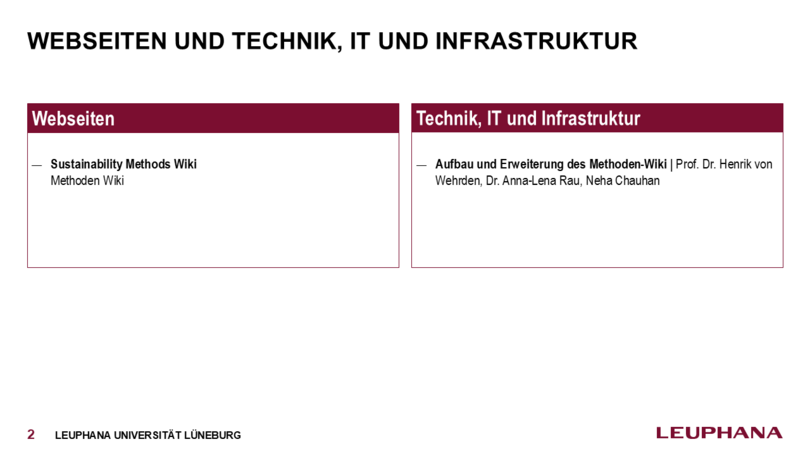
Subproject 4, the methods wiki, was part of the “Digital Transformation Lab for Teaching and Learning” (DigiTaL) project at Leuphana University Lüneburg and aimed to strengthen methodology teaching in the long term by establishing an open, digital, and collaboratively maintained knowledge platform. The goal was to develop a modular wiki that covered methodological basics as well as advanced applications and reflective discussions. Core components of the project were the continuous expansion of the wiki's content, the integration of a peer review process, the didactic embedding in various courses, and the systematic evaluation of its use. The results demonstrated a high level of acceptance among students and teachers, as well as a steadily growing reach beyond the boundaries of the university. The Methods Wiki thus made a lasting contribution to the digital transformation of university teaching.
A project led by Prof. Dr. M. Wenzel (Faculty of Management and Technology) and Dr. J. Webersik (Teaching Services)
Project team: Rosa Arnold, Marieke Röben, Linus Krüger
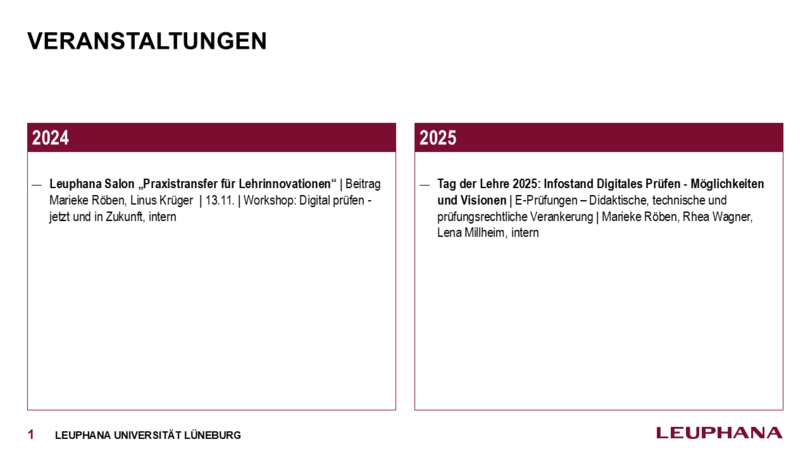
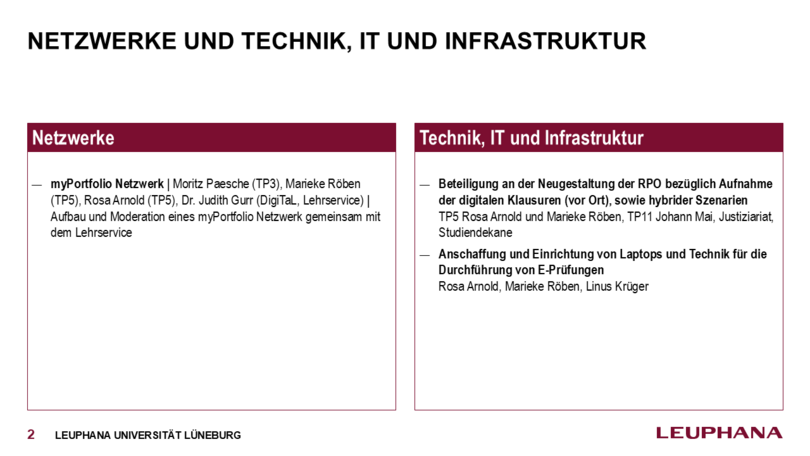
Subproject 5 of the “Digital Transformation Lab for Teaching and Learning” (DigiTaL) project at Leuphana University Lüneburg pursued the goal of sustainably integrating digital exam formats into the university's structures. Building on the experiences gained during the coronavirus pandemic, technical, legal, and didactic framework conditions for e-exams were developed and implemented. Key milestones included the procurement of a mobile e-exam center, the integration of e-exams into the framework examination regulations (RPO), the implementation of several pilot projects, the transfer of e-exams into Leuphana's regular examination system, and the development and consolidation of support structures and information services for teachers. Close cooperation with university committees, teaching and student services, and teaching staff ensured that the project results were widely accepted. Challenges such as staff shortages in the support area, technical maintenance, and the growing demand for digital exam formats were identified and translated into solution strategies. Looking ahead, the focus is on scaling the offerings, testing Bring Your Own Device (BYOD) formats, and adapting to new challenges such as dealing with AI in exam settings.
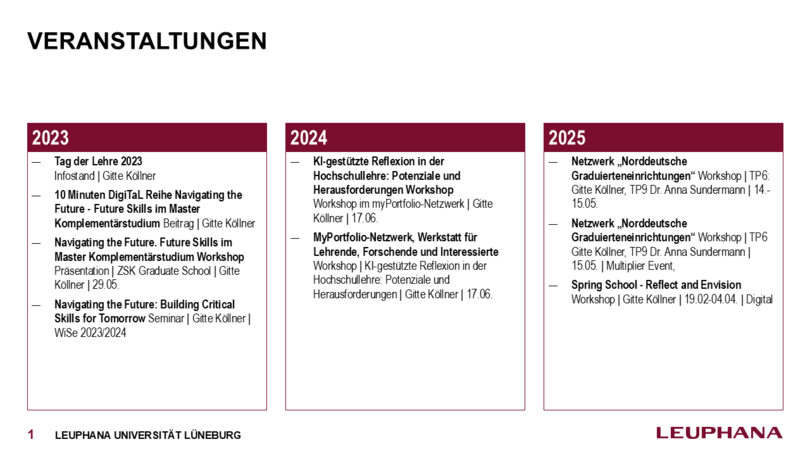
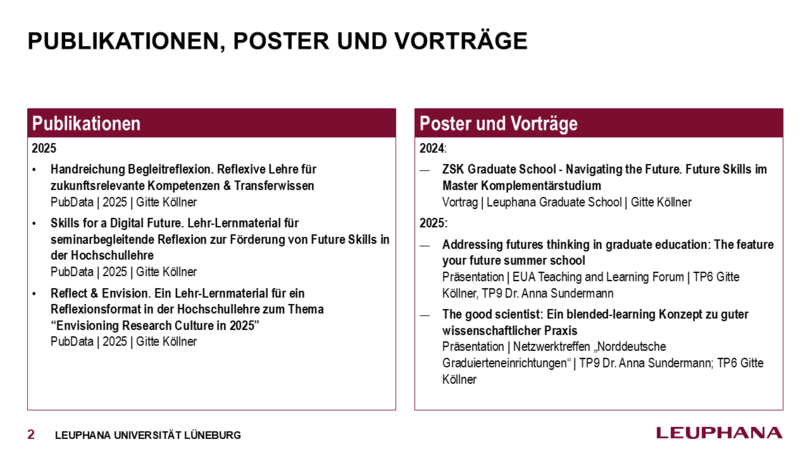
A project led by Prof. Dr. S. Abels (Faculty of Sustainability), Dr. Nadine Dablé (Graduate School)
Project team: Gitte Köllner
For finding adequate solutions in a rapidly changing, uncertain world, specialized knowledge alone is no longer sufficient. In order to prepare university graduates for new professional fields and complex challenges, they need to acquire a wide range of skills, such as problem solving, creativity and networked thinking. This is where the sub-project "Skills for a digital Future" comes in. With the aim of strengthening students in their individual learning process as well as their personal development, a digital reflection tool is being developed to accompany their studies. Workshops, individual courses, and reflection meetings give students the opportunity to critically examine their own learning experiences and personal developments. The targeted stimulation of self-reflection enables students to consciously perceive their own competence development and to derive appropriate options for action with regard to their further professional and personal careers.
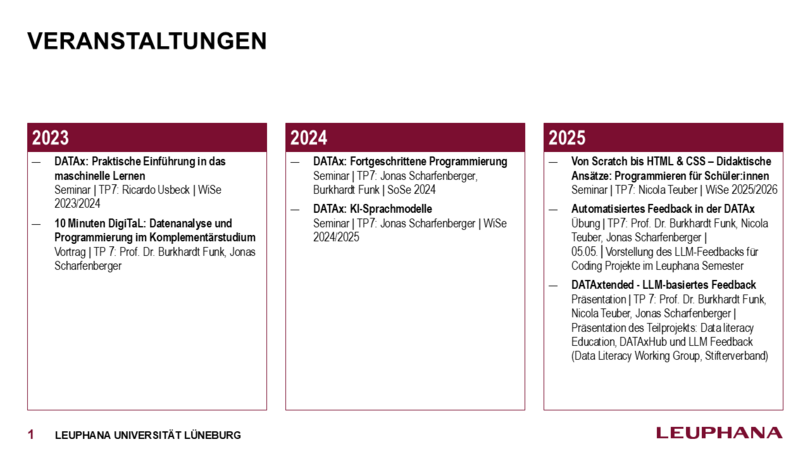
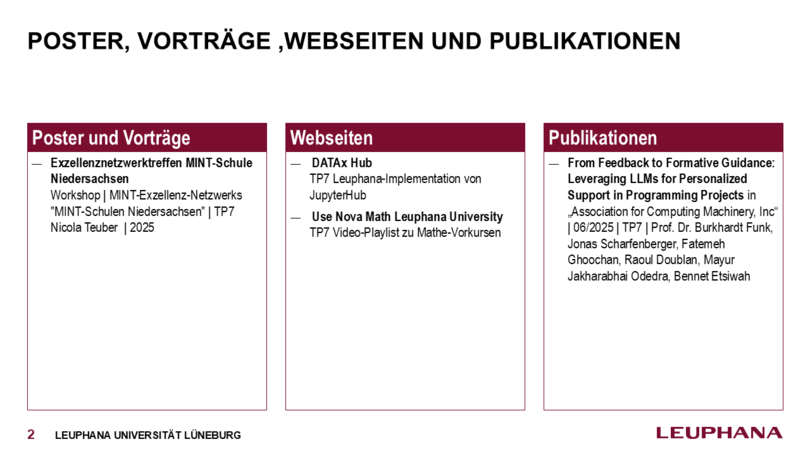
SP7: DATAxtended – Implementation of a concept for expanding data literacy skills in complementary bachelor's degree programs
A project led by Prof. Dr. B. Funk (Faculty of Management and Technology) and Prof. Dr. Ch. Wegener (Methodology Center)
Project team: Jonas Scharfenberger, M.Sc., Nicola Teuber, Thorben Ehlers
Subproject 7, “DATAxtended,” aimed to systematically promote and develop data literacy skills among students at Leuphana University Lüneburg. Building on a mandatory introductory course in programming and data analysis introduced at Leuphana, a more advanced concept for the bachelor's complementary program was developed and piloted in several sub-areas. Core measures included the development of new courses, the provision of digital learning resources, a web-based programming environment (“DATAxHub”), and the use of automated feedback for student programming projects. The measures were continuously evaluated and adapted. The TP made a substantial contribution to the digital transformation of teaching at Leuphana University, in particular by sustainably anchoring data-related skills across the breadth of degree programs.
SP8: DI-SZENARIO – Responsible introduction of digital innovations in organizations: A scenario-based approach
A project led by Prof. Dr. Paul Drews and Prof. Dr. Hannah Trittin-Ulbrich (Faculty of Management and Technology)
Project team: Britta Werksnis, Dr. Johannes Katsarov
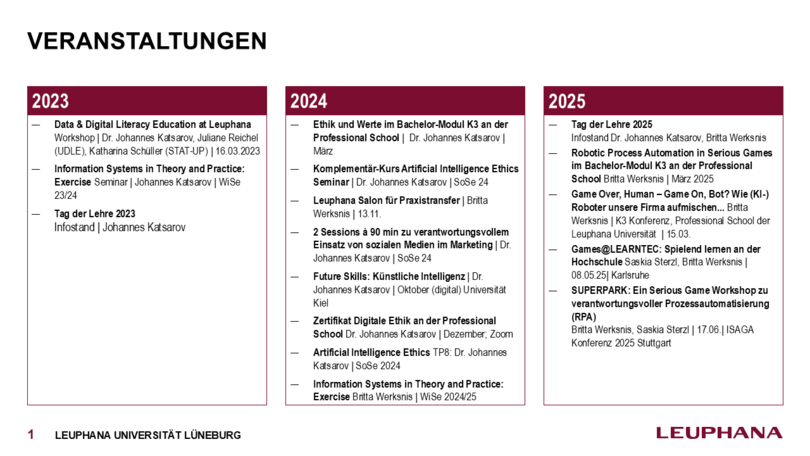
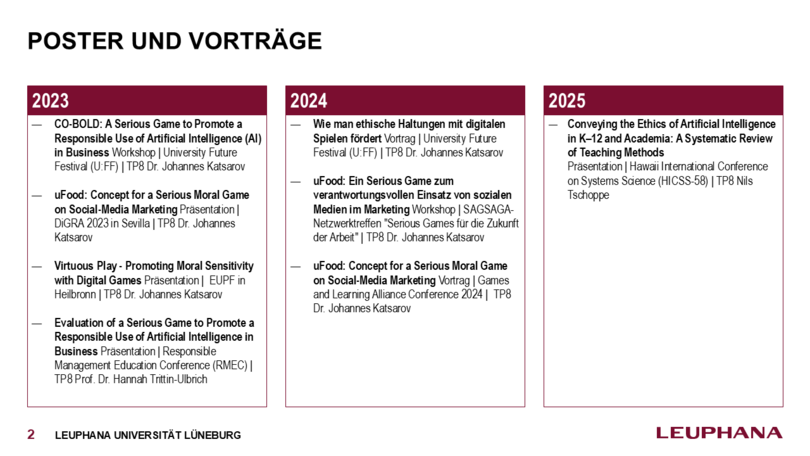
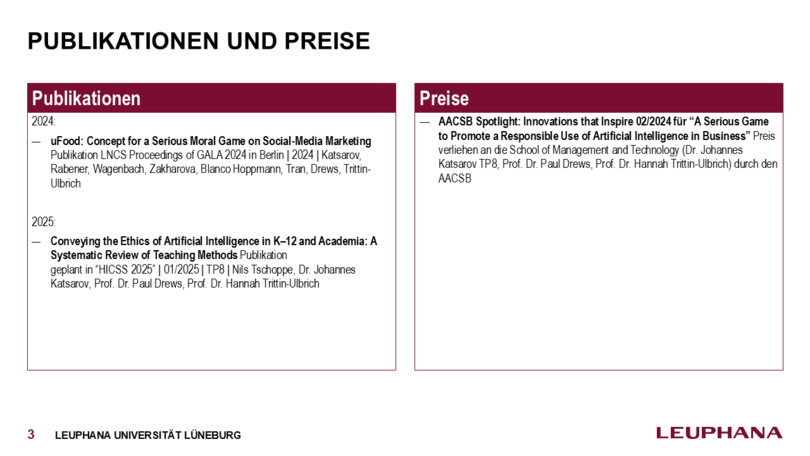
Subproject 8, “DI-SZENARIO,” part of the Digital Transformation Lab for Teaching and Learning (DigiTaL), focused on developing scenario-based digital learning formats to promote the responsible use of digital technologies in organizations. The starting point was the observation that ethical reflection and digital literacy had only been addressed sporadically in university teaching, even though future decision-makers in particular urgently needed to be made aware of the social and normative implications of digital innovations. The TP therefore focused on the development, testing, and evaluation of three comprehensive learning kits that used digital games to address ethical questions about artificial intelligence, social media, and process automation. The formats developed were piloted in various study programs and examined for their effectiveness through qualitative and quantitative studies. Initial results showed significant learning progress in terms of ethical sensitivity, reflective ability, and decision-making skills. The TP thus contributed to the sustainable integration of digital ethics issues into university teaching and at the same time initiated transfer impulses for other universities.
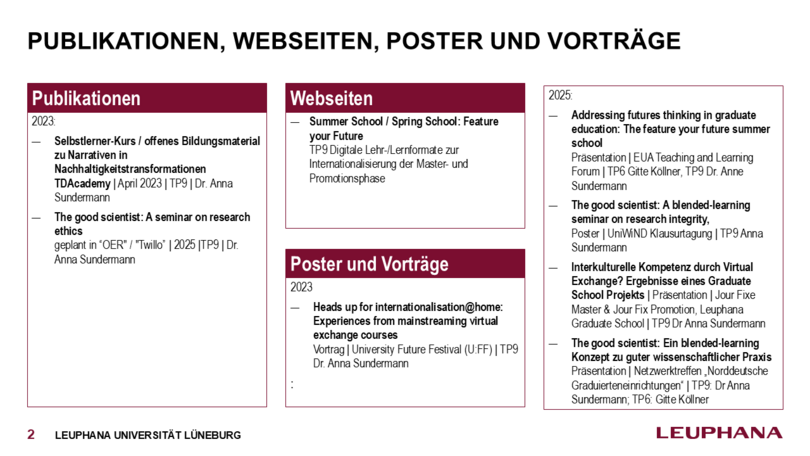
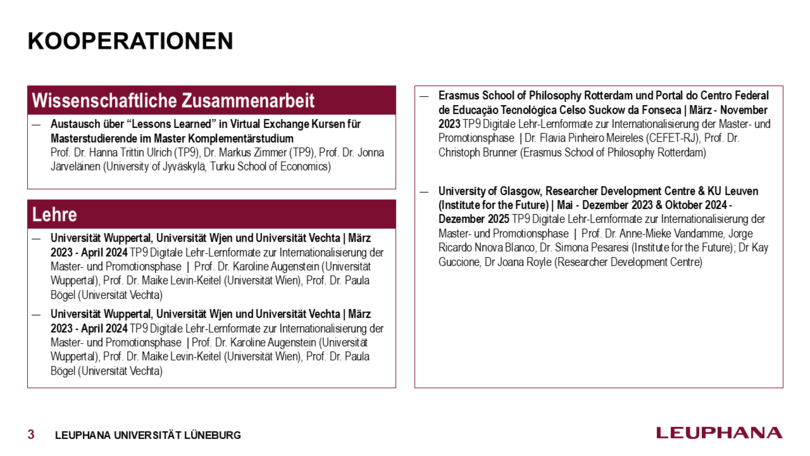
SP9: Digital teaching and learning formats for the internationalization of master's and doctoral programs
A project led by Prof. Dr. S. Abels (Faculty of Sustainability), Dr. A. Soltau (Graduate School)
Project team: Dr. Anna Sundermann
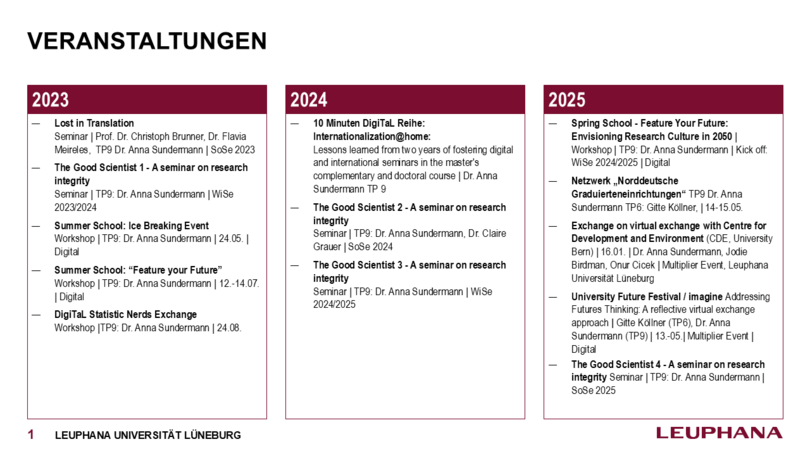
Subproject 9 aimed to systematically develop, test, and establish digitally supported teaching concepts to promote internationalization in the master's and doctoral phases at the Graduate School of Leuphana University Lüneburg. The focus was particularly on digitally supported seminars (virtual exchange (VE) vs. blended learning (BL)) and international summer schools that enabled international experiences at home. At the strategic level, the subproject pursued the integration of intercultural perspectives into teaching, while at the same time aiming to attract new target groups for international learning experiences and develop new international partnerships. Furthermore, the subproject aimed to promote the acquisition of intercultural skills that would enable students and doctoral candidates to collaborate appropriately and effectively with people from other cultural contexts.
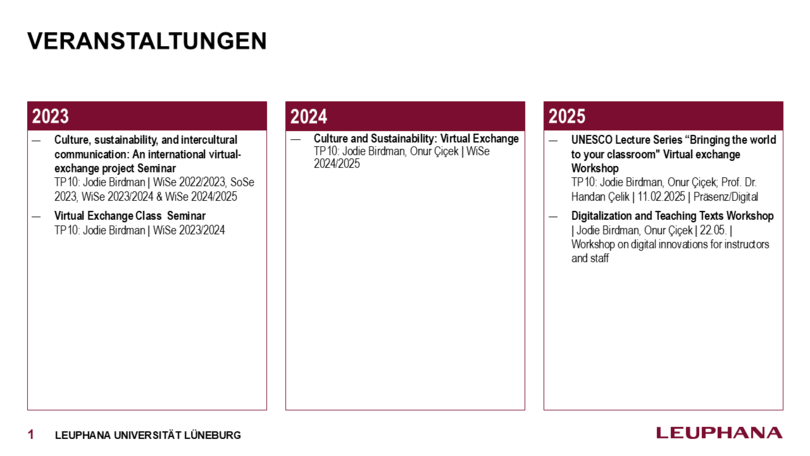
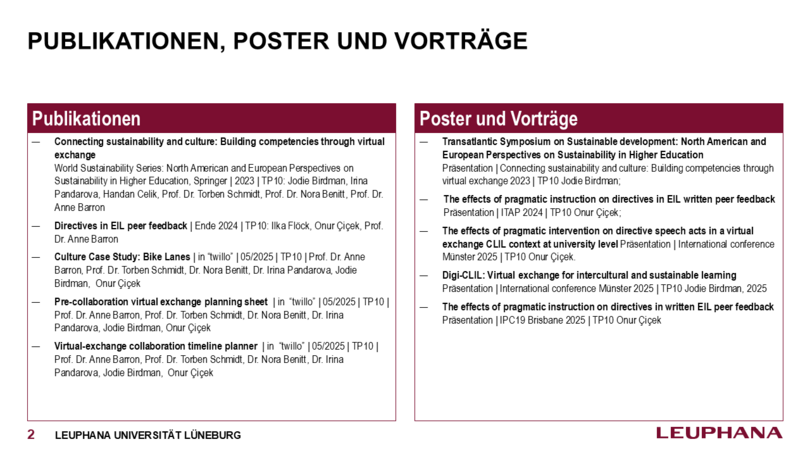
SP10: DigiCLIL Exchange: Teaching foreign language, intercultural, and subject-specific skills in an integrated way
A project led by Prof. Dr. A. Barron and Prof. Dr. T. Schmidt (Faculty of Education)
Project team: Jodie Birdman, Onur Çiçek
Subproject 10, “DigiCLIL Exchange,” pursued the goal of promoting foreign language, intercultural, and subject-specific skills in an integrated manner in digitally networked learning environments. The focus was on developing and implementing a project-based teaching format that enabled students to gain intercultural learning experiences through virtual exchange formats without having to physically travel abroad. The course focused on the United Nations Sustainable Development Goals and combined English-language group work with reflective communication practice. Through collaborations with partner universities on four continents, accompanied by a research project on the impact of peer feedback and pragmatic language teaching, relevant didactic, organizational, and technological insights were generated. The materials, concepts, and evaluation results produced in the TP were incorporated into the permanent curriculum and formed the basis for the university-wide further development of virtual exchange formats.
A project led by Prof. Dr. J.-Ph. Terhechte (Faculty of Management and Technology), M. Schloßstein (Professional School)
Project team: Johann Mai, Juliane Herden
Subproject 11 (SP) “HyLiK – Hybrid Teaching in an International Context” pursued the goal of developing, piloting, and institutionally anchoring viable didactic-technical concepts for hybrid university teaching. The target group was part-time students at Leuphana's Professional School and international students whose personal, geographical, or professional circumstances made it difficult for them to be physically present on campus on a continuous basis. Hybrid formats were intended to enable them to participate in courses on an equal footing. Beyond this specific context, hybrid formats were developed for undergraduate teaching as well as for hybrid meetings or events in order to cover a broad spectrum of hybrid applications.