
3rd Leuphana Industry Colloquium
2026-11-24 On November 11, at the Leuphana Industry Colloquium 2026 hosted by the Sustainable Production Innovation Community, Schüco, Siemens, and Ingenics demonstrated how sustainable production makes companies more resilient: through the use of recycled aluminum, shared machine data, and an energy simulation that reduces peak loads by nearly a quarter.
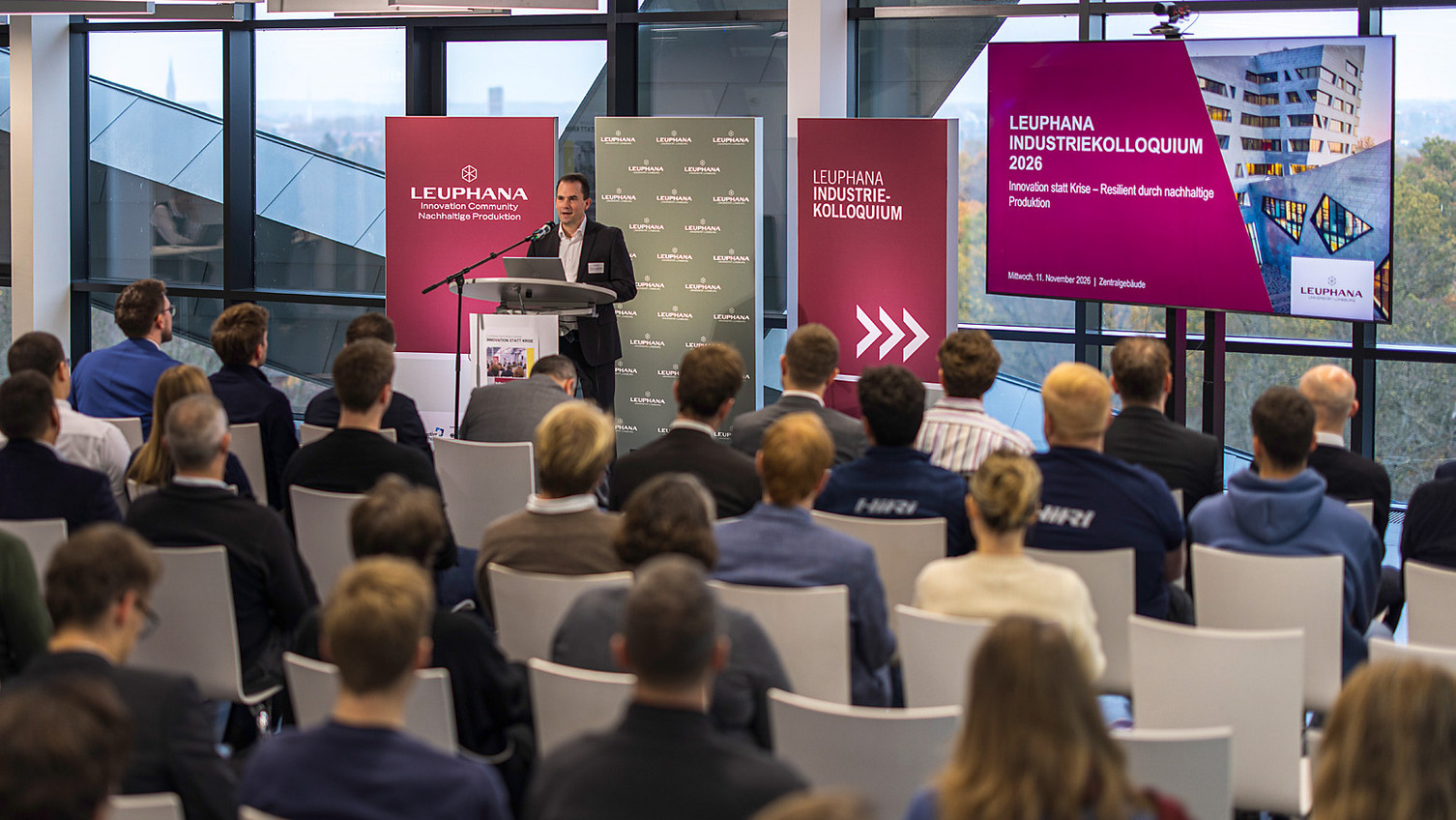
High energy prices, new tariffs, disrupted shipping routes: How production can become both resilient and sustainable under these conditions was the central question of the colloquium “Innovation Instead of Crisis—Resilience Through Sustainable Production.” Following opening remarks by Prof. Dr. Paul Drews, Dean of the Faculty of Management and Technology, Prof. Dr. Florian Stamer led the afternoon’s proceedings.
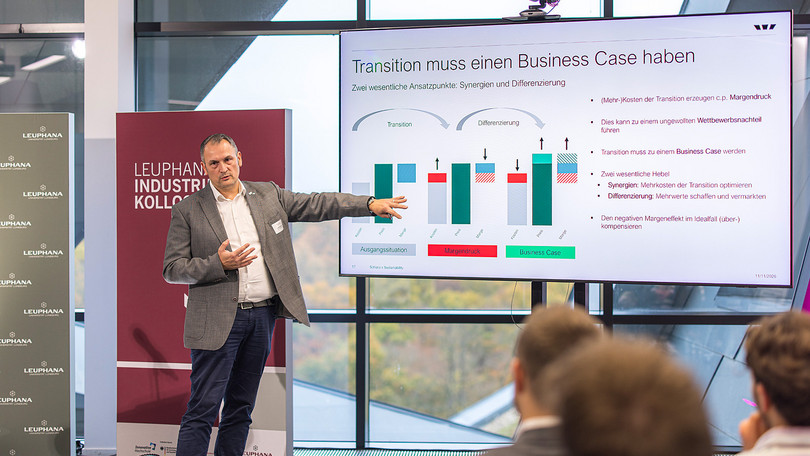
Lars Knöner, who shares responsibility for the Net-Zero-2040 goal at Schüco International, highlighted where the greatest leverage lies: Only about one percent of emissions are generated within the company itself, while 87 percent are attributable to purchased materials such as aluminum and plastics. However, low-carbon aluminum costs more. Sustainability therefore requires a business case that safeguards profit margins.
Knöner sees this in the circular economy, which he considers a “super lever”: “Circularity combines cost synergies with added value that sets us apart from the competition.” Using aluminum from the building next door instead of from a bauxite mine shortens supply chains and protects against energy price shocks. To achieve this, Schüco relies on take-back programs and a digital twin that serves as a “service record” for every window.
Data Reveals Hidden Value
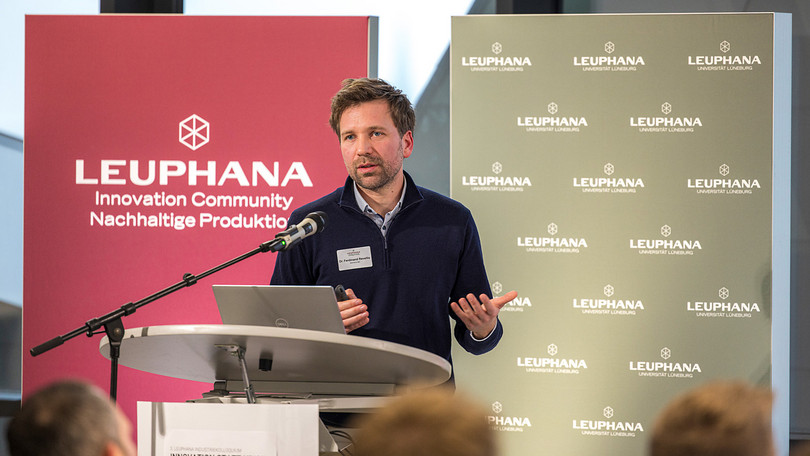
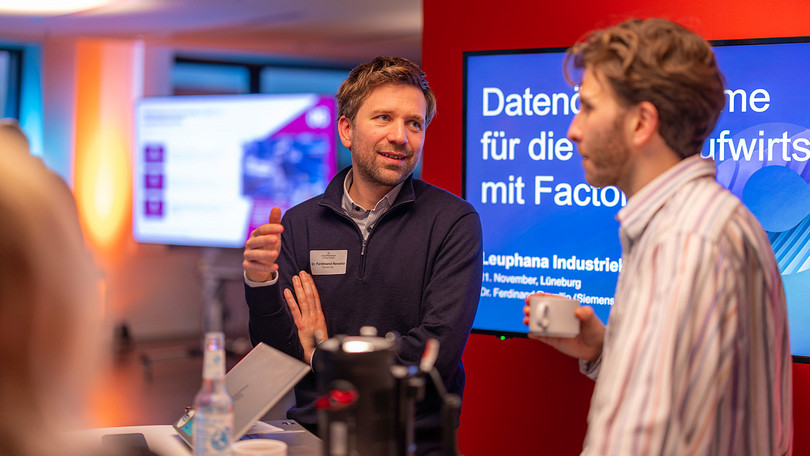
Dr. Ferdinand Revellio, Co-Lead for Circularity at Siemens Technology and a Leuphana alumnus, presented the Factory-X project: Mechanical engineers, component manufacturers, and factory operators share aggregated condition data through the management platform. This makes it possible to assess whether a motor should continue running or be remanufactured. “Many components still have real value; we just need to make it visible.”
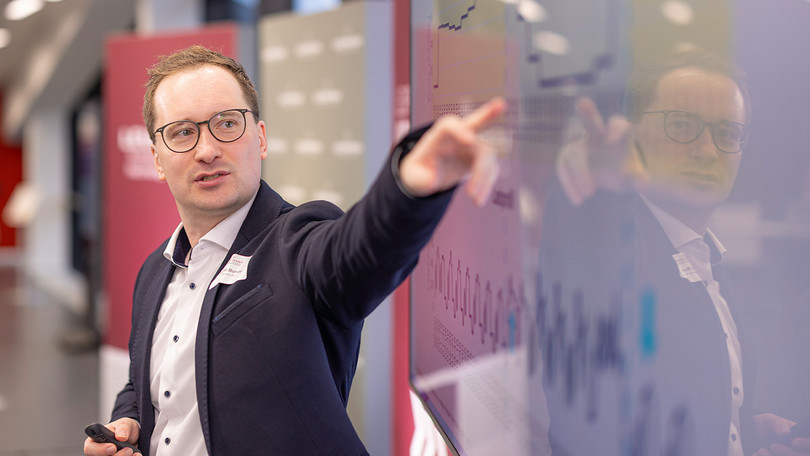
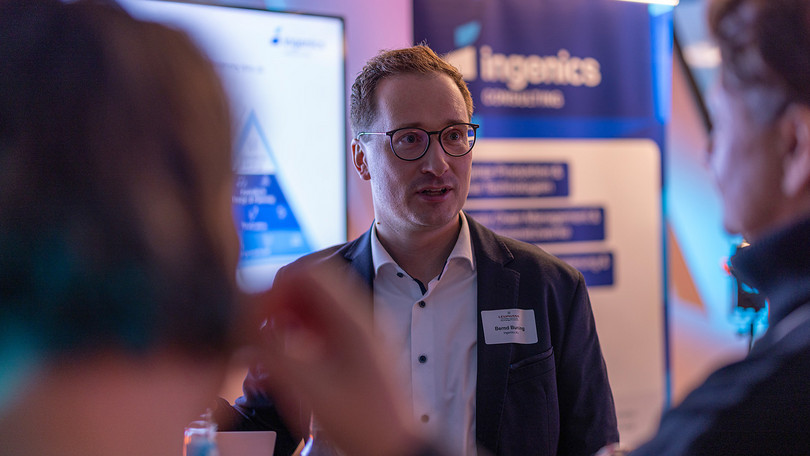
Bernd Buning, Head of the Simulation Team at Ingenics, demonstrated how energy simulation reduces costs without curbing production: In a sample production scenario, the peak load dropped by about 23 percent while maintaining the same output. Shifting processes to hours when electricity is cheaper on the grid saves about 11 percent in electricity costs; a storage unit costing 10,000 euros was cost-neutral in the model after one year.
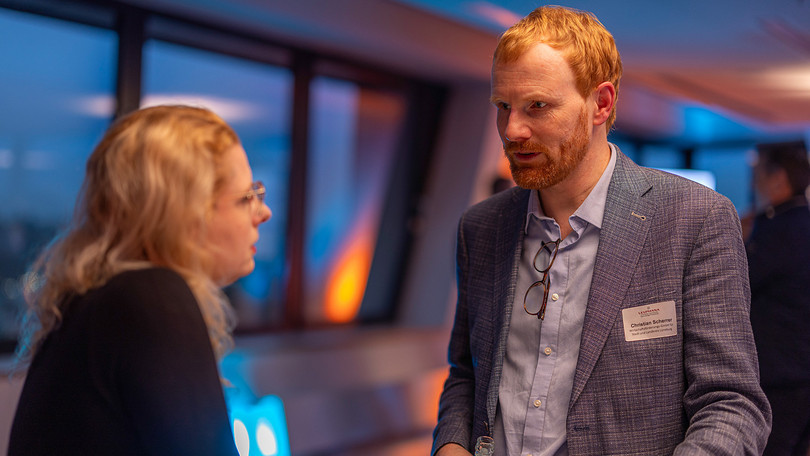
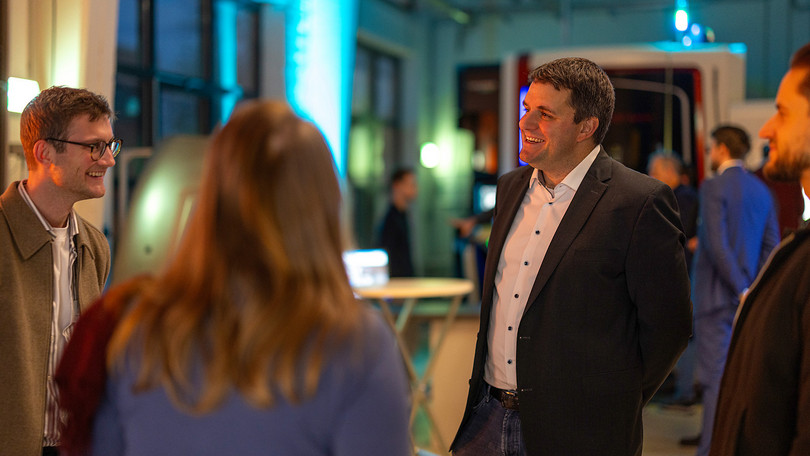
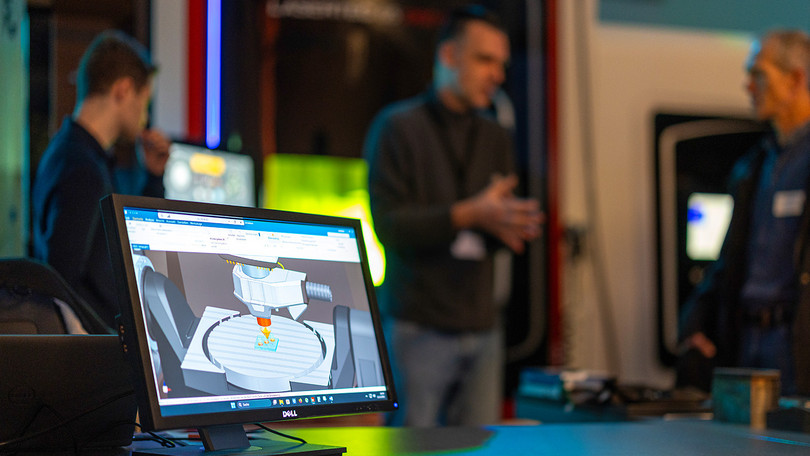
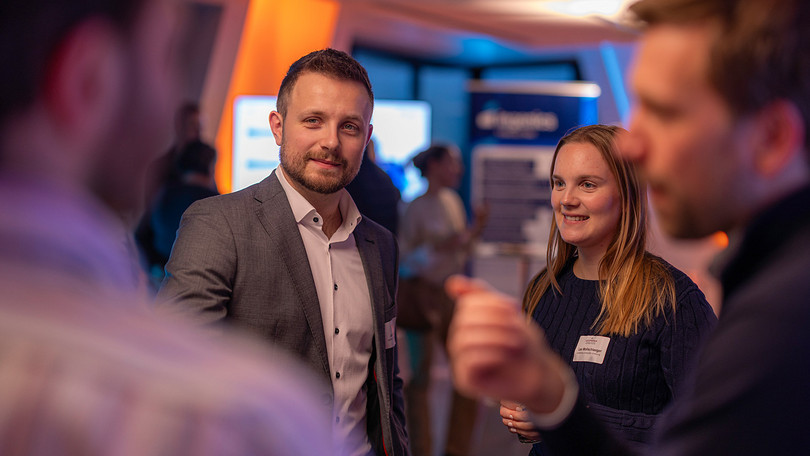
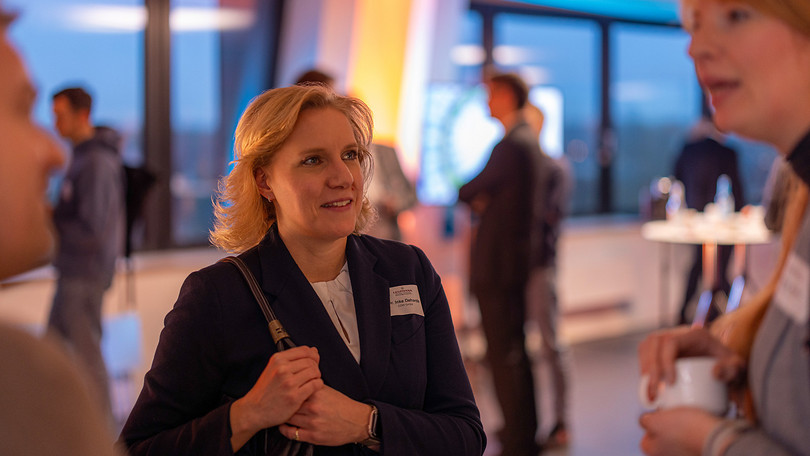
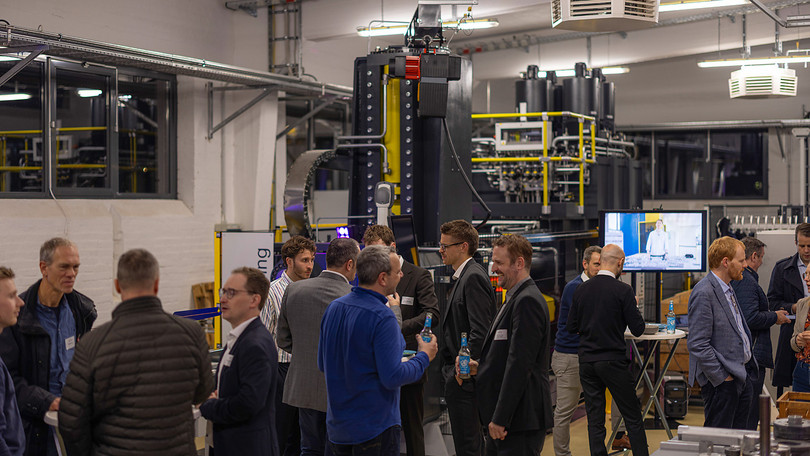
Götz H. Römer, Prof. Dr.-Ing. Jens Heger, and Prof. Dr.-Ing. Florian Stamer contextualized these insights within Leuphana’s research. During the subsequent gallery walk, guests, speakers, and researchers explored the topics in greater depth at various stations before the afternoon concluded with networking in the machine hall, featuring live presentations on metal powder 3D printing—which opened up new avenues for collaborative projects.
Program
2:00 p.m. Welcome and Introduction
Prof. Dr. Paul Drews (Dean of the Faculty of Management & Technology, Leuphana University of Lüneburg)
Moderated by Prof. Dr. Florian Stamer (Leuphana University of Lüneburg)
2:10 p.m. Perspectives from the Field
- Schüco International – Sustainability Goals and Their Impact on Core Business
- Siemens AG – Data Ecosystems and Factory-X
- Ingenics AG – Operational Resilience Through Intelligent Energy and Production Systems
Followed by Q&A and discussion
3:25 p.m. Interactive Gallery Walk
Together with the companies and researchers who provided the impetus, participants were able to explore individual topics in greater depth and gain insights into opportunities for collaboration with the university.
4:40 p.m. Networking in the Machine Hall
Amid extrusion presses, demonstrators, and additive manufacturing machines, attendees had the opportunity to engage in conversation with researchers and industry representatives in a relaxed atmosphere.
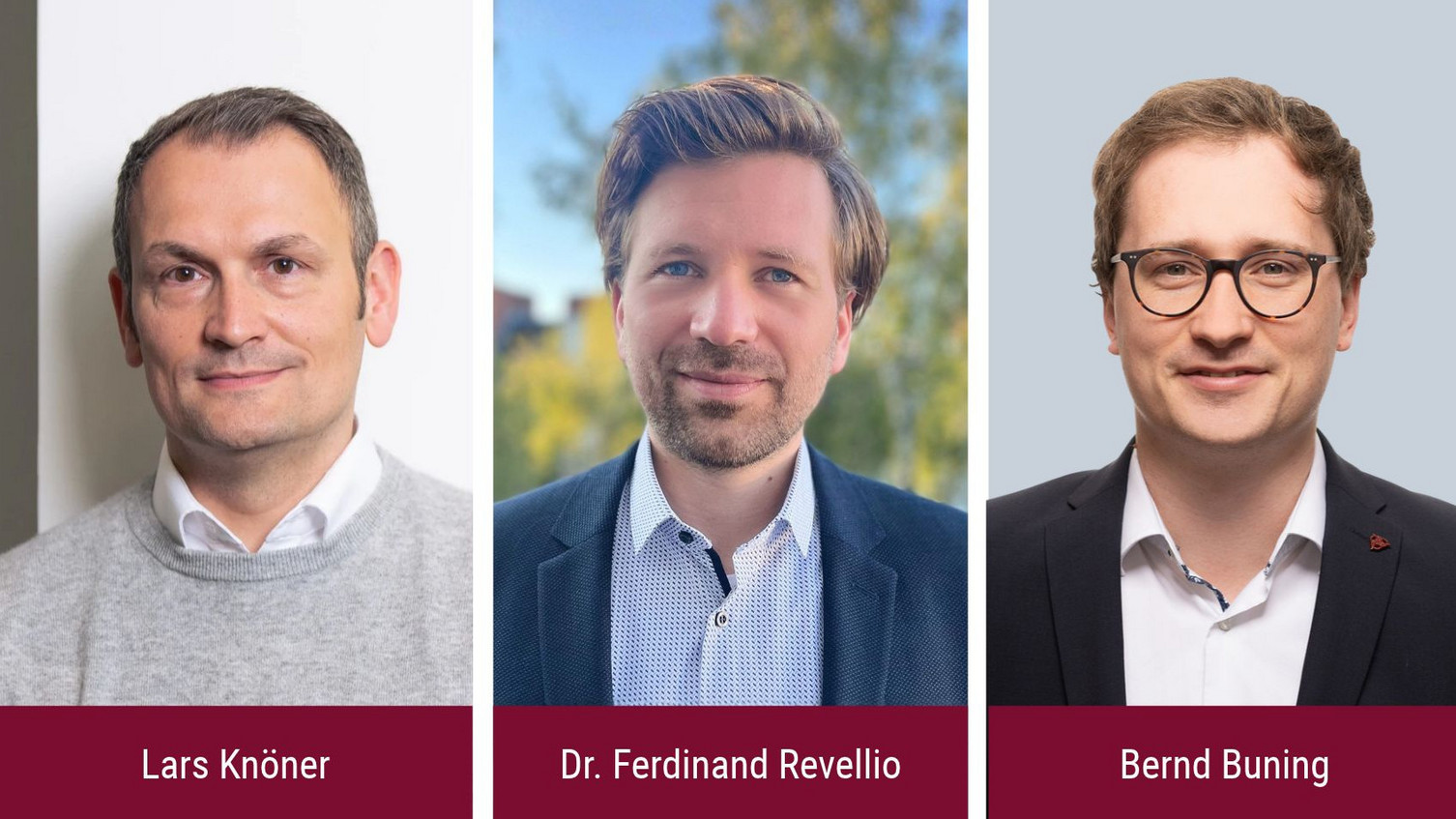
Sustainability Goals and Their Impact on Core Business – Lars Knöner, Schüco International
Lars Knöner, Head of Sustainability Consulting – Group Sustainability, has played a key role at Schüco in developing the group-wide Net Zero 2040 goal, the SBTi validation, and the climate and nature transition plans. In his presentation, the expert on climate strategy and transformation in the construction industry will demonstrate how additional costs in the upstream value chain can be transformed into differentiating customer value, thereby turning sustainability performance into competitive advantages and market success.
Data Ecosystems and Factory-X – Dr. Ferdinand Revellio, Siemens AG
Dr. Ferdinand Revellio is Principal Key Expert for Circularity at Siemens AG, where he combines his many years of research on the circular economy with the development and scaling of circular technologies. His starting point: Whether a used machine component continues to operate, is repaired, remanufactured, or recycled is often decided today based on gut instinct. Yet many parts still hold real value that simply isn’t visible because key information about their lifecycle is scattered across various sources. The Factory-X project demonstrates how data rooms enable companies to securely share data along the value chain, thereby making better decisions. This reduces costs, conserves resources, and opens the door to new circular business models.
Operational Resilience Through Smart Energy and Production Systems – Bernd Buning, Ingenics AG
Bernd Buning leads the Simulation Team at Ingenics Consulting and serves as project manager for material flow simulations and optimizations, drawing on many years of experience in the automotive and mechanical engineering industries. He demonstrates how transparent data and simulation can make companies less vulnerable to energy price and market risks. His approach: putting production to the test with data-driven simulation before reality does. Across industries, he considers production, logistics, and energy as an integrated whole, creating transparency and making complexity manageable. His goal: a factory that not only produces efficiently but is also flexible in times of crisis.
The Leuphana Innovation Community Sustainable Production is committed to a climate-neutral, resource-efficient and economically viable transformation of manufacturing companies and brings together stakeholders from science, industry and society. Shape the future with us and become part of the community!