
From Idea to Pitch in Two Days: AI Hackathon at Leuphana
2026-11-17 The hackathon participants had two days to form a team, come up with an idea, and ultimately develop a finished project. Through this competition, the Leuphana Startup Lab not only puts creativity and team spirit to the test but also aims to actively encourage students to start their own businesses.
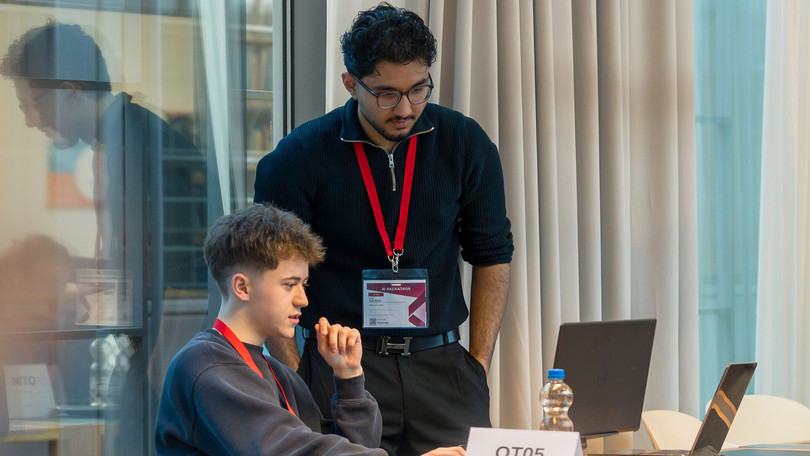
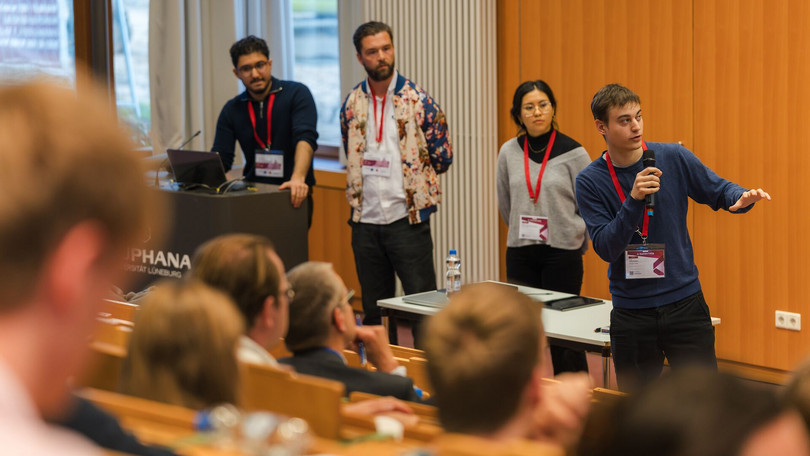
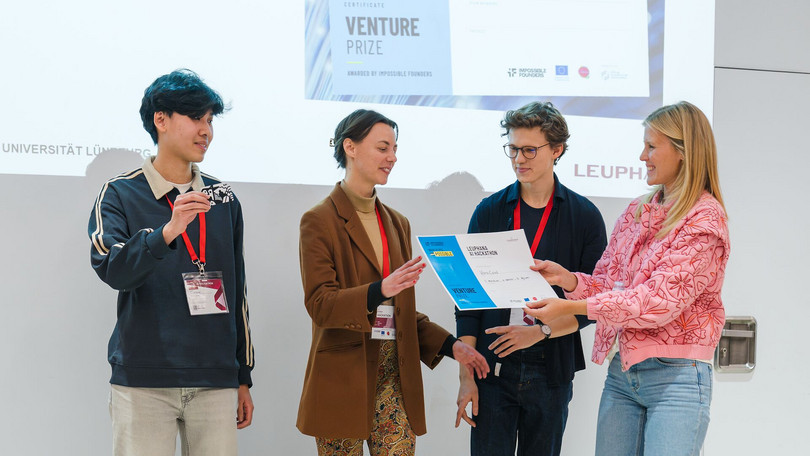
A possible scenario in the emergency room: An emergency is being treated; faces are tense; a doctor is speaking urgently to her patient’s family members: She urgently needs a decision on how to treat her patient’s life-threatening condition—ideally in his own best interest. What life-sustaining measures does he want? Is there perhaps a power of attorney? The family member is overwhelmed, helplessly searching through the papers in their hand. And cut. “Do you recognize this problem?” The hospital scene shifts back to Lecture Hall 1, where participants in the Leuphana “AI Hackathon” are pitching their projects. It’s now “VoraCard’s” turn—a card on which all health-related data is stored locally and can be displayed directly in the hospital information system when scanned. A built-in AI guidance tool in this system is then designed to sort the data. “We initially had a completely different idea,” explains team member Duc. “It was supposed to be about Parkinson’s disease or sleep disorders.” The participants had 48 hours to form a team, develop an idea, and ultimately create a finished project. The 21-year-old computer science student from Hamburg reports that the mentor who supervised their team helped them “get on the right track.” A total of 10 mentors supported the teams throughout the process. At the end of the process, “VoraCard” even won the special IF Venture Prize awarded by event partner Impossible Founders.
“The strictly limited timeframe ensures that the teams work with intense focus and quickly turn an idea into something tangible. It’s particularly impressive to see how much can be achieved with AI in just two days,” says Maria Kischstein from the organizing team, explaining the time pressure the teams face. She emphasizes that the Startup Lab aims to encourage students to start their own businesses and turn their ideas into reality with the help of AI. “The hackathon is the ideal format for this: it brings people from very different backgrounds together and gets them taking action right away.”
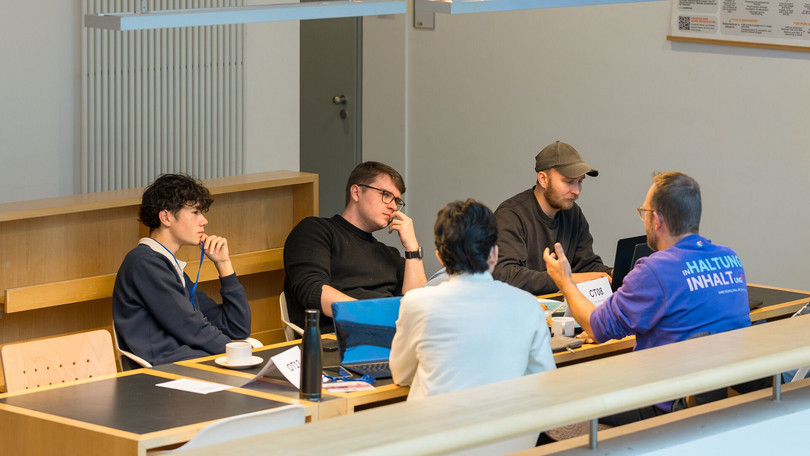
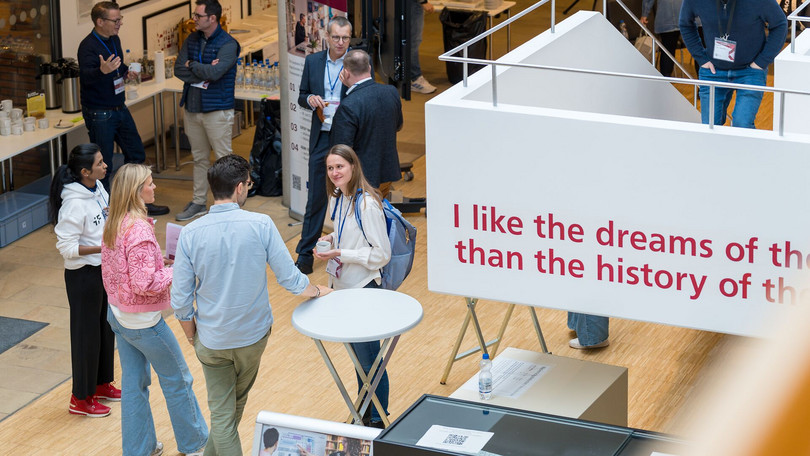
While Duc and his team are tinkering away in one of the group workrooms in the library foyer, other projects are taking shape next door. The 14 teams—formed from the 70 participants—could choose whether to work on their own project in the so-called “Open Track” or compete in the “Corporate Track,” where companies present their real-world problems and the participating teams develop suitable solutions. Burkhardt Funk, a professor of business informatics at Leuphana, serves as a jury member on the final day. “It’s not about having a glossy presentation, but about solving a real problem,” says Funk. Clarity—that is, effective communication—is also important.
And the problems are diverse. As practiced in a pitch training session—also part of the hackathon—the teams first present the problem and then the solution in their 8-minute pitch; some even present a fully developed sales strategy. Topics include verified reviews for local restaurants, a digital workspace that integrates all the functions of various AI services, and the winning team of the “Open Track” presents “Workplace Friction to Flow,” an app where employees at large companies can anonymously share their concerns. A built-in AI collects these concerns and generates proposed solutions based on them. All attendees can try out the tool live during the pitches. Sarah, a member of the winning team, is in her first semester of the “Studium Individuale” program at Leuphana. When she talks about the hackathon after the pitch, it becomes clear that, beyond the project itself, there’s something else at play: “I came here because I wanted to network with people who share similar interests. I think it’s really great to see how diverse the people here are. There’s a place for everyone.”
Gewinnerteams des "AI Hackathons"
Open Track
1. Workplace Friction to Flow: an HR app where employees can report issues and others can agree with them
2. Mood 2 Work: a study plan app that combines many others into one
3. Horus: protects personal data before it enters the AI, locally and open source
Corporate Track
1. Housing Radar: A monitoring map of the housing situation in Lüneburg, based on publicly available data (challenge from the City of Lüneburg)
2. Home Counts: Property owners can use a chatbot to assess the renovation needs of their properties and be connected with contractors and funding opportunities (challenge from heimWatt GmbH)
3. Tender Scout: Finds suitable public tenders for companies (Challenge from Werum Software & Systems GmbH)