
Can We Set the Rules of Change Ourselves? An Interview with Steffen Farny
2026-11-02 Collective action, local engagement, and transdisciplinary collaboration—these are the best ways to address the complex challenges of our time, says Prof. Dr. Steffen Farny. Instead of feeling powerless in the face of transformations in the world of work, the climate, and society, everyone can become an active part of the solution.
Please complete the following sentence: To me personally, transformation means …
… a fundamental change in the rules of the game—how we interact with one another, how we think, and what we do.
Can we change the rules of the game ourselves, or do we have to adapt to them?
I hope that we can actively drive change—knowing full well that this requires coordinated, collective action. Even the seemingly simple restructuring of our energy system shows just how difficult this is: Some prefer transition—that is, mere adaptation, in which power remains with large organizations; others want genuine transformation—such as community-based energy systems where citizens can have a say in decision-making.
What role can science play in this?
Science plays a central role when we think in a transdisciplinary way, co-creating with practitioners. Researchers often distance themselves from implementation—and thus from responsibility. But I see a great opportunity in scientists actively participating. That is precisely what our research area “Toward a Regenerative Society” at Embracing Transformation is all about: developing new explanatory frameworks and shaping processes of change together with local stakeholders.
The SINTRA project focused, for example, on transforming structures and processes to create a truly inclusive work culture. Together with 17 organizations, we developed a toolbox (www.arbeitenmitbewegtenbiografien.com). It helps organizations view the diversity of their employees’ life stories as a strength, rather than trying to make people conform to labor market norms.
Transformation affects not only the economy but also other areas of society. How can your findings be applied to education, for example?
Our institutions—universities, government agencies, schools—date back to a different era and all too often address problems in isolation and in a piecemeal fashion. Today’s major societal challenges, however, are intertwined. We need to shift our thinking—away from the mere transmission of knowledge and toward skills that empower students to proactively tackle complex problems. At our institution, for example, students from various disciplines work together to develop new solutions—ideally in a real-world context with actual industry partners.
So how can we get these various stakeholders on board?
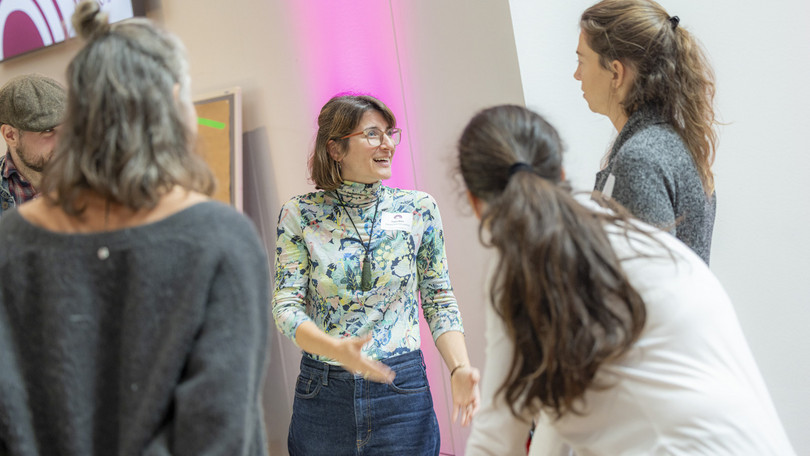
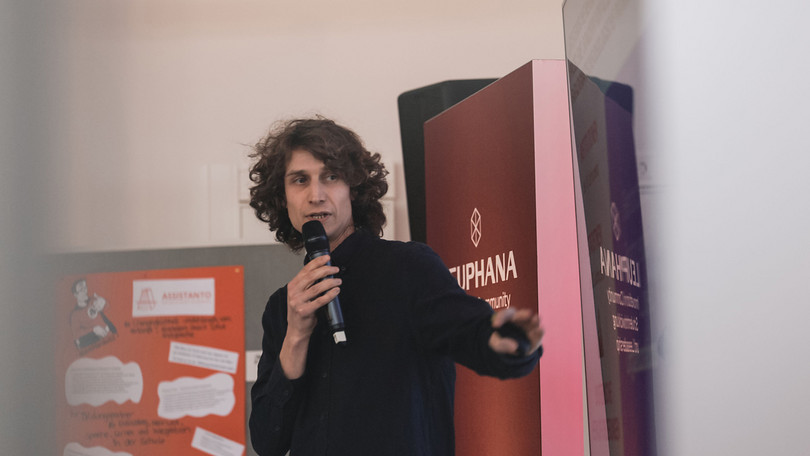
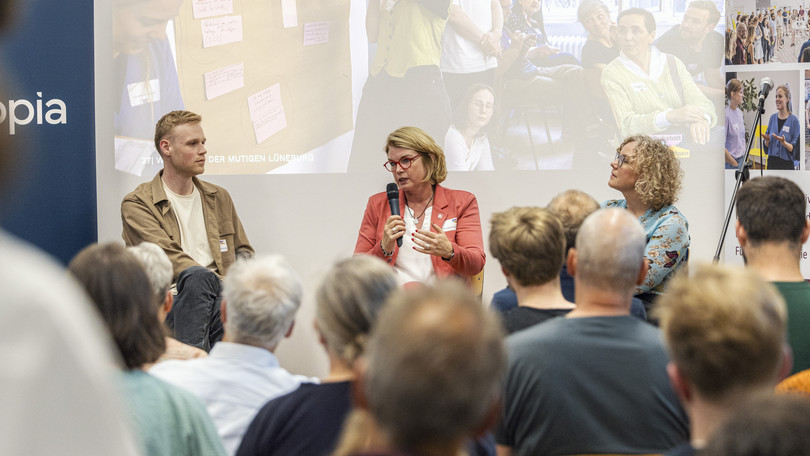
We need engaging formats. The Communicorn Conference and the Werkstatt der Mutigen organized by the Leuphana Social Innovation Community were very successful recently: Stakeholders from Lüneburg—representing politics, public administration, civil society, and the business sector—came together and specifically identified what they could contribute, for example regarding funding opportunities for social innovations and enterprises dedicated to the common good—this fostered a sense of ownership within the group. Now, a structured process is needed to turn these ideas into concrete projects.
Are there plans for additional formats?
Yes. In 2027, for example, we’ll be hosting the Social Entrepreneurship Forum at Leuphana—for the first time outside of Hamburg. This will bring the community and local stakeholders together to discuss areas where projects overlap. For “Regenerative Society,” we’re also organizing an interdisciplinary event on Planetary Well-Being in collaboration with the University of Jyväskylä, highlighting how different academic disciplines can work together.
What can people who aren't involved in such projects do to support the transformation?
I tend to think first and foremost on a very local level and in terms of communities. It’s a good place to start by asking yourself, “In which community am I active?”—for example, in my neighborhood or on a parent-teacher association—and making a contribution there. It makes sense not to view your own involvement as an isolated, individual activity, but rather as part of a larger transformation process in which various activities and actors work together and, in the best-case scenario, reinforce each other’s changes. It can certainly help to gain a clear understanding of how a transformation process works and what impact it has. With the concept of Regenerative Development Goals (RDGs), we’ve developed a new framework for such participatory, community-driven projects. Instead of feeling powerless in the face of major crises, everyone can be part of the solution.
Further information
- Embracing Transformation: “Toward a Regenerative Society”
- Leuphana Social Innovation Community
- Project SinTrA: „Sozial-innovative Transformation durch inklusive Arbeitswelten“
- Social Entrepreneurship Forum Hamburg 2027
- Article on the concept of Regenerative Development Goals (RDGs) (Farny S, Fischer J, Zeidler VGZ, Abson DJ, McElroy C (2026)