
Lecture by Mexican translator Claudia Cabrera
2026-06-29
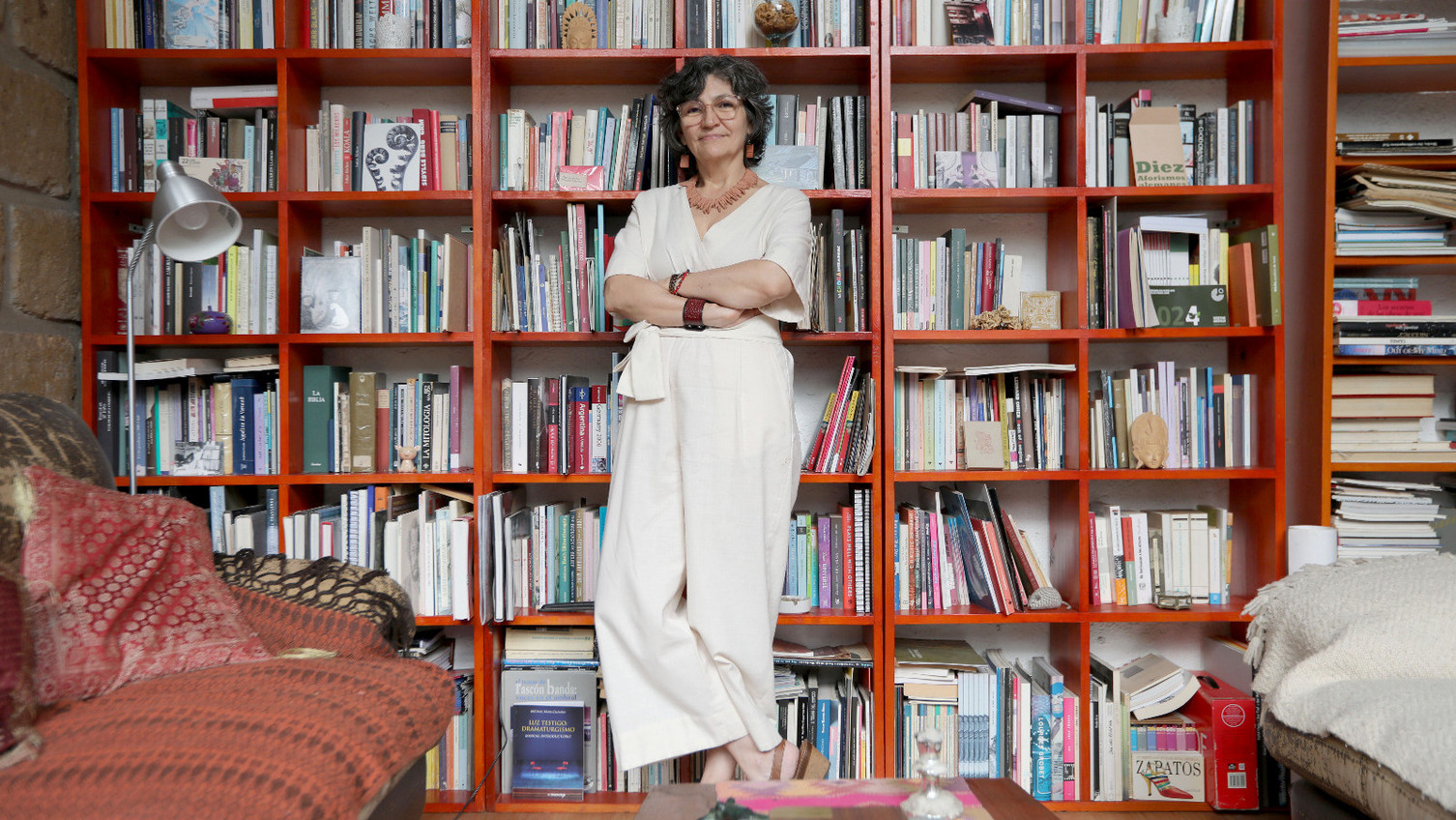
On June 29, Mexican translator and interpreter Claudia Cabrera spoke to the students at Leuphana. Cabrera, who specializes in translating from German into Mexican Spanish, talked about her career path as well as the challenges and joys of a life dedicated to translation. Her key message: Translation is not simply about transferring words directly from one language to another, but about understanding the cultural, political, and social contexts in which they are embedded. The students were fascinated by the work of the professional translator, especially by how vividly she demonstrated that translations build bridges between cultures by making precisely these cultural contexts tangible.
Cabrera came to translation as a self-taught translator. She began at the age of 22 with non-fiction books such as “Cien años de cine”, which she translated in 1995. In 2005, she and completed her first literary translation of the novel, “Animal triste” by Monika Maron. Since then, she has worked with a wide variety of texts but also worked as an interpreter for music conductors and architects, authors and artists in intercultural contexts. This diversity in the translator’s profession, she explained, requires the ability to reinvent oneself every day and is rewarded with a never-ending learning process and the opportunity to engage with topics she would otherwise never have engaged with.
For example, she was able to delve deeply into the lives and experiences of German authors who lived in exile in Mexico during the Third Reich—such as in the case with her translation of Anna Seghers’ works. Cabrera explained that this work led her to familiarize herself with the everyday language of the Third Reich by visiting exhibitions, and engaging with the terminology, locations, and sources. She criticized the fact that much of this work goes unpaid within the publishing industry, even though it is precisely this work that makes a good translation possible in the first place.
She also spoke about the political dimension of her work. It is only through translating these texts that she can give a voice to authors in exile - such as Anna Seghers and her anti-fascist novel, “Das siebte Kreuz”, which focuses on the escape of prisoners from a National Socialist concentration camp. Making these works accessible to a wider audience is becoming increasingly important considering the current resurgence of rightwing-extremist movements.
She provided many fascinating insights into the specific challenges of the day-to-day reality of translation work: deadlines, publishers’ demands, and the constant shift between translation and interpretation. She explained that interpreting requires assessing the social situation and reacting quickly, whereas translation demands discipline and setting daily goals. She also criticized the structures of major publishing houses and questioned the illusion of a “neutral Spanish,” which does not exist. On the contrary, she emphasized the need to translate from her own voice and experience as a Mexican woman. She therefore also criticized the practice of major publishers of acquiring worldwide translation rights in Spanish, which limits access to the works in other countries. In response to a question from the audience, she also spoke about the challenge posed by artificial intelligence. It is already being used for technical post-editing tasks - although post-editing is paid worse than actual translation work. Nevertheless, she was optimistic that translation will remain a profession: Artificial intelligence is not capable of precisely reading or understanding these differences in a cultural context, fails to grasp the nuances, and therefore requires too much work to correct. So, at least for the time being, literature cannot be replaced by artificial intelligence.
It was evident from the students’ reactions that Cabrera’s insight into the world of translation served as confirmation of what makes language learning so fascinating: You experience new worlds and become a bridge-builder yourself.