Knowledge Transfer Requires Culture and Structure – A Two-Day IHS Workshop in Kassel
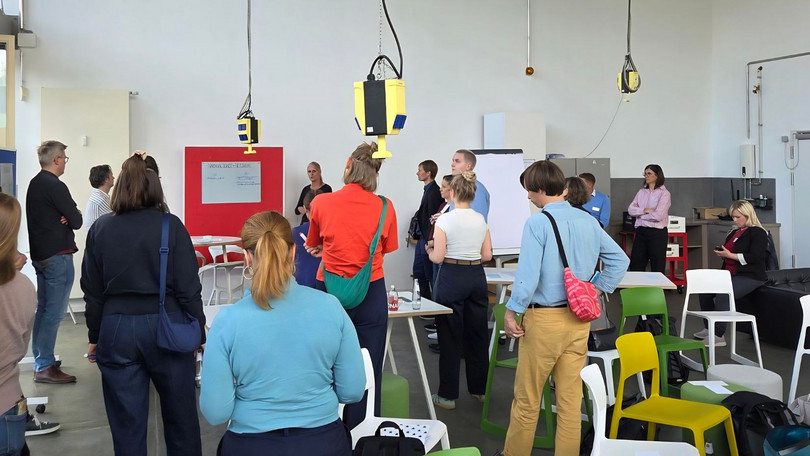
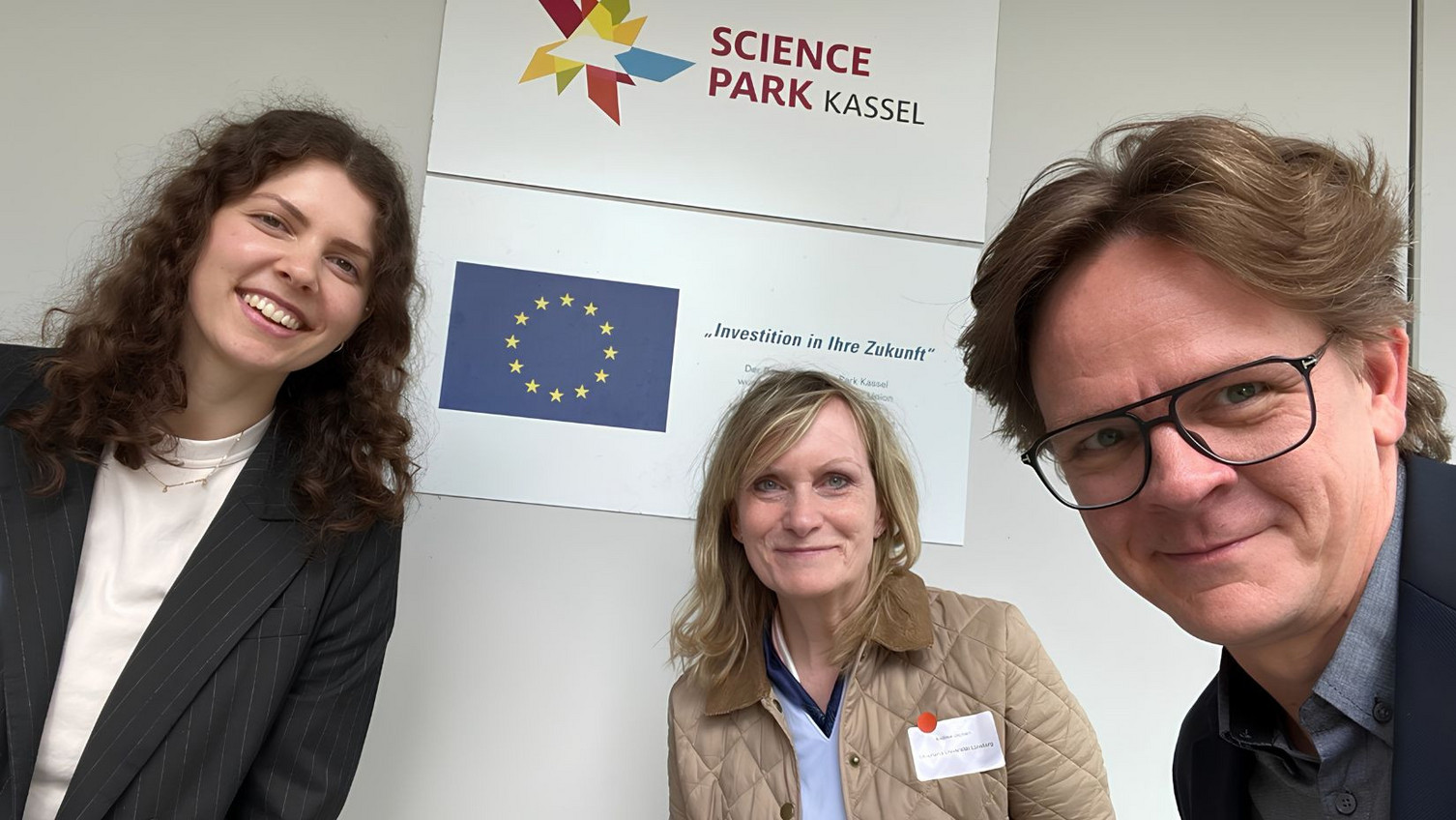
2026-06-16 How does a genuine culture of knowledge transfer develop? Teams from universities across Germany worked on this question last week. At the networking workshop in Kassel organized by the “Innovative Universities” funding initiative—which also supports the Leuphana Innovation Communities—our project lead Andrea Japsen, overall project coordinator Bernd Vogenbeck, and impact manager Lara Schimpf exchanged ideas with representatives from other exciting projects and came away with some valuable insights.
What particularly inspired the team in Kassel
According to Isabel Roessler’s (CHE) keynote speech, the path to a genuine culture of transfer involves five dimensions:
- Transparency
- Trust
- Translation
- Tools
- Consolidation
These are all dimensions that the Lüneburg team has recognized from their own practice. They provide us with a better way to articulate our own impact.
They were particularly inspired by the concept of design-oriented transfer, which stands for social responsibility.
What the team is taking away specifically
- Think about knowledge transfer from the end in mind. What impact do we want to have? Going forward, we’ll be asking this question even more consciously at the very beginning of our programs.
- The idea of modular continuing education for knowledge transfer scouts. This allows employees to gain targeted additional qualifications.
- Bridging the gap between academia, administration, and practice. This helps knowledge transfer competencies come together even more effectively.
Here's what the TrICo team brought with them
Since funding began in 2023, Leuphana has been establishing four innovation communities with partners from business, the arts and culture, education, and civil society. This process has already yielded valuable insights into how the university successfully engages with stakeholders and maintains contact—for example, through a unique workshop model involving international museums and active participation in Lüneburg’s social entrepreneurship ecosystem. The project has also driven changes within the university itself, such as in design guidelines for media products and in the alignment of project and impact goals. By establishing roles such as Community and Impact Management, the team has embraced profiles that are new to the university context from the outset. At Leuphana, we are convinced that knowledge transfer requires relationships and structure.