
2026 | RESEARCH >> IN::SECURITY
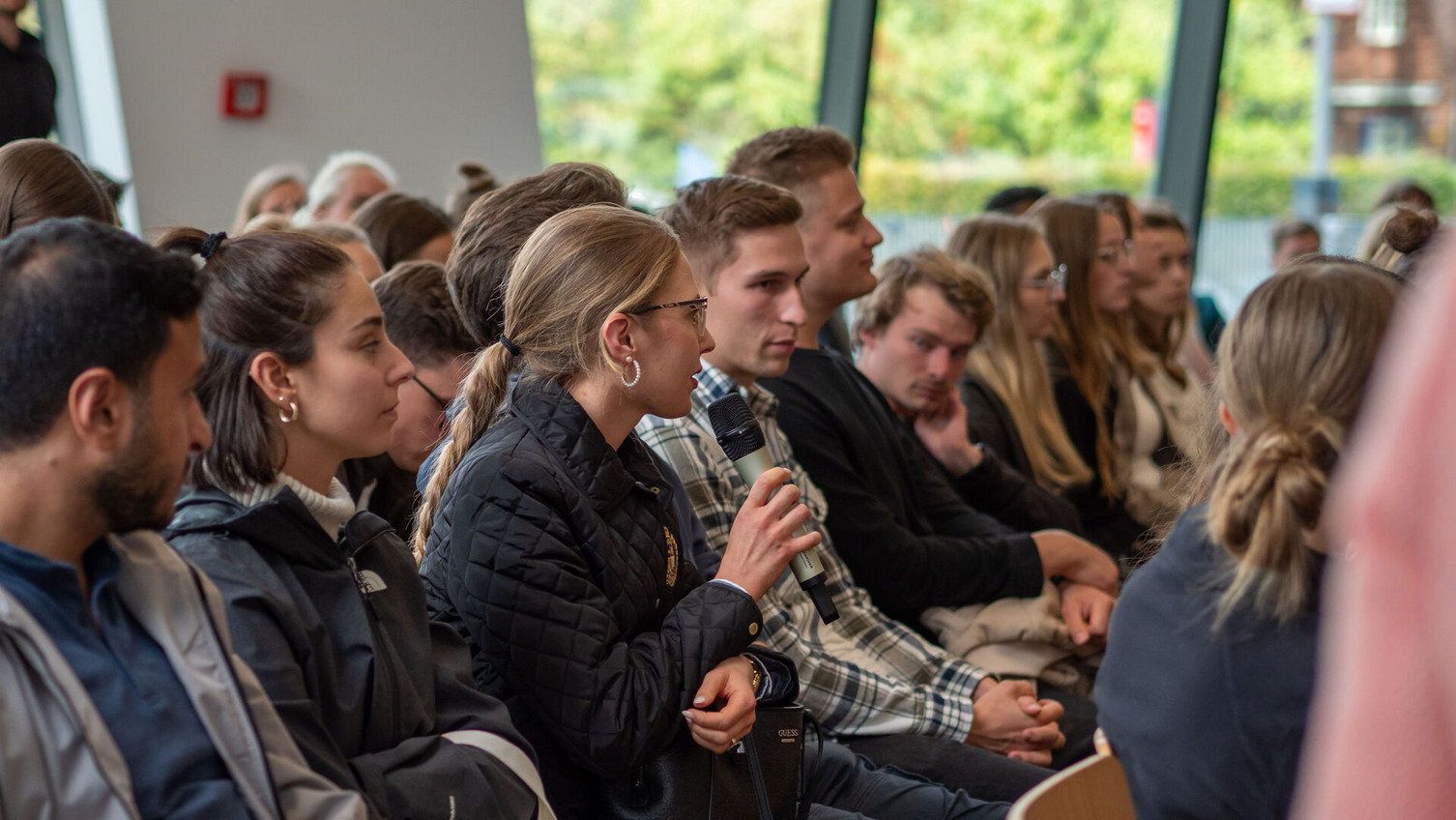 ©LEUPHANA / CIARA CHARLOTTE BURGESS
RESEARCH >> IN::SECURITY – CONTEMPORARY CHALLENGES AND ACADEMIC PERSPECTIVES
Insecurity has become a defining and complex condition of contemporary societies. Within the framework of the Opening Days 2026, this year's academic program on “Research >> In::Security” invites the Graduate School community to examine this phenomenon from an interdisciplinary perspective.
This year's theme goes beyond traditional security concepts. We aim to explore how vulnerability and instability affect diverse fields, including digital infrastructure, climate, mental health, and economic structures. Instead of focusing solely on insecurity, the discourse will address how security is produced, distributed, and contested in practice.
The event provides a shared starting point for new master’s and doctoral candidates to engage in cross-faculty exchange. All members of the university community are warmly invited to participate in the opening and closing keynote events.
You can find more details about the academic program below.
Keynote Speakers 2026
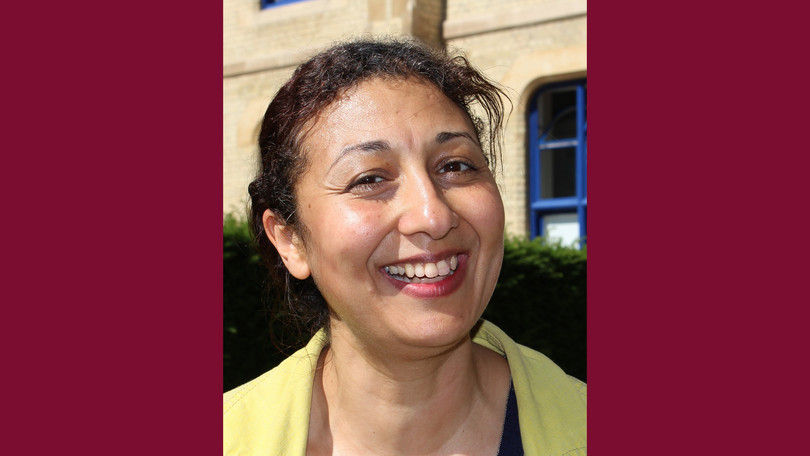 ©Magda Osman
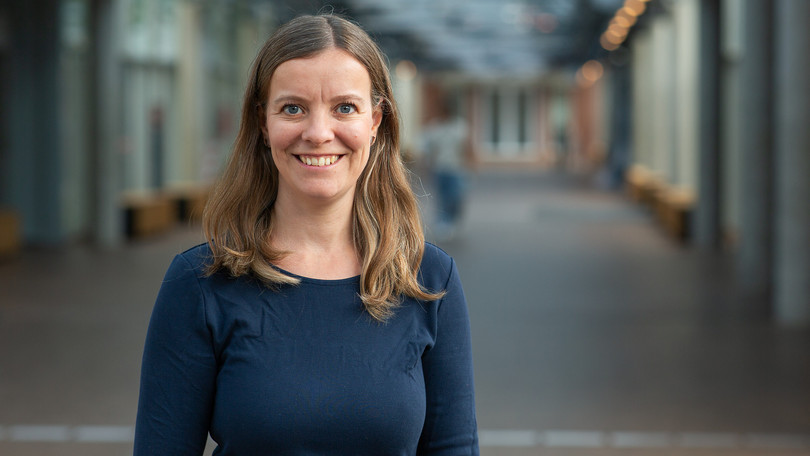 ©Leuphana/Phillip Bachmann
ACADEMIC PROGRAM
WELCOMING
Prof. Dr. Simone Abels,Vice President of Graduate School
OPENING KEYNOTE | 5 October 2026, 11:45 a.m., Auditorium
Prof. Dr. Magda Osman, Risk Analyst, Decision Scientist and Policy Analyst at the University of Cambridge and the University of Leeds
Dr. Osman's presentation explores the dynamic intersection of science and policy. You will explore the hidden pitfalls that arise when well-meaning assumptions go unchallenged, as even virtuous ones can lead us astray. Through vivid illustrations based on direct personal experience, Dr. Osman will explain how she tackles the complex task of measuring the various impacts of information disorders like disinformation campaigns and AI-generated deepfakes. She will also discuss the complex role of ideology as a causal factor in understanding extremism, radicalisation, and terrorism. Both examples reveal the potential problems that can come from unchecked assumptions taking us down a path that deviates from the evidence.
At its core, this talk delivers a practical, actionable insight to the question: How do we guard against the trap of bad assumptions? The answer lies in our (academia's) greatest collective strength: the power to ask incisive, thought-provoking questions. By sharpening our ability to question, we uncover the truth and help reduce uncertainty. In doing so, we build a more resilient foundation for science-informed policy.
CLOSING KEYNOTE | 7 October 2026, 2:30 p.m., Forum (Central Building)
(In-)Security in an Uncertain World: Reflections on Uncertainty in International Politics and Research
Prof. Dr. Julia Grauvogel, Professorship of Global Interventions and Conflicts
Dr. Grauvogel’s keynote will explore (in-)security in an uncertain world. In the first part, it will focus on uncertainty as a subject of research, while the second part turns to uncertainty as a condition of doing research. The keynote will examine how insecurity and uncertainty are (not) related and reconstruct the widespread sense that we have moved from security as the management of risk to a more profound and unstructured uncertainty – or from “known unknowns” to “unknown unknowns”. Disaggregating the omnipresent notion of uncertainty will also allow us to understand how different forms of uncertainty may be shaped by, and in turn shape, what is often referred to as “geopolitical change”. The second part of the keynote draws on Dr. Grauvogel’s research on sanctions – tools of international politics used under multifaceted conditions of uncertainty – as well as her personal experience to highlight insights for studying and conducting research in an uncertain world. It explores questions of uncertain outcomes and how we define success, the relationship between uncertainty, helplessness, and agency, and the challenge of developing exit strategies that allow us to revise our choices without relinquishing commitment.
Academic Program - Workshops
Arriving in (In)Security: A Workshop for New Master’s and Ph.D. Students
Dr. Anna Sundermann
Scientific knowledge emerges at the frontier of the unknown and is therefore inevitably linked to uncertainty. This workshop takes the ambiguity of security in research projects as its starting point: Drawing on models of epistemic uncertainty, it explores how research can be conducted with an attitude of certainty under these conditions.
In response, we use the idea of psychological safety. In doing so, the workshop addresses not only the epistemic uncertainties in research but also the individual uncertainties experienced at the start of a master’s or doctoral program. In interdisciplinary discussions, participants reflect on how (in)security is managed in different disciplines and, guided by the values of good scientific practice, collaboratively identify what is needed to conduct research amid ambiguitiy and uncertainty. This fosters a research mindset that understands security as both an individual prerequisite and a shared responsibility, laying the foundation for a reflective, ethical, and resilient research practice.
Anna Sundermann is an independent educational researcher and psychologist focusing on learning processes and communication in higher education for sustainable development. She facilitates courses and workshops on good research practice, drawing on her research, over ten years of university teaching and training in systemic counselling.
---
Stay Safe While Falling – What Acrobats Can Teach Us About Safe Teamwork
Lilith Diringer, Faculty of Management and Technology
This interactive workshop explores how teams coordinate under conditions of uncertainty, pressure, and risk. Drawing on insights from acrobatic cheerleading and organizational research, participants will experience how trust, embodiment, communication, and rapid decision-making shape successful collaboration in high-risk, low-time environments.
Based on my ongoing PhD research in Organization Studies, the workshop examines how acrobatic teams avoid injuries and performance failures despite operating in situations characterized by constant unpredictability. Participants will be introduced to key concepts from organizational and coordination research and directly apply them to their own experiences as emerging Master’s and PhD students working in research groups, interdisciplinary projects, and academic teams.
The workshop combines theoretical input with embodied learning and interactive group exercises. Through small-scale partner activities, collaborative problem-solving, and the design of a mini qualitative research study, participants will explore how diverse teams organize safety, coordination, and resilience in a VUCA (volatile, uncertain, complex, ambiguous) world.
Rather than understanding “security” only as a geopolitical issue, the workshop addresses insecurity as an everyday organizational condition: How do people create stability while facing uncertainty? How do teams coordinate safely under pressure? And what role do bodies, emotions, and trust play in collaborative research environments?
The workshop is designed as a highly participatory learning experience that creates practical insights and transferable skills for academic collaboration, teamwork, and research practice.
Lilith Diringer is a PhD researcher at Leuphana University, focusing on coordination and teamwork in acrobatic cheerleading teams. She also facilitates interactive workshops on organizational collaboration, drawing on her research and training in design thinking and science communication.
---
Embodied In::Security – Exploring Uncertainty Through Movement, Interaction, and Reflection
Yvonne Emig, Faculty Management
How does insecurity feel in the body? How do we respond when familiar structures disappear, expectations become unclear, or we must rely on others? This interactive workshop invites participants to explore the theme of (in)security through movement-based research methods and collective reflection.
Drawing on approaches from dance, improvisation, and social psychology, participants will engage in a series of simple movement and interaction exercises that require no previous dance experience. Through guided activities, they will experience different dimensions of insecurity: ambiguity, vulnerability, trust, dependence, unpredictability, belonging, and adaptation.
The workshop treats the body as a site of knowledge production. Rather than discussing insecurity only as an abstract concept, participants will investigate how it emerges in social interactions and how individuals and groups develop strategies to cope with uncertainty. Short reflective discussions will connect embodied experiences to broader questions of research, academic life, and contemporary societal challenges.
The workshop is designed as an inclusive and low-threshold environment that encourages curiosity, experimentation, and mutual respect. Participants will leave with a deeper understanding of insecurity as both a personal and collective experience, as well as practical insights into how embodied methods can contribute to interdisciplinary research.
Yvonne Emig is a postdoctoral researcher in social psychology whose academic work focuses on group evaluation. She also holds a Master’s degree in Dance and works as a dance instructor and choreographer, combining artistic practice with scientific inquiry.
---
Manufacturing doubt: the (in)security of scientific evidence, from test tubes to YouTube
Matheus Monteiro Nascimento, School of Sustainability, Institute of Sustainable Chemistry, Science Education
We all rely on science, as researchers, citizens and consumers, yet we are surrounded by competing claims about what the evidence "really" shows. How does anyone, expert or not, decide which scientific claims are reliable? This workshop treats that question as a defining epistemic insecurity of contemporary research culture, and turns it into a practical competence.
Its central provocation is an inversion: scientific knowledge is trustworthy not because it is certain, but because of how it organises its own uncertainty, through controls, replication, peer review and open criticism. Security comes from organised doubt. "Insecurity" is the textbook image of settled facts and a single method; "insecurity" is science as it actually works, provisional, fallible, contested, still in the making. Reliability is built across distinct layers of justification: from observation and measurement, through reasoning and modelling, to the social scrutiny of a research community, and finally into the public sphere, where a claim travels "from test tubes to YouTube" and reliability can be lost as easily as gained.
Using a contemporary socioscientific case, climate evidence, with manufactured doubt as the live example, participants trace a claim down to its measurement base and back up into the media, discovering both how robust evidence is constructed and how doubt about it can be deliberately engineered. They leave able to ask of any claim, in any field, "why should we trust this?", and to distinguish informed trust from both blind trust and blind cynicism.
Incoming researchers are about to produce claims that will travel this whole arc. The workshop asks: what will make your evidence reliable, and how will a competent outsider know?
Matheus Monteiro Nascimento is a postdoctoral research associate at Leuphana University whose work focuses on equity, diversity, identity, and trust in science education. His research examines how social and cultural factors shape participation in science, as well as how scientific knowledge gains credibility and is communicated to the public.
---
(In)security and Regeneration in Social-Ecological Systems: What Can We Learn from Farming Systems in Conflict-Affected Colombia?
Rowan Alden Hull, Angela Navarrete-Cruz
Growing insecurity—driven by climate change, economic instability, and violent conflict—is reshaping social-ecological systems worldwide and challenging the resilience of communities that depend on them. Armed conflicts are becoming increasingly prevalent, particularly in developing countries where agriculture forms the backbone of rural livelihoods. In 2024, 57 state-based armed conflicts were active worldwide.
Recent research on resilience and regeneration has begun to examine how interacting social, ecological, and political processes across scales can lead to either degenerative or regenerative trajectories. While armed conflict often undermines livelihoods and exacerbates vulnerability, emerging evidence suggests that agricultural systems can also display remarkable resilience and, under certain conditions, foster regenerative processes despite prolonged violence. Understanding these dynamics is essential for advancing more sustainable and equitable pathways for rural development.
Drawing on research conducted at Leuphana University within the Toward a Regenerative Society Key Subject Area, together with empirical evidence from conflict-affected farming systems in Colombia, this workshop explores how resilience and regeneration emerge under conditions of insecurity. Participants will be introduced to current interdisciplinary research, reflect on the role of social-ecological systems in contexts of armed conflict, and engage in discussions connecting these themes to broader sustainability challenges. By combining cutting-edge research with interactive exchange and participants' own experiences, the workshop aims to foster a sense of community among the new PhD cohort while offering a hopeful perspective on addressing complex global challenges.
Rowan (Ro) Alden Hull is a postdoctoral research associate whose interdisciplinary work focuses on accounting systems, landscape governance, social-ecological systems, regenerative transformation, and epistemic authority. Ro has a background in natural sciences, public policy, and corporate governance, and also teaches social-ecological restoration.
Angela Navarrete-Cruz is a DFG-funded postdoctoral researcher studying agriculture in wartime from a socialecological systems perspective. Her work examines institutional change, collective action, governance, and peacebuilding in conflict-affected rural communities.
---
AI and (In)Security: Trust, Uncertainty, and Responsible Futures
Onur Cicek, Institute of English Studies
Artificial intelligence is increasingly shaping how we learn, work, communicate, and make decisions. While AI promises efficiency and innovation, it also introduces new forms of insecurity that extend beyond technical concerns. Questions of trust, fairness, accountability, privacy, misinformation, employment, and social inequality affect individuals and institutions alike, making AI an important lens through which to explore this year's theme.
In this interactive workshop, Master's and PhD students from all disciplines critically examine how AI reshapes experiences of security and insecurity in contemporary society. Through collaborative discussions, case studies, and design activities, participants will investigate how AI influences processes across domains such as healthcare, education, public administration, research, and everyday life.
Rather than requiring technical expertise, the workshop encourages participants to draw on their own disciplinary perspectives to explore how AI creates, transforms, or (whether or not) potentially reduces different forms of insecurity. Participants will work together to map the social, ethical, and institutional challenges surrounding AI while reflecting on their own roles as researchers.
The workshop concludes with a collaborative design exercise in which participants develop principles for responsible and trustworthy AI systems. By combining critical reflection with practical engagement, the workshop aims to foster interdisciplinary dialogue and equip participants with conceptual tools for examining AI-related insecurity within their own research contexts.
Onur Cicek is a PhD student and researcher in Linguistics at Leuphana University, studying how artificial intelligence is transforming linguistic research, teaching, and knowledge production. He also designs and facilitates interactive workshops on AI and its responsible use for participants from diverse disciplinary backgrounds.
---
Navigating Insecurity: Consumer Behavior, Social Evaluation, and Technology
Meikel Neumann, School of Management & Technology
Insecurity has become a defining feature of contemporary consumer environments. Economic instability, sustainability concerns, digitalization, and artificial intelligence create uncertainty about what to buy, which information to trust, how to evaluate organizations and other consumers, and who is responsible for the consequences of market decisions. This interdisciplinary workshop examines how insecurity shapes consumer behavior through perspectives from consumer psychology, responsible marketing, behavioral ethics, and human–technology interaction.
The workshop moves beyond understanding insecurity as an individual psychological state. It asks how market structures, marketing practices, and technologies produce, distribute, or reduce insecurity. Which consumers are protected, which remain vulnerable, and how can responsible marketing support autonomy, dignity, trust, and well-being?
Through consumer cases and interdisciplinary group work, participants will develop study ideas or practical interventions for creating more responsible and psychologically supportive market and consumer environments.
Meikel Neumann is a postdoctoral researcher and Lab Manager at the School of Management and Technology at Leuphana University Lüneburg. His research examines consumer behavior, social perception, moral judgment, digital technologies, and individual well-being. He has extensive teaching experience in psychology, marketing, consumer behavior, ethics, and empirical research methods.
---
Making Peace with Nature
Dr. Matthias Packeiser, Leuphana School of Public Affairs / Joachim Herz Doctoral School of Law
Imagine the year is 2056.
Humanity has done what once seemed impossible. Humanity has largely achieved net zero greenhouse gas emissions, large-scale ecological destruction has ceased, and ecosystems are beginning to recover. Across much of the world, humanity has begun to question the belief that nature exists merely to serve human needs and has begun to rebuild a relationship based on coexistence rather than exploitation.
Yet one question remains.
If the past two centuries are understood as humanity's war against nature, has the end of ecological violence brought peace?
Or have we merely achieved a ceasefire?
The workshop uses this scenario as a starting point to explore the distinction between ending ecological violence (negative peace) and establishing lasting peace (positive peace). Rather than discussing these questions theoretically, participants engage in a structured negotiation exercise in which they jointly develop the foundations of a peace agreement between humanity and nature.
Participants are divided into two delegations. One represents humanity; the other acts as guardians of nature. Building on their respective perspectives, both delegations negotiate the principles, rights, responsibilities and institutional arrangements that they consider necessary for a lasting peace.
The workshop concludes with a plenary reflection linking the negotiation experience to broader questions of peace, conflict and ecological transformation.
Dr. Matthias Packeiser is a Scientific Manager of the Joachim Herz Doctoral School of Law at Leuphana University, where he coordinates an interdisciplinary doctoral programme and organises workshops, conferences and academic training formats for early-career researchers. His research focuses on international law, sustainability, climate justice and societal transformation, with a particular interest in questions of ecological governance and the relationship between law and the Triple Planetary Crisis.
---
Sustainability and Security from a decolonising lens
Dr. Julia Benkert, Centre for Sustainability Management
As global communities and organisations seek to become more resilient against current and future threats to social, ecological, and economic welfare, the integration of sustainability principles into politics, the economy and organisational strategies plays a key role. However, in sustainable development policies and initiatives global communities are not treated equitably, as sustainability and colonialism are historically and structurally intertwined. Colonial powers extracted massive resources, causing deforestation, soil loss and biodiversity decline that fuel today’s climate, species extinction and water crises. Colonialism also imposed racist, class-based oppression, marginalising indigenous knowledge and leaving disadvantaged communities bearing most environmental harms. Global supply chains shifted ecological and social costs to producers while profits accrued in Western societies. Decolonial sustainability calls for justice, self-determination and reparations—integrating indigenous expertise, fair trade mechanisms and community-led sustainability initiatives.
In considering sustainable development from a decolonising lens, the objective of this workshop is to practice reflexive approaches with participants in considering and discussing the following questions: How and where do established sustainable development policies discriminate, and who pays the price? What is required to enhance sustainability, resilience, and security for all, instead of a selected few? What cultural paradigms underpin and inform your understanding of sustainable development and its aims?
Dr. Julia Benkert is a researcher, instructor, and consultant with extensive expertise in sustainability management and sustainable development. Her international work, particularly her experience in Australia, examines tensions between Western corporations and Aboriginal communities within broader colonial structures.