

Experience reports - Critical Studies - Arts, Theory, History
On this page you find reports of current and former students about the Masters Critical Studies - Arts, Theory, History at Leuphana Graduate School.


Nikolas' experiences
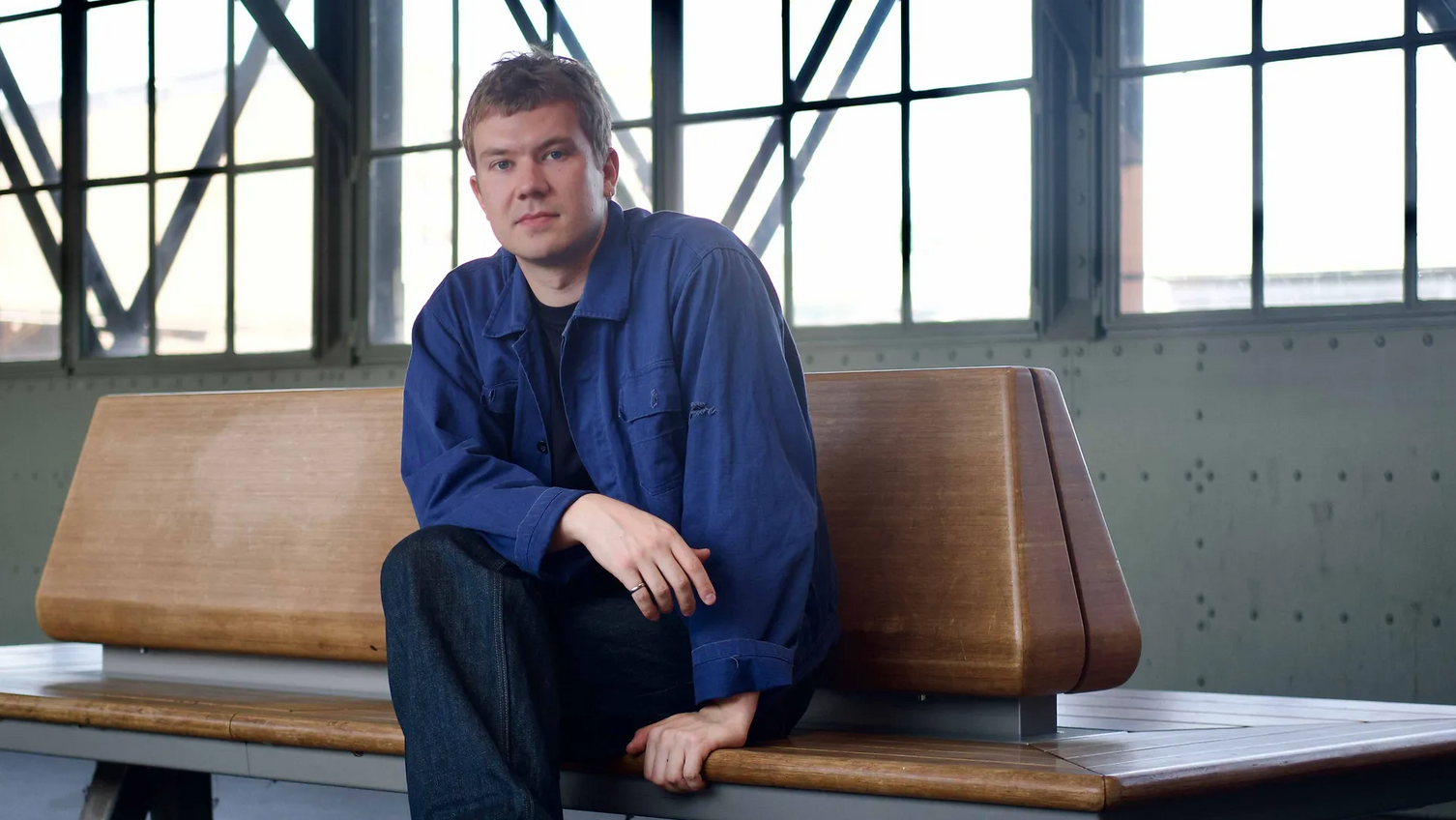
17.08.2026 Nikolas Geier’s transition into his career is seamless: In the coming weeks, he will submit his Master’s thesis and is already working full-time as an assistant curator at the Kunstverein Harburger Bahnhof.
 ©Privat
Nikolas Geier is hard to reach at the moment. His Master’s thesis and new job are keeping him busy. He hadn’t really expected to land the coveted position as assistant curator at the Kunstverein Harburg: “I was honestly surprised that my very first application worked out,” he says.
But perhaps his professional success is also due to the good mix of practical experience and theoretical knowledge that Nikolas Geier brings to the table: Even while studying art history and philosophy, he was already active in the art scene, organizing exhibitions, mentoring artists, and curating shows. But at some point, he found himself less drawn to the fast-paced nature of Berlin’s art scene: “I sometimes had the impression that so much is happening and being produced in the capital’s art scene that there’s often little room left for an in-depth exploration of content.”
He also lost interest in the Master’s program in philosophy he had started, due to its disciplinary narrowness. “I was looking for a space for discourse and, at the same time, more room to actually be able to study in depth.” Nikolas Geier set out on a search and found the degree program Critical Studies.
“I also deliberately looked for a smaller setting. In Lüneburg, I felt for the first time that I could study in peace. Everything is close by. I spent a lot of time in the library, immersing myself in books.” Exciting and intense discussions often arose in the small study groups: “The interaction with the faculty was also close. My professors were always approachable. On the Leuphana campus, there’s a different way of interacting than in Berlin,” explains Nikolas Geier.
During his studies, he explored current discourses on contemporary art, as well as classical art history, postcolonial theories, and Marxist approaches: “I love theoretical work. During my Master’s program, a whole new network of ideas opened up for me. I now have a much better understanding of the significance of university research for the art world.”
Now he’s building that bridge himself: As part of a small team, the young assistant curator organizes exhibitions, mentors artists, conducts research, drafts grant proposals, and handles organizational tasks such as transport and setting up exhibitions. Once Nikolas Geier submits his Master’s thesis in the coming days, things will quiet down a bit for him again. He looks back positively on the past few years: “Over the course of the four semesters, I’ve come to understand more and more what it’s like to work in the art world and how it functions—both on an intellectual and substantive level.” This solid theoretical foundation is now helping him make a smooth transition into his career: “I speak the same language as my colleagues,” says Nikolas Geier.
Linn's experiences
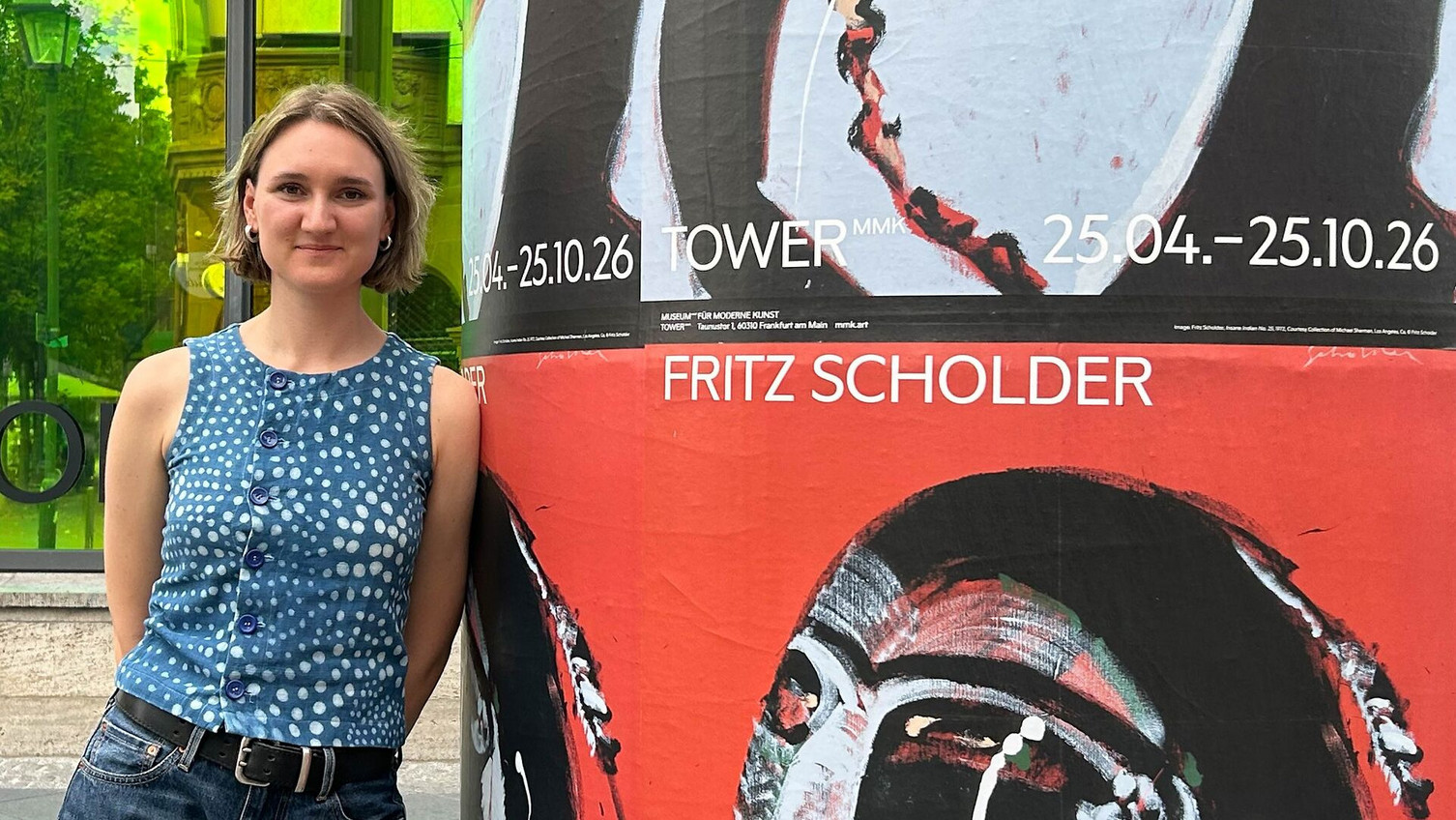
09.07.2026 Linn Felgendreher is a research intern at the Museum of Modern Art (MMK) in Frankfurt. The 26-year-old attributes landing this coveted position not only to her college degree: “Grades are important, but in the end, the experiences you’ve gained also count.” Leuphana opened up numerous opportunities for her to gain that experience.
 ©Linn Felgendreher
“I felt that at Leuphana, I wasn’t just studying—I was also able to explore what interested me,” says Linn Felgendreher about her time as a student in Lüneburg. One particularly formative experience was her work at the Leuphana Institute for Advanced Studies (LIAS). There, she supported international scholars and artists during their research stays. The fellows come from all over the world. “I helped them settle in and also co-organized lectures and conferences. Through this, I learned how academic work is organized and how much planning goes into international research projects.”
“I’m now benefiting greatly from those experiences,” says Linn Felgendreher. As a research intern at the MMK Frankfurt, she works in the Collections and Exhibitions department. There, her responsibilities include cataloging artworks, organizing international loans, and preparing exhibitions. She finds working directly with the artworks themselves particularly exciting. “You’re not just dealing with the objects, but also with the big questions behind them: How do you document a performance? How do you evaluate a work of art that consists of an idea and not just a physical object?”
After graduating from high school in Erlangen, she moved to Rome, where she studied communication sciences. But despite some courses in cultural studies and film, she still felt she hadn’t found the right path. “I realized that I didn’t want to go into marketing or traditional media careers. I was more interested in philosophical and artistic questions,” she explains, and began searching for a suitable degree program: She was particularly drawn to the interdisciplinary nature of the Master’s program Cultural Studies: Critical Studies at Leuphana University in Lüneburg. “I wanted to reorient myself academically. At Leuphana, I had the opportunity to combine different perspectives.” With a focus on “Arts, Theory, and History” as central perspectives in cultural studies, the Master’s program Cultural Studies: Critical Studies—Arts, Theory, History combines the analysis of artistic productions from historical perspectives with a cultural history of knowledge.
Impressed by the program, Linn Felgendreher moved from Italy to northern Germany: “I deliberately chose an apartment in Lüneburg so that I could participate as much as possible in university life .” She was active in the student initiative ArchipelagoLab, worked as a student assistant not only at LIAS but also at the Center for Critical Studies (CCS), and spent countless hours in the university library.
She also gained practical experience in the field of contemporary art early on. Together with her fellow student Sophie McCuen-Koytek, she curated the exhibition *SapphicEntanglements* as part of the peer-to-peer program at Leuphana’s Kunstraum. The exhibition featured works by young artists and explored issues of gender, identity, and relationships.
Through Leuphana’s International Center, she spent a semester abroad at the American University of Beirut in Lebanon. “Beirut has an incredibly vibrant cultural scene. The city made a big impression on me.”
Linn Felgendreher gained further international experience at a summer school in Azerbaijan funded by the German Academic Exchange Service (DAAD), as well as during a three-month internship at the Goethe-Institut in Dakar, Senegal. “I simply tried to take advantage of as many opportunities as possible. Each of these experiences broadened my perspective.”
Her Master’s program laid the theoretical foundation: “I found what I was looking for. The theoretical breadth of the program was a huge asset for me. I was able to integrate different approaches: from art history and philosophy to postcolonial and cultural studies perspectives. The experiences I gained during my studies—through study abroad programs, projects, and my work at the university—have opened many doors for me.”
Nike's experiences
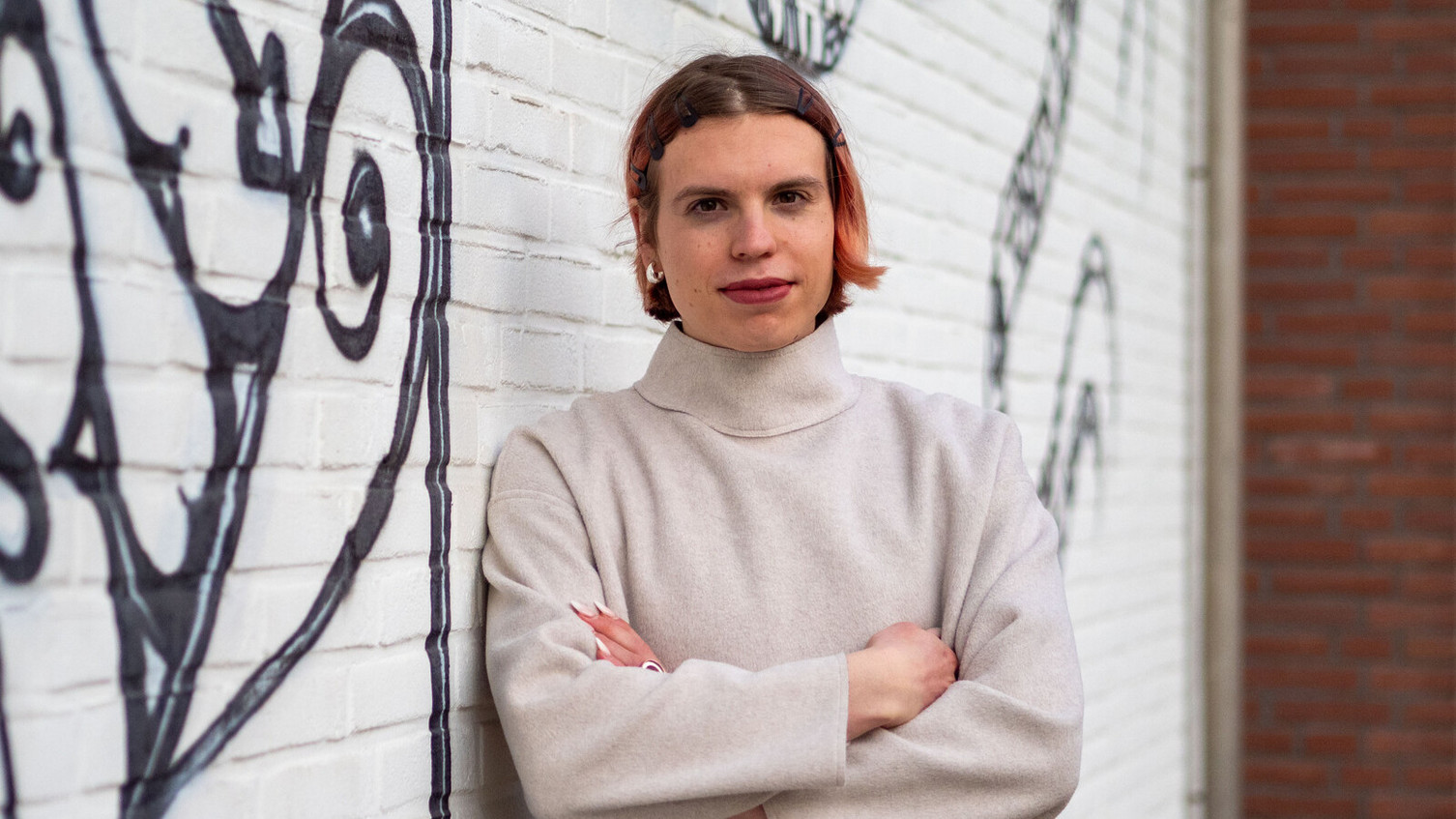
12.05.2023 Nike Mattheis is already in the final stages of the Masters. Mattheis has made extensive use of the time at Leuphana, deepening academic and artistic practices, taking advantage of the university sports offerings, and working as a research assistant. Above all, however, Mattheis has found great pleasure in the transdisciplinary approach here.
 ©Ciara Burgess/Leuphana
Why did you choose the study programme Critical Studies - Arts, Theory, History at Leuphana Graduate School?
After my Bachelor degree, I was looking for a programme that combined different projects of contemporary critique. For some while, I considered studying political or social theory. In the end, however, Leuphana’s cultural studies programme seemed a unique fit, given its transdisciplinary combination of philosophical, historical, and art-related approaches.
What did you study before your current Masters, and where were you able to connect to those studies?
My background is in philosophy and economics. In my Masters degree, I was able to tie in with the attempt to address contemporary issues in a way that goes beyond disciplinary silos. A focus on conceptual specificities also remained central in the Critical Studies programme. But in contrast to the analytical and neoclassical orientation of my Bachelor degree, questions of power and historicity came to be focalized here.
How is the cultural studies perspective of the programme enriching compared to a study programme that is solely focused on the arts?
The Critical studies programme at Leuphana consistently foregrounds questions of materiality, mediality, aesthetics, and canonization. But the objects and approaches are broader than it would be possible in a purely art theoretical/historical study programme: through diverse cultural traces, critical studies permits to address problems from diverse fields, ranging from philosophical anthropology to the history of affects to the operations of platform economies. We here consider objects beyond the (institutionalized) sphere of art, too. At the same time - in distinction to classical social sciences – this is done with particular attention to aesthetics, ontological-epistemological questions and power relations. Put briefly, we here pursue the tradition of the "first cultural studies" and British cultural studies through a historical-philosophical method: the aim is to become capable of intervening in the historically shaped present.
In your opinion, what role does art play in a critique of the present? Can you think of examples of this?
Academic discussions do not exhaust the repertoire of critical confrontations of contemporary conditions. Often it is artistic modes (alongside activist ones) that are more accurate and compelling: Practices regarded as "art" in a (post-)conceptual and multimedia moment can often generate exciting aesthetic-material interventions. For example, the video works of the Karrabin Film Collective - which I first encountered in the context of a seminar on capitalism and coloniality as part of Critical Studies’s core modules - provide uniquely disruptive, satirical, and unsettling perspectives on colonial continuities and extraction in the Anthropocene. Compared to "theory," "art" also reaches different audiences. And although these are often similarly selective, in artistic engagements, the tradition of institutional critique (e.g., in the wake of Andrea Fraser, whose work we discussed in another seminar from the core modules) is also more outspoken, and there is a constant negotiation of notions of the public.
The cultural studies integration area brings together students from all Masters programmes in the School of Cultural Studies. How have you experienced these parts of the programme?
Admittedly, I only experienced these parts of the programme when teaching was exclusively digital due to the covid pandemic. However, in terms of content, the introductions to the history of the (ambivalent) precursors of cultural studies in the Germanophone context as well as to the seminal concept of biopolitics were very stimulating - the latter especially prepared me well for an academic stay abroad in Paris. The specific format of the lecture series is probably a matter of taste – personally, I enjoyed being exposed to a "panorama" of lecturers and research interests, but I can also understand some peers’ desire for more systematic, concentrated lectures.
Leuphana sees itself as an inter- and transdisciplinary university. The orientation of your study programme is also interdisciplinary. How do you perceive this?
This orientation was a central factor influencing my decision: I am convinced that individual disciplines face severe limitations in critically diagnosing contemporary conditions. While this is hardly an original conviction any longer (the questioning of the "two cultures" of natural and cultural sciences has increasingly become standard), I am not aware of other programmes in the German context similarly committed to and creative at transdicisplinary engagements. Combining different approaches at Critical Studies has rarely been an end in itself and transdisciplinary modules are generally carefully curated (e.g., in a seminar on globalization that brought political economy into dialogue with decolonial studies and queer theory). At the same time, of course, this experimentation is challenging; sometimes there is a feeling of disorientation, especially since no unified method is taught. But it's also addictive: I wouldn't want to work in a monodisciplinary way anymore!
What keeps you busy besides your studies?
Since my Bachelor degree, I have regularly held student employment positions at the university; during my time at Leuphana, for example, as a research assistant in the sociology department. My own art practice has also become more important during my time at Leuphana, and I have increasingly participated in literary workshops and publication collectives. In connection with Critical Studies’ focal points, I have been involved in climate activism; Lüneburg and its surrounding also offer good starting points for this. And the university sports programme has also been engaging, offering wide-ranging activities, from racing bikes in the summer to first ballet classes.
Do you already have an idea in which direction your Masters thesis could go?
Since my Bachelor degree, I have been interested in conceptualizations of childhood and generational power relations, which tend to be neglected even in many critical approaches. During Critical Studies, this interest has focused on how different levels of development get related to each other. My Masters thesis focuses on Frantz Fanon's notion of development and explores how it is spelled out by authors writing within black studies.
What are your plans after your Masters degree?
Currently, I could well imagine doing a PhD in cultural studies or the history of knowledge, especially on the mutual imports of concepts of development between evolutionary biology and Marxist theory. For this, Leuphana University could again be an attractive location. Related to my academic interests, I would like to further pursue an artistic practice, working across media and in collective structures.
To whom would you recommend your Masters degree at Leuphana Graduate School?
To people from all disciplines who want to explore a host of critical approaches. Especially to those who are interested in unresolved disciplinary relations, the political and artistic upshots of theory, and consistently engaging encounters.
Interviewer: Jonas Kernein
Chiara's experiences
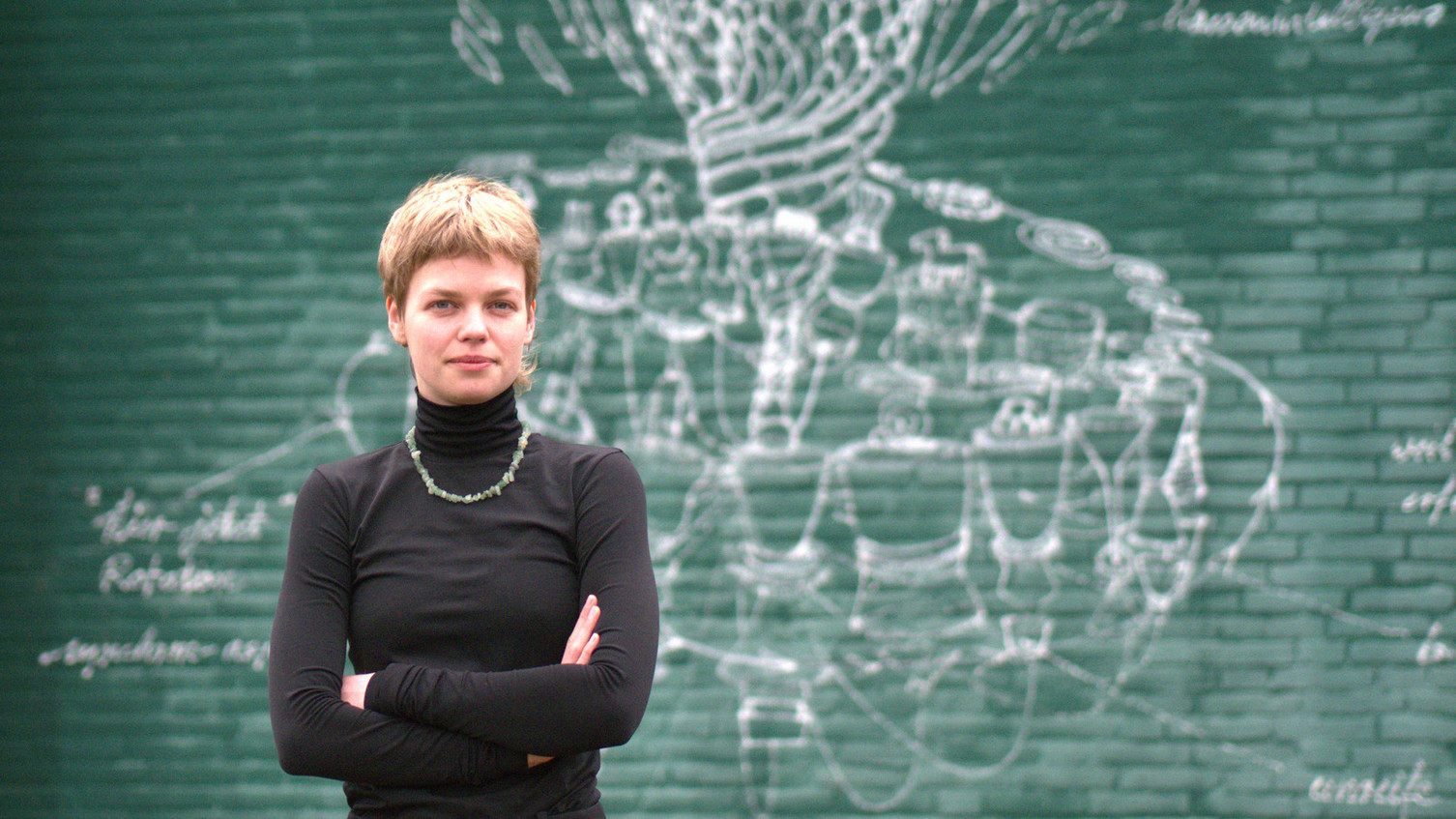
03.04.2023 Chiara Welter had already moved to Amsterdam for her Masters degree before she applied for the programme Critical Studies at the Graduate School. Here, she has now found the orientation of Cultural Studies that makes it so special for her: Interdisciplinary, critical and undogmatic.
 ©Ciara Burgess/Leuphana
Why did you choose the programme Critical Studies - Arts, Theory, History at Leuphana Graduate School?
Two years ago I was already toying with the idea of going to the Leuphana Graduate School. When I received a full scholarship for a Masters degree abroad, I first moved to Amsterdam to study a Research Masters in Cultural Analysis with a focus on Arts & Culture. However, I quickly realised at the University of Amsterdam that I didn't feel at home in terms of discipline at the Amsterdam School for Cultural Analysis with its Anglo-American orientation and literary studies background. For me, studying Cultural Studies always means including sociological, philosophical and political questions. When a professor said to me during the presentation of a topic that my questions were not cultural analytical for her because I wanted to analyse a "real object", not a film scene or work of art, I knew it was time for me to look for something else. So I moved back to Germany and applied again for a place at Leuphana. It was not easy to end with my studies in Amsterdam and move away, but fortunately this decision turned out to be exactly right.
What did you study before your current Masters and how were you able to tie in with this study?
After a Bachelor degree in Cultural Studies with a similar focus as here at Leuphana, I was worried that the content would be repetitive, but that's not the case at all. Right from the start, the Masters was always challenging in terms of content and I was able to learn many new things in the very first seminars. At the same time, after the first Masters degree, it was particularly important for me to be able to use my existing knowledge. The theories and methodologies that I got to know in the Bachelor programme are bundled into central discourses in contemporary criticism and are thus also applied much more strongly. You also notice that in the discussions. I enjoyed the Bachelor programme, but I always asked myself: What am I actually doing with it? I got to know a wild mix of theoretical schools and topics and can now bring this prior knowledge together in the Masters and use it to further develop my own main topics.
To what extent is the Cultural Studies perspective of the programme enriching compared to a programme exclusively devoted to the arts?
For me, Cultural Studies questions are always interdisciplinary in nature due to the self-image of the discipline. There is no one right perspective; rather, you have to decide on a specific approach and be able to legitimise this decision. I find this play of the most diverse approaches immensely exciting and puts the person writing and researching into a much more active role in which one's own conditions of knowledge must be reflected upon. Ultimately, the Cultural Studies perspective is above all a question of social relevance: I want to foreground feminist and decolonial issues and ask how inequalities and social developments affect art and culture, how they find expression and can be negotiated here. A study of art usually remains much closer to the subject matter and therefore does not deal with such questions as centrally as Critical Studies Masters allows.
In your opinion, what role does art play in a critique of the present? Can you think of any examples?
Art can offer a qualitatively completely different approach to critical issues that news, theories or other textual treatments cannot achieve. Engaging with art is always also an emotional experience and therefore unpredictable, open-ended and with greater transformative potential. For example, I can read a text that denounces that many contemporary images of femininity continue to be sexist, in which it is quite clearly formulated what is sexist about these ideas of femininity and what negative consequences this has. But when I visit an exhibition on the subject, let's say at least an exhibition that is successful in this sense, then everything is less articulated here and I am addressed quite differently as a visitor. I can perceive how the artworks affect me, can thus observe affective and emotional reactions and draw my own conclusions. Ultimately, I can directly experience criticism in the form of art myself and there is a very productive potential in this experience where something new emerges every time. It is precisely in relation to this potential that I find the interplay of art and theory very exciting.
The cultural studies integration area brings together students from all Masters programmes at the Faculty of Cultural Studies. How did you experience these parts of the degree programme?
In the first semester, we took a historical perspective on the conditions under which Cultural Studies came into being. Especially since Amsterdam, I know how differently Cultural Studies approaches are understood. There is no such thing as "the" Cultural Studies in the singular, with a fixed canon. I thought the lecture series was a great opportunity to see this starting point and the associated difficulty in finding common ground. In the Cultural Studies integration area, we gained insight from various lecturers into their specific approach to Cultural Studies. I really like the fact that Leuphana does not try to represent a dogmatic programme of "its" Cultural Studies at this point, but rather that the disciplinary openness itself is programmatic.
What keeps you busy besides your studies?
I work for Prof. Beate Söntgen as a student assistant in the Department of Art History and really like how I can link the knowledge from the seminars with my work here. Otherwise, I have taken part in less of the university programme than I had initially expected or planned. The degree programme is quite time-consuming, especially if you try to complete it in the standard period of study. In the coming semesters, I would like to take more time for initiative work and the like.
What do you think of Lüneburg as a place to study? What should everyone have done in or around Lüneburg?
Since I go to Berlin regularly, I have a good change between a small, cute study town and a big city. I like Lüneburg with its nature, cafés and bars, and I enjoy cycling, jogging and strolling around here. In addition, you can travel to Hamburg for free with the semester ticket and take advantage of the great cultural offerings there, which I can only recommend to anyone! Lüneburg is an ideal place to study, for those who don't need the big city right on their doorstep every day.
What are your plans after your Masters degree?
I wanted to follow up the Research Masters in Amsterdam directly with a PhD. Now my plans have changed and I will see what happens in the coming semesters. I still want to do a PhD, but the orientation of the Masters programme also makes me want to work in a museum again.
To whom would you recommend your Masters at the Leuphana Graduate School?
In my opinion, Critical Studies is exactly the right Masters for anyone who understands Cultural Studies in the plural, who has a desire for theory and for finding their own position in this diverse field. If you want to really get your money's worth in this degree, you also have to like text work. So perhaps a little pinch of nerdiness is also an advantage.
Interviewer: Jonas Kernein
Simone's experiences
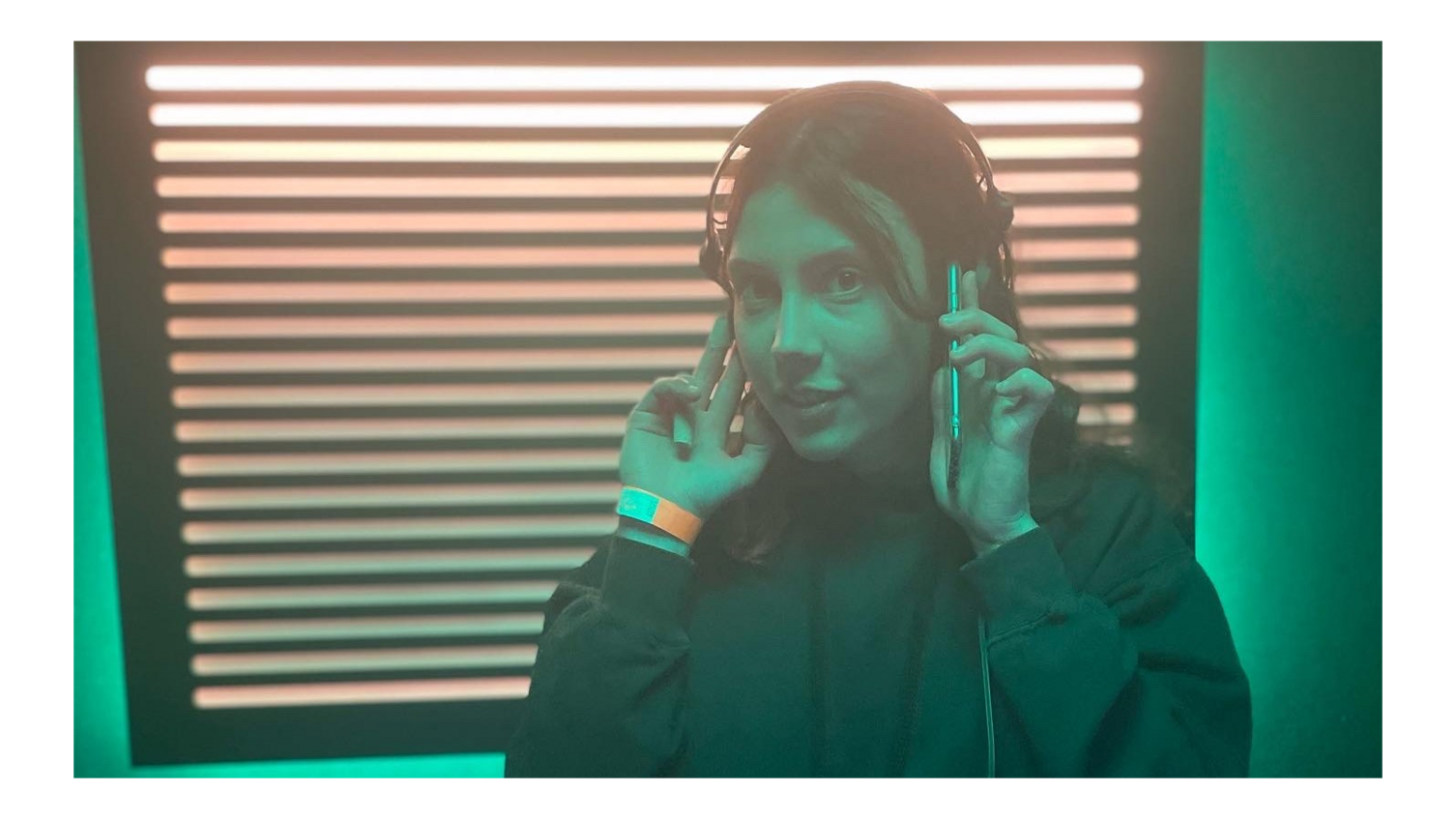
21.02.2022 Simone Curaj is firmly rooted in the field of arts. However, what she particularly appreciates about the Masters in Critical Studies - Arts, Theory, History is the opportunity to set new accents and change perspectives.
 ©Privat
What did you study before you started your Masters degree at Leuphana Graduate School?
I previously studied art history and sociology.
Why did you choose the study programme Critical Studies?
Interdisciplinary work, perspective, the prospect of thinking and academic practices. Wanting to leave your own field and not being limited to the art field and the business. The lecturers were known to me from my own research and I found the foci interesting. I was also attracted by the proximity of the programme to the doctoral research group Cultures of Critique and the legacy of Leuphana's art space in the 1990s.
To what extent does the programme enrich a purely art-scientific perspective and what can you take away from it?
It enriches the perspective with numerous accents from philosophical and political theory. Doesn't always directly encompass an object and the art-scientific discourse and therefore enables me not to limit myself to the artistic field. The art-scientific perspective is anyway permeated by other disciplines and so the disciplinary opening helps to gain critical perspective.
During your studies, you have the opportunity to choose between different modules and set your own priorities. Which modules did you choose? What do you mean by that?
So far, I have chosen the module Critique and Enlightenment. Every year, the modules and courses are filled by new teachers, which is why the content frameworks do differ. That's why it's hard to say to what extent the idea basically fits. However, one can say that texts and authors of critical theory - classics, but also current debates - are discussed and sometimes read in connection with literary and artistic works.
What keeps you busy besides your studies?
I am a curatorial assistant at the Halle für Kunst Lüneburg and work in an art gallery in Hamburg.
To whom would you recommend the Masters in Critical Studies - Arts, Theory, History?
I recommend the Masters to anyone who likes to take a theoretical-scientific perspective. That doesn't mean that you have to follow a different way of working yourself, but that you want to mix these accents in your own work. The programme is interdisciplinary, which of course also means that accents are sometimes placed here or there, so it's up to you to link your own interests in the assignments or exams with the topics of the seminar - as always. Studying this programme therefore also means getting involved in something new and also being able to endure not yet understanding something and coming up with new points of view. The exchange with fellow students can then be all the more enriching and enjoyable.
Interviewer: Jonas Kernein
Benedikt's experiences
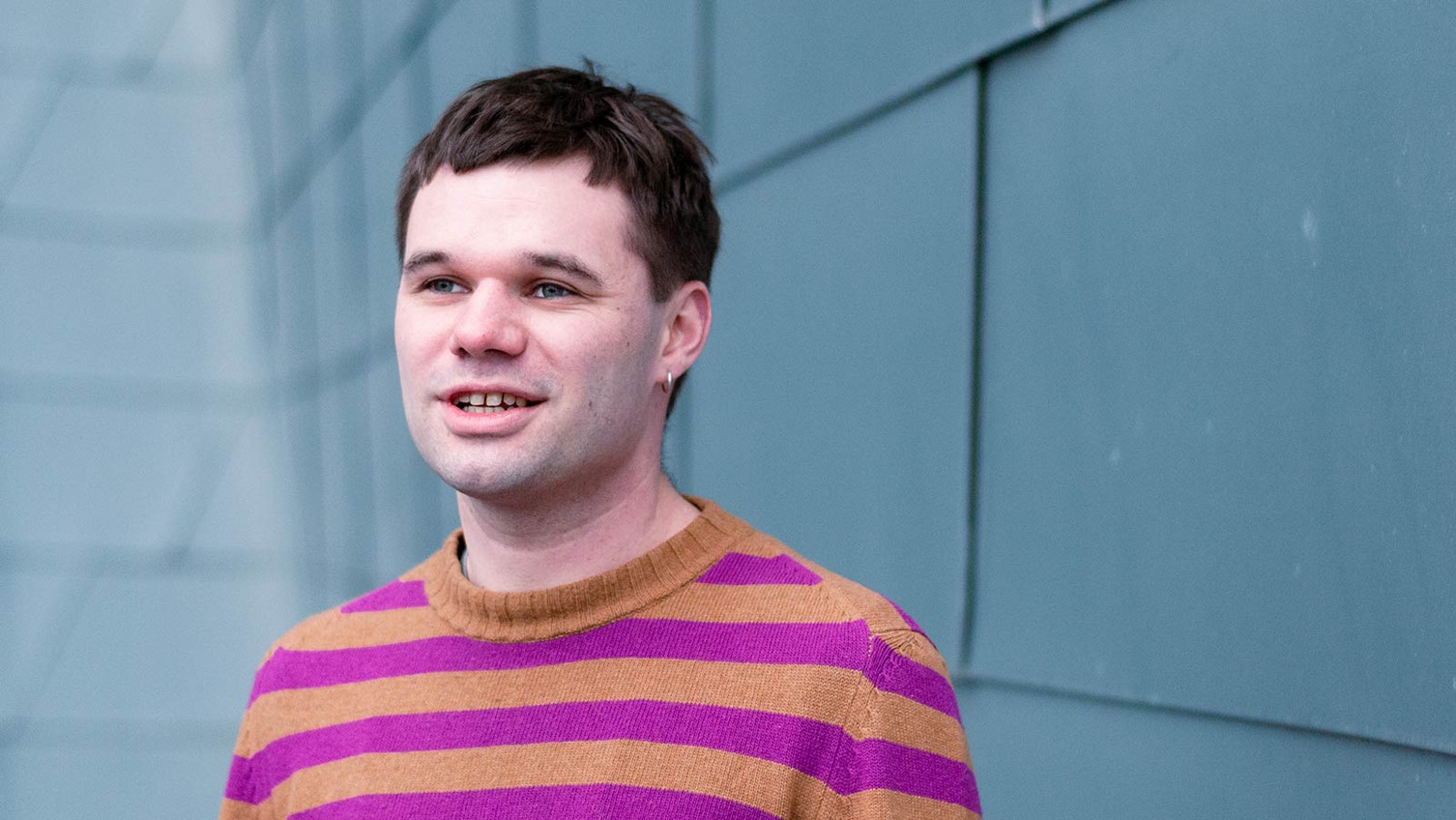
20.12.2021 The 27-year-old is one of the first students in the Master's programme "Critical Studies - Arts, Theory, History" at the Leuphana Graduate School. By taking a broader view of philosophy, the student gains deeper insights.
 ©Leuphana/Marie Meyer
Benedikt Kuhn has two mainstays: one artistic and one academic. The 27-year-old studied the Bachelor's programmes Literary Writing and Philosophy at the University of Leipzig. After completing both programmes, it was clear to him that he would like to immerse himself even more in theory and science: "Literary writing is an artistic study and I will continue to write. But after my bachelor's degrees, there were still a lot of philosophical questions for me in particular."
He heard about Leuphana through a friend. "She was doing the Studium Individuale programme at the time," Benedikt Kuhn recalls. He came across the degree programme " Critical Studies - Arts, Theory, History". In Benedikt Kuhn's opinion, the programme opens up philosophy to other disciplines, such as media theory, queer studies or critical philosophy of science: How can we think about bodies and sexuality today? How does our perception change in the digital? What does a critique of the natural sciences mean from a humanities perspective and how do these questions relate to each other? "For example, I have gained a new perspective on Marx, especially in relation to questions of gender and reproductive labour, which remain underexposed in his theory. Many teachers in our programme do an intersectional critique of political economy, for example by showing how the social category of class can be understood in relation to other categories such as gender, "race" or disability." The interdisciplinary view enriches his studies, but also challenges him: "The breadth always calls me to focus on the core of my interest, philosophical questions. Nevertheless, I experience the expansion of my disciplinary horizon as a huge enrichment and feel comfortable in critical cultural studies."
Benedikt Kuhn can imagine continuing to work academically after completing his Master's degree. His desire to do a doctorate is met with open ears by the teaching staff: "Anyone who would like to write a doctoral thesis after graduation is very well supported," he reports. During his studies, he was impressed by the small working groups and the close supervision. Benedikt Kuhn brings with him what the degree programme demands of him: an enthusiasm for contemporary cultural, aesthetic and political issues as well as an above-average interest in theory.
Author: Dr. Marietta Hülsmann
Contact and Counselling
First contact point
The Information Office (Infoportal) is your contact point for
- general information on the application procedure
- initial questions about the study programmes offered at Leuphana
- making an appointment with the Graduate School Student Counselling Service.
Information Office
Building 8, Ground Level
Fon +49.4131.677-2277
studierendenservice@leuphana.de
Campus opening hours
Mon - Thu 9.00 am - 4:00 pm
Fr 9.00 am - 12 noon
Student Counselling
To make an appointment with our Student Counselling Service, please use our booking tool on our website.