
Experience reports - Sustainability Science: Governance and Law
On this page you find experiences of current and former students about the Masters Sustainability Science: Governance and Law at Leuphana Graduate School.
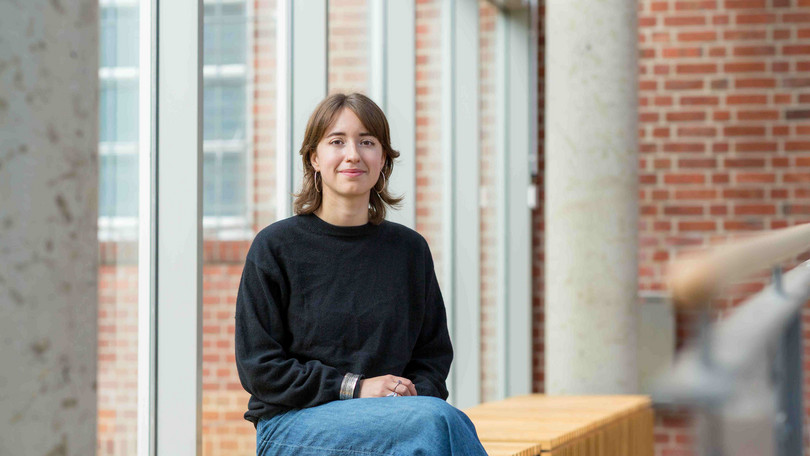
Lene's experiences
11.09.2026 With a Bachelor’s degree in Politics and Society, Lene Remshagen came to Leuphana to place a stronger focus on sustainability in her studies. In the Master’s program Sustainability Science: Governance and Law, she particularly appreciates the diverse perspectives on sustainability and the opportunity to connect theoretical knowledge with practical experience.
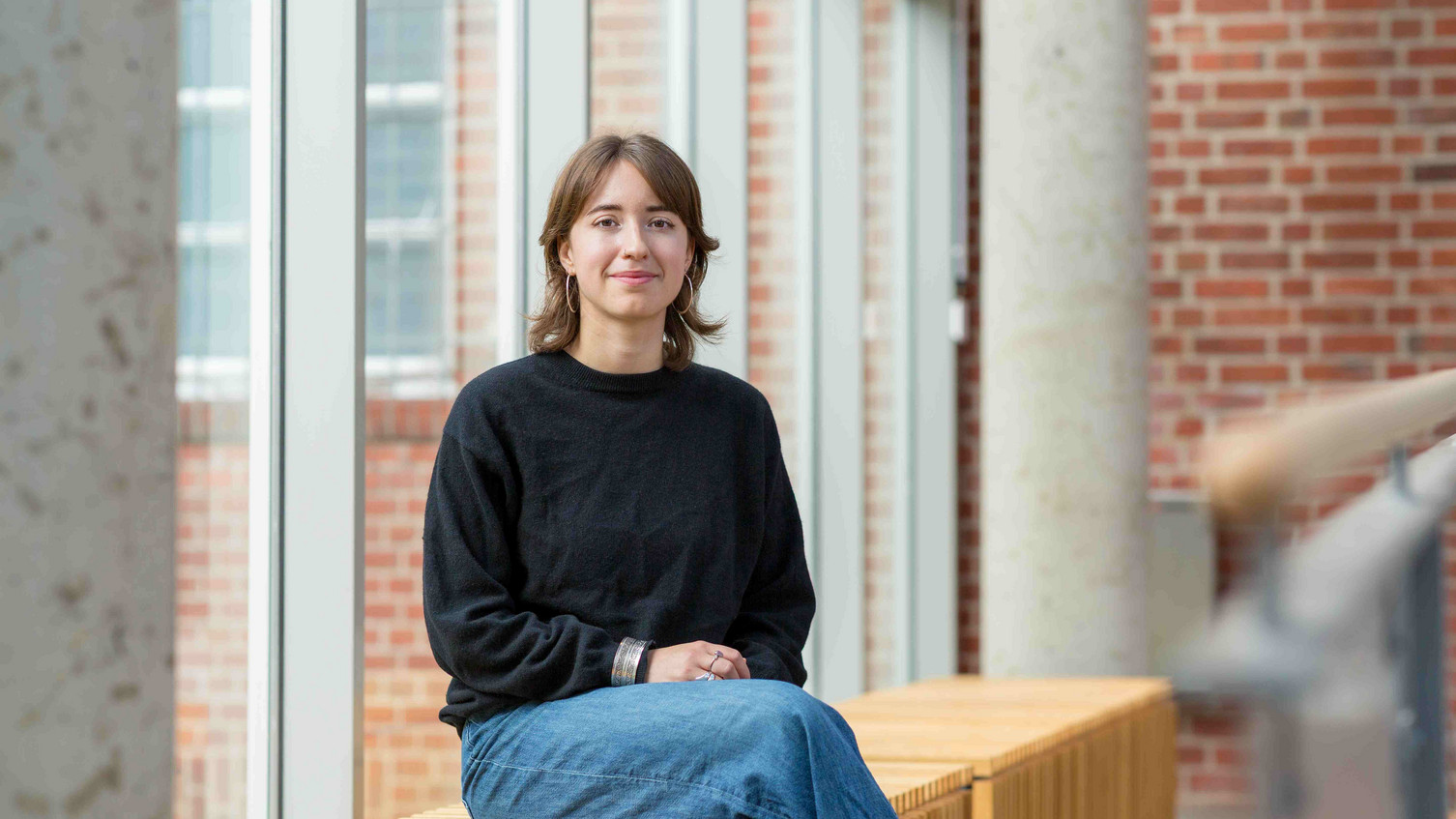 ©Leuphana/Tengo Tabatadze
Why did you choose to study Sustainability Science: Governance and Law?
During my Bachelor's degree, I hardly had the opportunity to delve deeper into sustainability, so I looked for a Master's program that would fit my background in political science while also focusing on sustainability. Since I had worked in sustainability management at my previous university, I had been familiar with the University of Lüneburg for quite some time, as we often used it as an best practice example. This made me want to pursue my Master's degree in Lüneburg from an early stage.
What were your expectations before you started your Master’s degree at Leuphana, and what do you like most about Sustainability Science: Governance and Law?
I had high expectations for the university in general, but especially for the teaching. These were largely met; the law modules, in particular, were fascinating. One or two of the political science modules were a bit less enriching for me personally, as they were sometimes too theory-heavy.
Overall, however, I’m very satisfied with the Master’s program. I learned a lot of new things, including in other areas thanks to the complementary modules and electives. The transdisciplinary project was a lot of fun and added a very practical component to the program. Another highlight was the field trip to Brussels as part of a profile module.
What did you study before starting your Master’s degree, and how were you able to build on your previous studies?
I earned a Bachelor’s degree in Politics and Society with a minor in Economics. That program was already interdisciplinary in nature and thus provided a good foundation for the transdisciplinary approach at the University of Lüneburg, which was new to me. My Bachelor's degree gave me a solid foundation for the political science modules, though these are quite manageable even without a relevant background. The law modules were completely new to me, but they were designed in a way that made them challenging yet definitely doable.
Leuphana sees itself as an inter- and transdisciplinary university. The orientation of your study program is also interdisciplinary. How do you perceive this?
Many courses are designed to be interdisciplinary, which I think makes them more interesting. In addition, all students complete a transdisciplinary project in which they delve deeper into a practical issue. That’s a nice change of pace from the otherwise rather theoretical group projects. For our project, we organized a workshop on designing a garden for a neighborhood management initiative in Lüneburg. The goal was to make the garden more accessible and attractive, as well as to address different needs.
What do you particularly like about the campus and the city of Lüneburg?
I really like that there are so many events on campus – whether it’s flea markets, concerts organized by the AStA, or the university cinema. Plus, everything is close together: the library, the cafeteria, and the seminar rooms and lecture halls. In general, it’s great how quickly you can get from A to B in the city by bike. The city center is really charming: there are great cafés, places to relax, and nice bars. The proximity to Hamburg is also great; taking a trip to Hamburg on the weekend is a nice change of pace from small-town life every now and then.
What is the relationship like with other students and lecturers?
Since there are only a maximum of 25 students in SGAL, we all know each other well which creates a family-like atmosphere in classes. The lecturers were almost always very approachable and accommodating. In the first semester, almost all of the courses are taken together with students from the other Sustainability Science programs. That was great because it gave me the chance to make friends outside of my own program.
Did you spend a semester abroad? If so, where did you go, what did you particularly enjoy about it, and to what extent would you recommend studying abroad to new Master's students?
I spent a semester abroad at the BOKU University in Vienna during my fourth semester. While it wasn’t an extraordinarily unique cultural experience, I would still highly recommend it. BOKU is very similar to the University of Lüneburg and offers a wide range of courses, especially since you can choose courses from any degree program. There are a lot of international students, so you can get by speaking very little German if you want to. Vienna is also a beautiful (sustainable) city with a high quality of life. I did find the bureaucratic hassle quite high, but it’s definitely worth it.
Have you decided on a topic for your Master's thesis yet, and do you have any plans for after graduation?
At the moment, I’m still in the process of choosing a topic, but I’d like to write my Master’s thesis on energy transition or energy policy. After graduation, I’ll start looking for a job. I’m interested in many fields; right now, my top choice would be to work in the political field on energy transition. However, I can also see myself working for a local government or an NGO.
Are there any tips you can give new Sustainability Science: Governance and Law Master’s students, that you would have loved to know at the start of your studies?
At first, I was a little nervous about the law modules, but they turned out to be really manageable. The modules are designed so that you can complete them without any prior legal studies. You really start with the basics and then delve deeper into specific topics.
There’s a lot of group work in the courses, which can be tricky at times. But the vast majority of fellow students are engaged, so group work goes really smoothly. The Code of Conduct – which you usually establish within the group at the beginning – also helps to organize these projects.
In general, there’s no need to worry too much; the program is definitely feasible. It’s also normal not to stress out and not to finish within the standard period of study.
Who would you recommend the Sustainability Science: Governance and Law Master's program to, and what difference can SGAL graduates make?
People who want to engage with sustainability issues and are particularly interested in the governance of processes, the regulations behind them, and both national and international perspectives will find SGAL to be the right fit. Since there’s a large selection of electives and plenty of options in the complementary courses, you can really explore a wide variety of directions.
With dedication, SGAL graduates can make a difference in many different fields. The knowledge gained during the program helps, but the activist spirit that many students at the university embody can also be a source of motivation and help foster a deeper political awareness.
Contact and Counselling
First contact point
The Information Office (Infoportal) is your contact point for
- general information on the application procedure
- initial questions about the study programmes offered at Leuphana
- making an appointment with the Graduate School Student Counselling Service.
Information Office
Building 8, Ground Level
Fon +49.4131.677-2277
studierendenservice@leuphana.de
Campus opening hours
Mon - Thu 9.00 am - 4:00 pm
Fr 9.00 am - 12 noon
Student Counselling
To make an appointment with our Student Counselling Service, please use our booking tool on our website.