
Report Laura Wenzel
Social Pedagogy in diverse Societies
2024-09-13 Laura Wenzel finished her PhD on refugee family research this summer. Read how she managed the challenges of a doctorate and balancing academia and family life.
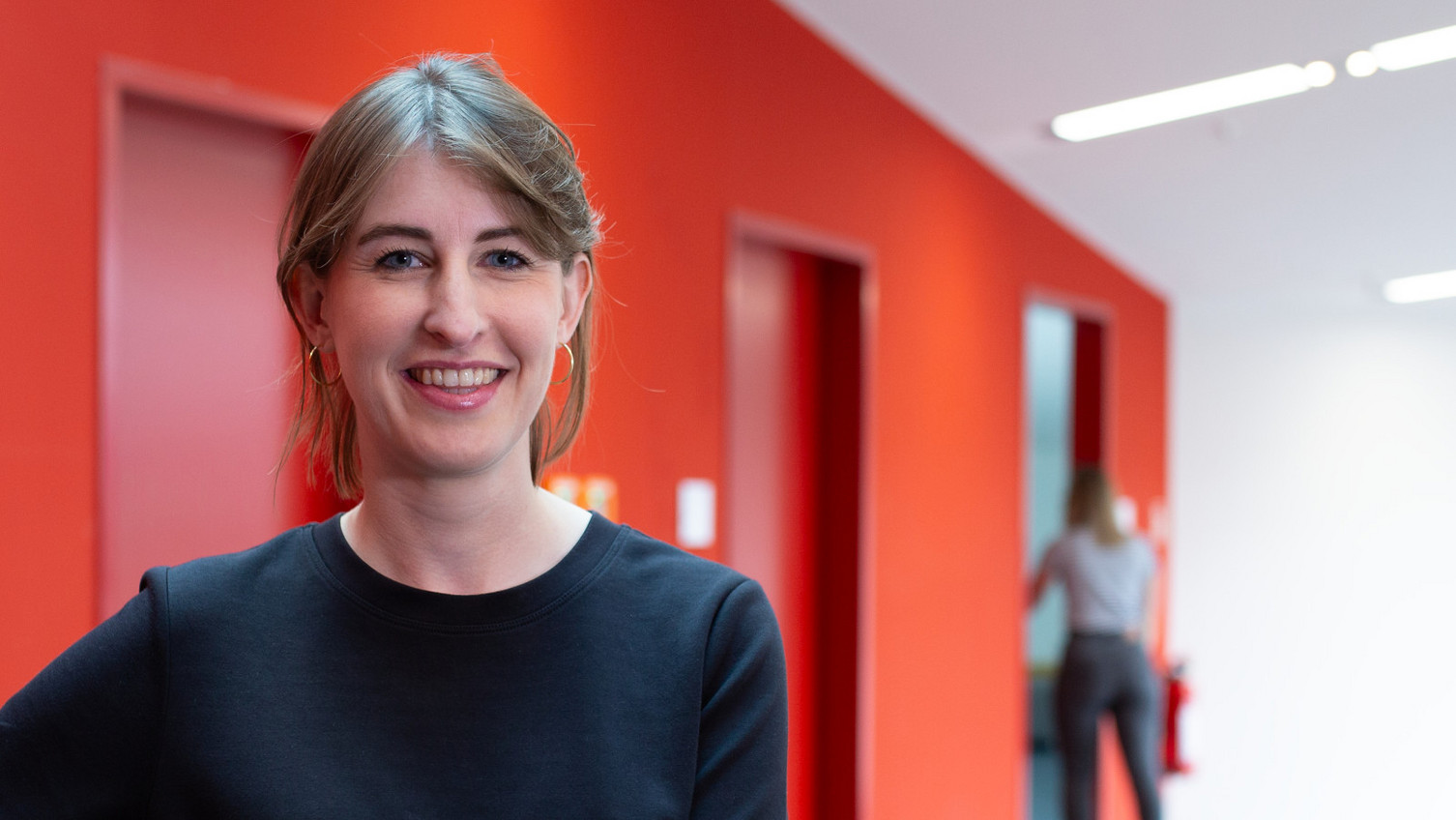
You recently finished your PhD, time for a look back. How did you get to Leuphana?
Coming to Leuphana was topic-driven: I completed my Master's degree in Sociology and Social Research and then worked at a non-university research institute on transnational families in the context of flight. The project ‘Integration through trust’, which focussed on refugee families and their access to early education services, immediately appealed to me. On the one hand, the thematic links to my previous work and, on the other, the combination of basic research, practical relevance, and transfer.
It was very helpful for me to write my doctorate in the interdisciplinary project and to find my place as a sociologist in socio-educational work and research contexts in the very appreciative and interdisciplinary doctoral programme.
Doing a doctorate requires stamina. What challenges did you face?
The start of the data collection of my research coincided with the first coronavirus lockdown. That was a shock at first and we had to be very flexible so that we could continue our research. I am very glad that we quickly tried new ways at the university and continued the doctoral courses and the doctoral research group in online mode. That meant important support in getting through this challenging time.
The Leuphana mentoring programme was also very important for me. I got to know many women* doing their doctorates from other disciplines and benefited greatly from the exchange - also in relation to my greatest personal challenge: I had my daughter during my doctorate. Doing a doctorate with a child presented me with completely different questions, e.g. with regard to my time and resource management. Unfortunately, it is often not easy to reconcile parenthood with qualification projects, especially in academia. I had really positive experiences here and received a lot of support from my first supervisor, the doctoral research group, and my colleagues.
You have submitted a cumulative dissertation, what is special about this approach?
A cumulative dissertation, in which several thematically related scientific articles are developed, requires a high degree of organisation, as you parallelly do research, writing and management of the publication process. It can take a long time for the articles to be published in scientific journals. At the same time, early publication increases the visibility of your research. I was able to gain a lot of experience during my doctorate, e.g. in relation to peer review processes and collaborative writing processes, which is very helpful for me now. Gladly, I didn't have to manage all of this alone, but received support on ‘academic writing’ in the doctoral programme and the continuous feedback from my doctoral supervisors and colleagues. At the same time, I had enough freedom to find my own path and style.
Congratulations on your PhD. What's next for you?
Thank you! First of all, I take a deep breath. And, what I've learnt at numerous scientific conferences: you don't have to have an answer to every question straight away, you can also think out loud sometimes. In a figurative sense, this also applies to my current phase. I am currently sharing a position as a research assistant in tandem with a colleague. At the same time, I'm starting to develop ideas for further research proposals by exchanging thoughts a lot and attending conferences. I'm also doing further training to become a systemic counsellor so that I can open up other fields of work if necessary.