

The doctoral courses
A doctoral program is much more than just writing a dissertation — it is an intensive period of research, reflection, and personal growth.
The modules presented here guide you along this path and help you structure your academic work in a well-founded, responsible, and effective manner. You will explore the theoretical foundations of research, deepen your methodological skills, and learn to examine complex issues from diverse disciplinary perspectives. At the same time, you will develop key skills to clearly communicate and visualize your research and position it within both academic and societal contexts. Continuous exchange with other doctoral candidates opens up new perspectives, fosters critical thinking, and strengthens your ability to work independently and reflectively. This creates an inspiring environment in which you not only advance your dissertation project but also actively shape your own role as a researcher.
We also want to give you a variety of perspectives on the doctoral courses. Take a look at testimonials from doctoral candidates, interviews with various faculty members, and an interview with Professor Henrik von Wehrden, director of the Sustainability Science doctoral research group at Leuphana University of Lüneburg.
 ©Leuphana Graduate School
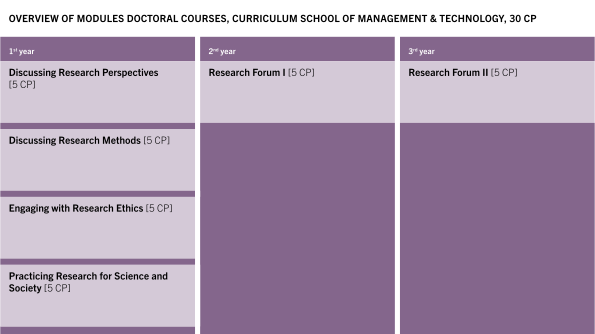
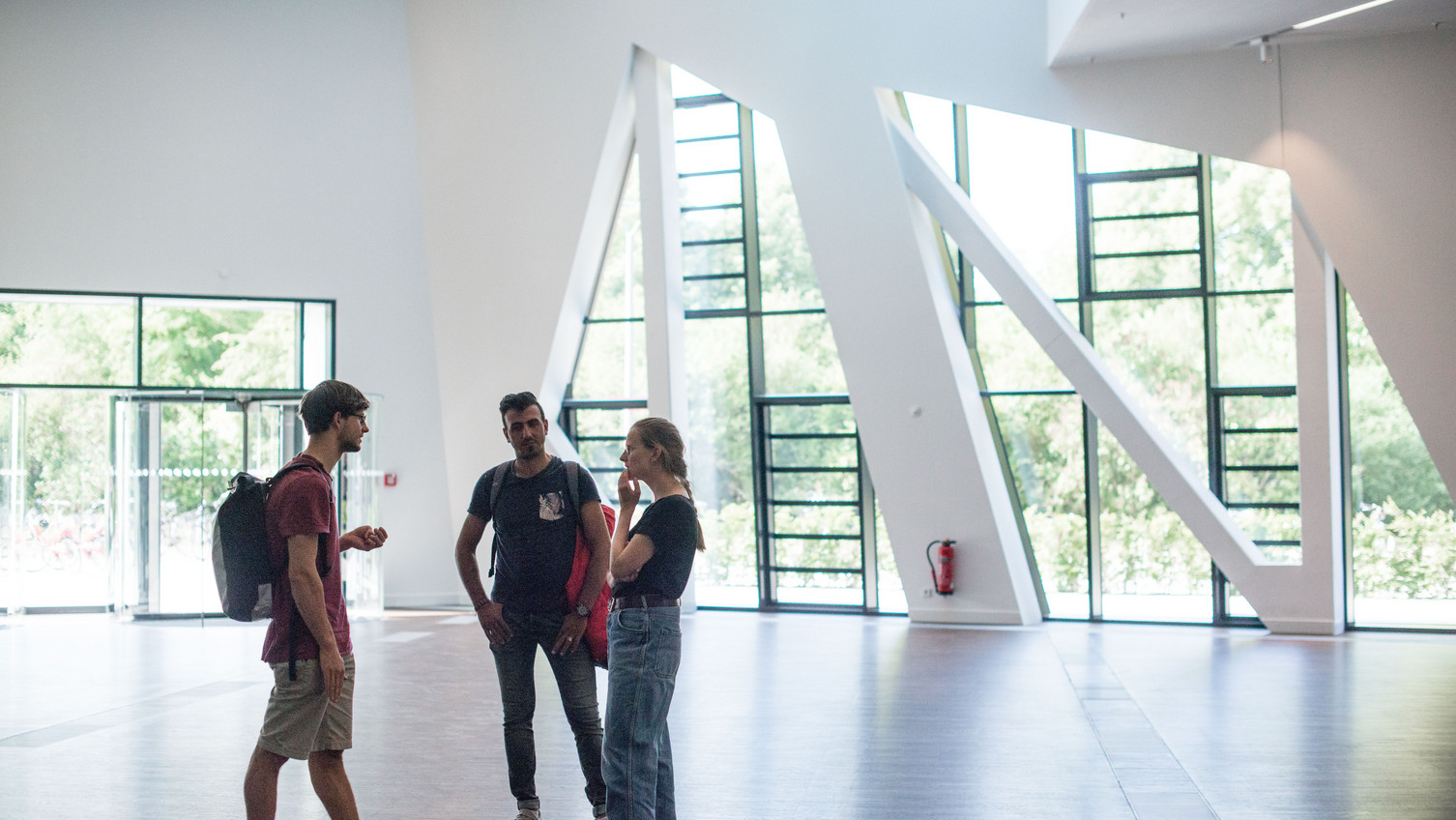
Discussing Research Perspectives
In the module “Discussing Research Perspectives” you critically explore the foundations, responsibilities, and societal relevance of your research. Through engaging with philosophy of science, interdisciplinary debates, symbolic interactionist perspectives, and global challenges, you reflect with other students on how knowledge is produced and positioned. Interactive discussions and workshop formats help you connect theory to your own doctoral project, strengthen your methodological and ethical awareness, and develop a clearer understanding of your role as a researcher.
 ©Leuphana/Jannis Muser
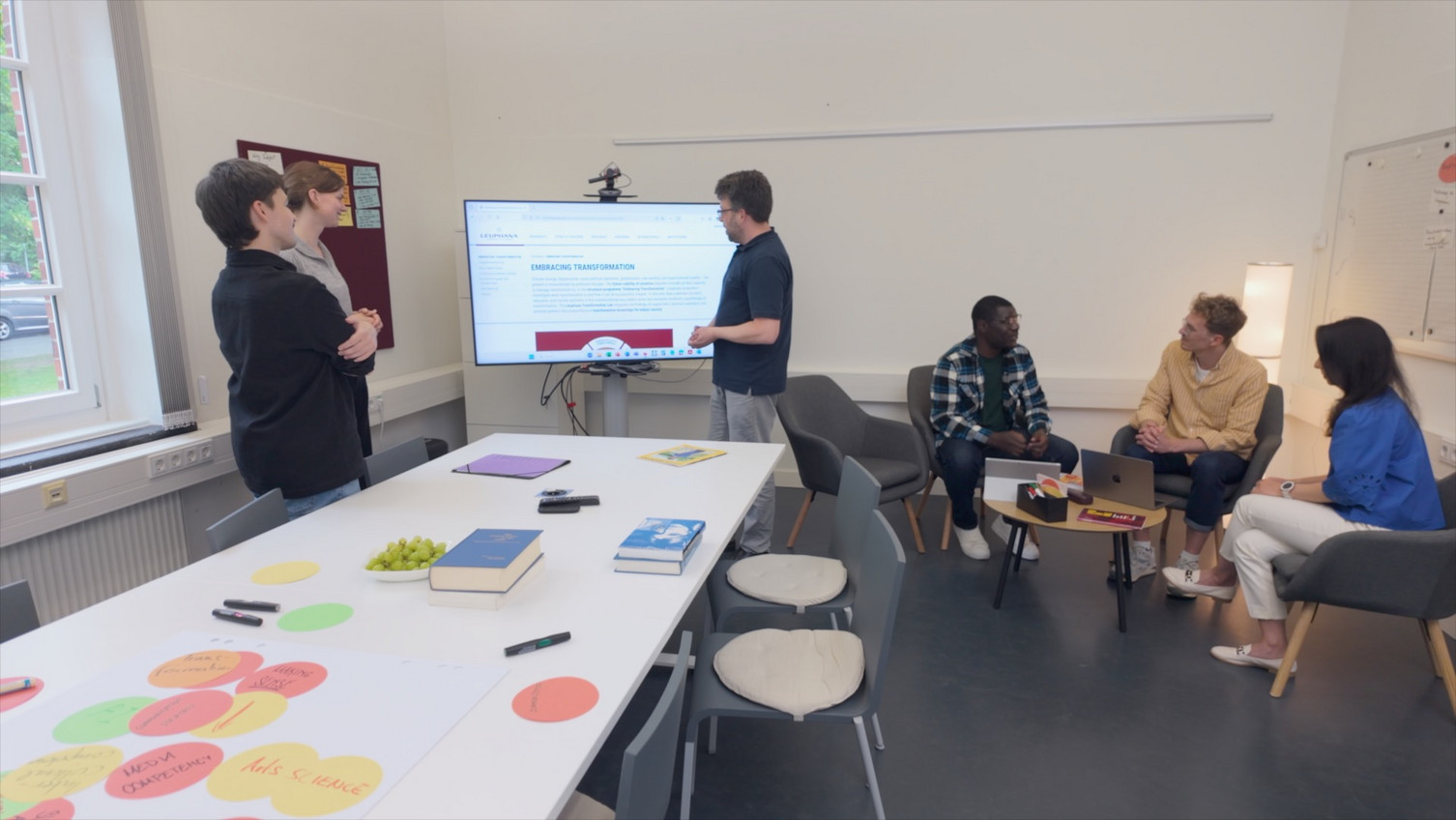
Discussing Research Methods
The module “Discussing Research Methods” provides you with an overview of various research methods and the opportunity to discuss their application in behalf of your project. Throughout the courses, initiative, creativity, and critical thinking will be appreciated and encouraged. The aim is to facilitate progress in your thesis project, to stimulate the reflection on the proposed methods and to offer an analytical and critical point of view in the field of the optimization also for students with less knowledge on this topic.
 ©Christian Gatzert
Engaging With Research Ethics
The courses around research ethics serve as a starting point of your PhD journey at Leuphana. By starting with an open exchange about the expectations and goals for your PhD we frame together how to conduct each and every individual research best: What are competencies relevant to be a successful PhD students? What are opportunities at your institution? What are responsibilities of you as a PhD students? Our goal in this course is to answer your staring questions best, and to work on an agenda and planning that serves as a reflexive point of your phD in addition to your research project and your supervisors.
 ©Leuphana/Brinkhoff/Mögenburg
Practicing Research for Science and Society
In the module “Practicing Research for Science and Society” you actively develop the practical skills needed to communicate, visualize, publish, and ethically ground your research. You explore innovative forms of representation — from artistic and design-based approaches to scientific visualization — and learn how to make complex knowledge accessible to diverse audiences. Through elevator pitches, journal writing, and peer review simulations, you sharpen your ability to present and publish your work. At the same time, you reflect on research ethics, good scientific practice, and self-management in the doctoral process. The module empowers you to position your research responsibly and effectively within academia and society.
 ©Leuphana/Jannis Muser
Research Forum I
The Research Forum I, usually attended in the second year, is held as a joint event for all four doctoral programs of the Faculty of Management and Technology, as part of the M&T Conference Days. The individual Research Forums of each program are organized as parallel tracks, allowing participants to move freely between them. This format is intended to encourage attendees to look beyond their own field of expertise by attending presentations from other disciplines. The following year, another forum will offer the opportunity to build on the experiences gained from the first presentation.
The Conference Day will take place on the campus of Leuphana University Lüneburg. As part of the Research Forum, participants are expected to present the current state of their research, followed by a discussion with their peers (20-minute presentation + 10-minute discussion, The presentation language is English.) The presentation should reflect the participant’s own individual work.
 ©Christian Gatzert
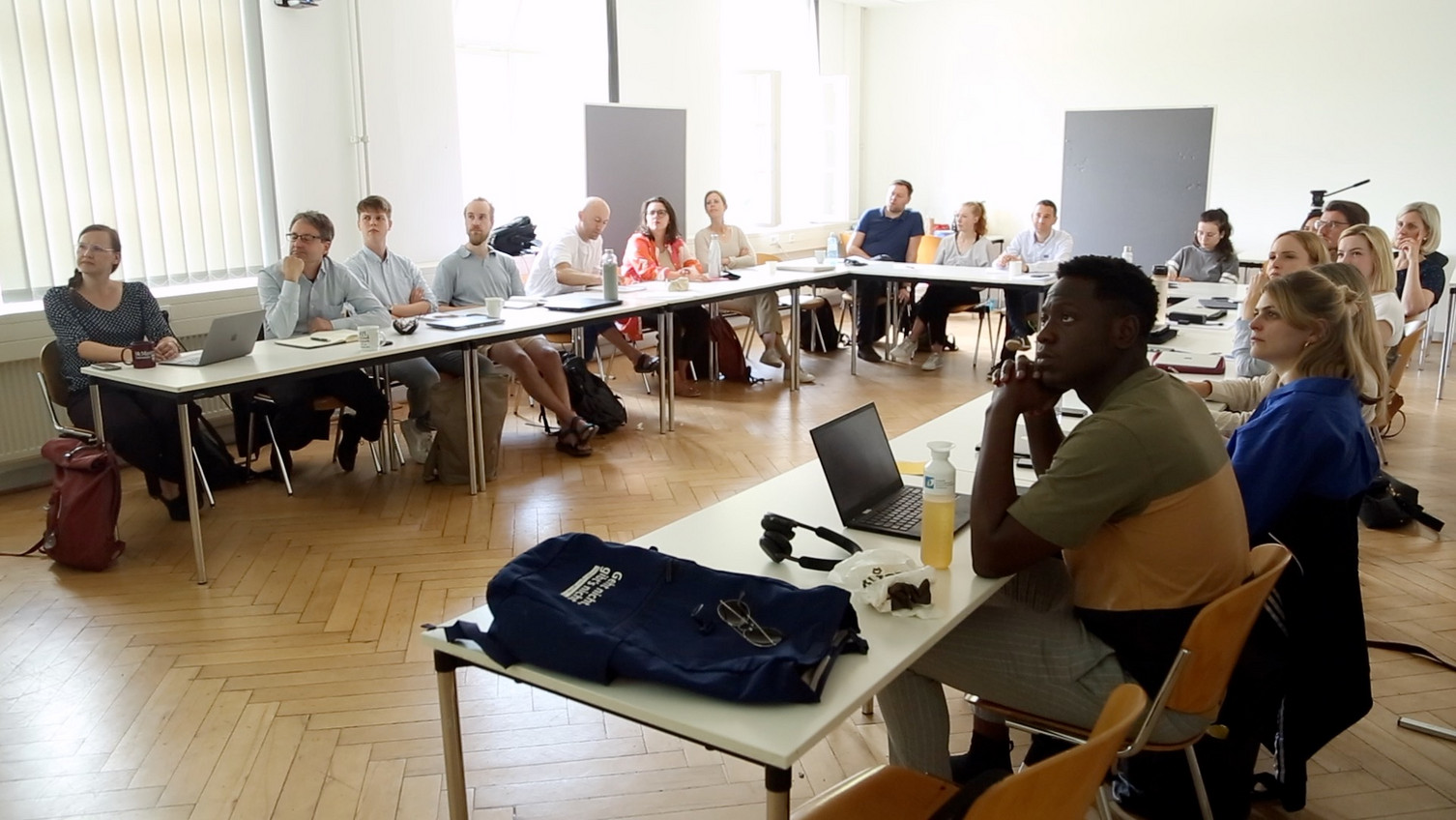
Research Forum II
Usually taking place in the third year, the Research Forum II like Research Forum I (see above) enables doctoral students to be integrated into the respective disciplinary working group or doctoral program. The module offers the further opportunity to present research approaches and methods and to discuss them in an (inter)disciplinary context.
 ©Christian Gatzert
How to doctoral courses
Course Catalogue
The course catalogue is published in myCampus via the myStudy application twelve weeks before the start of lectures. The user guide on the myStudy homepage explains how to create your timetable online or register for courses. Some courses may have a limited number of participants. You should therefore check the course catalogue for the coming semester in good time.
Signing up for Doctoral Courses
You can register for courses on the doctoral courses via the myStudy platform, where the course catalogue is published, among other things. You can access myStudy with your Leuphana account either directly via the myStudy website or via the campus management system myCampus.
Please note: When using myCampus, you will find the application "myStudy" under the heading "Services". After clicking on the application, a new window will open in which you must then select the "Start login" button.
Certificate of Attendance for Doctoral Courses
In order for your participation in the classes of the doctoral courses to be documented in myCampus, you must register in myStudy for the class(es) you wish to attend. Six months after the end of the respective semester at the latest, you can see in myCampus for which class your participation has already been certified.
In the doctoral courses, you complete each of the six modules with a certificate of achievement (5 CP each). Possible certificates of achievement are 1) presentation and 2) report. The modules are not graded.
When submitting your dissertation, you must prove that you have successfully completed all modules (with a total of 30 CP).
Recognition of External Credits
If you wish to have credits obtained in classes at other institutions recognized towards your doctoral courses, please submit an application to the spokesperson of your doctoral research group.
The application form must be accompanied by appropriate proof of successful participation from the external institution and brief written confirmation from your supervisor. This must show that the work to be recognized has contributed to your academic/scientific development as a doctoral candidate in terms of skills and expertise. Applications can only be approved if the external achievements are at least comparable with those required at Leuphana.
Please submit approved applications for recognition to student services.
Please note: credits obtained as part of a Bachelor's or Master's degree cannot be recognised.
Some examples of credit-bearing courses and summer schools for doctoral candidates can be found here:
PhD Network - Courses for PhD students
The Ph.D. Network is a cooperation between German (including Leuphana) and Danish universities and research institutions, as well as the Inter-University Centre Dubrovnik in Croatia.
The common goals are the establishment, development and consolidation of a network for doctoral programs. The network offers a mutual exchange of information on activities in the field of doctoral education via the website, which also provides access to these activities. No financial obligations arise from participation in these activities. The partners of the network support each other in raising funds for the expansion of further cooperation.
An overview of the courses offered for doctoral candidates can be found here: phd-network.eu
VHB - ProDok
The Association of University Teachers of Business Administration (VHB) offers various courses for doctoral candidates that also include interdisciplinary courses, e.g. methods courses and diversity courses. Here, you can find the current course overview of VHB.
Recognition for External Credits: Form
My Doctoral Studies


International Perspectives
The doctoral program at Leuphana is regularly enriched by International Visiting Fellows. Internationally renowned scholars and experts from a range of professional fields bring their perspectives and experience directly into teaching and academic exchange.
Through interdisciplinary intensive seminars, research discussions, and workshops, you have the opportunity to explore new approaches to research, reflect on your own doctoral project from different perspectives, and engage with international scholars. In this way, the doctoral program combines academic and methodological training with international perspectives and scholarly exchange across disciplines and national borders.
Would you like to learn which distinguished scholars have contributed to the doctoral program at the Leuphana Graduate School as Visiting Fellows in the past? Find out more here:
