Opening Days 2026: The Power of Good Questions
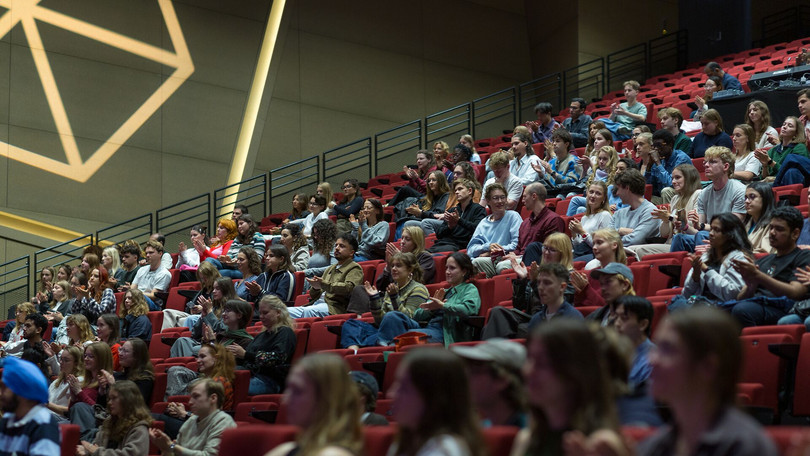
2026-10-07 Around 800 new master’s students and doctoral candidates kick off their studies and doctoral programs at the Graduate School together during the Opening Days. Over the course of seven days, they engage in intensive discussions on this year’s theme, “Research >> In::Security.” Prof. Dr. Magda Osman (Cambridge/Leeds) spoke with the new graduate students and doctoral candidates about good scholarship, doubt, and the absence of certainty.
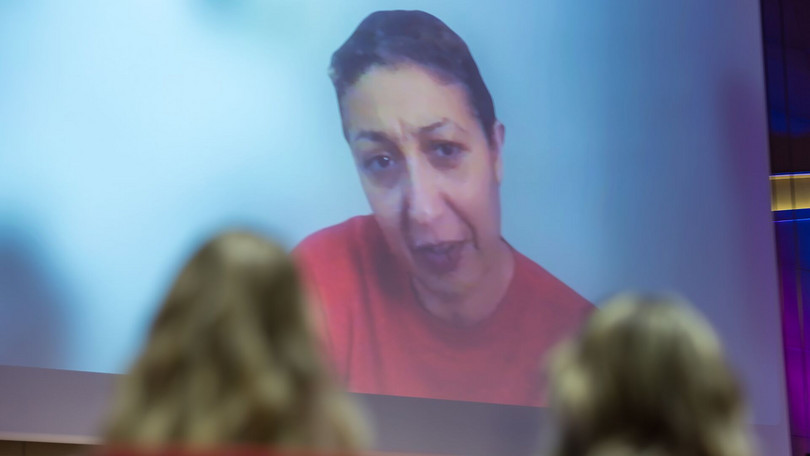
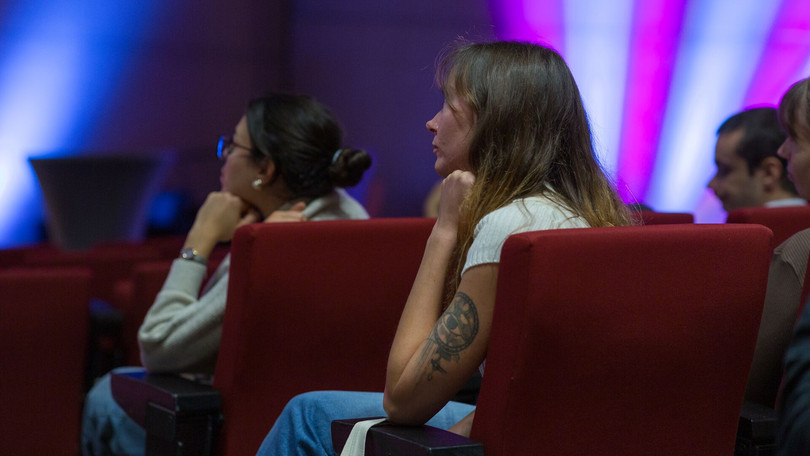
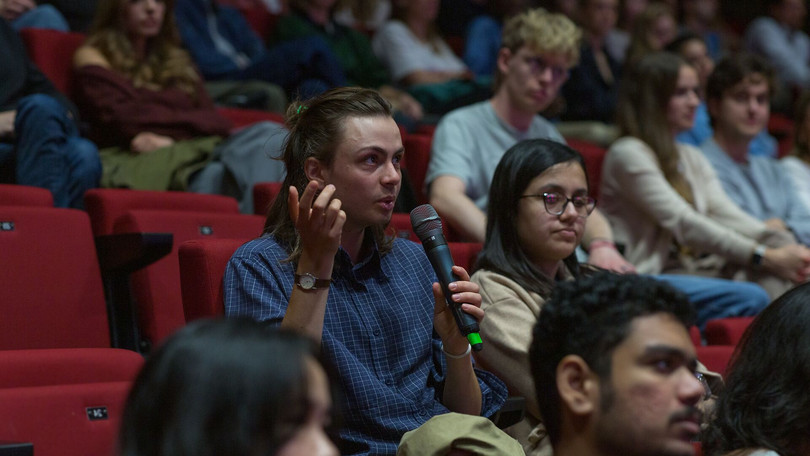
What does it mean to generate knowledge in a world where certainty is rarely absolute? Magda Osman explored this topic with the new graduate students. “You said that security is a fluid concept. So, for us as researchers in the field of security, what aspects or elements of a research question can be turned into a true security question?” asked a participant at the Opening Ceremony.
The psychologist and professor of decision research recommended first narrowing down the term itself. For researchers, she explained, it is not enough to simply assume a term like “security.” They must clarify what they mean by it and how that understanding can be measured within the respective research context—a so-called “operational definition.”
In the discussion with students and doctoral candidates, it became clear that in science, uncertainty does not begin only where evidence is lacking. It can already arise from the terms we use to describe a phenomenon. What sounds unambiguous at first can have different meanings upon closer examination.
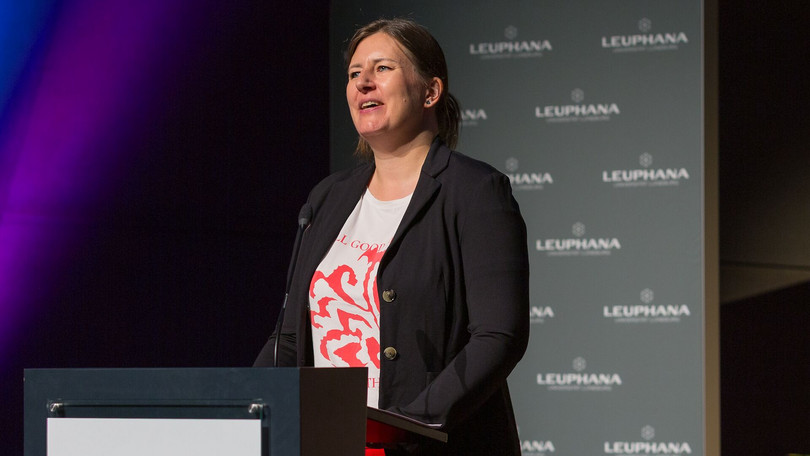
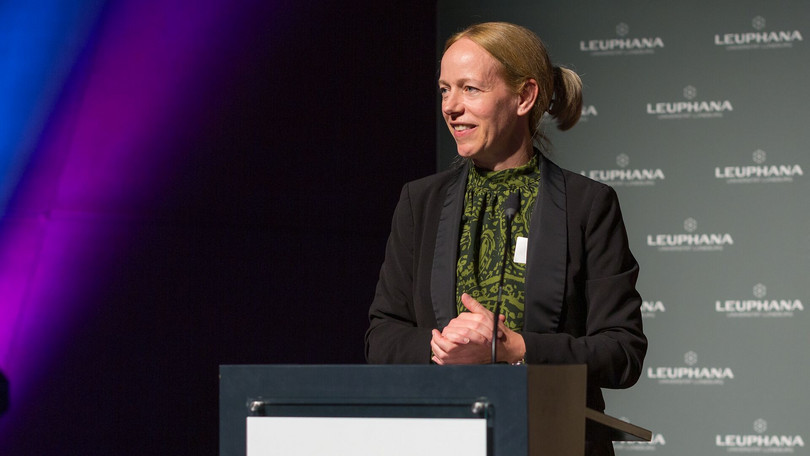
“What do we actually mean when we call something secure? Secure for whom, from what, and who decides?” asked Vice President Prof. Dr. Simone Abels in her welcome address and opening remarks for the academic portion of the Graduate School Opening Days, which in 2026 will be held jointly with Leuphana College under the theme “In::Security.”
Questions of security and insecurity are increasingly part of our everyday lives and also of academia today, the Vice President emphasized in her opening address. “Security is something we all seek at a personal and societal level, but it can mean very different things.”
Research can reveal where insecurity arises, whom it affects, and which forms have been overlooked so far. At the same time, it can challenge existing notions of security. In doing so, scholarly work does not always have to provide simple answers. “As researchers, your role is not necessarily to provide simple answers to complex problems,” Simone Abels told the new graduate students.
Interdisciplinary exchange is therefore particularly important: “What initially appears to be a question of security can look very different when viewed from another perspective.” A central component of the academic program during the Graduate School Opening Days is therefore the so-called Thematic Workshops, in which undergraduate and doctoral students from all disciplines explore the topic of insecurity from different perspectives. There is deliberately no single definition of “(In)Security.” Designed and led by postdocs and advanced doctoral candidates from Leuphana and other universities, the workshops cover topics ranging from artificial intelligence and sustainability to scientific evidence, trust, fairness, and accountability. This gives new graduate students the opportunity to look beyond the boundaries of their own disciplines and engage in interdisciplinary discourse.
In her presentation, Magda Osman took it a step further and asked what happens when scientific findings become the basis for political decisions. In doing so, she highlighted a fundamental contradiction: political decision-makers often need clear answers, while scientific research provides complex, preliminary, and subject-to-revision findings.
For Magda Osman, uncertainty is therefore not a weakness of science. On the contrary: questioning what we believe we know is an essential part of gaining reliable insights. “Research doesn’t become stronger because we eliminate every uncertainty,” she argued. Rather, research becomes stronger when scientists critically question their assumptions and remain open to changing their understanding.
Simone Abels encouraged the master’s students and doctoral candidates to ask questions, remain curious, and continually reexamine supposed certainties: “Never underestimate the power of a good question.”