
Doctoral Track: Tom Reckmann – Raised to be interdisciplinary
2026-11-09 A native of Oldenburg, he has just completed his master’s degree in Sustainability Science at the Leuphana Graduate School. At the same time, he has been admitted to the doctoral program for nearly a year, has already completed his first courses in the program, and has published internationally.
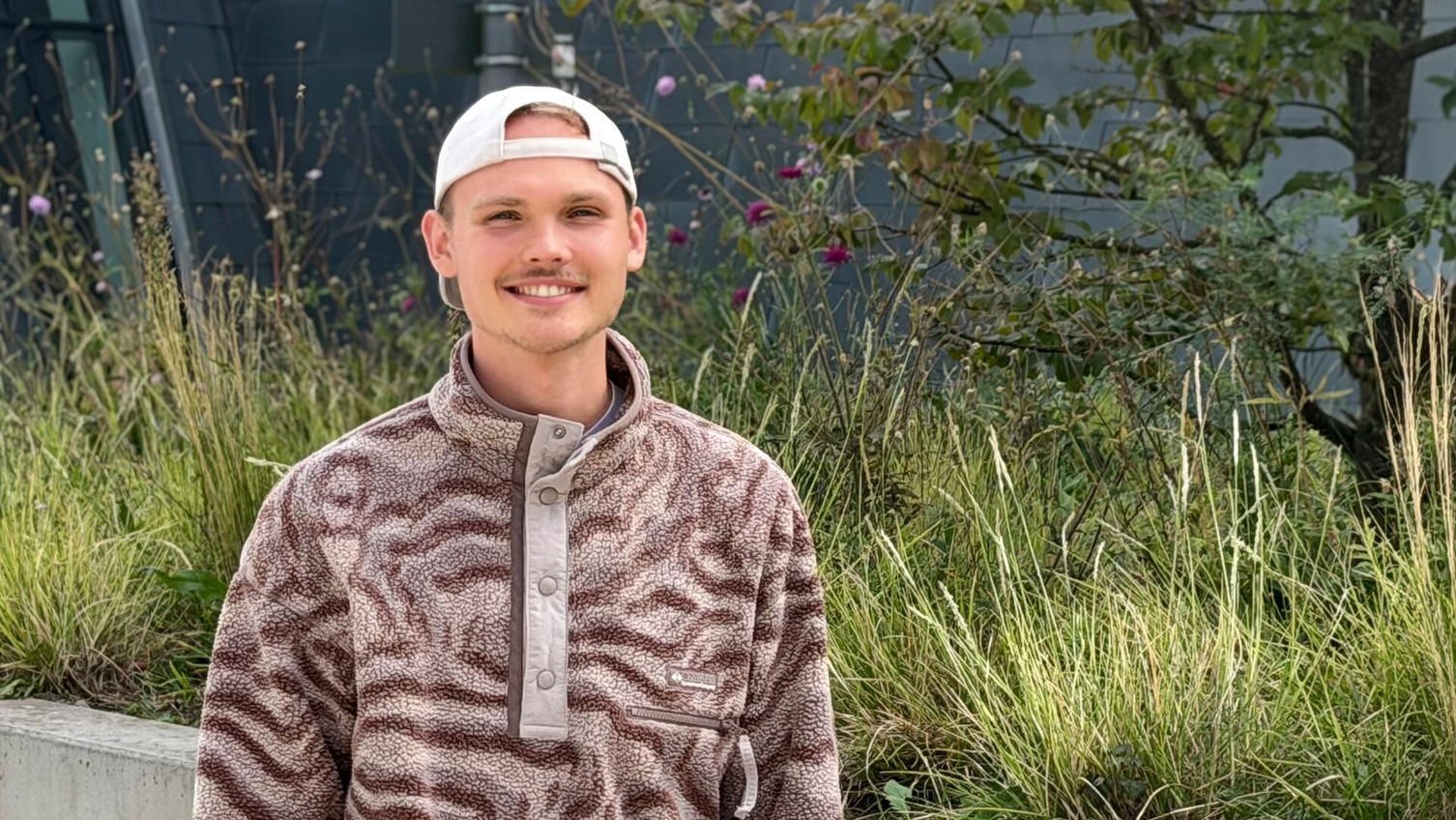
Tom Reckmann almost missed the start of his third semester in the master’s program. He was still attending a scientific conference in Rwanda. Together with other researchers from Leuphana, he presented the findings of a study that had just been published. “We investigated whether growing coffee under native shade trees could create a corridor between two isolated rainforests in Rwanda that would promote biodiversity while also strengthening the livelihoods of local people,” he explains.
What’s remarkable is that the publication incorporated data from Tom Reckmann’s bachelor’s thesis. Using GIS (Geographic Information System), he investigated whether coffee could grow well in the corridor under current and future climate conditions.
The publication gave Tom Reckmann an early insight into the scientific peer-review process: “It was exhausting, but also educational. You have to endure the reviewers’ criticism and constantly reevaluate your own work,” explains Tom Reckmann, who is the first author. The thesis was supervised by Prof. Dr. Jörn Fischer.
It was through him that Tom Reckmann also learned about the Doctoral Track. The Doctoral Track allows bachelor’s graduates and master’s students with a strong interest in research to join the doctoral program early on, giving them the opportunity to integrate their master’s and doctoral studies. “For me, this was a fantastic opportunity because I was able to take two courses in the doctoral program ahead of schedule. Thanks to my experience in the Doctoral Track, I started my doctoral studies with much greater confidence,” says Tom Reckmann.
For the past few days, the 25-year-old has been a research assistant at the Social-Ecological Systems Institute (SESI). There, he is delving deeper into the socio-ecological topic of his master’s thesis, in which he studied agricultural land in Andalusia. Using satellite data, he analyzed how the productivity of intensively and extensively used land changed between 2005 and 2025.
To do this, he works with geodata, satellite images, and Google Earth Engine, among other tools. A key metric is the so-called NDVI, a vegetation index derived from satellite data. Put simply, it can be used to determine how green an area is. However, this is only one part of his research. As part of his doctoral work, Tom Reckmann will speak with farmers in Andalusia. Among other things, he plans to conduct interviews designed to help understand changes in the landscape from the perspective of local residents. It is precisely this interdisciplinary connection between ecology, spatial science, and social science questions that interests him. “Ultimately, it’s the people who live there who are affected by the changes. Not talking to them would feel wrong to me,” says Tom Reckmann. Even during his study in Rwanda, the young researcher reflected on his role as a white, Western person in an intercultural team.
The fact that Tom Reckmann now moves effortlessly between different disciplines also has to do with his academic background. After graduating from high school, he chose the Environmental Sciences program and took advantage of the opportunity to focus on both the natural sciences and the social sciences. “I’ve always had a wide range of interests. The academic model at Leuphana gave me the chance to develop an interdisciplinary perspective. The fact that I was able to explore so many topics benefits me today.”
At the same time, there was room for his hobbies at Leuphana: Tom Reckmann sings in the Music Center’s chamber choir and performed on stage in the musical “Dear Evan Hansen.”
There’s one thing, however, that the newly minted research assistant will be doing without this semester: Tom Reckmann will no longer be teaching dance classes through the university’s sports program. Now he wants to focus entirely on research.