
A school where you feel comfortable!?
2026-02-03 “I can make a difference” – When it comes to school development, students are rarely asked for their opinion. Yet research clearly shows that participation is an essential key to effectively optimizing school education. The 1st Lüneburg Education Conference at Leuphana University is now providing important impetus for this. On February 17, around 100 elementary school students will debate with teachers, school administrators, administrators, and researchers about a “school where you feel good.” The conference, organized by the Hanseatic City of Lüneburg in cooperation with the Leuphana Innovation Community School Development and Leadership, aims to bring all education stakeholders to the proverbial table. In an interview, Lüneburg's Head of Education Gabriele Scholz and Marcus Pietsch, Professor of Education, explain what they hope to achieve.
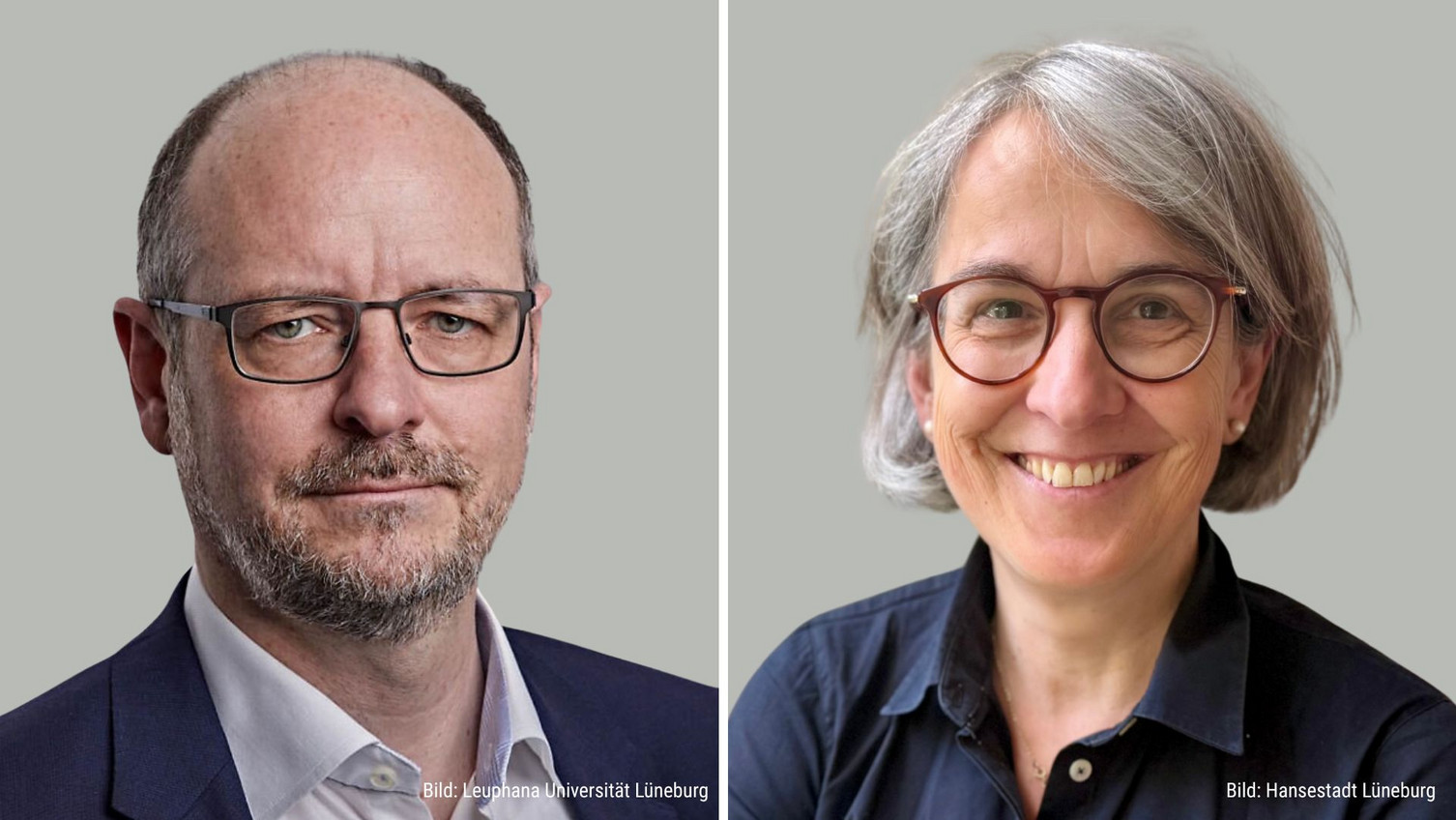
In your opinion, what are the most important factors for students to feel comfortable at school?
Pietsch: Research clearly shows that three things are needed for this: First, good relationships so that children feel safe and accepted. Second, a sense of achievement, i.e., the feeling that “I can do this.” The third and most important factor is participation. Instead of making decisions over their heads, it makes more sense to ask the students themselves and let them actively help shape their school. Those who have influence and feel that they can make a difference also feel comfortable.
Scholz: Since the Hanseatic City of Lüneburg is the school authority, you would probably expect me to focus on good facilities and equipment. That is also important. But even more important, and I agree with Mr. Pietsch on this, is that children are able to build good relationships with the people they encounter in their everyday school life, that they are “seen” in a positive sense, and that the overall atmosphere at school is free of fear and characterized by respect.
What contribution can the education conference make to Lüneburg? What are your hopes for the conference?
Scholz: The education conference aims to anchor the value and importance of education in the social consciousness. By putting the students at the center of this conference, we want to help give their voices more weight than before. I hope that it will provide inspiration for further conceptual considerations—for example, for the implementation of all-day schooling in elementary schools.
Pietsch: I hope that we will really work on an equal footing at the conference, adults and children together. The students are the experts on their everyday lives. If we seriously involve them, listen to them, and develop solutions together instead of just giving lectures, the conference will be a success.
What are the next steps on the way to a school where everyone involved feels comfortable?
Scholz: We need an overall concept at the federal, state, and local levels. This starts with legislation and financing and extends to school development planning and framework concepts to the educational concepts of the respective schools. All stakeholders from politics, administration, schools, and, last but not least, parents are called upon to work together here.
Pietsch: I agree. Continuity is particularly important here: participation and work on the school climate are not one-off projects. They must be firmly anchored in everyday school life as an ongoing process. We need regular time slots and formats so that exchange takes place continuously and school development has a lasting effect. It is important to create a sense of unity with which all students can identify.
Ms. Scholz, how can the city support teachers and students in feeling comfortable at school?
Scholz: By contributing to the creation of the necessary framework conditions within the scope of its responsibilities and its financial and personnel capabilities. This applies to construction and repair measures as well as staffing, support in the area of youth welfare, and social services. To this end, city employees are in close contact with schools and their stakeholders, including the city parents' council and the city student council.
What role can science play? To what extent is cooperation needed?
Pietsch: Science and school practice are two sides of the same coin. It's about linking practical knowledge with empirical evidence. Our students contribute another important level to this: they have developed methods in seminars that are applied in a very concrete way at the conference. In this way, schools benefit from fresh, methodological impulses, while prospective teachers learn directly in practice. When we combine these perspectives, school development is no longer a matter of chance, but improves everyday life for students in a well-founded and tangible way.
The 1st Lüneburg Education Conference emerged from the 2024 City Conference entitled “Education in Transition,” to which Mayor Claudia Kalisch had invited participants.
In order to strengthen regular exchange between academia and school practice, Kalisch and Pietsch agreed to jointly set up a regular education conference for Lüneburg that brings all those involved in schools together around one table.