
Prof. Dr. Matthias Wenzel
Werdegang
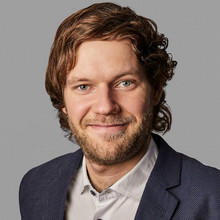
Matthias Wenzel ist Professor für Organisation an der Leuphana Universität Lüneburg und Gastprofessor an der Universidad EAFIT in Medellín (Kolumbien). Vor seinem Wechsel zur Leuphana im September 2019 absolvierte er Studium (Bachelor: 2008; Master: 2011), Promotion (2015) und die sich daran anschließende PostDoc-Zeit an der Europa-Universität Viadrina in Frankfurt (Oder).
Prof. Wenzel befasst sich mit dem Zusammenspiel von Organisation und Strategie aus einer praxistheoretischen Perspektive sowie den gesellschaftlichen Implikationen dieses Zusammenspiels. Seine Forschung beruht i.d.R. auf qualitativen Studien mit verschiedenen analytischen Ansätzen, z.B. critical discourse analysis und video analysis. Seine Arbeiten wurden in Zeitschriften wie z.B. dem Academy of Management Journal, Academy of Management Perspectives, Business & Society, Business Ethics Quarterly, Human Relations, Journal of Business Research, Journal of Management Inquiry, Journal of Management Studies, Journal of Product Innovation Management, Long Range Planning, Organization Studies, Organizational Behavior and Human Decision Processes, Strategic Management Journal und Strategic Organization veröffentlicht. Zudem ist er Senior Editor für Organization Studies, Mitglied des Herausgeberbeirats der zfo - Zeitschrift Führung+Organisation sowie Mitglied des Editoral Boards des Academy of Management Journal und Strategic Organization.
ABSCHLUSSARBEITEN
Hinweise zu Abschlussarbeiten finden Studierende auf myStudy.
Projekte
-
Strategische Praktiken in Krisenzeiten
Matthias Wenzel (Wissenschaftliche Projektleiter*in)
→Projekt: Forschung
-
Förderung wiss. Nachwuchs Managerial Accounting
Matthias Wenzel (Wissenschaftliche Projektleiter*in) , Stella von Schnakenburg (Projektmitarbeiter*in) , Rainer Lueg (Wissenschaftliche Projektleiter*in)
→Projekt: Forschung
-
Embracing Transformation: Organisieren in Krisenzeiten
Elke Schüßler (Wissenschaftliche Projektleiter*in) , Matthias Wenzel (Wissenschaftliche Ko-Projektleiter*in) , Iris Seidemann (Projektmitarbeiter*in) , Hanna Pauline Börries (Projektmitarbeiter*in)
→Projekt: Forschung
-
Future matters: Wie organisationale Pfadabhängigkeit durch "future-making" beeinflusst wird
Matthias Wenzel (Wissenschaftliche Projektleiter*in)
→Projekt: Forschung
-
LeuFIT
Matthias Wenzel (Wissenschaftliche Projektleiter*in)
→Projekt: Wissenschaftliche Veranstaltung
Publikationen
Bücher und Anthologien
- Imagination and Organization Studies: Insights and Reflections
Matthias Wenzel (Herausgeber*in) , 2023 Lüneburg , 46 S.Publikation: Bücher und Anthologien › Sammelwerke und Anthologien › Forschung
- Foundations of Management & Entrepreneurship: Courses and Cases
Matthias Wenzel (Herausgeber*in) , 2023 Lüneburg , 435 S.Publikation: Bücher und Anthologien › Sammelwerke und Anthologien › Forschung
- Foundations of Management & Entrepreneurship: Courses and Cases
Matthias Wenzel (Herausgeber*in) , 2023 2. Aufl. Lüneburg , 455 S.Publikation: Bücher und Anthologien › Sammelwerke und Anthologien › Forschung
- Organizing for Innovation: The Case of Accelerators
Matthias Wenzel (Herausgeber*in) , 2022 Lüneburg , 126 S.Publikation: Bücher und Anthologien › Sammelwerke und Anthologien › Forschung
- Foundations of Management & Entrepreneurship: Concepts and Cases
Matthias Wenzel (Herausgeber*in) , 2022 2. Aufl. Lüneburg , 333 S.Publikation: Bücher und Anthologien › Sammelwerke und Anthologien › Forschung
Beiträge in Zeitschriften
- The Manifold Impacts of Management Research
Matthias Wenzel (Autor*in) , Philip Gylfe (Autor*in) , Saku Mantere (Autor*in) , Joep Cornelissen (Autor*in) , 01.09.2026 , in: Journal of Management Studies, 63, 6 , S. 2831-2860 , 30 S.Publikation: Beiträge in Zeitschriften › Zeitschriftenaufsätze › Forschung › begutachtet
- Organizational Adaptability: Synthesizing Emergent and Deliberate Innovation Processes Into an Evolutionary Model
Jochen Koch (Autor*in) , Lorenzo Skade (Autor*in) , Sarah Stanske (Autor*in) , Matthias Wenzel (Autor*in) , Paul Vetter (Autor*in) , 06.05.2026 , in: Journal of Product Innovation Management , 19 S.Publikation: Beiträge in Zeitschriften › Zeitschriftenaufsätze › Forschung › begutachtet
- Reviewing is caring! Revaluing a critical, but invisibilized, underappreciated, and exploited academic practice
Leonhard Dobusch (Autor*in) , Mie Plotnikof (Autor*in) , Matthias Wenzel (Autor*in) , 01.04.2026 , in: Organization, 33, 3 , S. 458-474 , 17 S.Publikation: Beiträge in Zeitschriften › Zeitschriftenaufsätze › Forschung › begutachtet
- Futures Imagined: Navigating Sustainability, Digitalization, and Entrepreneurship in Business and Management Research
Markus Reihlen (Autor*in) , Matthias Wenzel (Autor*in) , Thomas Gehrig (Autor*in) , Monika Imschloss (Autor*in) , 01.12.2025 , in: Schmalenbach Journal of Business Research, 77, 4 , S. 585-596 , 12 S.Publikation: Beiträge in Zeitschriften › Andere (Vorworte. Editoral u.ä.) › Forschung
- Projectification without projects? Theorizing temporal structures of agile-based organizing
Joana Geraldi (Autor*in) , Iben Stjerne (Autor*in) , Matthias Wenzel (Autor*in) , 01.11.2025 , in: International Journal of Project Management, 43, 8 , 13 S.Publikation: Beiträge in Zeitschriften › Zeitschriftenaufsätze › Forschung › begutachtet
Beiträge in Sammelwerken
- Foresight
Regina Gattringer (Autor*in) , Matthias Wenzel (Autor*in) , 01.12.2025 , S. 412-414 , 3 S.Publikation: Beiträge in Sammelwerken › Lexikonbeiträge › Forschung
- Future-Making
Matthias Wenzel (Autor*in) , Eva-Maria Spreitzer (Autor*in) , 01.12.2025 , S. 418-419 , 2 S.Publikation: Beiträge in Sammelwerken › Lexikonbeiträge › Forschung
- Vertrauen in Organisationen
Markus Reihlen (Autor*in) , Matthias Wenzel (Autor*in) , 12.08.2025 , S. 39-50 , 12 S.Publikation: Beiträge in Sammelwerken › Kapitel › Forschung
- Multimodality in Strategy-as-Practice Research
Eric Knight (Autor*in) , Matthias Wenzel (Autor*in) , 11.03.2025 3. Aufl. Cambridge , S. 729-739 , 11 S.Publikation: Beiträge in Sammelwerken › Kapitel › Forschung › begutachtet
- Multimodality
Ehud Lehrer (Autor*in) , Matthias Wenzel (Autor*in) , Eric Knight (Autor*in) , 01.01.2024Publikation: Beiträge in Sammelwerken › Kapitel › Forschung
Aktivitäten
-
Responses to entrepreneurial identity tensions: A self-theory approach
Matthias Wenzel (Sprecher*in) , Ronit Yitshaki (Sprecher*in)
Aktivität: Konferenzvorträge › Forschung
-
Innovating amid poly- and permacrisis: The role of time in organizing for disruptive innovation
Stefanie Habersang (Ko-Autor*in) , Eva-Maria Spreitzer (Ko-Autor*in) , Raghu Garud (Ko-Autor*in) , Tor Hernes (Ko-Autor*in) , Oliver Ibert (Ko-Autor*in) , Patricia Klarner (Ko-Autor*in) , Gargi Sharma (Ko-Autor*in) , Matthias Wenzel (Keynote Sprecher*in) , Sarah Stanske (Panel-Teilnehmer*in)
→Aktivität: Konferenzvorträge › Forschung
-
Future-making at a crossroads
Matthias Wenzel (Sprecher*in) , Laure Cabantous (Sprecher*in) , April L. Wright (Sprecher*in) , Antonio Comi (Sprecher*in) , Lorenzo Mosca (Sprecher*in) , Eva-Maria Spreitzer (Sprecher*in) , Johanne Düsterbeck (Sprecher*in)
→Aktivität: Konferenzvorträge › Forschung
-
Strategizing for tomorrow's wars today: A process perspective on future-making in the military context
Lorenzo Skade (Sprecher*in) , Matthias Wenzel (Sprecher*in) , Jochen Koch (Sprecher*in) , Sarah Stanske (Sprecher*in)
→Aktivität: Konferenzvorträge › Forschung
-
Sociotechnical imaginaries: How Sheila Jasanoff’s approach to futures illuminates future-making
Matthias Wenzel (Sprecher*in)
→Aktivität: Konferenzvorträge › Forschung
Presse / Medien
-
Reading the Room to Influence Decisions and Strategies
1 Mal zitiertPresse/Medien: Presse / Medien
-
From entrepreneurs of chaos into the Leuphana Transformation Lab.
1 eigener MedienbeitragPresse/Medien: Presse / Medien
-
Entrepreneurship in times of social crisis.
1 eigener MedienbeitragPresse/Medien: Presse / Medien
-
Entrepreneurs of chaos? From disruptive innovation to negentropic entrepreneurship.
1 eigener MedienbeitragPresse/Medien: Presse / Medien
-
IBAE: Der Studiengang zum Entrepreneur in Lüneburg
2 eigene MedienbeiträgePresse/Medien: Presse / Medien
Auszeichnungen
-
Honorary Visiting Professor
Matthias Wenzel (Empfänger/-in) ,Auszeichnung: Externe Preise, Stipendien, Auszeichnungen, Ernennungen › Forschung
-
Transfer- und Impact Award der Leuphana Universität Lüneburg
(Empfänger/-in) (Empfänger/-in) (Empfänger/-in) (Empfänger/-in) Matthias Wenzel (Empfänger/-in) (Empfänger/-in) (Empfänger/-in) Markus Reihlen (Empfänger/-in) (Empfänger/-in) ,Auszeichnung: Leuphana interne Preise, Stipendien, Auszeichnungen, Ernennungen › Transfer
-
Transfer & Impact Award 2025
(Empfänger/-in) (Empfänger/-in) Markus Reihlen (Empfänger/-in) (Empfänger/-in) Matthias Wenzel (Empfänger/-in) ,Auszeichnung: Leuphana interne Preise, Stipendien, Auszeichnungen, Ernennungen › Forschung
-
Transferpreis
Matthias Wenzel (Empfänger/-in) ,Auszeichnung: Leuphana interne Preise, Stipendien, Auszeichnungen, Ernennungen › Transfer
-
Most Engaging Session Award for “Video Methods in Organizational Studies”
Matthias Wenzel (Empfänger/-in) ,Auszeichnung: Externe Preise, Stipendien, Auszeichnungen, Ernennungen › Forschung
Lehrveranstaltungen
(1) What is an "appropriate" research question?
(2) What is "appropriate" literature, and where do I find it?
(3) What is an "appropriate" research design?
(4) How to "appropriately" generate and report research outcomes?
The concept of the Colloquium is "inverted". That is, rather than lecturing, the Colloquium centers on students' thesis projects as well as the questions and concerns that arise in and through them. These questions and concerns are elicited through short, max. 3-min thesis "pitches" (without slides) and jointly discussed. This enables collective learning that directly relates to students' thesis projects on the one side, and raises important issues that students might have thought about regarding their own project on the other.
The seminar builds on students’ group reflections, discussions, investigations, and presentations. Therefore, participants are asked to bring any digital devices (notebooks, tablets, smartphones, etc.) that they would like to use for in-class investigations.
Managing organizations in today’s competitive and societal environment is complex and challenging. Think about the newspaper industry, which is undergoing one of its most fundamental changes triggered by the rise of digital technology. Firms are seeking salvation in a declining industry by creating new business models and defensive cost cutting strategies. The key issue we address in this course is how managers orchestrate the interplay between strategy, organization, and innovation for navigating their organizations through complex economic, cultural, political, and ecological demands. This course is built upon the premise that students of management should learn to combine state of the art scientific knowledge with practical applications and reflections. Instead of regarding the student as a passive memorizer of predefined knowledge, participants will reflect upon theories and become active inquirers themselves.
COURSE STRUCTURE
We will use a flexible teaching style mixing lectures, case discussions, and multimedia presentations whenever appropriate. It is imperative for you as a student to have read the required book chapters, articles, and cases before coming to class. Class discussion will be used to explore theoretical as well as practical business implications from an interdisciplinary perspective.
Qualitative research is a strategy to study a given phenomenon of interest through interviews, participant observations, and documents. In contrast to quantitative research approaches, these large bodies of unstructured data can often not be analyzed by formal, statistical approaches. Students will learn to differentiate between qualitative and quantitative research and to discern the advantages and disadvantages of both approaches. We will cover topics such as the nature of qualitative research, different research designs, data collection, data analysis and coding, writing up qualitative research, and ethics in qualitative research.
Note that the syllabus also contains an extended session plan!
If you want to present your project, please register for a date under "groups".
Zoom links for each session will be provided in the "seminar plan" tab - but note that the default mode is in presence and you should only opt for online participation if it is not possible otherwise.