
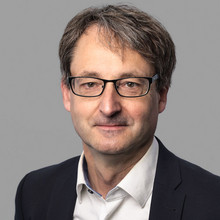
Prof. Dr. Markus Reihlen
Werdegang
Markus Reihlen ist Professor für Strategisches Management und Entrepreneurship und Vizepräsident für Entrepreneurship, Transfer und Internationalisierung an der Leuphana Universität Lüneburg. Von 2010 bis 2012 war er Studiendekan der Graduate School und bereits von 2012-2020 und 2023-2024 Vizepräsident mit unterschiedlichen Aufgabengebieten tätig.
Nach Studium, Promotion und Habilitation an der Universität zu Köln hatte Prof. Reihlen verschiedene akademische Positionen inne, u.a. als Gastprofessor an der Universität St. Gallen (2013), der University of Wisconsin-Milwaukee (2001/2002), Vertretungsprofessuren an der RWTH Aachen (2007/2008) sowie der Universität Mannheim (2008/2009) und als Gastforscher an der Copenhagen Business School (2000) und der University of Oxford (2008).
Seine akademischen Lehr- und Forschungsaktivitäten sind mehrfach ausgezeichnet worden, u.a. erhielt er acht Best Paper Awards von der Academy of Management, der Strategic Management Society und der Academy of Marketing und wurde von der University of Wisconsin-Milwaukee als Gold Star Professor für seine Lehre ausgezeichnet.
Prof. Reihlen ist Autor und Mitherausgeber von 10 Büchern zu den Themen Innovationsplanung, Prozessmanagement, Netzwerke und Allianzen, Internationalisierung professioneller Dienstleistungsunternehmen, Entrepreneurship in professionellen Dienstleistungsunternehmen und zum Management von Universitäten. Zusammen mit Cristina Neesham und Dennis Schoeneborn hat er ferner das Handbook of Philosophy of Management (über 1.000 S.) herausgegeben. Seine Forschungsarbeiten sind u.a. in internationalen Fachschriften wie Accounting, Organization and Society, Journal of Management Studies und Organizational Research Methods erschienen. Er ist Mitglied im Herausgeberbeirat des Journal of Management Studies und dem Journal of Professions and Organization und ist regelmäßig als Gutachter für zahlreiche internationale Fachzeitschriften tätig.
Seine Forschungsinteressen liegen in den Feldern Corporate und Digital Entrepreneurship, Strategisches Management sowie Organisationstheorie, u.a. mit speziellen Anwendungen in professionellen Organisationen. Zudem befasst er sich mit der Philosophie der Sozialwissenschaften und qualitativen Forschungsmethoden, insbesondere qualitativen Meta-Studien.
Die wichtigste Zeitschriftenpublikationen:
- Habersang, Stefanie; Reihlen, Markus (2024) Advancing Qualitative Meta-Studies (QMS): Current Practices and Reflective Guidelines for Synthesizing Qualitative Research, Organizational Research Methods (accepted for publication).
- Reihlen, Markus; Schlapfner, Jan-Florian; Seeger, Monika; Trittin-Ulbrich, Hannah (2022) Strategic Venturing as Legitimacy Creation: The Case of Sustainability, Journal of Management Studies 59(2), 2022, 417-459.
- Habersang, Stefanie; Küberling-Jost, Jill; Reihlen, Markus; Seckler, Christoph (2019) A Process View on Organizational Failure: A Qualitative Meta-Analysis, Journal of Management Studies, 56(1), 19-56.
- Seckler, Christoph; Gronewold, Ulfert; Reihlen, Markus (2017) An Error Management Perspective on Audit Quality: Toward a multi-level model, Accounting, Organization and Society, 62, 21-42.
- Ringberg, Torsten; Reihlen, Markus (2008) Towards a Socio-Cognitive Approach to Knowledge Transfer, Journal of Management Studies, 45(5), 912-935.
Die Mitglieder seines Teams finden Sie hier.
Lehrgebiete
Strategisches und internationales Management Organisationstheorie Qualitative Methoden der empirischen Sozialforschung
Forschungsgebiete
Strategisches Management/Strategischer Wandel Professionelle Dienstleistungen Wissensmanagement/Lernen in Organisationen Internationalisierung Wissenschaftstheorie
Projekte
-
European University Network on Entrepreneurship Conference 2026
Markus Reihlen (Wissenschaftliche Projektleiter*in) , Robert Hoyer (Koordinator*in)
→Projekt: Lehre und Studium
-
Leuphana Science Startup & Innovation Lab für forschungsbasierte Gründungsaktivitäten durch gezieltes Scouting und spezialisierte Beratung.
Markus Reihlen (Wissenschaftliche Projektleiter*in) , Andrea Japsen (Koordinator*in)
→Projekt: Transfer (FuE-Projekt)
-
Förderung zum weiteren Auf- und Ausbau der niedersächsisch-schottischen Wissenschaftsregion 2025 - 2029
Markus Reihlen (Wissenschaftliche Projektleiter*in) , Sarah Wilewski (Wissenschaftliche Projektleiter*in)
→Projekt: Lehre und Studium
-
Holistic Impact Incubator 2.0 - hands on impact
Markus Reihlen (Wissenschaftliche Projektleiter*in) , Steffen Farny (Wissenschaftliche Ko-Projektleiter*in) , Andrea Japsen (Koordinator*in) , Ele Jansen (Projektmitarbeiter*in)
→Projekt: Transfer (FuE-Projekt)
-
TrICo Teilprojekt: Community Social Innovation und Entrepreneurship
Robert Hoyer (Projektmitarbeiter*in) , Matthias Wenzel (Wissenschaftliche Projektleiter*in) , Markus Reihlen (Wissenschaftliche Projektleiter*in) , Steffen Farny (Wissenschaftliche Projektleiter*in) , Boukje Cnossen (Wissenschaftliche Projektleiter*in) , Jacob Hörisch (Wissenschaftliche Projektleiter*in) , Ursula Weisenfeld (Wissenschaftliche Projektleiter*in) , Frederic Penz (Projektmitarbeiter*in) , Lillan Lommel (Projektmitarbeiter*in) , Charlotte Wulffen (Projektmitarbeiter*in)
→Projekt: Transfer (Wissenschaftliche Dienstleistung)
Publikationen
Bücher und Anthologien
- Hochschulen im Wandel: Entwicklungsprozesse im Netzwerk gestalten
Roland Brünken (Herausgeber*in) , Joachim Härtling (Herausgeber*in) , Stefan Löhrke (Herausgeber*in) , Markus Reihlen (Herausgeber*in) , 2023 1st ed.. Aufl. Wiesbaden , 151 S.Publikation: Bücher und Anthologien › Sammelwerke und Anthologien › Forschung
- Handbook of Philosophy of Management
Cristina Neesham (Herausgeber*in) , Markus Reihlen (Herausgeber*in) , Dennis Schöneborn (Herausgeber*in) , 2022 Cham , 1089 S.Publikation: Bücher und Anthologien › Sammelwerke und Anthologien › Forschung
- Gründung einer Unternehmensberatung
Markus Reihlen (Autor*in) , Sebastian Göse (Autor*in) , 2017 Berlin , 82 S.Publikation: Bücher und Anthologien › Monografien › Transfer
- Multi-Level Governance in Universities: Strategy, Structure, Control
Jetta Frost (Herausgeber*in) , Fabian Hattke (Herausgeber*in) , Markus Reihlen (Herausgeber*in) , 2016 1. Aufl. Cham , 256 S.Publikation: Bücher und Anthologien › Sammelwerke und Anthologien › Forschung
- Mehrebenen-Steuerung in Universitäten: Von der professionellen Bürokratie zu kollaborativen Wissensnetzwerken
Jetta Frost (Autor*in) , Fabian Hattke (Autor*in) , Markus Reihlen (Autor*in) , Ferdinand Wenzlaff (Autor*in) , 2015 Köln , 123 S.Publikation: Bücher und Anthologien › Monografien › Forschung › begutachtet
Beiträge in Zeitschriften
- The cheap back office becomes a transformation driver: managing ambidexterity in shared services
Dirk Klimkeit (Autor*in) , Markus Reihlen (Autor*in) , 14.12.2026 , in: Journal of Service Management, 37, 6 , S. 176-197 , 22 S.Publikation: Beiträge in Zeitschriften › Zeitschriftenaufsätze › Forschung › begutachtet
- Self-imposed Immaturity in the Age of Artificial Intelligence
Detlef Schwarting (Autor*in) , Markus Reihlen (Autor*in) , 01.01.2026 , in: Philosophy of ManagementPublikation: Beiträge in Zeitschriften › Zeitschriftenaufsätze › Forschung › begutachtet
- Futures Imagined: Navigating Sustainability, Digitalization, and Entrepreneurship in Business and Management Research
Markus Reihlen (Autor*in) , Matthias Wenzel (Autor*in) , Thomas Gehrig (Autor*in) , Monika Imschloss (Autor*in) , 01.12.2025 , in: Schmalenbach Journal of Business Research, 77, 4 , S. 585-596 , 12 S.Publikation: Beiträge in Zeitschriften › Andere (Vorworte. Editoral u.ä.) › Forschung
- Navigating (In)Visibility: Exploring Political Dynamics in Future-Making
Stefanie Habersang (Autor*in) , Markus Reihlen (Autor*in) , Johanne Düsterbeck (Autor*in) , 01.07.2025 , in: Academy of Management Annual Meeting Proceedings, 2025, 1 , 6 S.Publikation: Beiträge in Zeitschriften › Konferenzaufsätze in Fachzeitschriften › Forschung › begutachtet
- Advancing Qualitative Meta-Studies (QMS): Current Practices and Reflective Guidelines for Synthesizing Qualitative Research
Stefanie Habersang (Autor*in) , Markus Reihlen (Autor*in) , 01.04.2025 , in: Organizational Research Methods, 28, 2 , S. 210-244 , 35 S.Publikation: Beiträge in Zeitschriften › Zeitschriftenaufsätze › Forschung › begutachtet
Beiträge in Sammelwerken
- Vertrauen in Organisationen
Markus Reihlen (Autor*in) , Matthias Wenzel (Autor*in) , 12.08.2025 , S. 39-50 , 12 S.Publikation: Beiträge in Sammelwerken › Kapitel › Forschung
- Lernen in Netzwerken: Qualitätsentwicklung am Beispiel des Verbundprojekts Quality Audit
Judith Braun (Autor*in) , Miriam Garve (Autor*in) , Markus Reihlen (Autor*in) , 28.12.2023 Wiesbaden , S. 1-23 , 23 S.Publikation: Beiträge in Sammelwerken › Aufsätze in Sammelwerken › Forschung
- Die Lehrstrategie am Beispiel der Leuphana Universität Lüneburg
Steffi Hobuß (Autor*in) , Markus Reihlen (Autor*in) , Anja Soltau (Autor*in) , Christof Schmitt (Autor*in) , Julia Webersik (Autor*in) , 28.12.2023 Wiesbaden , S. 49-74 , 26 S.Publikation: Beiträge in Sammelwerken › Aufsätze in Sammelwerken › Lehre
- Introduction to Philosophy of Management
Cristina Neesham (Autor*in) , Markus Reihlen (Autor*in) , Dennis Schöneborn (Autor*in) , 23.07.2022 Schweiz , S. 1-14 , 14 S.Publikation: Beiträge in Sammelwerken › Kapitel › Forschung › begutachtet
- The Epistemology of Management: An Introduction
Markus Reihlen (Autor*in) , Dennis Schöneborn (Autor*in) , 23.07.2022 Schweiz , S. 17-37 , 21 S.Publikation: Beiträge in Sammelwerken › Aufsätze in Sammelwerken › Forschung
Aktivitäten
-
Qualitative Knowledge Synthesis in Management Research: Approaches, Opportunities & Expert Insights
Stefanie Habersang (Sprecher*in) , Miriam Feuls (Panel-Teilnehmer*in) , Rikke Albertson (Panel-Teilnehmer*in) , Nick Berente (Panel-Teilnehmer*in) , Hans Behrends (Panel-Teilnehmer*in) , Christina Hoon (Panel-Teilnehmer*in) , Markus Reihlen (Panel-Teilnehmer*in) , Maria Rumyantseva (Panel-Teilnehmer*in)
Aktivität: Konferenzvorträge › Forschung
-
Strategic Management of Sustainability: The Struggle for Legitimacy
Markus Reihlen (Sprecher*in) , Monika Lesner (Sprecher*in)
→Aktivität: Konferenzvorträge › Forschung
-
Quality Management in a Top Tier Accounting Firm: Towards a Socio-Cognitive Model
Markus Reihlen (Sprecher*in)
Aktivität: Konferenzvorträge › Forschung
-
Transfer Leadership and Control in Organizational Practice Transfer
Markus Reihlen (Sprecher*in)
→Aktivität: Konferenzvorträge › Forschung
-
Leveraging Error to Improve Audit Quality: Towards a Socio-Cognitive Model
Markus Reihlen (Sprecher*in) , Christoph Seckler (Sprecher*in)
Aktivität: Konferenzvorträge › Forschung
Presse / Medien
-
Entrepreneurs of chaos? From disruptive innovation to negentropic entrepreneurship.
1 eigener MedienbeitragPresse/Medien: Presse / Medien
-
How do strategic ventures become legitimate and part of a corporate strategy? Lessons learned from the case of sustainability
1 eigener MedienbeitragPresse/Medien: Presse / Medien
-
Globales Wissensmanagement: Probleme und Gestaltungsmaßnahmen am Beispiel eines internationalen Beratungsunternehmens
1 eigener MedienbeitragPresse/Medien: Presse / Medien
-
In Europe, Does National Culture Induce a Particular Management Style?
1 eigener MedienbeitragPresse/Medien: Presse / Medien
-
Ohne konsequente Prozessorientierung bleibt Supply Chain Management Illusion
1 eigener MedienbeitragPresse/Medien: Presse / Medien
Auszeichnungen
-
SAP Best Paper Award Finalist, Academy of Management 2025
Stefanie Habersang (Empfänger/-in) Markus Reihlen (Empfänger/-in) ,Auszeichnung: Externe Preise, Stipendien, Auszeichnungen, Ernennungen › Forschung
-
Transfer- und Impact Award der Leuphana Universität Lüneburg
Lillan Lommel (Empfänger/-in) Frederic Penz (Empfänger/-in) Robert Hoyer (Empfänger/-in) Charlotte Wulffen (Empfänger/-in) Matthias Wenzel (Empfänger/-in) Boukje Cnossen (Empfänger/-in) Steffen Farny (Empfänger/-in) Markus Reihlen (Empfänger/-in) Ursula Weisenfeld (Empfänger/-in) ,Auszeichnung: Leuphana interne Preise, Stipendien, Auszeichnungen, Ernennungen › Transfer
-
Transfer & Impact Award 2025
Jacob Hörisch (Empfänger/-in) Steffen Farny (Empfänger/-in) Markus Reihlen (Empfänger/-in) Ursula Weisenfeld (Empfänger/-in) Matthias Wenzel (Empfänger/-in) ,Auszeichnung: Leuphana interne Preise, Stipendien, Auszeichnungen, Ernennungen › Forschung
-
Outstanding Article Award - Runner up, Industrial Marketing Management (together with Torsten Ringberg and Pernille Rydén)
Markus Reihlen (Empfänger/-in) ,Auszeichnung: Externe Preise, Stipendien, Auszeichnungen, Ernennungen › Forschung
-
Best Paper Award - Runner up – Journal of Professions and Organization 2021/2022
Markus Reihlen (Empfänger/-in) ,Auszeichnung: Externe Preise, Stipendien, Auszeichnungen, Ernennungen › Forschung
Lehrveranstaltungen
- Strategic Management
- Organization theory and design
- New forms of organization
- Entrepreneurship (corporate, digital, social entrepreneurship)
- Entrepreneurial Ecosystem
- New forms of working and organizing (Agile, Holacracy, Coworking, etc.)
- Integration of corporate and sustainability strategy
- Digitalization and digital transformation
In general, you can also contribute your own conceptual and empirical ideas as long as they roughly fall within the professorship's thematic areas and methodological orientations.