
Prof. Dr. Markus Reihlen
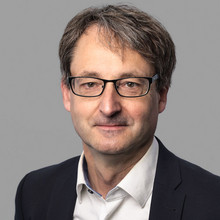
Vita
Markus Reihlen is Professor of Strategic Management and Entrepreneurship and Vice President of Entrepreneurship, Transfer, and Internationalization at Leuphana University of Lüneburg. From 2010 to 2012, he was the Graduate School Dean of Studies, and from 2012 until 2020, and from 2023 to 2024, he was Vice President in different roles.
After his studies of Business Administration at the Universities of Giessen, Wisconsin-Milwaukee, and Cologne, Professor Reihlen received his doctorate (1996) and post-doctorate qualification degree (Habilitation) (2007) at the University of Cologne. Before joining Leuphana University of Lüneburg, he held various visiting professor and guest researcher positions, including the University of St. Gallen, the University of Mannheim, the University of Technology Aachen, the University of Wisconsin-Milwaukee, the University of Oxford, the Copenhagen Business School, and McGill University. He has received awards in research and teaching, including eight Best Paper Awards from the Academy of Management, the Strategic Management Society, the Academy of Marketing, and the Gold Star Teaching Award from the University of Wisconsin.
Professor Reihlen is the author and co-editor of 10 books on innovation, process management, networks and alliances, internationalization of professional services, entrepreneurship in professional services, and university management. Together with Cristina Neesham and Dennis Schoeneborn, he edited the Handbook on the Philosophy of Management (over 1,000 p.). His academic work has been published in such journals as Accounting, Organization and Society, Journal of Management Studies, and Organizational Research Methods. He serves on the editorial boards of the Journal of Management Studies and the Journal of Professions and Organization and regularly reviews for several international journals.
His research interests are in the field of corporate and digital entrepreneurship, strategic management, and organization theory, focusing notably on applications within professional organizations. Additionally, his expertise includes the philosophy of social sciences and qualitative research methodologies, particularly qualitative meta-studies.
Most significant journal publications:
- Habersang, Stefanie; Reihlen, Markus (2024) Advancing Qualitative Meta-Studies (QMS): Current Practices and Reflective Guidelines for Synthesizing Qualitative Research, Organizational Research Methods (accepted for publication).
- Reihlen, Markus; Schlapfner, Jan-Florian; Seeger, Monika; Trittin-Ulbrich, Hannah (2022) Strategic Venturing as Legitimacy Creation: The Case of Sustainability, Journal of Management Studies 59(2), 2022, 417-459.
- Habersang, Stefanie; Küberling-Jost, Jill; Reihlen, Markus; Seckler, Christoph (2019) A Process View on Organizational Failure: A Qualitative Meta-Analysis, Journal of Management Studies, 56(1), 19-56.
- Seckler, Christoph; Gronewold, Ulfert; Reihlen, Markus (2017) An Error Management Perspective on Audit Quality: Toward a multi-level model, Accounting, Organization and Society, 62, 21-42.
- Ringberg, Torsten; Reihlen, Markus (2008) Towards a Socio-Cognitive Approach to Knowledge Transfer, Journal of Management Studies, 45(5), 912-935.
You can find the members of his chair here.
Projects
-
European University Network on Entrepreneurship Conference 2026
Markus Reihlen (Project manager, academic) , Robert Hoyer (Coordination)
→Project: Teaching
-
ScienceStartupLab
Markus Reihlen (Project manager, academic) , Andrea Japsen (Coordination)
→Project: Transfer (R&D project)
-
Promotion and Intensification of the Scotland - Lower Saxony Academic Region
Markus Reihlen (Project manager, academic) , Sarah Wilewski (Project manager, academic)
→Project: Teaching
-
Holistic Impact Incubator 2.0 - hands on impact
Markus Reihlen (Project manager, academic) , Steffen Farny (Co-Projectmanager, academic) , Andrea Japsen (Coordination) , Ele Jansen (Project staff)
→Project: Transfer (R&D project)
-
TrICo Subproject: Community Social Innovation and Entrepreneurship
Robert Hoyer (Project staff) , Matthias Wenzel (Project manager, academic) , Markus Reihlen (Project manager, academic) , Steffen Farny (Project manager, academic) , Boukje Cnossen (Project manager, academic) , Jacob Hörisch (Project manager, academic) , Ursula Weisenfeld (Project manager, academic) , Frederic Penz (Project staff) , Lillan Lommel (Project staff) , Charlotte Wulffen (Project staff)
→Project: Transfer (Scientific Services)
Publications
Books and anthologies
- Hochschulen im Wandel: Entwicklungsprozesse im Netzwerk gestalten
Roland Brünken (Editor) , Joachim Härtling (Editor) , Stefan Löhrke (Editor) , Markus Reihlen (Editor) , 2023 1st ed. ed. Wiesbaden , 151 p.Research output: Books and anthologies › Collected editions and anthologies › Research
- Handbook of Philosophy of Management
Cristina Neesham (Editor) , Markus Reihlen (Editor) , Dennis Schöneborn (Editor) , 2022 Cham , 1089 p.Research output: Books and anthologies › Collected editions and anthologies › Research
- Gründung einer Unternehmensberatung
Markus Reihlen (Author) , Sebastian Göse (Author) , 2017 Berlin , 82 p.Research output: Books and anthologies › Monographs › Transfer
- Multi-Level Governance in Universities: Strategy, Structure, Control
Jetta Frost (Editor) , Fabian Hattke (Editor) , Markus Reihlen (Editor) , 2016 1 ed. Cham , 256 p.Research output: Books and anthologies › Collected editions and anthologies › Research
- Mehrebenen-Steuerung in Universitäten: Von der professionellen Bürokratie zu kollaborativen Wissensnetzwerken
Jetta Frost (Author) , Fabian Hattke (Author) , Markus Reihlen (Author) , Ferdinand Wenzlaff (Author) , 2015 Köln , 123 p.Research output: Books and anthologies › Monographs › Research › peer-review
Journal contributions
- The cheap back office becomes a transformation driver: managing ambidexterity in shared services
Dirk Klimkeit (Author) , Markus Reihlen (Author) , 14.12.2026 , in: Journal of Service Management, 37, 6 , p. 176-197 , 22 p.Research output: Journal contributions › Journal articles › Research › peer-review
- Self-imposed Immaturity in the Age of Artificial Intelligence
Detlef Schwarting (Author) , Markus Reihlen (Author) , 01.01.2026 , in: Philosophy of ManagementResearch output: Journal contributions › Journal articles › Research › peer-review
- Futures Imagined: Navigating Sustainability, Digitalization, and Entrepreneurship in Business and Management Research
Markus Reihlen (Author) , Matthias Wenzel (Author) , Thomas Gehrig (Author) , Monika Imschloss (Author) , 01.12.2025 , in: Schmalenbach Journal of Business Research, 77, 4 , p. 585-596 , 12 p.Research output: Journal contributions › Other (editorial matter etc.) › Research
- Navigating (In)Visibility: Exploring Political Dynamics in Future-Making
Stefanie Habersang (Author) , Markus Reihlen (Author) , Johanne Düsterbeck (Author) , 01.07.2025 , in: Academy of Management Annual Meeting Proceedings, 2025, 1 , 6 p.Research output: Journal contributions › Conference article in journal › Research › peer-review
- Advancing Qualitative Meta-Studies (QMS): Current Practices and Reflective Guidelines for Synthesizing Qualitative Research
Stefanie Habersang (Author) , Markus Reihlen (Author) , 01.04.2025 , in: Organizational Research Methods, 28, 2 , p. 210-244 , 35 p.Research output: Journal contributions › Journal articles › Research › peer-review
Contributions to collected editions/anthologies
- Vertrauen in Organisationen
Markus Reihlen (Author) , Matthias Wenzel (Author) , 12.08.2025 , p. 39-50 , 12 p.Research output: Contributions to collected editions/anthologies › Chapter › Research
- Lernen in Netzwerken: Qualitätsentwicklung am Beispiel des Verbundprojekts Quality Audit
Judith Braun (Author) , Miriam Garve (Author) , Markus Reihlen (Author) , 28.12.2023 Wiesbaden , p. 1-23 , 23 p.Research output: Contributions to collected editions/anthologies › Contributions to collected editions/anthologies › Research
- Die Lehrstrategie am Beispiel der Leuphana Universität Lüneburg
Steffi Hobuß (Author) , Markus Reihlen (Author) , Anja Soltau (Author) , Christof Schmitt (Author) , Julia Webersik (Author) , 28.12.2023 Wiesbaden , p. 49-74 , 26 p.Research output: Contributions to collected editions/anthologies › Contributions to collected editions/anthologies › Education
- Introduction to Philosophy of Management
Cristina Neesham (Author) , Markus Reihlen (Author) , Dennis Schöneborn (Author) , 23.07.2022 Schweiz , p. 1-14 , 14 p.Research output: Contributions to collected editions/anthologies › Chapter › Research › peer-review
- The Epistemology of Management: An Introduction
Markus Reihlen (Author) , Dennis Schöneborn (Author) , 23.07.2022 Schweiz , p. 17-37 , 21 p.Research output: Contributions to collected editions/anthologies › Contributions to collected editions/anthologies › Research
Activities
-
Qualitative Knowledge Synthesis in Management Research: Approaches, Opportunities & Expert Insights
Stefanie Habersang (Speaker) , Miriam Feuls (Panel participant) , Rikke Albertson (Panel participant) , Nick Berente (Panel participant) , Hans Behrends (Panel participant) , Christina Hoon (Panel participant) , Markus Reihlen (Panel participant) , Maria Rumyantseva (Panel participant)
Activity: Conference Presentations › Research
-
Strategic Management of Sustainability: The Struggle for Legitimacy
Markus Reihlen (Speaker) , Monika Lesner (Speaker)
→Activity: Conference Presentations › Research
-
Quality Management in a Top Tier Accounting Firm: Towards a Socio-Cognitive Model
Markus Reihlen (Speaker)
Activity: Conference Presentations › Research
-
Transfer Leadership and Control in Organizational Practice Transfer
Markus Reihlen (Speaker)
→Activity: Conference Presentations › Research
-
Leveraging Error to Improve Audit Quality: Towards a Socio-Cognitive Model
Markus Reihlen (Speaker) , Christoph Seckler (Speaker)
Activity: Conference Presentations › Research
Press / Media
-
Entrepreneurs of chaos? From disruptive innovation to negentropic entrepreneurship.
1 Media contributionPress/Media: Press/Media
-
How do strategic ventures become legitimate and part of a corporate strategy? Lessons learned from the case of sustainability
1 Media contributionPress/Media: Press/Media
-
Globales Wissensmanagement: Probleme und Gestaltungsmaßnahmen am Beispiel eines internationalen Beratungsunternehmens
1 Media contributionPress/Media: Press/Media
-
In Europe, Does National Culture Induce a Particular Management Style?
1 Media contributionPress/Media: Press/Media
-
Ohne konsequente Prozessorientierung bleibt Supply Chain Management Illusion
1 Media contributionPress/Media: Press/Media
Prizes
-
SAP Best Paper Award Finalist, Academy of Management 2025
(Recipient) (Recipient) ,Prize: external Prizes, scholarships, distinctions, appointments › Research
-
Transfer- und Impact Award der Leuphana Universität Lüneburg
(Recipient) (Recipient) (Recipient) (Recipient) (Recipient) (Recipient) (Recipient) (Recipient) (Recipient) ,Prize: Leuphana internal Prize, Scholaships, distinctions, appointments › Transfer
-
Transfer & Impact Award 2025
(Recipient) (Recipient) (Recipient) (Recipient) (Recipient) ,Prize: Leuphana internal Prize, Scholaships, distinctions, appointments › Research
-
Outstanding Article Award - Runner up, Industrial Marketing Management (together with Torsten Ringberg and Pernille Rydén)
(Recipient) ,Prize: external Prizes, scholarships, distinctions, appointments › Research
-
Best Paper Award - Runner up – Journal of Professions and Organization 2021/2022
(Recipient) ,Prize: external Prizes, scholarships, distinctions, appointments › Research
Courses
- Strategic Management
- Organization theory and design
- New forms of organization
- Entrepreneurship (corporate, digital, social entrepreneurship)
- Entrepreneurial Ecosystem
- New forms of working and organizing (Agile, Holacracy, Coworking, etc.)
- Integration of corporate and sustainability strategy
- Digitalization and digital transformation
In general, you can also contribute your own conceptual and empirical ideas as long as they roughly fall within the professorship's thematic areas and methodological orientations.