
Organizational Research: New Book Explores documenta fifteen
2026-03-16 Organizations are not merely composed of structures, processes, and plans. They emerge from people, spaces, objects, and practices that are in constant interaction. It is precisely from this perspective that cultural studies scholars Jana Faßbender and Luca Marie Tüshaus have examined documenta fifteen. Their findings, which focus on atmosphere as a central organizational principle, have now been published by transcript Verlag under the title “Concrete and Water.”
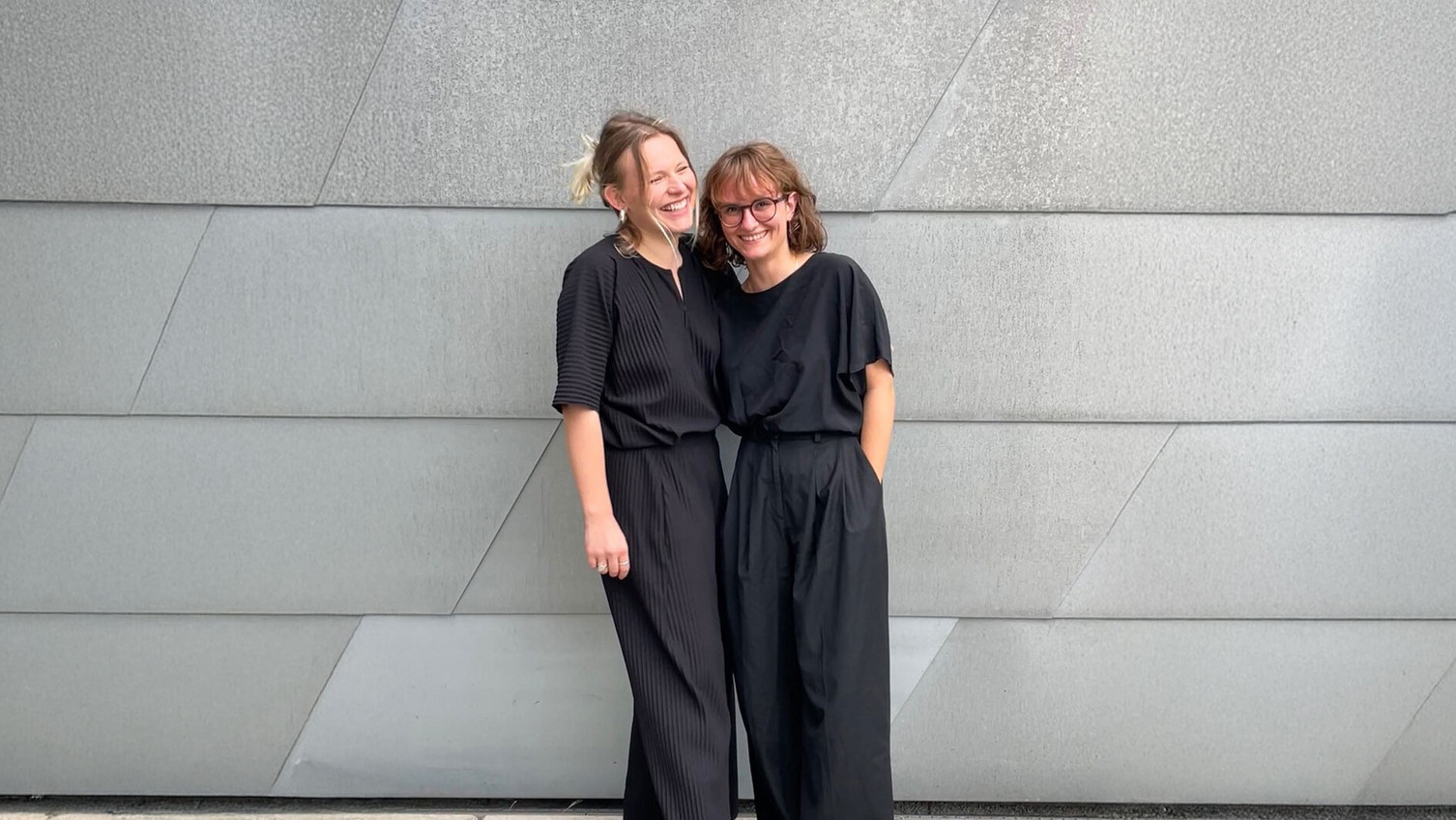
For their joint master’s thesis at Leuphana University Lüneburg, Jana Faßbender and Luca Marie Tüshaus took an unusual step: Six weeks before the opening of documenta fifteen, they moved to Kassel and accompanied the exhibition both before the opening and throughout its entire run. They conducted interviews with over 40 participating cultural practitioners, observed workdays up close, and documented everyday practices within the artistic and organizational environments.
documenta fifteen offered a particularly exciting setting for this: “For the first time, the exhibition was curated by a group, the Indonesian artist collective ruangrupa. The group established the principle of ‘lumbung,’” explains Jana Faßbender. Lumbung is the Indonesian word for a rice barn where surplus harvests are stored for the benefit of the community. “Applied to the organization, the word refers to a practice rooted in interpersonal relationships: resources, knowledge, and responsibility are shared, and decisions are made collectively. Art is understood not as a static object but as a participatory practice,” explains Luca Marie Tüshaus.
At the center of their analysis is the concept of atmosphere. Both authors understand atmospheres as what arises between people, spaces, and objects—as a sensually perceptible mood that shapes action, perception, and organization. Put simply: What emotional and physical experiences structure everyday life? And how do these affect organizational work? Building on this, they develop a vocabulary of so-called “atmospheric forces”—eleven in total—with which they describe and analyze documenta fifteen as both an organization and a place of community, crisis, abundance, intensity, charging and discharging, …
Methodologically, the then-master’s candidates chose an ethnographic and dialogic approach. The writing itself became part of their research: the entire book emerged through dialogue, in a shared thought process, with each individual sentence composed by the two of them together. Their hope: an immersive text that makes theory and material both thinkable and tangible.
Today, the two graduates continue to work in the cultural sector: Luca Marie Tüshaus works for the European Creative Hubs Network, funded by the European Commission in Athens, while Jana Faßbender serves as a program manager at the Körber Foundation in Hamburg.
Initially, there were no plans for their master’s thesis to be published as a book, yet it was also a long-held dream. The publication was made possible by the close guidance they received at Leuphana and the support of their advisor, Prof. Dr. Timon Beyes.