
Student and Alumni experiences - Sustainability Science: Resources, Materials and Chemistry
On this page you find experiences of current and former students about the Masters Sustainability Science: Resources, Materials and Chemistry at Leuphana Graduate School.
Maria Júlia's experiences
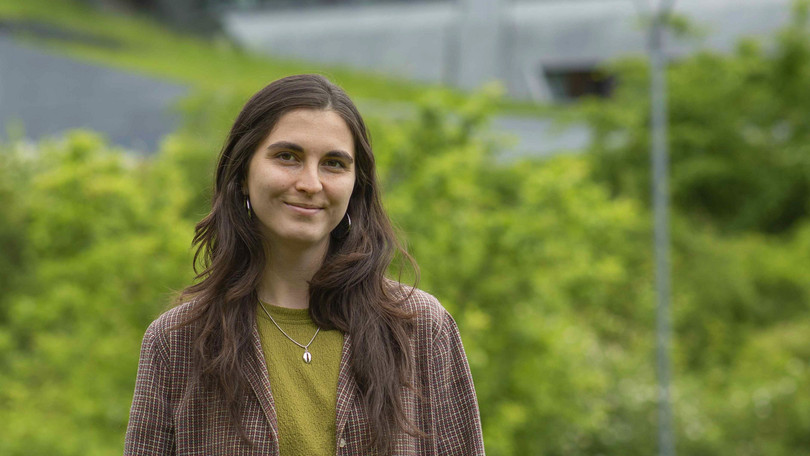
16.06.2026 Curiosity and an openness to new perspectives brought Maria Júlia Schmitt to Leuphana. In the Master’s program Sustainability Science: Resources, Materials and Chemistry, she appreciates the diverse community and the chance to explore topics beyond her original field of study.
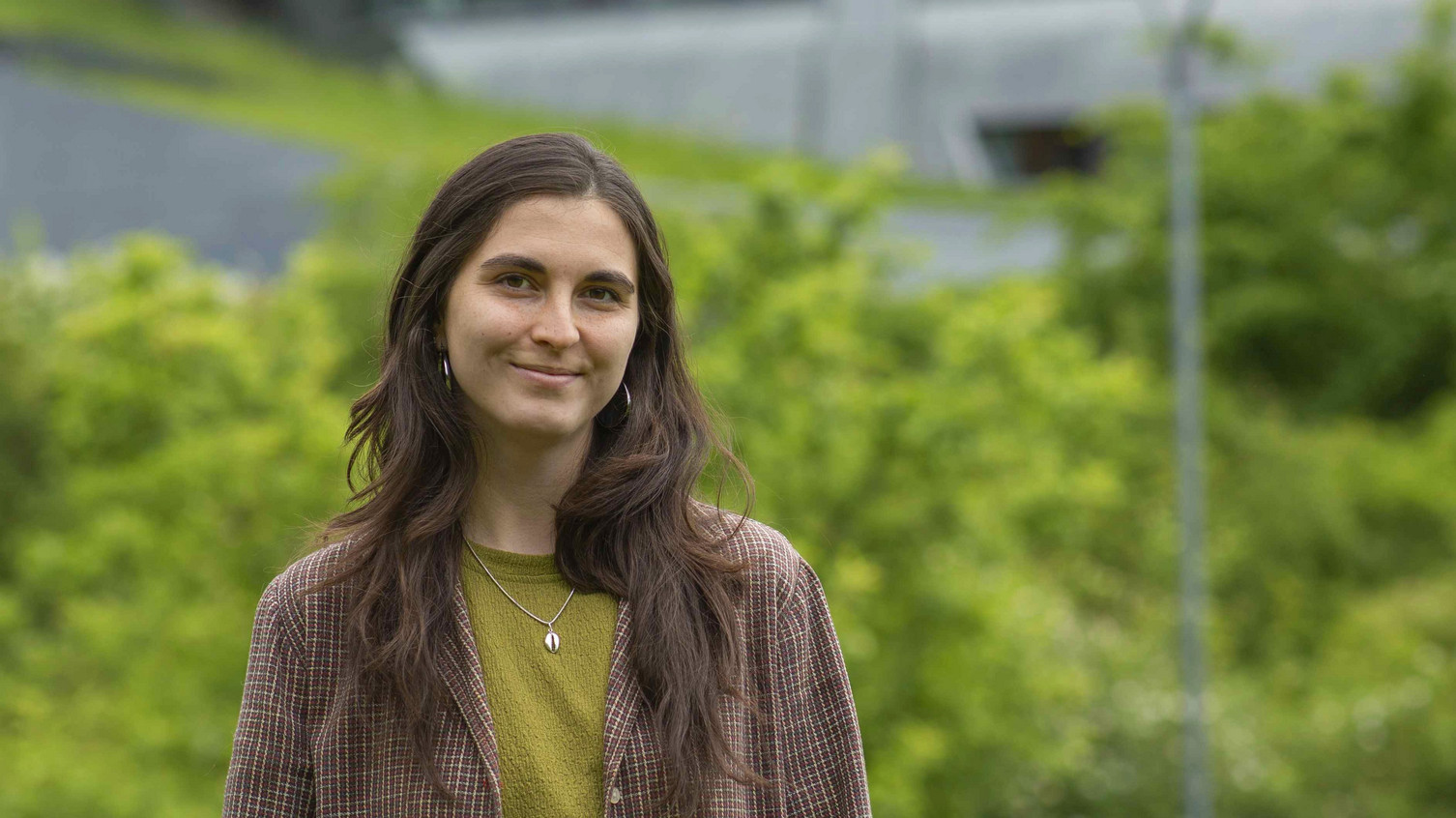 ©Leuphana/Phillip Bachmann
Why did you choose to study Sustainability Science: Resources, Materials and Chemistry?
After finishing my Bachelor’s degree in Geoecology, I felt comfortable in the field of natural sciences, but the connection to society in problem-solving was lacking. This is the reason I chose to start my Master’s at Leuphana, where sustainability is not only a minor discipline, but has the space of an entire faculty in which to develop. As an international student, I was also interested in a program in English, where I expected to share a room with other non-native speakers and, by doing so, get to know people from different backgrounds who are interested in similar goals.
What were your expectations before you started your Master’s degree at Leuphana, and what do you like most about Sustainability Science: Resources, Materials and Chemistry?
My expectations were to be able to discuss different topics within sustainability with a broader range of ideas, points of view, and solutions, considering sustainability is a meeting point of many areas. And I’m glad to say this is a reality in the different modules I’ve been part of. And what I like most about the program: I have learned to approach problems through the perspectives of colleagues from very different backgrounds.
What did you study before starting your Master’s degree, and how were you able to build on your previous studies?
I completed a Bachelor of Science in Geoecology, where the different natural spheres were studied separately and then connected to create an understanding of the Earth as a large system. Although I was very happy with how we approached these topics, it was based solely on natural sciences, and the social and economic aspects of the problems were mostly not involved. I feel the knowledge I have been acquiring at Leuphana is helping me fill the gaps and make deeper connections, as sustainability problems are complex and require such an approach.
How did you find adjusting to the new disciplines in the program?
Considering the program and the university have an inter- and transdisciplinary approach, sometimes I have classes that are more connected to my Bachelor’s degree and are easier to follow, and sometimes I find myself in classes that are completely new to me, which requires more of my attention and may seem challenging. But I noticed that the most interesting discussions and exchanges happen there too! It feels like exploring new worlds that I did not know could be interesting to me, and it always broadens my perspective.
What do you particularly like about the campus and the city of Lüneburg?
Lüneburg is a cute and cozy small city that has way more to offer than you might initially think. The campus is very lively and green, a little student hood with multiple corners to learn, work, or chill. You will mostly find me at the library having a focus session or sitting down with friends for a coffee at Klippo. Also, with the different events happening on campus, it is easy to get to know people from other programs and learn about different projects and initiatives.
In the city center, I love walking around and paying attention to the different old houses, the medieval narrow streets, and the charm this city intrinsically has. During magnolia season, I make sure to pass by the courtyard of the town hall to see the beautiful flowers.
What is the relationship like with other students and lecturers?
It is a treasure to meet people from so many different places and get involved with various topics. The lecturers embrace this diversity and encourage us to bring our different perspectives to discussions and assignments. Through group assignments, it is easy to connect with different colleagues and build your network. Suddenly, a person from a country many kilometers away from your own, whom you never thought you would meet, becomes a close friend and an important part of your life in Lüneburg.
Leuphana sees itself as an inter- and transdisciplinary university. The orientation of your study program is also interdisciplinary. How do you perceive this?
I realized I mentioned the inter- and transdisciplinary aspect in most of my answers, which shows how present this is at Leuphana. As a person who is curious about many things and has a hard time narrowing down their interests, it is truly amazing to study something I chose while still not having to give up exploring other directions. Especially through the Complementary Studies modules, I have learned things that really changed my perspective, mostly connected to the field of humanities, with which I had barely had any contact before starting at Leuphana.
Are there any tips you can give new Sustainability Science: Resources, Materials and Chemistry Master’s students, that you would have loved to know at the start of your studies?
Take your time to understand the university’s systems: how the library works, the different portals the university has, the sports and language centers, the International Office, and the AStA, etc. This will help you stay organized and give you a better overview of the opportunities on campus. If difficulties appear along the way, there is always someone willing to help – you just need to reach out. And always share this information with your colleagues and friends. Keep the community alive!
Who would you recommend the Sustainability Science: Resources, Materials and Chemistry Master's program to, and what difference can SRMC graduates make?
I would recommend this program to those who are curious about understanding sustainability processes and problems in all their complexity. To those willing to step out of their comfort zone, discover different points of view, and still be able to find solutions and move forward. And to those who understand that the current state of our world is the result of the interconnectedness of things, which requires different minds thinking together toward a common goal. These are exactly the skills and perspectives that students in this program can develop.
Afua's experiences
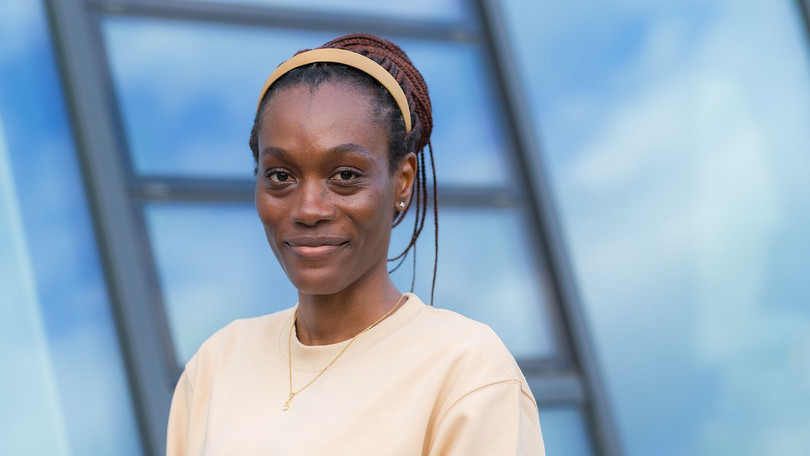
18.05.2026 After completing a Bachelor’s degree in Biochemistry, Cell and Molecular Biology at the University of Ghana, Afua Antwi moved to Lüneburg for her Master’s studies. What she particularly enjoys is how the program reveals the complexity behind sustainability topics and encourages critical thinking across disciplines.
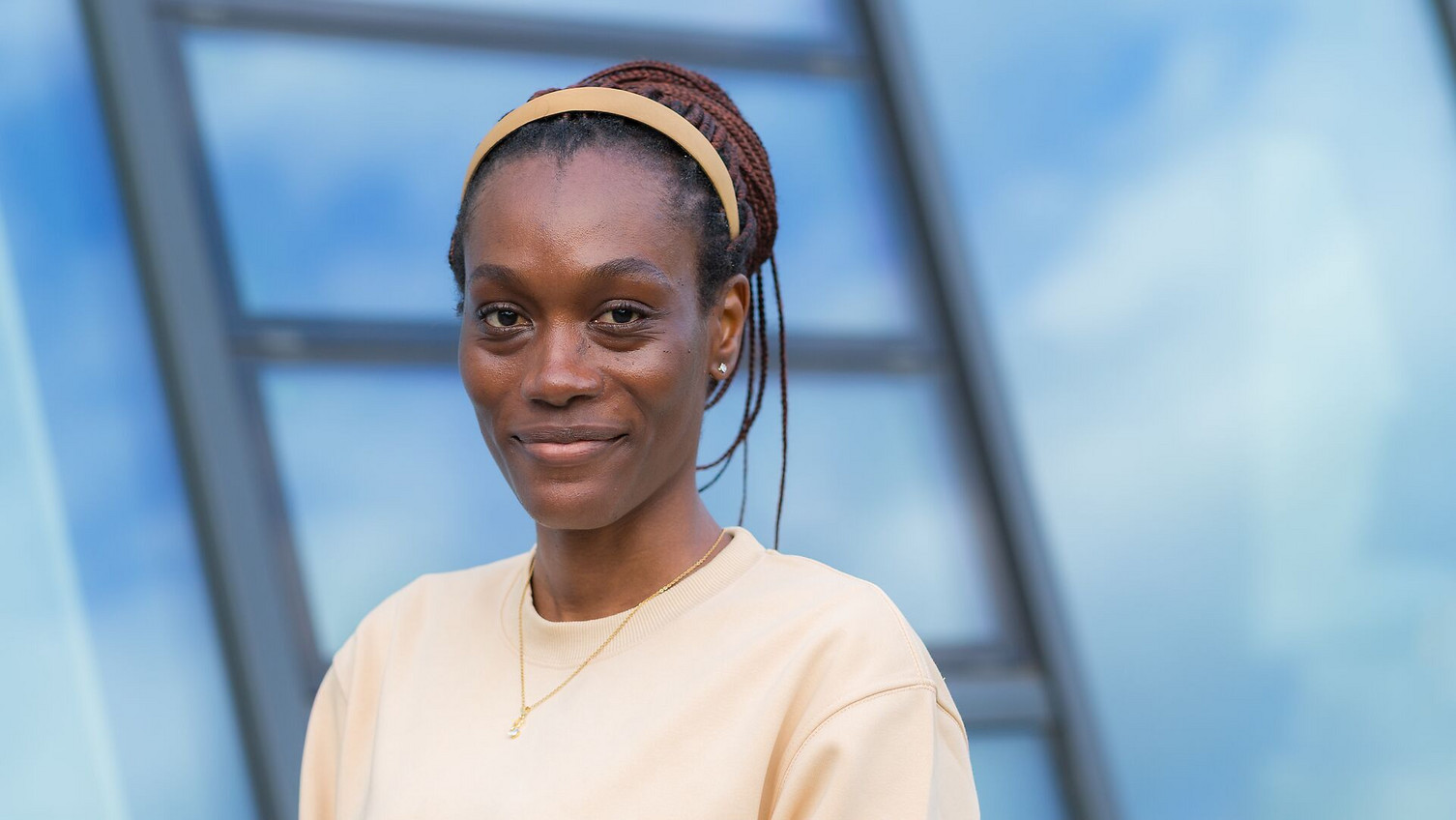 ©Leuphana/Tengo Tabatadze
Why did you choose to study Sustainability Science: Resources, Materials and Chemistry?
I chose to study Sustainability Science: Resources, Materials and Chemistry because of the course content and structure. I was drawn to the combination of natural sciences with areas like sustainability governance, law and social sciences. This balance is important to me because I’ve come to realize that sustainability challenges are not purely scientific but also involve various stakeholders, policies and decision-making processes.
My long-term career goal is to consult in the renewable energy sector to help organizations develop practical and efficient sustainability solutions. This program offers the opportunity to develop both the scientific understanding and the broader systems thinking skills needed to bridge research with real-world application. I also liked the fact that the program encourages critical thinking and problem-solving rather than simply memorizing concepts, something that is crucial on the job market.
What were your expectations before you started your Master’s degree at Leuphana, and what do you like most about Sustainability Science: Resources, Materials and Chemistry?
Before starting my Master’s degree at Leuphana, I did not have much of an expectation. Due to unprecedented visa delays with the German consulate, I could not join my cohort during the first semester as planned, so I arrived in the summer semester excited to finally begin and make the most of the experience.
What I enjoy most about the program is how deeply the assignments make you think and research. At first glance, some topics seem straightforward but once you begin researching, you realize the layers of complexity connected to sustainability, resources, policy and society. I genuinely enjoy that process of digging deeper and discovering things I would probably never have explored otherwise.
I also enjoy working in teams for presentations and group projects. Working with people from diverse academic and cultural backgrounds helps you to see problems through a different lens, communicate better and learn from one another. It makes things interesting.
What did you study before starting your Master’s degree, and how were you able to build on your previous studies?
I studied Biochemistry, Cell and Molecular Biology for my Bachelor’s degree. This provided me with foundational knowledge on understanding various substances that make up chemical and biochemical reactions and processes at the molecular level.
Building on this foundation, the Master’s program is expanding my perspective beyond the laboratory into broader sustainability challenges related to resources, materials and energy systems. It’s been rewarding to be able to connect my background with practical sustainability applications and systems thinking.
How did you find adjusting to the new disciplines in the program?
Adjusting has been smoother than I expected. The interdisciplinary nature of the program creates the environment and understanding that we’re all from different academic backgrounds learning new things. The faculty and fellow students have been very approachable and supportive making it easier to convey my thoughts and feel heard. As long as you’re willing to break the ice and ask questions, put in the effort and stay curious, adapting is a piece of cake.
What do you particularly like about the campus and the city of Lüneburg?
Definitely Trafos (innovative learning spaces on Campus) and the Central building, they deserve their own fan club! You will probably find me at the Trafos more often than anywhere else on campus. Beyond that, I really like how peaceful and student-friendly Lüneburg is. The city has this calm atmosphere and beautiful architecture that makes taking walks a delight.
What is the relationship like with other students and lecturers?
Despite being somewhat “new”, I don’t feel left out. Everyone is incredibly welcoming, making relationships with other students and lecturers a breeze.
With fellow students, it is more friendly and relaxed. Grabbing lunch together at the mensa, chatting over coffee and tea at Trafos and just offering academic and unacademic support to one another. We are already planning a barbecue to get to know ourselves better outside of the classroom.
The lecturers are very approachable, and I appreciate how informal, yet respectful and open interactions can be, even down to being on first-name basis. It creates an environment where ideas can be shared without intimidation.
Leuphana sees itself as an inter- and transdisciplinary university. The orientation of your study program is also interdisciplinary. How do you perceive this?
It is as it is! One moment you are discussing renewable resources, dismantling smartphones and the next, you’re exploring how law can lead to sustainability transformation. I am currently taking an elective on law and sustainability transformation, and this perfectly shows how solving sustainability challenges cannot be solved only by scientists.
What I appreciate most is that through the program, you are prepared for real-life situations where problems do not come separated into academic disciplines. You learn how to communicate scientific findings to people outside the scientific field and see sustainability from diverse perspectives. This versatility will make you thrive in any field.
Are there any tips you can give new Sustainability Science: Resources, Materials and Chemistry Master’s students, that you would have loved to know at the start of your studies?
Many! Do not panic if something doesn’t make much sense immediately, especially if you didn’t study it in your previous studies. We’re all learning something new every day. You are not alone.
Also, do not take group work and discussions for granted. You learn some of the best things during conversations which most times stick with you more than if you’d studied by yourself.
Finally, pace yourself. I cannot overemphasize this! There is always another article to read or another series of assignments waiting. In all this, balance the learning with rest and sightseeing.
Who would you recommend the Sustainability Science: Resources, Materials and Chemistry Master's program to, and what difference can SRMC graduates make?
I would recommend Sustainability Science: Resources, Materials and Chemistry to anyone who is open-minded, curious and willing to tackle sustainability challenges from diverse perspectives. Those who enjoy connecting ideas across disciplines to translate sustainability concepts into real world impact.
I believe SRMC graduates can make a difference in whatever field they decide to venture in. The technical knowledge, collaborative skills across disciplines and communication skills developed in their studies will lead them to contribute to solutions that are both scientifically backed and socially relevant and practical.
Muhammad's experiences
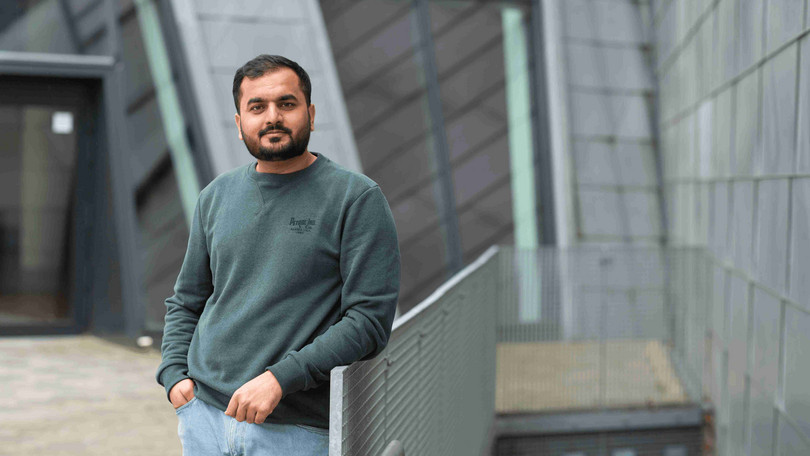
24.03.2026 With a background in Applied Chemistry and Environmental Engineering, Muhammad Umer came to Leuphana to deepen his understanding of sustainability challenges from different scientific perspectives. In the Master’s program Sustainability Science: Resources, Materials and Chemistry, he especially values the interdisciplinary and research-oriented approach.
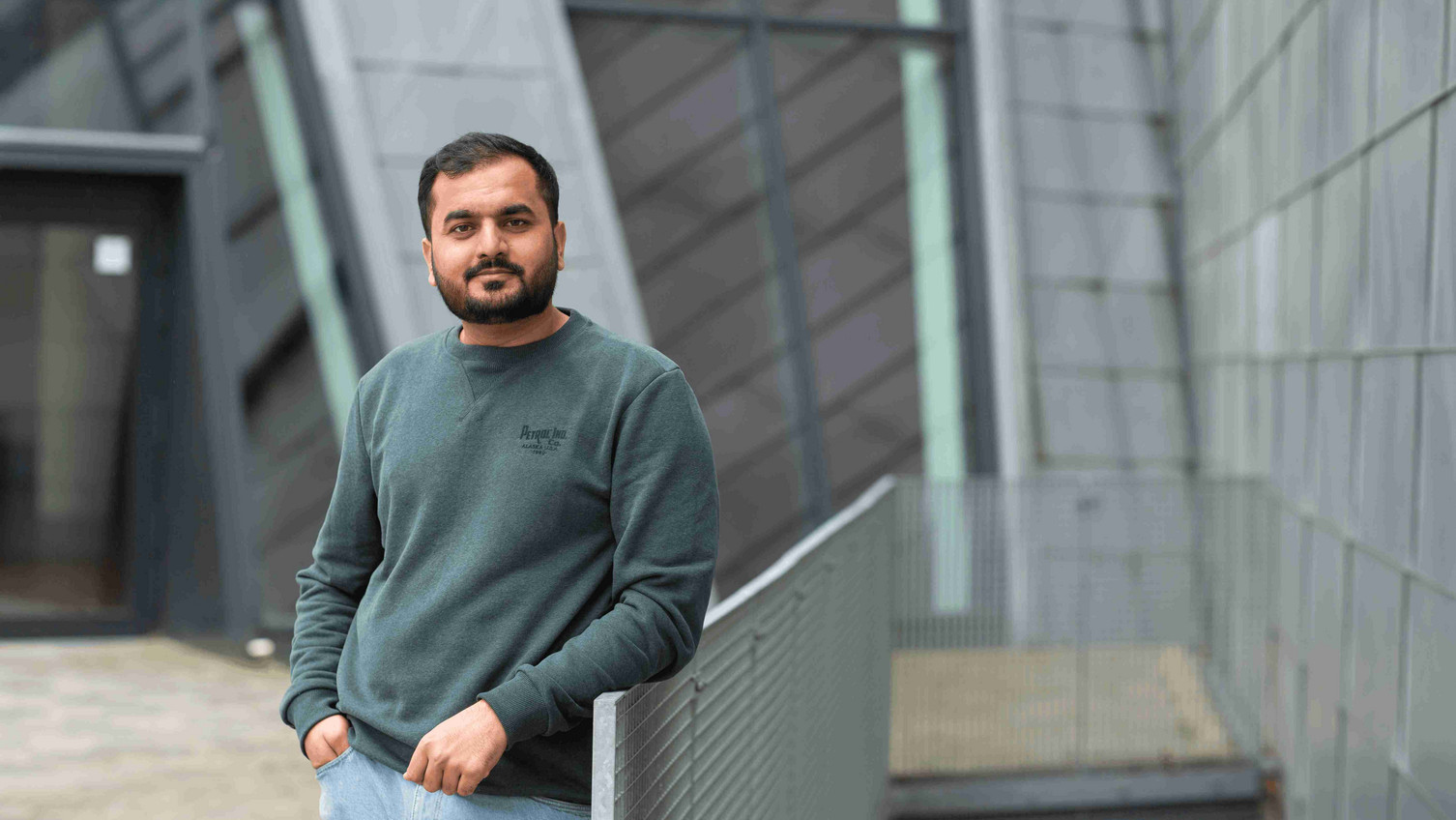 ©Leuphana/Phillip Bachmann
Why did you choose to study Sustainability Science: Resources, Materials and Chemistry?
I chose to pursue the Master’s program in Sustainability Science: Resources, Materials and Chemistry due to its strong integration of chemical sciences with sustainability oriented resource management. With my academic background in Applied Chemistry and Chemical Technology, particularly with a specialization in Environmental Engineering, I developed a keen interest in addressing environmental challenges through scientific and technological approaches. This program offers a systems oriented perspective, combining material flow analysis, green chemistry principles, and sustainable resource utilization. It aligns closely with my goal of contributing to sustainable industrial processes, circular economy strategies, and environmentally responsible material design.
What were your expectations before you started your Master’s degree at Leuphana, and what do you like most about Sustainability Science: Resources, Materials and Chemistry?
Before starting my studies, I expected the program to provide a multidisciplinary framework that bridges chemistry, environmental science, and sustainability policy. I was particularly interested in gaining exposure to advanced analytical tools, life cycle assessment methodologies, and sustainable material development. What I appreciate most about the program is its interdisciplinary structure, which allows students to explore complex environmental problems from multiple scientific and socio economic perspectives. The emphasis on real world applications, combined with research oriented teaching, has significantly enhanced my critical thinking and problem solving abilities.
What did you study before starting your Master’s degree, and how were you able to build on your previous studies?
Prior to my master’s degree, I completed a Bachelor’s in Applied Chemistry and Chemical Technology, with a specialization in Environmental Engineering. My undergraduate studies provided a strong foundation in chemical processes, environmental monitoring, wastewater treatment, and pollution control technologies. This background enabled me to effectively engage with advanced topics in sustainability science, such as resource efficiency, environmental impact assessment, and sustainable material cycles. The transition was smooth, as I was able to build upon my prior knowledge and apply it within a broader sustainability framework.
How did you find adjusting to the new disciplines in the program?
Adjusting to the interdisciplinary nature of the program was initially challenging, as it required integrating knowledge from chemistry, environmental science, and socio economic disciplines. However, this challenge also proved to be highly rewarding. Through collaborative projects, seminars, and coursework, I developed the ability to approach problems from multiple perspectives. Over time, I became more comfortable with systems thinking and interdisciplinary methodologies, which are essential for addressing complex sustainability challenges.
What do you particularly like about the campus and the city of Lüneburg?
The campus environment at Leuphana is modern, well structured, and highly conducive to academic work. The availability of research facilities, study spaces, and a collaborative atmosphere greatly supports student learning. The city of Lüneburg offers a unique combination of historical charm and a peaceful environment, making it an ideal place for focused academic study. Its sustainability oriented initiatives and student-friendly atmosphere further enhance the overall experience.
What is the relationship like with other students and lecturers?
The relationship between students and lecturers is highly interactive and supportive. Lecturers are approachable and encourage open discussions, critical thinking, and active participation. Students come from diverse academic and cultural backgrounds, which fosters a collaborative learning environment. Group work and interdisciplinary projects have helped build strong professional and academic relationships among peers.
Leuphana sees itself as an inter- and transdisciplinary university. The orientation of your study program is also interdisciplinary. How do you perceive this?
The interdisciplinary and transdisciplinary approach is one of the core strengths of the program at Leuphana. It enables students to integrate scientific knowledge with societal and policy related dimensions of sustainability. I perceive this approach as highly effective in preparing students to tackle real world challenges, where solutions require collaboration across disciplines. It enhances not only technical expertise but also communication and systems thinking skills.
Are there any tips you can give new Sustainability Science: Resources, Materials and Chemistry Master’s students, that you would have loved to know at the start of your studies?
New students should be prepared for an interdisciplinary learning environment and remain open to concepts beyond their primary field of study. Developing strong time management and research skills is essential. I would also recommend actively participating in group discussions, networking with peers, and engaging with faculty members. Familiarity with tools such as life cycle assessment software and data analysis techniques can be highly beneficial from the beginning.
Who would you recommend the Sustainability Science: Resources, Materials and Chemistry Master's program to, and what difference can SRMC graduates make?
I would recommend this program to students with backgrounds in chemistry, environmental science, chemical engineering, food science or related fields who are interested in sustainability and resource management. Graduates of the SRMC program are equipped to contribute to sustainable development by designing environmentally friendly materials, improving resource efficiency, and supporting the transition towards a circular economy. They can play significant roles in academia, industry, and policy making.
Contact and Counselling
First contact point
The Information Office (Infoportal) is your contact point for
- general information on the application procedure
- initial questions about the study programmes offered at Leuphana
- making an appointment with the Graduate School Student Counselling Service.
Information Office
Building 8, Ground Level
Fon +49.4131.677-2277
studierendenservice@leuphana.de
Campus opening hours
Mon - Thu 9.00 am - 4:00 pm
Fr 9.00 am - 12 noon
Student Counselling
To make an appointment with our Student Counselling Service, please use our booking tool on our website.