
Student and Alumni experiences - Politics and Democracy
On this page you find experiences of current and former students about the Master's in Politics and Democracy at Leuphana Graduate School.
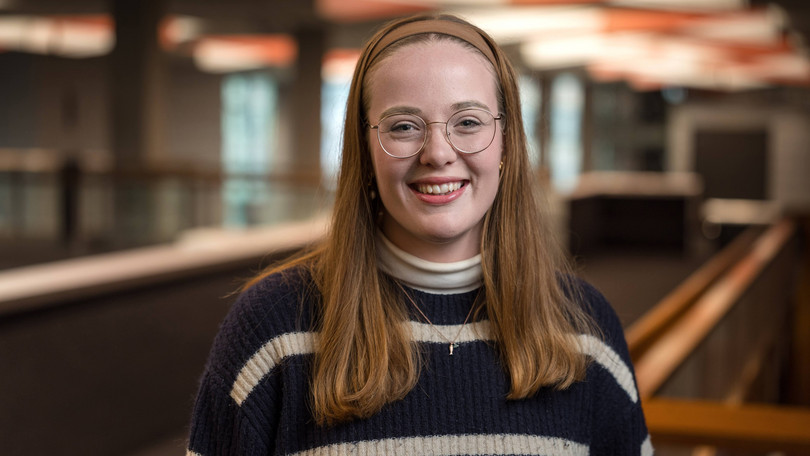
Kirsti's experiences
08.06.2026 After completing the German-French dual Bachelor’s program in Political Science at Leuphana and UPEC in Fontainebleau, Kirsti Elle chose the Master’s program in Politics and Democracy. In the Master's program, she is deepening her interests in democracy studies and research methods. After graduation, she is considering pursuing a PhD.
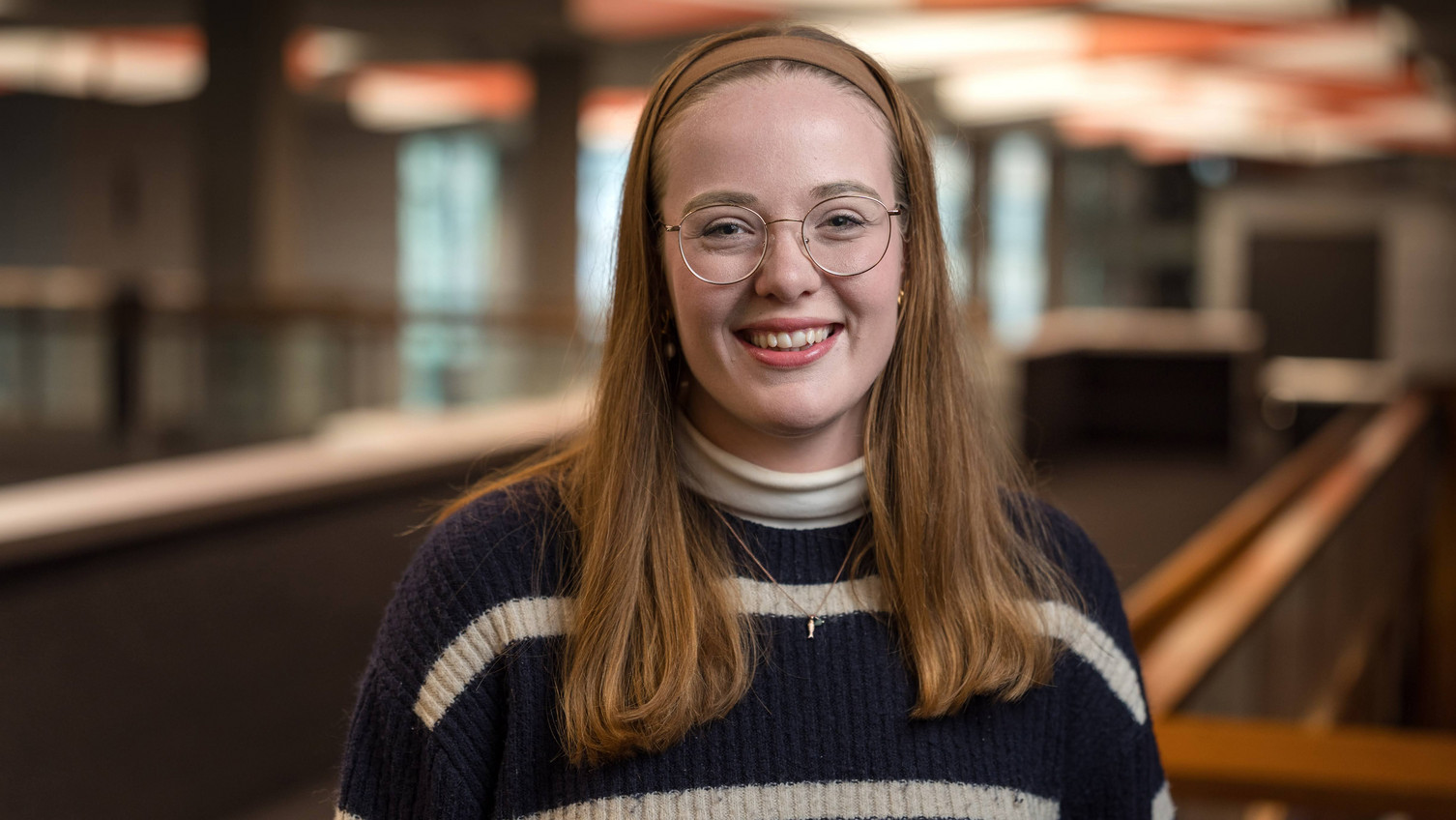 ©Privat/Fionn Große
Why did you choose to study Politics and Democracy?
After completing my Bachelor’s degree, I wanted to stay in the field of political science but also specialize in a specific area. I looked into various programs, but the specialization in democracy seemed the most interesting to me personally. The fact that the program is a Master of Science was also appealing to me. I was already familiar with Leuphana from my Bachelor’s program and could easily imagine staying in Lüneburg to continue my studies. The fact that the focus of the Master’s program aligned perfectly with my interests made it my top choice.
What were your expectations before you started your Master’s degree at Leuphana, and what do you like most about Politics and Democracy?
Since I had already studied at Leuphana, I expected the program to be similar, but with a strong focus on democracy. What I particularly like about the program are the in-depth courses on democracy, as well as the emphasis on research and academic work.
What did you study before starting your Master’s degree, and how were you able to build on your previous studies?
I studied political science as part of a dual German-French Bachelor’s program at Leuphana and UPEC in France. This meant there were many connections to my previous studies, particularly the areas of international relations, comparative politics, and political theory are all covered in the Master’s program.
How did you find adjusting to the new disciplines in the program?
The methodology courses, especially quantitative methods, were a challenge at first, but I was able to get the hang of them quickly. I now feel much more confident in applying these methods and am therefore grateful for the emphasis placed on them in the first few semesters. Courses in the field of sustainability were also new to me. While I had no trouble keeping up with them, I did notice that they aren’t as much a part of my interests as the actual political science courses.
What do you particularly like about the campus and the city of Lüneburg?
I especially love Lüneburg and the Leuphana campus in the spring and summer. There’s plenty of greenery, lots of students, and there’s always something going on somewhere. At the same time, everything is within walking or biking distance. Lüneburg may not be the place for big parties and events, but it’s perfect for a relaxed and enjoyable student life.
What is the relationship like with other students and lecturers?
The classes in the Master’s program are small; there are only 15 students in my cohort. This makes interactions with fellow students and faculty very personal. Everyone knows each other, and, for the most part, the professors know more than just the names on paper and are always willing to talk if you have questions or concerns.
Have you decided on a topic for your Master's thesis yet, and do you have any plans for after graduation?
I’m currently brainstorming ideas for my Master’s thesis. I plan to write about political culture or political sociology, specifically how sociocultural aspects and values shape perspectives on democracy.
After I finish my master's degree, I may pursue a Ph.D., as my studies have motivated me to delve deeper into the subject and explore a potential career in research.
Are there any tips you can give to new Politics and Democracy Master’s students that you would have loved to know at the start of your studies?
You should definitely have an interest in research. This requires a willingness to familiarize yourself with topics that might be unfamiliar to someone with just a bachelor’s degree in political science, such as statistics. In my experience, however, these challenges are precisely what makes the program so valuable.
Who would you recommend the Politics and Democracy Master's program to, and what difference can PAD graduates make?
I would recommend this Master’s program to anyone who wants to spend two years delving deeply into the topic of democracy and who is interested in research and methodology. The program focuses on international topics, and the student body is diverse and intercultural. It is therefore ideal for those who wish to broaden their perspective beyond a purely German focus, and who are eager to engage in intensive dialogue with professors and fellow students.
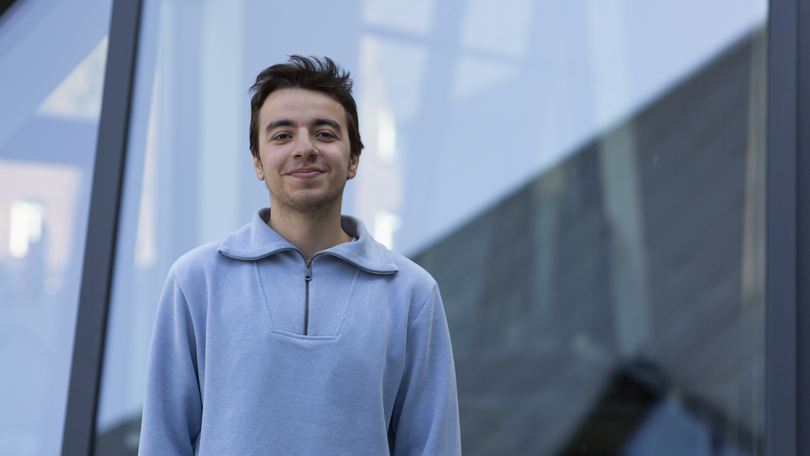
Emre's experiences
08.06.2026 Emre Özacar chose the Politics and Democracy Master’s program at the Leuphana Graduate School to build on his Bachelor’s degree in Political Science and International Relations from MEF University in Istanbul. He particularly values the program’s international perspective and its critical perspective on democracy, the Global South, and international relations.
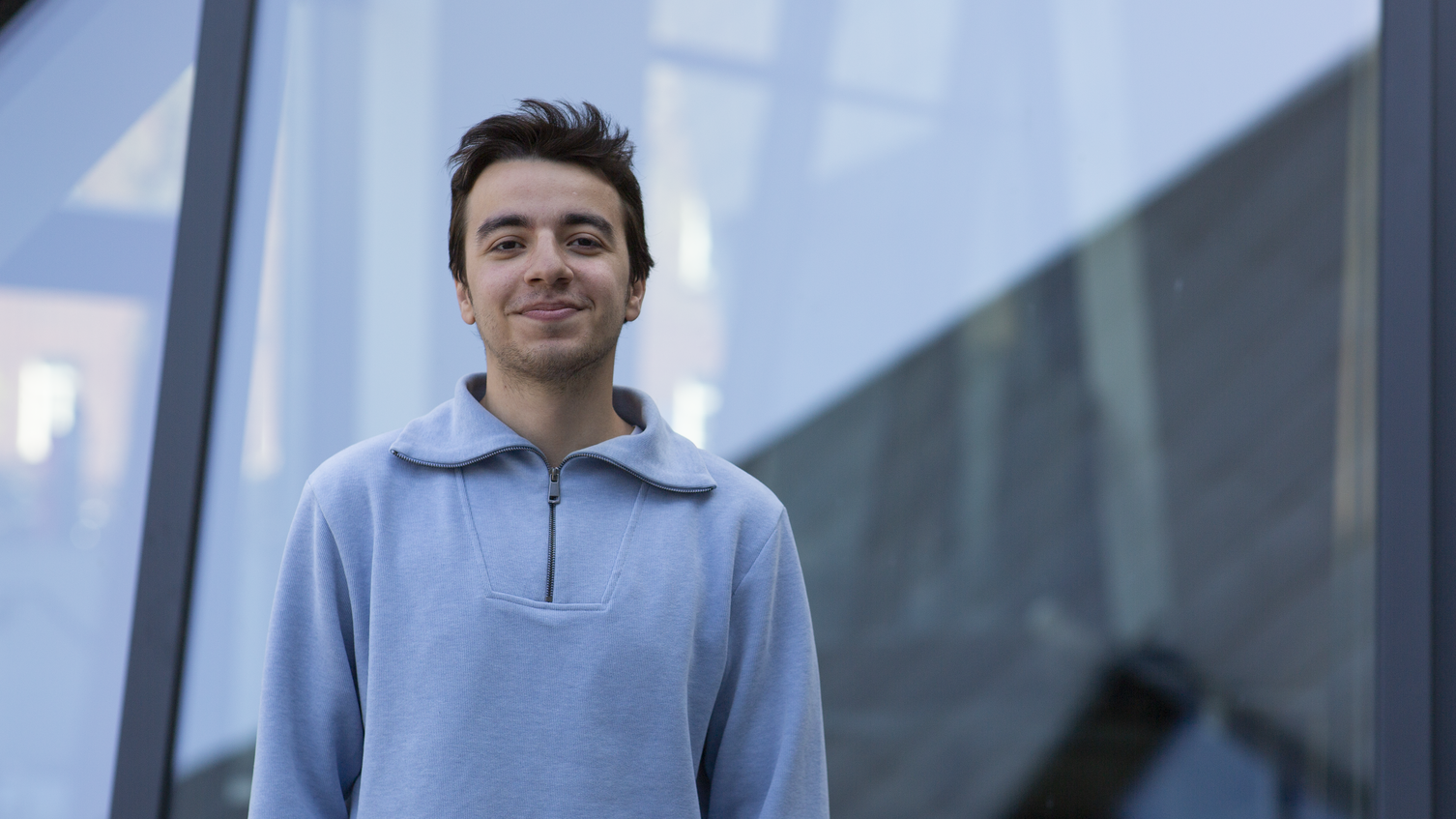 ©Leuphana/Fotograf
Why did you choose to study Politics and Democracy?
Since high school, I’ve been interested in the social sciences, especially politics. That’s why I chose to study Political Science and International Relations for my Bachelor’s degree. I really enjoyed my studies during that time, which is also why I decided to continue in the same field for my Master’s. While researching different programs, I came across this one and felt that it was a very good fit for my interests. Especially considering today’s global political developments, I think democracy studies have become increasingly important, both academically and in practice.
What were your expectations before you started your Master’s degree at Leuphana, and what do you like most about Politics and Democracy?
Before starting this program at Leuphana, my main expectations were having good communication with professors, a well-structured curriculum, and personal as well as social development. Since pursuing a Master’s degree in another country already comes with its own challenges, it was important for me to feel comfortable and supported within the university environment. At the same time, receiving a high-quality education in Germany was one of my key expectations. What I appreciate most about the program is the close and open communication with our professors, as well as the interactive nature of the classes. As a social sciences student, I believe that an interactive learning environment is very valuable, and Leuphana truly provides that. I also find the interdisciplinary structure of the program particularly appealing. The combination of themes such as democracy, international relations, sustainability, and the Global South gives the program a strong international and global perspective.
What did you study before starting your Master’s degree, and how were you able to build on your previous studies?
Before joining this program, I studied Political Science and International Relations in Istanbul. I believe this gave me a very strong foundation before starting my Master’s. I had already taken many introductory courses during my Bachelor’s, which made it easier for me to build on that knowledge and engage more confidently with the material at the Master’s level.
How did you find adjusting to the new disciplines in the program?
The courses focusing on the Global South and different regions, in particular, have given me new perspectives. Going beyond the traditionally Western-centric academic approach and examining other regions from a more critical perspective within democracy studies is something I really value about this program. In a time when the world is facing multiple crises, I believe that academic work in this field is especially important and relevant.
What do you particularly like about the campus and the city of Lüneburg?
I think we have a very beautiful campus, which becomes even more enjoyable during the summer. What I like most are the sports facilities, the amount of green space, and the dining hall. Coming from a large city like Istanbul, living in Lüneburg has been a completely different experience for me. It’s a small and charming city where everything is easily accessible, and I really enjoy its preserved historical streets and buildings. I also appreciate how close Lüneburg is to Hamburg, as it allows me to easily visit a bigger city whenever I miss that atmosphere. At the same time, as international students, we take part in many activities organized by the university’s International Society, which make the experience more enjoyable and help a lot with adapting to a new environment.
What is the relationship like with other students and lecturers?
We have a very friendly and enjoyable atmosphere with our classmates. I especially enjoy the long political discussions we have in the cafeteria after classes. Having a diverse group of international students also adds a lot to the program, as it brings different perspectives into our discussions during lectures. We also have very good communication with our professors. I do not feel a strong hierarchical distance between students and professors, which makes the learning environment more comfortable. It is very valuable for us that they are always approachable and supportive.
Have you decided on a topic for your Master's thesis yet, and do you have any plans for after graduation?
I haven’t made a final decision yet, but I am considering writing my thesis on Turkey–EU relations, with a stronger focus on international relations. As for my plans after graduation, I do not have a fixed plan yet. However, I would like to stay in Germany for a while and explore the opportunities that come my way.
Are there any tips you can give new Politics and Democracy Master’s students, that you would have loved to know at the start of your studies?
I think this program is a very good fit for students with a background in political science. One important aspect of the program is the strong emphasis on methods courses. Especially for the Quantitative Methods course, it would be very helpful to do some preparation in advance. Academically, I would also recommend reviewing the syllabus before starting the program and doing some background reading to become familiar with the topics. This can make the transition much smoother and help students feel more confident in their courses.
Who would you recommend the Politics and Democracy Master's program to, and what difference can PAD graduates make?
I would especially recommend the Politics and Democracy Master’s program to students with a background in political science, international relations, or related social sciences, who are interested in understanding global political dynamics from a critical and interdisciplinary perspective. It is also a great fit for those who are curious about issues such as democracy, governance, sustainability, and the Global South, and who want to go beyond a purely Western-centered approach. PAD graduates can make a meaningful difference by bringing a more nuanced and critical understanding of global challenges into their professional fields. Whether they work in academia, international organizations, public institutions, or the private sector, they are equipped to analyze complex political processes, consider different perspectives, and contribute to more inclusive and informed decision-making.
Contact and Counselling
First contact point
The Information Office (Infoportal) is your contact point for
- general information on the application procedure
- initial questions about the study programmes offered at Leuphana
- making an appointment with the Graduate School Student Counselling Service.
Information Office
Building 8, Ground Level
Fon +49.4131.677-2277
studierendenservice@leuphana.de
Campus opening hours
Mon - Thu 9.00 am - 4:00 pm
Fr 9.00 am - 12 noon
Student Counselling
To make an appointment with our Student Counselling Service, please use our booking tool on our website.