
Pursuing a Ph.D.: Dr. Melanie Weber-Moritz – Growth and Transformation
2026-05-17
The current president of the German Tenants’ Association earned her doctorate at Leuphana University of Lüneburg. In this interview, she explains the crucial role a doctorate can play in advancing to leadership positions. On June 19, the Graduate School will host its second Homecoming Day for graduates of the “Leadership in Society and Business” certificate program. The focus will be on professional development after earning a doctorate.
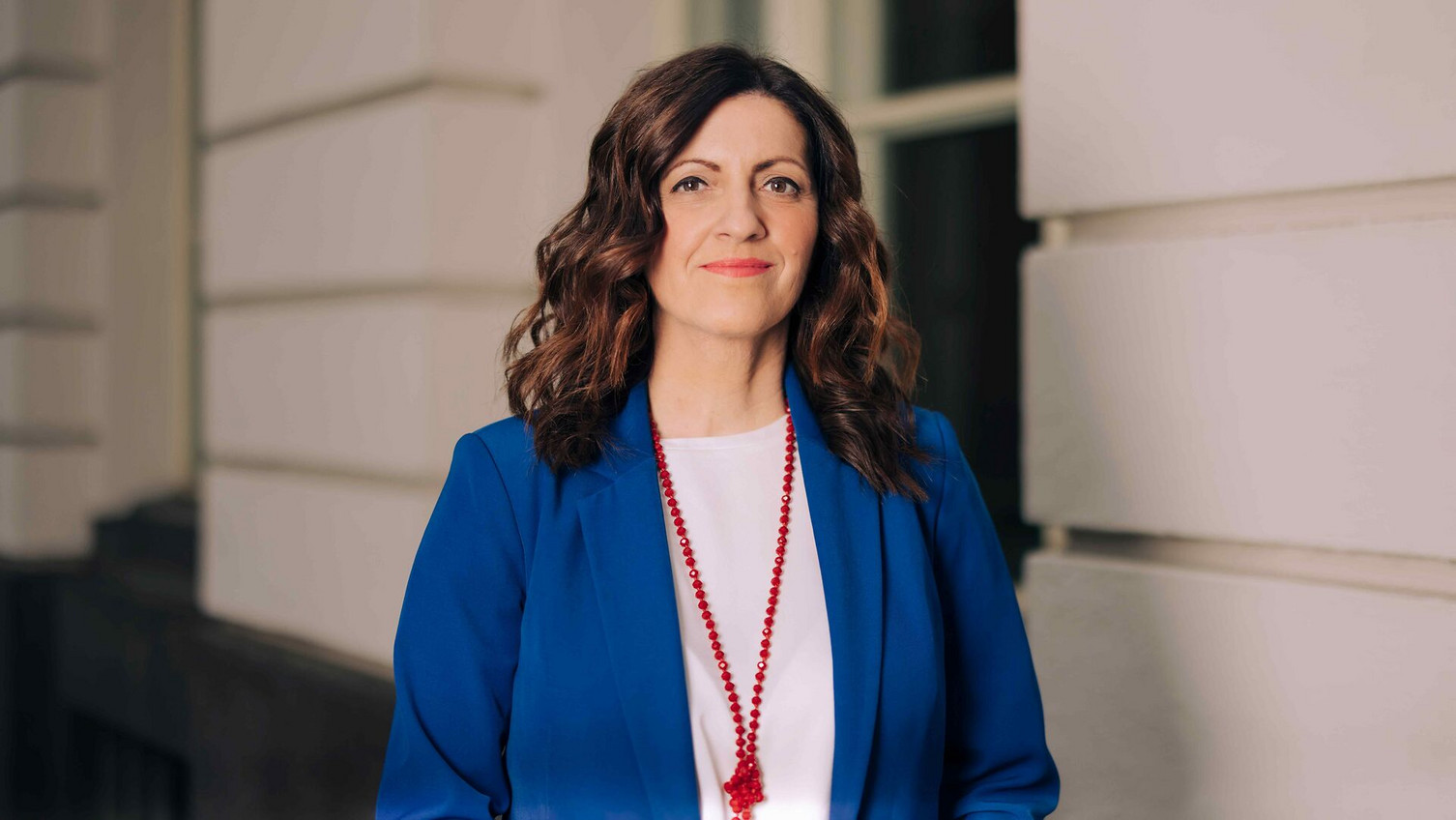
Dr. Weber-Moritz, what did you take away from your time as a doctoral candidate?
I earned my doctorate in environmental sociology in 2007, which is a field in the humanities. It all began with the central challenge of developing a viable research question. That is a very intensive process that requires a lot of time and personal effort.
What I learned most during that time was perseverance, keeping a long-term goal in sight, organizing myself, and working in a structured manner. At the same time, I developed methodological skills and had to familiarize myself with topics on my own.
In your opinion, does a Ph.D. prepare you well for leadership positions?
Yes, definitely. But not because of the title itself. While it is helpful and opens doors, what really matters are the skills you develop during your PhD: the intensive work on yourself, independent research, and the ability to structure complex projects. These are all skills that are incredibly important in leadership roles. A PhD is a very personal process—you grow and emerge from it a changed person.
How formative was your time as a doctoral candidate for you?
Very. Not least, I learned to develop leadership and personal responsibility for myself. Because even with good supervision, you’re responsible for many things: for example, the research question, methodology, or continuing education. For instance, I organized a scholarship myself to attend an international sociology conference in South Africa.
For me, this ability to organize myself is one of the most important skills I gained during my doctoral studies. It stays with me to this day, because often enough, no one is waiting for you.
What do you mean by that?
If I want to set a topic or move a project forward today, I have to organize it myself and take action. I can’t lead a large association if I remain passive. A leader must also be able to endure when things don’t move fast enough or don’t lead to success. That there are dry spells. That you receive criticism. All of that is part of it—and that’s what your time as a doctoral candidate teaches you.
What is it like to work as a woman in a heavily male-dominated industry?
That brings both challenges and advantages. On the positive side, you stand out, are noticed, and are often specifically sought out. And I don’t get the impression that men want to stick only to their own kind—quite the opposite.
But of course, male-dominated networks still exist. That’s why it’s important for women to build their own networks. I get the impression that women often don’t do this as naturally as men—but things are changing.
What other tips do you have for doctoral students?
Have the courage to ask questions. I haven’t done that enough myself at times. You should actively reach out to people who are further along than you or who serve as role models, and ask them: How did you do that? What experiences have you gained? That’s incredibly valuable. It’s also important for career planning, because universities can’t accept all doctoral candidates, and the number of professorships is limited. That’s why you should start exploring alternative career paths early on.
Did you have a clear career direction early on?
I wanted to put what I had learned into practice. I knew that early on, even if the exact job description wasn’t clear to me yet. I wrote my dissertation on a climate policy issue. The topic was gaining importance at the time, and many new initiatives and organizations were emerging. I felt that I could contribute something relevant with my expertise.
My path then led me first to consumer protection and later to the German Tenants’ Association. Today, I work primarily in the social sector, but many of my current topics—such as energy efficiency, utility costs, or climate protection in the building sector—are directly linked to my doctoral research.
Thank you very much for the interview!
Dr. Melanie Weber-Moritz studied political and social sciences in Göttingen, Bristol, and Berlin. In 2007, she earned her doctorate at Leuphana University Lüneburg on issues related to climate protection. She worked as a research assistant at Freie Universität Berlin and Humboldt University of Berlin. From 2015 to 2019, she served as executive director of the German Foundation for Consumer Protection.
In 2019, Melanie Weber-Moritz became director of the German Tenants’ Association. Since 2024, she has also served as chair of the board of directors of the Federal Association of Consumer Advice Centers and as chair of the board of the German Foundation for Consumer Protection. In 2025, she was elected president of the German Tenants’ Association.
The German Tenants’ Association (DMB) is the umbrella organization for 15 DMB state associations and over 300 local DMB tenant associations, with more than 500 counseling centers throughout Germany. Currently, approximately 1.25 million households are members, representing about three million tenants.