
Minor Museum Studies
Minor at Leuphana College
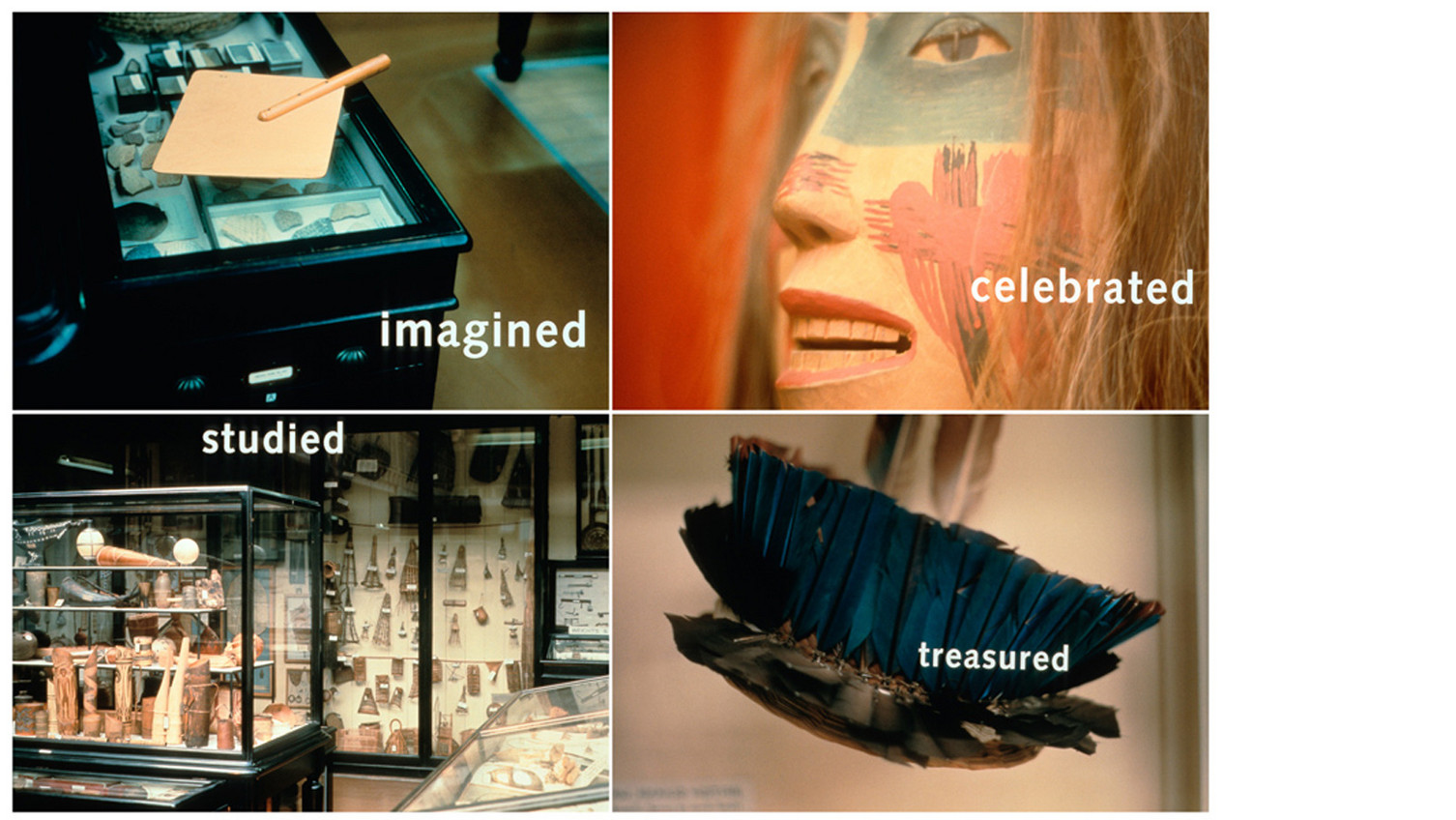
What are we collecting when we collect? What do we not exhibit? How do museological practices come to shape the understanding of the world we live in? The minor in Museum Studies at Leuphana answers such questions from multiple perspectives. It interweaves critical museology, transcultural art history, memory studies, provenance research, and concepts of cultural organization. It offers theoretical foundations for our contemporary and historical engagement with humanity’s tangible and intangible heritage. The program also provides insights into the practical aspects of this professional field through the involvement of museum and cultural heritage experts.
The program addresses current challenges such as decolonization, restitution, memory, representation, participation, and accessibility, particularly evident in the museum sector. It is designed for students who are interested in museums as sites and agents of knowledge production, negotiation, and transformation and who want to learn about the role of culture in contemporary societies.
There are numerous career opportunities in museums, exhibition spaces, galleries, private collections, memorials, and archives in the cultural sector.
Program director Prof. Dr. Lynn Rother, Professor of Provenance Studies, in an interview about the minor.
 ©Lothar Baumgarten
Studying Museum Studies
The BA minor in Museum Studies is the first of its kind in Germany to be taught entirely in English. Embedded in an international network, the minor is organized by professors with extensive experience in and with cultural institutions, including MARKK in Hamburg, Städel in Frankfurt, Brücke Museum in Berlin, and The Museum of Modern Art in New York. Among the instructors are professors Timon Beyes, Sven Kramer, Susanne Leeb, Lynn Rother, Beate Söntgen, and the incoming assistant professor for Transcultural Art History. Some seminars are organized at and with partners from the cultural heritage and exhibition sector, primarily in Berlin and Hamburg.
The program focuses not only on art museums but also other kinds of museums and heritage sites. It takes a critical and interdisciplinary approach, which it shares with the Leuphana Cultural Studies program as a whole. The artistic project space, the Kunstraum, is an important and distinctive component of Leuphana University. It hosts numerous events and seminars within the Cultural Studies major and the Complementary Studies program, providing students the opportunity to collaborate with artists and curators.
The English language minor in Museum Studies complements the new English language Culture, Organization and the Arts major, as well as the German language major in Cultural Studies (this major allows students to specialize in the following fields: Cultural and Social Theory; Art and Visual Culture; Cultural Organization and Society; Literary Cultures; Media Studies; Music and Auditive Cultures or the History of Knowledge elective), Studium Individuale, or a major in Economics, Business Administration,or Law.
Course Content
In the minor, you first acquire the basis for understanding the multi-faceted relationship between different types of museums — e.g., ethnological, historical, natural history, fine arts — and the particular items they collect and exhibit. As places where cultural values are expressed, experienced, and negotiated, museums are pivotal for understanding cultural organization, a topic you will study in the third semester. Exhibitions play a central role in communicating culture and knowledge to various audiences and are, therefore, the subject of another more practice-oriented module. Theories, histories, and concepts related to the transcultural, to heritage and memory or to provenance and restitution complete the program to understand current challenges and discourses on museums, culture, and society.
Studying at Leuphana College: Our study concept
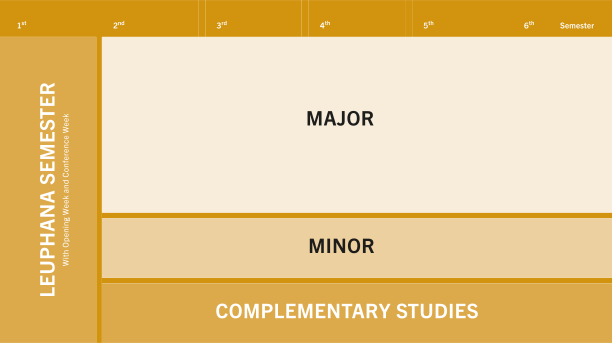
The minor in Museum Studies is embedded in Leuphana’s interdisciplinary College study model made up of the Leuphana Semester, a Major, and Complementary Studies. You start your Bachelor studies with the Leuphana Semester where you learn about the fundamentals of knowledge production and university life. The minor supplements your BA major. In Complementary Studies, you can pursue your thirst for knowledge through individualized study by immersing yourself in a different field of knowledge each semester.
 ©Leuphana Universität Lüneburg
Major combination options for Minor Museum Studies
Language of instruction
ENG English-language subject: no German required
GER German-language subject: German required
Compulsory modules in the Museums Studies minor
Leuphana Semester
- Transformation
- AI Literacy
- Methods
- 2 major modules
2. Semester
- Introducing Artifacts, Objects and Museums
- 4 major modules
- 1 Complementary Studies module
3. Semester
- The Museum as Organization and Institution
- 4 major modules
- 1 Complementary Studies module
4. Semester
- Concepts and Practices of Exhibiting
- Theories and Practices of Memory and Heritage
- 3 major modules
- 1 Complementary Studies module
5. Semester
- Transcultural Histories and Theories of Museums
- Concepts and Practices of Collecting, Provenance and Restitution
- 3 major modules
- 1 Complementary Studies module
6. Semester
- Bachelor dissertation
- 1 major module
- 2 Complementary Studies modules
Chart your own path in the cultural sector with the Minor in Museum Studies
In the Museum Studies minor, you’ll build the foundation you need to find and develop your own path in the cultural sector.
Career Prospects After Earning Your Bachelor’s Degree
Your bachelor’s degree is your first important step into the professional world. It qualifies you for roles in museums, cultural institutions, and related fields:
- Working in museums and memorial sites: for example, in collection management, documentation, exhibition coordination, or visitor services
- Positions in education and outreach departments of cultural institutions: for example, developing and conducting guided tours, workshops, and educational programs for various target groups
- Work at foundations and NGOs focused on art, culture, and social education: for example, in project coordination, program management, or public relations.
- Editorial offices, publishing houses, and media companies with a focus on the humanities and cultural studies: for example, developing articles on cultural topics, assisting with publications, or contributing to digital and journalistic formats
- Art associations, galleries, or auction houses: for example, in exhibition organization, artist support, collection management, or event management
- Organizations and companies in the field of cultural tourism: for example, in the design and supervision of cultural travel and educational programs, and the development of city tours or cultural programs

Career Goal: Curator
For leadership, research, and curatorial positions in museums, a master’s degree is generally required, and in some cases, a Ph.D.
To gain admission to master’s programs with a focus on Curatorial Studies / Exhibition Practice, you must strategically plan your bachelor’s degree:
- Choose a complementary major in Kulturwissenschaften or Cultural Studies: Organization, Society, and the Arts
- Take additional elective courses during your bachelor’s program
This will strengthen your academic profile and increase your chances of admission to highly sought-after master’s programs.
Further Education in Master’s Programs
A bachelor’s degree is the formal prerequisite for a master’s program. Depending on your choice of major and your areas of concentration or additional electives during your bachelor’s studies, you will qualify for advanced master’s programs in Germany and abroad:
- Museum Studies and Museology
- Cultural Studies
- Art History
- History and Public History
- Memory Studies
- Provenance Research
- Literary and Media Studies
At Leuphana, you can also continue your academic path with the Master’s programs offered by the Graduate School:
- Cultural Studies: Culture and Organization (in English)
- Kritik der Gegenwart – Künste, Theorie, Geschichte (in German)
At a Glance
Final degree: the minor in Museum Studies can only be studied in combination with a major
Admission restriction: no
Study places: 35
Teaching and examination language: English
Events for prospective students
Student counselling service
Clarify your questions in a personal conversation during the Open Advisory Service. You can take advantage of digital counselling at short notice without registering. The College study advisors will be happy to help you:
- Wednesdays from 11 a.m. - 1 p.m. (in person on campus)
- Thursdays from 4-6 p.m. (digitally via Zoom)
Contact & Counseling
Initial Information
Information Office (Infoportal)
Building 8, ground floor
Universitätsallee 1, 21335 Lüneburg
Phone +49.4131.677-2277
Fax +49.4131.677-1430
studierendenservice@leuphana.de
Opening hours
Term time & term break:
Mon - Thu 9 a.m. - 4 p.m.
Fr 9 - 12 a.m.
Arrange an appointment
College's Student Counselling Service
Building 8, ground floor
Universitätsallee 1, 21335 Lüneburg
Open Consultation Hours
Wed 11 – 13 h (on campus)
Thu 16 – 18 h (via Zoom)