
LüneGAL Conference: The Power of Communication
2026-09-22 From September 16–18, 2026, the annual conference of the Society for Applied Linguistics (GAL e. V.) was held at Leuphana for the first time. The GAL is one of the largest and oldest linguistic societies in the German-speaking world and brings together all those who conduct scientific research on communication processes in everyday life and professional contexts and are interested in practical improvements. As a result, linguistic research is always in demand wherever society is changing.
 ©Leuphana/Imke Bredehöft
 ©Leuphana/ Imke Bredehöft
 ©Leuphana/Teresa Halbreiter
 ©Leuphana/ Teresa Halbreiter
 ©Leuphana/ Imke Bredehöft
 ©Leuphana/ Imke Bredehöft
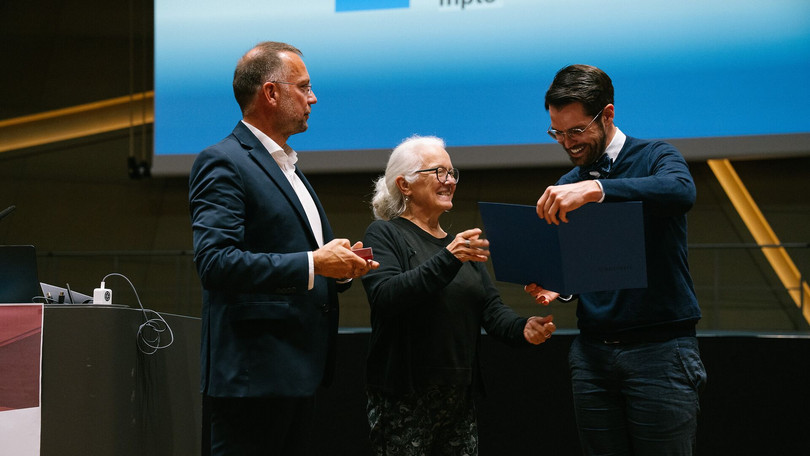
Anyone who works their way through the LüneGAL program will quickly get a sense of just how multifaceted and highly relevant applied linguistics is: Over 150 presentations in three days, spread across 15 sections. These include, for example, conversation analysis, intercultural communication, the science of writing, multilingualism, media literacy, language pedagogy, sociolinguistics, and translation studies. The research project by Dr. Sam Schirm of Bielefeld University, which was awarded the GAL Research Prize, exemplifies just how closely these diverse topics are linked to societal and very practical questions of daily life. The starting point for his research is a specific societal challenge: Given the many pharmacy closures, there is a need for skilled workers from abroad. To ensure that professional counseling remains a core service offered by pharmacies, effective linguistic communication is essential. Schirm conducts research on German as a foreign and second language in medical professions and, in this project, analyzes conversations between immigrant pharmacists and customers. The results of his conversation analyses are directly incorporated into professional language instruction, which prepares students for the specialized language exams required for licensure. This is just one example of the impact of language on the most diverse areas of our lives, in a society that is undergoing change on many different levels.
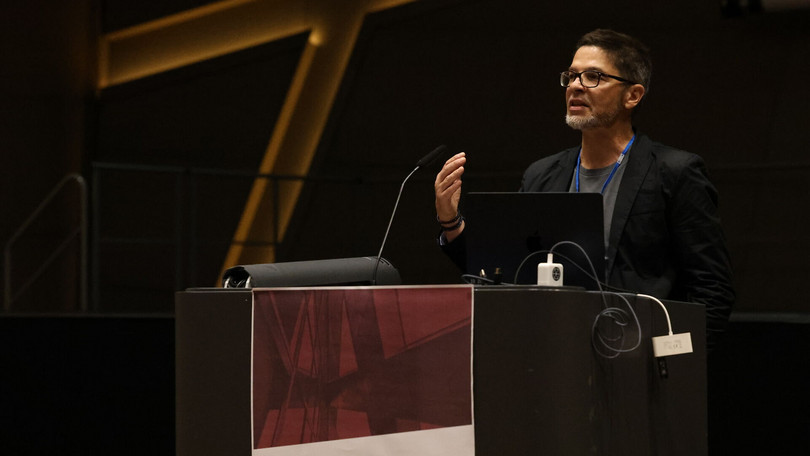
Sascha Spoun, President of Leuphana University Lüneburg, summarized the importance of language in his welcome address to the more than 300 LüneGAL participants: “Language is a tool of order, but also one with which order can be disrupted.” And he pointed out the great responsibility that comes with it. Leuphana Vice President Prof. Dr. Simone Abels drew attention to the importance of language for educational practice and asked: “How political should language pedagogy be?”
Artificial intelligence is becoming an increasingly important player when it comes to language and communication. Accordingly, it featured prominently in a wide variety of session presentations: from the question of how feedback loops in interactions between large language models (LLMs) and humans can reinforce cultural stereotypes, to the opportunities and risks of AI-supported translation tools in German-as-a-foreign-language instruction, to hybrid reading practices in academic work. The conference featured critical discussions on how to address these new AI possibilities. Conference participant Prof. Eva-Maria Jakobs, for example, emphasized the responsibility of university teaching to foster creativity and critical thinking in light of the changes already brought about by AI and those yet to come: “Our students must not succumb to the lure of the effortless.”
Auch Konferenz setzt neue Kommunikationsimpulse
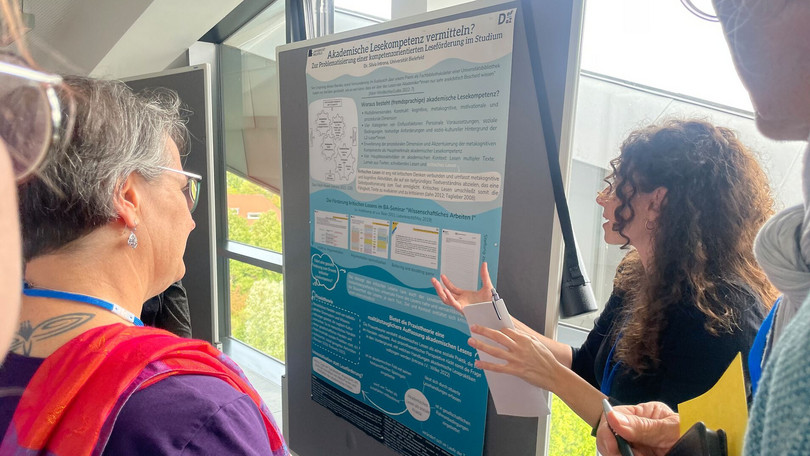
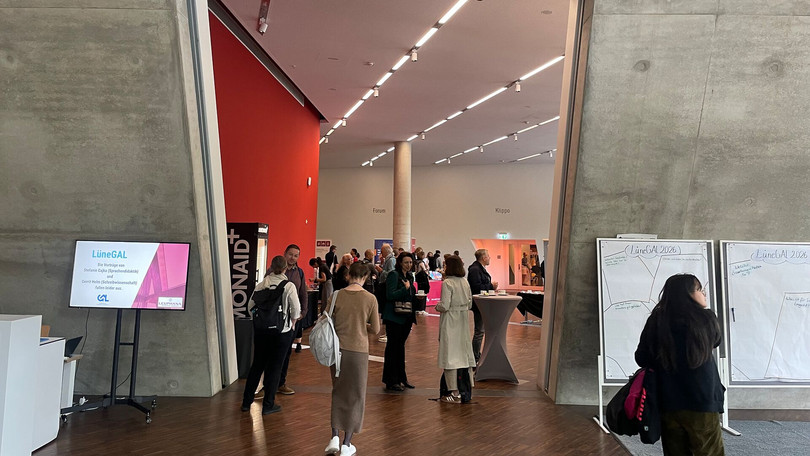
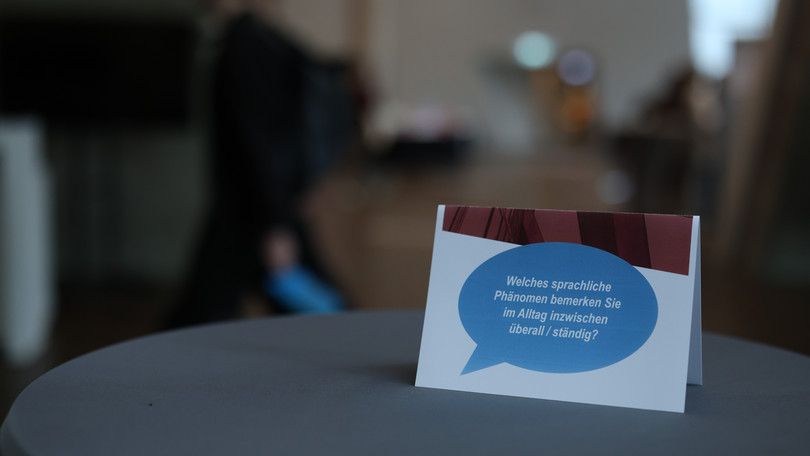
The conference also takes the liberty of setting new trends. PD Dr. habil. Dagmar Knorr, director of the Writing Center and a long-standing member of GAL, brought the conference to Leuphana for the first time and organized it together with an interdisciplinary team: “It’s important to us to move away from this very traditional lecture-based culture. We wanted to bring movement and variety to the conference structure—and in doing so, use the unique architecture of the Libeskind building to facilitate communication. When I look at the many conversations taking place at the poster stations, during the various sessions, and in the breaks, I think we’ve succeeded.” For example, on the mornings of the conference days, there was yoga in the foyer of the main building; displays on the bar tables encouraged academic discussions; and, for the first time, a World Café was held to exchange ideas on fundamental questions in applied linguistics. Prof. Dr. Matthias Schulz (University of Würzburg) co-led this session with Dr. Miriam Schwebler (University of Würzburg) at the discussion table titled “What, exactly, are applications in applied linguistics?” The GAL’s co-president also poses this question to shed more light on the discipline’s role in society: “We are essentially a ‘problem-solving science,’ because the starting point of our research is always real-world problems related to language, for which we aim to offer a solution.” Ensuring that these solutions are effective often requires significant effort. “I also see it as the GAL’s task to promote this special commitment and to secure recognition for our members for their efforts.” One way to achieve this is through more intensive science communication. How GAL can support its members in this regard was the focus of another roundtable discussion. A recent GAL survey on the needs and wishes of researchers was presented here.
This conference thus showcased a scientific community that wants not only to reflect on its research topics but also to reflect on itself and continue to develop—and, above all, one that is aware of the power of communication.