
New at Leuphana: Prof. Dr. Christine Sälzer – “Data alone doesn’t change anything”
2026-10-21 How can scientific findings be applied in schools? The renowned education researcher heads the Educational Monitoring division at the newly founded Center for Empirical Education Research (ZEB). Previously, she served as the national project director for the PISA study for seven years and, as a professor of education at the University of Stuttgart, played a key role in shaping teacher education. At the ZEB, she aims to bring research and educational practice closer together—through monitoring and relationship-building.
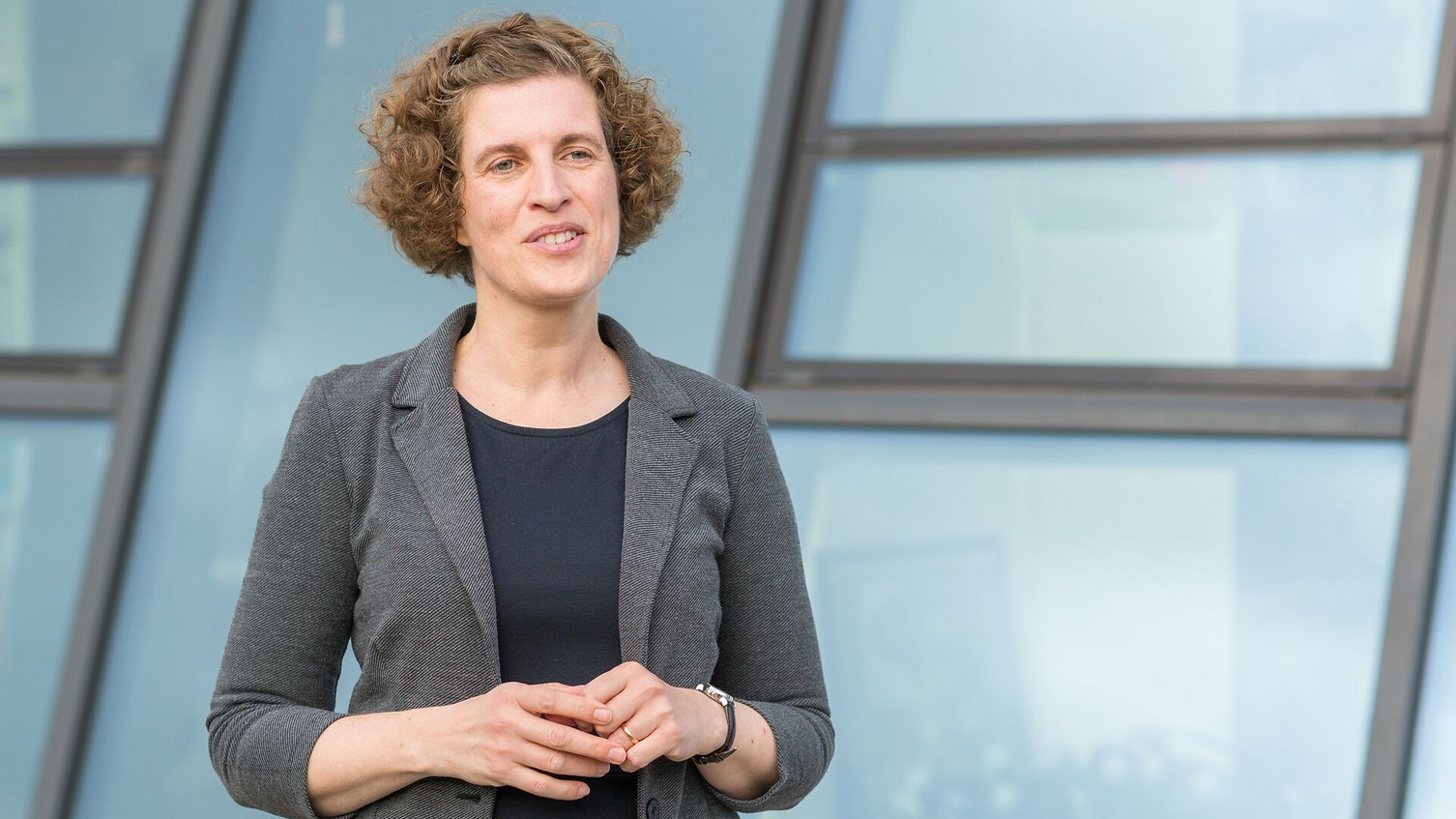
Professor Sälzer, you gave up a well-established position to help establish the Center for Empirical Educational Research at Leuphana. Why did you take this step?
It wasn’t the first time in my professional career that I’d asked myself how my research could contribute to solving specific social issues. The PISA study was a fascinating project that I could have—and would have wanted to—work on for the rest of my life. But data alone doesn’t change anything. So later on, I decided to take a professorship in teacher education. My idea was to inspire prospective teachers, bring scientific findings into school practice, and thereby spark change.
That sounds like a sensible plan. Why did you change it?
What I had underestimated was this: In practice, these enthusiastic young teachers may not encounter an environment that is open to being inspired by their enthusiasm. Then that flame fizzles out again. With the ZEB, we’re applying more pressure at the policy level and creating space for joint initiatives involving educational research, practice, and administration. This step is exactly what’s needed right now if we want to bring about real change.
Why does the ZEB enable better research?
What makes the ZEB special to me is that several professorships are being created specifically for this purpose—ones that don’t focus solely on empirical educational research. We want to engage with policymakers and practitioners so that research can have an impact in schools and, in turn, be inspired by them. This isn’t something that can be done on the side. My professorship combines the strategic development of the center with my own research on educational monitoring and school absenteeism.
You say that data collection is made easier by the ZEB. How does that work?
In educational research across Germany, we face a major problem with so-called field access: Schools are not required to allow research. Many understandably say: In our day-to-day work, with so many challenges like the teacher shortage, we already have enough on our plates. Why bring researchers into schools as well? Even ambitious research projects fail because of this. Only a few studies, such as PISA, are mandatory. But we also need the “smaller” studies. The ZEB also includes the State Advisory Board, on which ministries and the Lower Saxony State Institute for School Quality Development, among others, are represented. This opens more school doors for us researchers. Without data, there is no evidence. Conversely, we can provide schools with well-founded insights into real-world problems.
So it’s a give-and-take situation?
That’s right—we don’t want to be researchers who impose solutions from above. The ZEB is meant to be a go-to source for scientific information and explanations. For example, if someone wants to know whether certain national PISA results also apply to Lower Saxony, it should be clear that they can turn to Ms. Sälzer.
How do you plan to bridge the gap between research and practice in the future?
I see the ZEB as a great opportunity to truly reach people and work together to improve the education system. I want to build connections that transcend existing boundaries: teachers, education administrators, researchers, parents, and even students. Real change can only happen when everyone pulls together. But for that to happen, all voices must be heard. Often, scientific evidence doesn’t reach schools at all, since teachers frequently see a disconnect between research and their lived experience. With the ZEB, that could change.
You’ve been researching school absenteeism for many years. How does the ZEB support your own research?
Often, a student’s absence is simply marked as “sick” in the class register. But the problems can be much more varied: ranging from poor transportation access to bullying to neglect at home. We have a tangible problem of unknown magnitude. Teaching staff do not handle it uniformly. School districts do not know the numbers. Education policymakers do not know what resources are actually needed. There is very little meaningful data. At the same time, many professions deal with school absenteeism: school social workers, psychologists, teachers, child welfare agencies, and we researchers. At the ZEB, we can collaborate to consider: How can research contribute to solving this specific societal problem? For me, that is the great opportunity offered by the ZEB: research does not stop at diagnosis. Together, we take responsibility to ensure that real change occurs within the education system.
Thank you very much for the interview!
Christine Sälzer studied education, psychology, and sociology at the universities of Braunschweig, Bern, and Fribourg (Switzerland), where she earned her doctorate in 2010 with a dissertation on school absenteeism. From 2008 to 2009, she was a Visiting Scholar at the Stanford School of Education as a fellow of the Swiss National Science Foundation. In 2016, she completed her habilitation at the Technical University of Munich on studies of academic achievement. From 2010 to 2017, Christine Sälzer served as the national project director for the PISA study in Germany. During the 2017–2018 winter semester, she served as a visiting professor in the field of national and international comparative education studies at Heidelberg University. In 2018, she was appointed professor of educational science at the University of Stuttgart. Since September 2026, she has been a professor of educational monitoring at Leuphana University.