
"Land. Vorteil. Gründung": Strengthening the Local Startup Ecosystem Through “Creative Construction”
2026-07-21 How can startup support in rural areas be strengthened and made more effective? And how does this contribute to regional development? These are the kinds of questions addressed by “Land.Vorteil.Gründung,” a WIR! project set to launch in November 2025 as a collaborative initiative involving Leuphana University Lüneburg, the University of Lübeck, the Think & Do Tank neuland21 e.V., Wir bauen Zukunft e.G., and the associated partners – the districts of Herzogtum Lauenburg (specifically the WFL Economic Development Agency) and Ludwigslust-Parchim (specifically Fachdienst 64 with DeveLUP) – in November 2025.
“Land.Vorteil.Gründung” (transl. “Country.Advantage.Startup”) is part of the Landvorteil Alliance, which is funded by the Federal Ministry of Research, Technology, and Space and aims to research, develop, and test sustainable living and working concepts in the two counties.
The “Land.Vorteil.Gründung” project is intended to contribute to this by further developing the local startup ecosystem in a context-sensitive and collaborative manner, while highlighting and strengthening the contribution of startups to essential public services, the common good, and sustainability. Using the “Creative Construction” approach – an alternative understanding of entrepreneurship – the project aims to build upon existing locations, networks, and institutions in the two counties to lay the groundwork for future development. The project will examine which target groups are significant for the region, what needs, opportunities, and barriers arise for entrepreneurs, how the interface between entrepreneurship and public administration should be structured, and which regional characteristics could influence entrepreneurship.
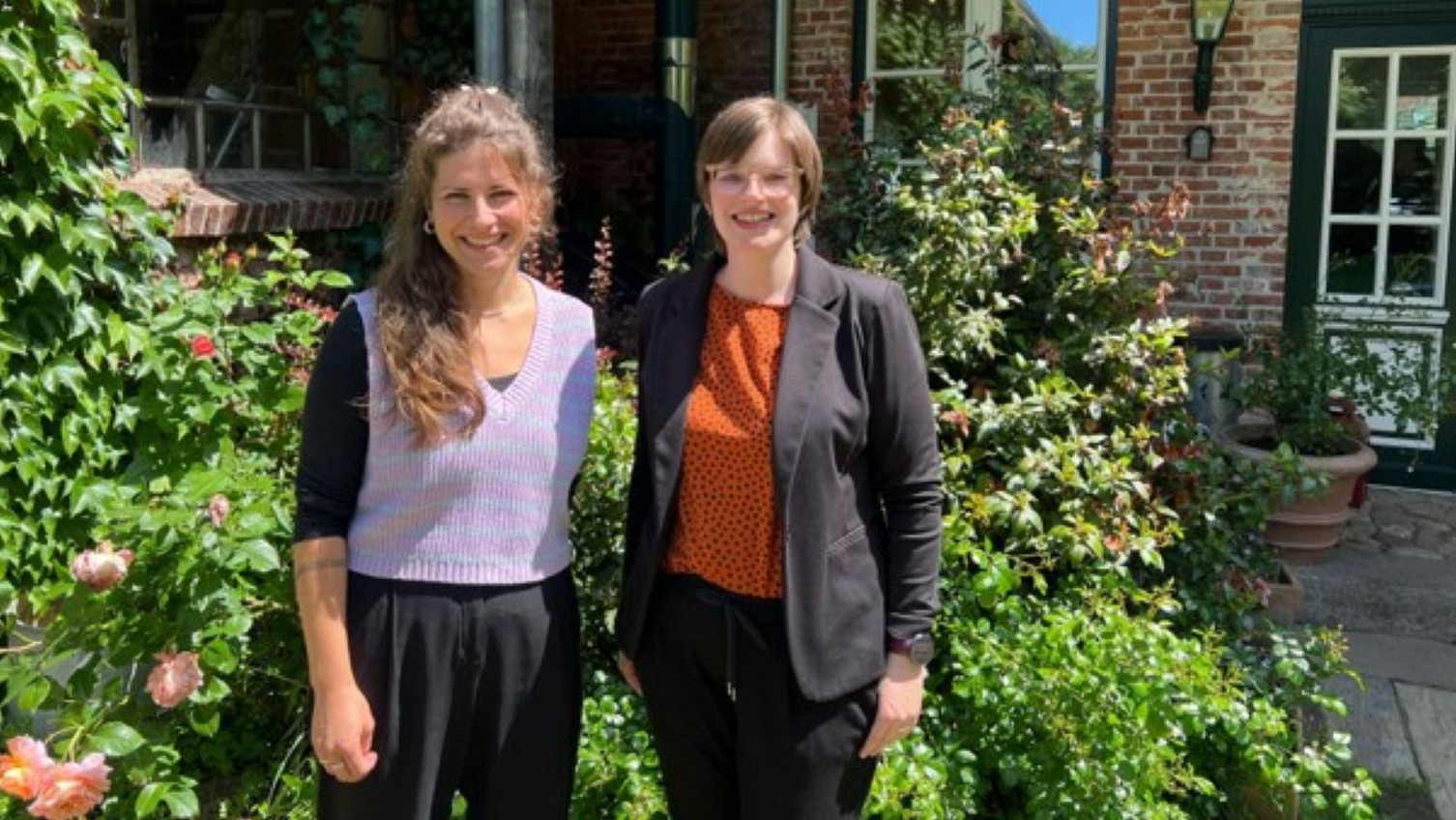
Leonie Dienst and Dr. Verena Meyer, who – along with Prof. Dr. Matthias Wenzel – are part of the project team representing Leuphana University, explain the project in an interview:
Almut Schafner: Why “Creative Construction” instead of “Creative Destruction”? And what does that actually mean?
Dr. Verena Meyer: In the U.S.-influenced discourse on entrepreneurship, the classic concept of “creative destruction” – traced back to the economist Joseph Schumpeter – predominates. This concept relies on the process of displacement and reconstruction to give rise to something new. However, we find this difficult to apply in the context of rural areas and against the backdrop of resource scarcity. With “creative construction” – that is, a creative, constructive approach – the focus shifts to existing resources, networks, and institutions. The aim is to build upon what already exists and develop it collaboratively; in this way, cooperation rather than competition, along with social and regional impact, become guiding principles in the joint development of the startup ecosystem.
Leonie Dienst: The startup ecosystem in rural areas is also much more diverse than one might think. While there are certainly traditional, technology-oriented startups, alongside commercial ventures, social and sustainability-focused projects play a particularly significant role, making an important contribution to regional public services and quality of life. Through our initiative, we aim to bring these projects into sharper focus and highlight their importance.
Schafner: Your project got underway last November. Where do you stand now, after more than half a year of research?
Meyer: During the first few months, the project focused on gaining a better understanding of regional structures and the landscape of stakeholders. To this end, we were able to build in part on insights from the preliminary LIONA project. While that project focused on the regional innovation system, our focus here is on the startup ecosystem. To this end, we analyzed existing support services and the network of institutions within the startup ecosystem, and held discussions with founders as well as stakeholders from government, business, and civil society. An important step within this work package was the identification and selection of target groups and their respective challenges and needs, which we will address as the project progresses.
Dienst: At the same time, the initial phase was crucial for the project team to come together and develop a shared understanding of goals, working methods, and expectations across the various partners. Especially in a transdisciplinary team like ours, this groundwork is vital for the project’s progress.
Schafner: What experiences are entrepreneurs and those interested in starting a business having in the districts of Herzogtum Lauenburg and Ludwigslust-Parchim? Are there any initial trends or insights yet?
Meyer: Many of the people we spoke with mentioned feeling somewhat lost at the beginning of their startup process. The problem seems to be less a lack of resources and more the question of which resources are relevant to their specific situation and who they can even turn to. Added to this are bureaucratic requirements, which are often perceived as a challenge, especially in the early stages. Most founders were able to overcome these hurdles through direct communication and personal contacts. This highlights just how important access to local networks is.
Dienst: The fact that people sometimes feel overwhelmed also highlights just how many resources are actually already available. After all, there are already a multitude of dedicated stakeholders, institutions, and support structures. The challenge often lies in the fact that these resources aren’t always visible, or that they exist side by side without being sufficiently interconnected or reaching the right target audience. This raises a key question for us: How can existing structures, networks, and institutions be better connected so that entrepreneurs can find the support they need more quickly and easily? Our findings to date show how important low-threshold points of contact, personalized guidance, and well-functioning networks are, especially in the early stages of starting a business.
Schafner: What challenges have arisen in the meantime?
Meyer: One challenge is to understand the different starting conditions in the two counties and to take them into account in our work. Although both regions are part of the Landvorteil Alliance, they differ in their established structures, networks, and institutional frameworks. In addition, the field of startup support involves many dedicated stakeholders with different areas of focus, experiences, and working methods. Bringing these perspectives together and strengthening collaboration across organizational, county, and state boundaries is an important – but also challenging – part of our work.
Dienst: At the same time, we are considering how the project’s results can have a long-term impact. Our goal is not only to analyze the findings from a scientific perspective but also to work with our regional partners to translate them into concrete formats and courses of action. Furthermore, we are already thinking about how successful approaches can be sustained beyond the project’s duration and made available to other rural regions. The question of how a time-limited project can give rise to sustainable structures in the long term has therefore been with us from the very beginning.
Schafner: What happens next?
Dienst: We are now increasingly moving into the implementation phase, which will be much more practice-oriented. Based on what we’ve learned so far, we are currently developing initial model formats that we plan to test and evaluate together with our partners in the regions. One example is the development of an AI guide designed to help aspiring entrepreneurs better navigate the existing support services and find suitable regional points of contact. In addition, we are developing and testing further formats in two phases that can help facilitate access to information, networks, and support services. These include low-threshold online offerings as well as two-day hackathons.
Meyer: This is, of course, closely intertwined with our overarching research interest. In addition to fundamental questions – such as what a region must offer to be considered startup-friendly, and how the various stakeholders, services, and structures within a regional startup ecosystem interact – we are particularly interested in how founders actually perceive and utilize these structures. Where are opportunities for access, where are there gaps, and what forms of support are needed during different stages of startup development? We therefore view the testing of these model formats not only as practical implementation but also as a learning process. Another round of testing and evaluation is planned for the coming year, into which the experiences and insights from the first phase will be directly incorporated. In this way, we aim to determine what works in practice, what impacts are achieved, and how successful approaches can be sustained in the long term and potentially transferred to other regions.
Schafner: Thank you both very much for this in-depth and fascinating look into your work.
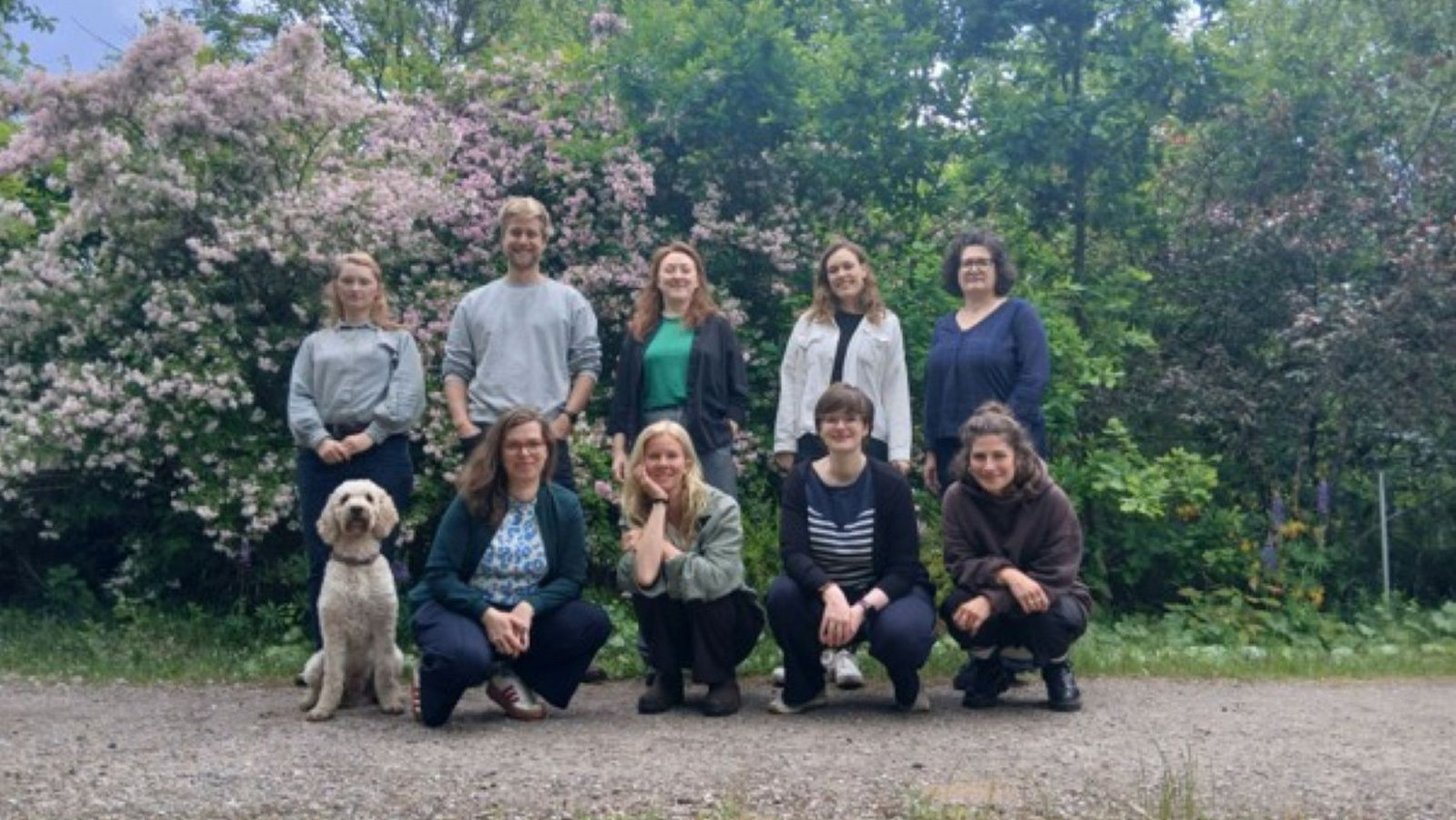 ©WIR!-Projektteam "Land.Vortei.Gründung"
About the Interview Participants
Dr. Verena Meyer is a postdoctoral researcher at Leuphana University, focusing on entrepreneurship, transformation, and alternative organizational forms. Her work primarily explores how organizations and entrepreneurship can contribute to a better society, both now and in the future.
Leonie Dienst has a background in sustainability studies. Her research interests focus primarily on sustainable development and the resilience of rural areas, as well as on how local communities and regional networks can help shape processes of social transformation.