
The “Sustainability Belief Trap”—An Obstacle to Climate Action in SMEs
International Study Identifies Why SMEs Often Lack Willingness to Take Climate Action
2026-11-12 Small and medium-sized enterprises (SMEs) contribute significantly to total CO₂ emissions in the economy due to their large number. A lack of staff, time, financial resources, information, and knowledge—as well as the perceived need to align with other owners and executives—all affect the motivation to implement climate protection measures. As a result, executives often fall into a “sustainability belief trap” that leads them to assume other executives place less value on sustainability than they do. This, in turn, goes hand in hand with inaction in the area of sustainability.
Zu diesem Ergebnis kam eine internationale Studie, in der 4.432 Inhaber und Führungskräfte kleinerer und mittlerer Unternehmen mit Daten aus sieben Ländern befragt wurden. Prof. Dr. Elke Schüßler vom Institut für Management und Organisation war Teil des Forschungsteams, das vor Kurzem seine Ergebnisse als Paper, „Belief Traps Hinder Small Business Climate Action" (Lees et al., 2026), in der Zeitschrift Entrepreneurship Theory and Practice veröffentlichte.
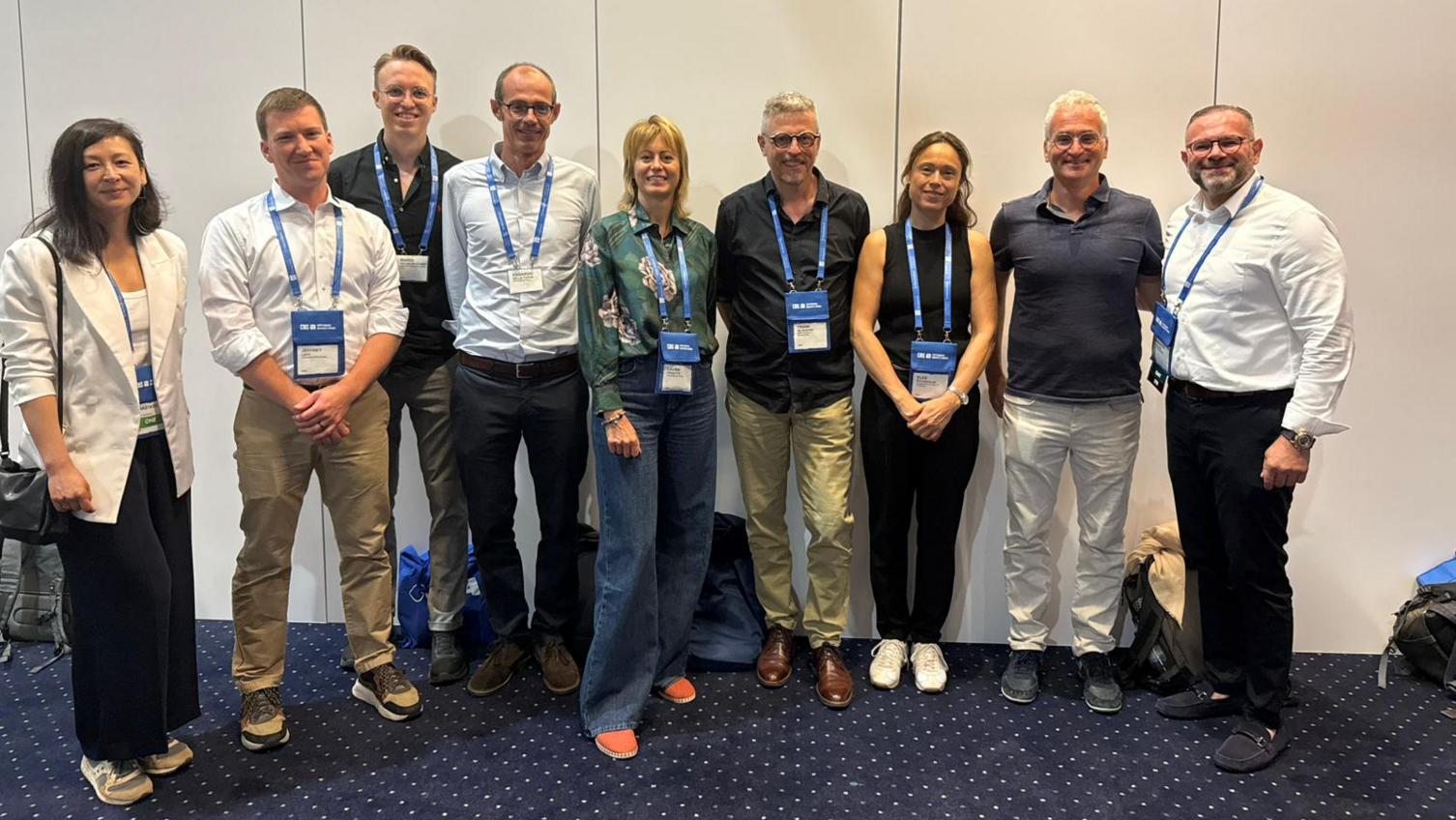 ©Privat
Ms. Schüßler, prior to data collection, it was decided to publish the results as a registered report—that is, only the methodological approach was reviewed initially. What does that mean, and why did you and your research team choose this specific submission format?
With a registered report, the paper undergoes a two-stage review process: First, the research question, hypotheses, and analysis plan are reviewed even before data are collected. If this review is positive, the journal generally commits to publication, regardless of the results.
This approach is already relatively well-established in the natural sciences and psychology. It is intended to prevent widespread but unethical practices, such as the selective omission of variables and non-significant results, or the formulation of hypotheses after the results are known, even though these are presented in the manuscript as a priori hypotheses (known as HARKing—“Hypothesizing After the Results are Known”). By reviewing a study plan in advance—that is, before the actual data collection and analysis take place—one ensures, among other things, that even non-significant results are published, since these contribute to the advancement of knowledge just as much as significant ones. In management research, these practices have long been a subject of debate (see, for example, Honig et al., 2018), the registered report approach is still not widely adopted.
Why is the “sustainability trap” such a major problem for SMEs in particular?
SMEs are often not directly affected by so-called ESG regulations, yet they are indispensable to a sustainable economy. Based on Eurostat data, for example, Calogirou et al. (2010) estimate that SMEs account for approximately 64% of industrial pollution in the European Union.
A lack of money, time, and human resources is often cited as an obstacle to climate protection investments among SMEs. However, our study shows that social-psychological mechanisms also play a role. Companies look to other companies for guidance, especially when there is uncertainty about what constitutes “correct” behavior. Since the belief trap—the tendency to underestimate others’ willingness to act on climate change—has already been demonstrated among citizens, it stood to reason that it would also influence key decision-makers in SMEs.
On the one hand, the sustainability belief trap is a problem for SMEs that are already investing in climate protection measures but feel they are on their own, which can be demotivating in the long term. On the other hand, the belief trap hinders climate protection because SMEs do not view certain courses of action as relevant if they are not socially embedded.
What can entrepreneurs do to avoid falling into the “sustainability belief trap”?
A first step is to question their own assumptions: The idea that “sustainability isn’t that important to others” is apparently often wrong. Our data shows that entrepreneurs systematically underestimate the importance others place on the issue. Those who are already investing in climate protection should therefore speak more openly about it. This signals that all those considering climate protection measures are not alone. Networking events, such as entrepreneur meetings organized by Chambers of Commerce and Industry (IHKs) or industry associations, can help break free from this belief trap. Furthermore, chambers of commerce and associations could survey and publish the actual attitudes of their members. Once it becomes clear that sustainability is important to the majority, the barrier to taking action oneself will decrease. So-called “prescriptive norms”—that is, shared assumptions about what one should do—can be strengthened through both individual and collective initiatives.
Thank you for the interview!