
Energy Forum 2026: How Can the Energy Transition Succeed at the Local and Regional Levels in Lower Saxony?
2026-09-17 The 14th Energy Forum at Leuphana University took place on September 15, 2026, in Leuphana’s main building in the Hanseatic city of Lüneburg—with a clear focus on a sustainable electricity supply for the region. Prof. Dr. Thomas Schomerus of Leuphana University Lüneburg welcomed the audience to the Libeskind Building and was delighted that the forum was fully booked with approximately 220 attendees. Under the theme “The Electricity Supply of the Future: What Matters Locally and Regionally for the Energy Transition to Succeed?”, representatives from politics, government, academia, energy providers, and the general public gathered to discuss potential solutions for the energy transition.
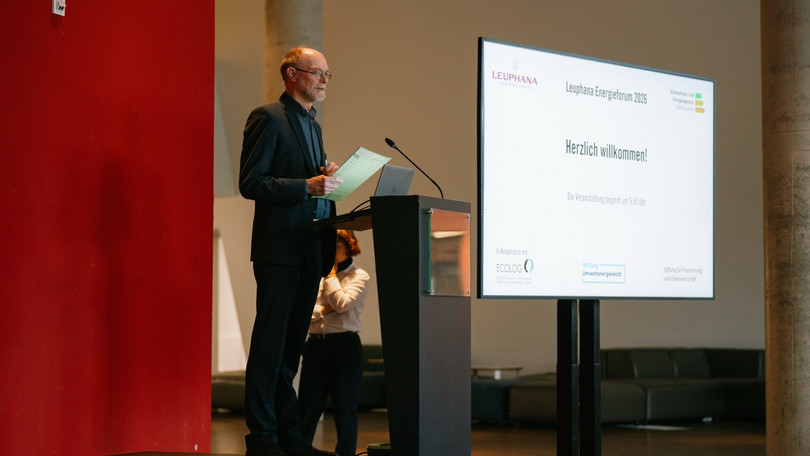
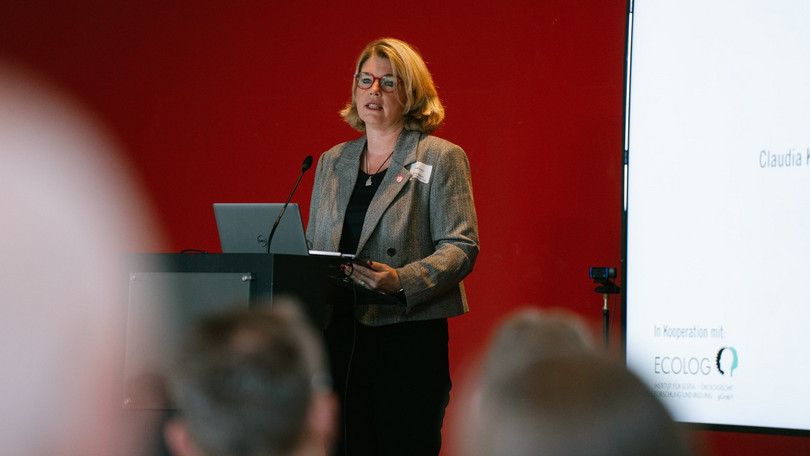
In her opening remarks, Claudia Kalisch, Mayor of the Hanseatic City of Lüneburg, emphasized the central role of the local level: “We want the energy transition to succeed quickly: As a Hanseatic city, we want to generate wind energy, further increase the share of solar power, and advance the energy transition in public buildings. But it won’t work without a shift in mindset and compromises.” She emphasized that the energy transition can only succeed if local stakeholders plan together, involve citizens, and the administration acts as a facilitator. She noted that a particular challenge in Lüneburg is the combination of a high density of historic buildings and the need to strengthen the grid—which is only possible in public spaces.
Following this, Klaus Müller, President of the Federal Network Agency, joined the event via video link and spoke about current challenges facing the energy transition from the perspective of the Federal Network Agency. He highlighted the need for clear rules in the energy market, as the principle of supply and demand does not function in the traditional sense in grid-connected markets.
In the seven sessions that followed, key building blocks for the future electricity supply were discussed. Legal and financial issues were also on the agenda. The expert forums addressed, among other topics, priority areas for wind energy in the Lüneburg district, financial participation in wind and solar projects, grid access for renewable energy and storage, and the financing of necessary investments in municipalities and regions. The discussions made it clear that technical innovation, clear regulations, and financial participation models form the cornerstones of a successful energy transition at the local and regional levels.
“Moin, friends of the energy transition”
In the afternoon, Lower Saxony’s Minister of the Environment and Energy, Christian Meyer, began his presentation in a typically dry Northern German manner with: “Moin, friends of the energy transition,” thereby setting the tone for his speech: Lower Saxony is a leader in wind energy and remains committed to renewable energy. He advocated for better utilization of surplus wind and solar power and summarized: “Lower Saxony wants to continue expanding renewable energy. Even in these times, we want a resilient, independent energy supply based on domestic energy sources.”
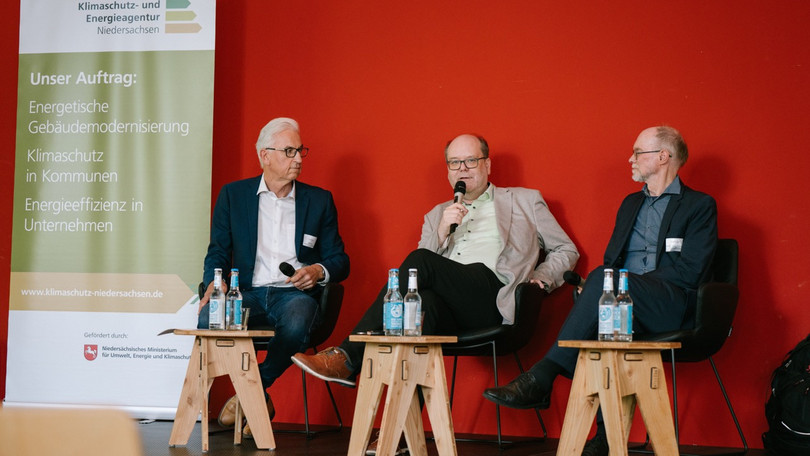
Following this, Christian Meyer participated in a discussion moderated by KEAN Director Lothar Nolte (standing in for Claudia Kemfert, who unfortunately had to cancel her participation at the last minute) with Thomas Schomerus and the session moderators. It became clear that planning and financing certainty are the fundamental prerequisites for the further expansion of wind and solar energy, grid infrastructure, and battery storage. Clear grid prioritization rules, a uniform hydrogen framework, and targeted government financing instruments were identified as key measures to overcome the current uncertainty among investors, grid operators, and citizens and to rapidly advance the energy transition in Lower Saxony.
Prof. Dr. Thomas Schomerus added after the event: “Topics such as the electrification of all areas of life, sector coupling, the provision of land for wind and solar parks, and grid expansion were addressed in presentations, sessions, and discussions, including with Klaus Müller, President of the Federal Network Agency, and Christian Meyer, Lower Saxony’s Minister of the Environment. The fact that the conference had to be interrupted due to a fire alarm did not dampen the positive atmosphere; the time was used for in-depth discussions. Conclusion: The Energy Forum fulfilled its purpose of providing a platform for sharing scientific findings and fostering exchange within the region.”
The 14th Energy Forum was organized in collaboration with the Lower Saxony Climate Protection and Energy Agency (KEAN), the ECOLOG Institute for Social-Ecological Research and Education, the Foundation for Finance and Financial Management, and the Foundation for Environmental and Energy Law. The next Leuphana Energy Forum is scheduled for September 7, 2027.