
Leuphana Publishes New Sustainability Report in Accordance with EU Standards
2026-10-21 The new sustainability report provides a detailed look at Leuphana's strategic and operational sustainability profile.
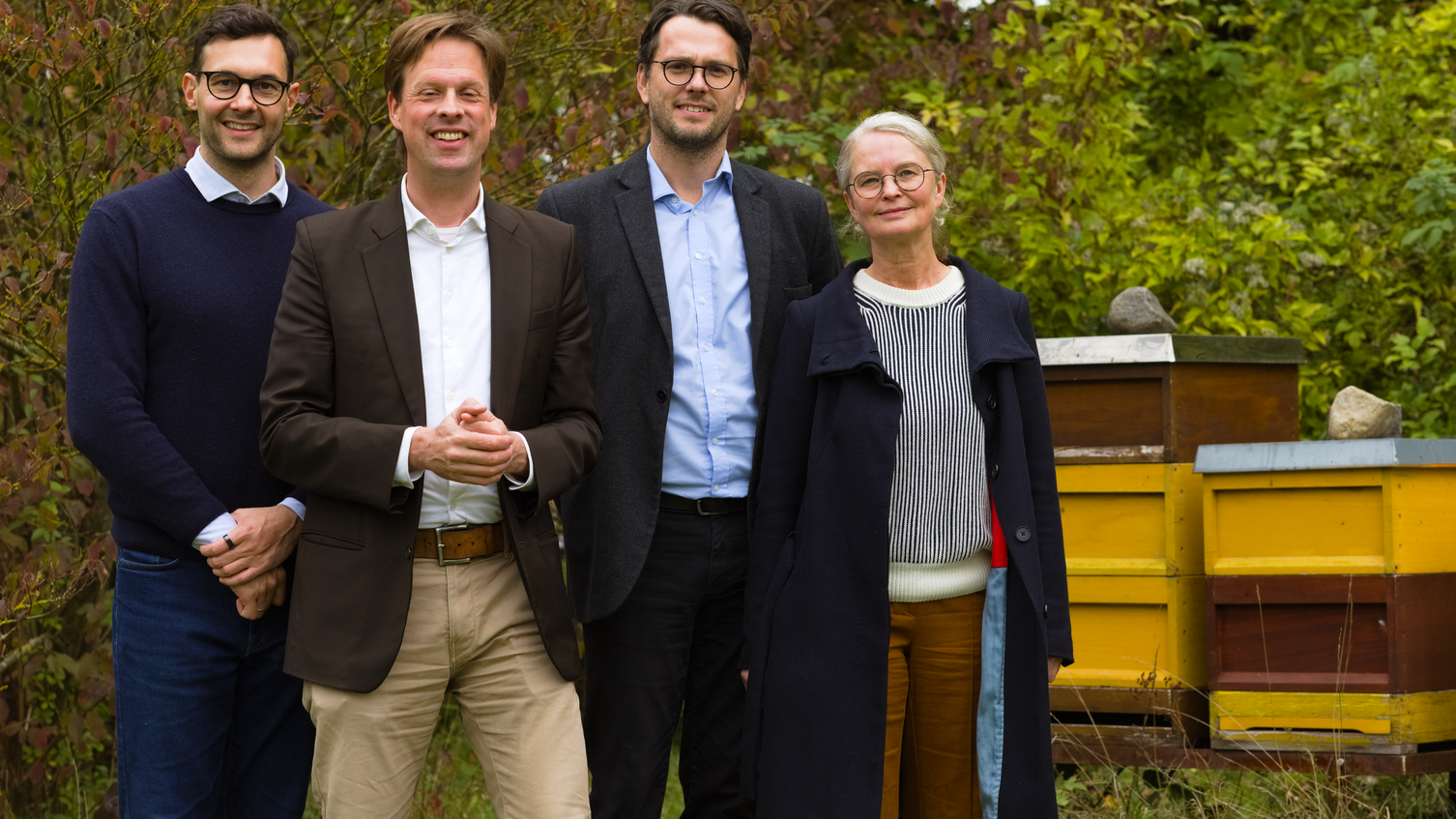
Leuphana University of Lüneburg is putting its sustainability reporting on a new footing: The starting point is the European guidelines for sustainability reporting (the Corporate Sustainability Reporting Directive (CSRD) and the European Sustainability Reporting Standards (ESRS)). These guidelines are not tailored to universities. Leuphana itself is not required to report: “We are raising our sustainability reporting to a new level of quality,” explains Prof. Dr. Patrick Velte, who provided academic guidance for the project.
In parallel with the sustainability report, the Executive Board has adopted a comprehensive sustainability strategy for the first time. A key insight from the process: “Leuphana already has a large number of sustainability goals, measures, and activities. However, these were previously scattered across various strategy documents, departments, and units,” explains Irmhild Brüggen, head of the Sustainability Office.
A central pillar of the new reporting is the so-called double materiality analysis. The survey included students, faculty, and researchers; technical and administrative staff; as well as external groups such as alumni and representatives from civil society. The focus was on two questions: Which sustainability aspects have a material impact on Leuphana, and what material impacts does the university have on the environment and society?
Social and societal issues were of particular importance, such as diversity and inclusion, as well as the impact of research, teaching, and knowledge transfer. Climate and environmental protection, on the other hand, were mentioned less frequently: “This shows us that we have already achieved a great deal in this area,” explains Irmhild Brüggen. For example, Leuphana has been operating an environmental management system validated according to the EU EMAS standard since 2000 and submits an annual environmental statement audited by independent environmental assessors. In addition, campus operations have been mathematically climate-neutral in Scopes 1 and 2 since 2014. By 2025, all electricity came from renewable energy sources. Leuphana is now gradually expanding its tracking of Scope 3 emissions and aims to achieve comprehensive mathematical climate neutrality by 2035.
In the future, reports will be issued annually instead of every three years as before: “This makes reporting more labor-intensive, but at the same time more precise and easier to compare,” says Patrick Velte. A complete stakeholder analysis, however, will not be repeated every year.
The new sustainability report is intended to better capture the university’s social impact. “One example of this is the newly introduced Pure Impact module with mapping to the Sustainable Development Goals (SDGs),” says Dr. Maximilian Focke, a member of the project team. In 2025, approximately one-quarter of the publications tracked were assigned to one or more SDGs. In addition, contributions from researchers and courses related to sustainability are to be tracked more systematically.
Reporting is set to be further developed in the coming years, particularly through closer integration of sustainability and financial data. For example, the financial impacts of investments in building renovation, energy efficiency upgrades, climate adaptation, and accessibility will be presented more transparently in the future. To this end, the annual data collection process will be established as a standard procedure in collaboration with the Finance Department.