
Network meeting of the German Institutes for Advanced Study held in Lüneburg for the first time
2026-05-04 Lüneburg. On 27 and 28 April 2026, the biannual network meeting of the German Institutes for Advanced Study (IAS) took place for the first time at Leuphana University Lüneburg. Representatives from leading academic institutions across Germany came together to discuss current developments, challenges and prospects in international cutting-edge research. The event was hosted by the Leuphana Institute for Advanced Studies (LIAS) in Culture and Society.
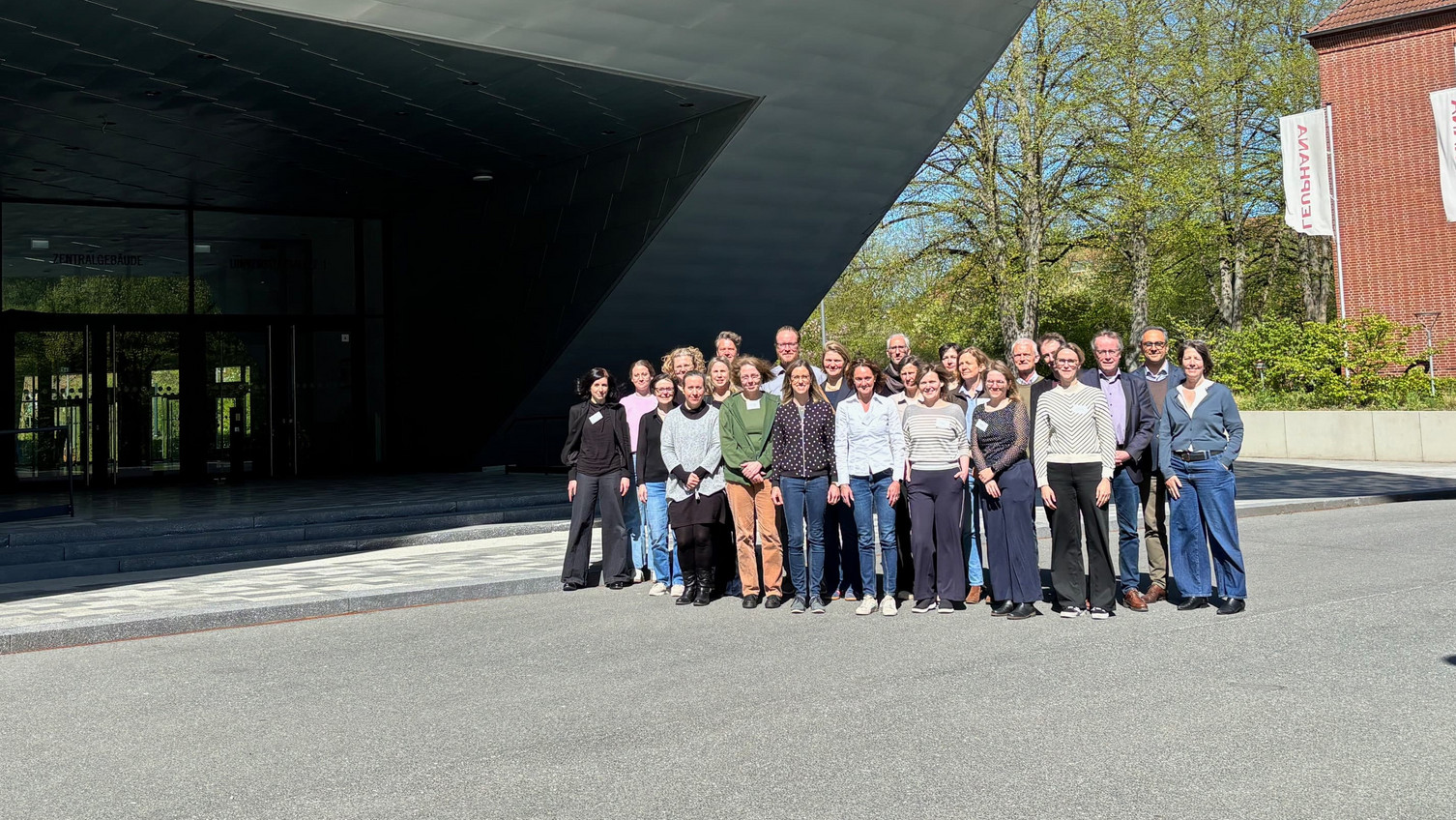
The meeting marks an important milestone for the IAS network in Germany: for the first time, the long-standing conference was hosted in Lüneburg – a location that is increasingly establishing itself as an internationally recognised hub for interdisciplinary research. The Leuphana Institute for Advanced Studies (LIAS) in Culture and Society, founded in 2022, makes a significant contribution to this through its fundamental research. The network’s member institutions meet twice a year to intensify their exchange and further develop joint strategies.
Exchange on future topics in science
This year’s meeting centred on key questions regarding the future of the science system. Topics discussed included the use of artificial intelligence in science management, the relationship between science and activism, and new formats for science communication.
The event kicked off on the afternoon of 27 April with a panel discussion on the topic ‘Artificial Intelligence at the IAS’. The focus was on strategies balancing individual workload reduction and institutional responsibility, as well as the question of how AI is changing administrative processes and the IAS’s remit, whilst opening up new scope for action. As AI is not yet used systematically, the risk of informal “dark uses” was also addressed. The aim of the discussion was to identify areas of application, clarify challenges and, at the same time, highlight the limitations of AI, which cannot solve structural problems.
Other programme items addressed the role of academics in societal discourse. In the tension between research and activism, it was emphasised that whilst academia should not engage in activism, it should nevertheless contribute its findings responsibly to public debates. For the IAS, this presents both challenges and opportunities: dialogue with politics, business and civil society can help maintain this balance and provide new impetus for research and policy advice.
The first LIAS Lecture of the summer semester, delivered by Adam Sitze (Amherst College) and entitled “Taboo as Vocation: Three Theses on Academic Freedom”, addressed fundamental questions of academic freedom in the evening and was received by all as a timely and critical contribution.
For the institutes’ science communication, there were innovative suggestions, such as partially automated, data-driven communication throughout the fellow cycle, as well as important case studies on how to target specific audiences. Strong institutional anchoring and cooperation formats, including “science festivals”, hold great promise.
IAS as engines of innovation in research
Over the past decades, the German Institutes for Advanced Study have established themselves as an independent and dynamic type of institution within the academic system. They offer outstanding researchers from all over the world temporary freedom to pursue innovative and interdisciplinary research. Thanks to their unique structure, IAS facilitate interdisciplinary exchange, thereby creating the conditions for new research approaches and collaborations. There are currently around two dozen such institutions in Germany, which host several hundred international fellows each year and thus make a significant contribution to the internationalisation and diversity of the research landscape.
At the same time, IAS see themselves as flexible actors capable of responding swiftly to social and scientific developments. Their comparatively lean structures allow them to address new topics at an early stage and open up innovative spaces for discourse. The network therefore also advocates for greater visibility of these achievements, as well as for suitable framework conditions to secure the long-term potential of IAS.
About the Leuphana Institute for Advanced Studies in Culture and Society (LIAS)
The Leuphana Institute for Advanced Studies (LIAS) in Culture and Society was founded in 2022 and is a research institute at Leuphana University Lüneburg that aims to strengthen the internationalisation and profile of the university’s research. At its heart is an international fellowship programme that supports interdisciplinary projects in the humanities, cultural studies and social sciences. LIAS sees itself as a hub for academic exchange and the development of new perspectives on social transformation processes and global challenges.