From Silicon Valley to Lüneburg: How the “Trans-Nation Co-Creation” Project Is Establishing a Sustainable Culture of Innovation in Germany
2026-06-25 From June 13 to 19, 2026, the Institute for Performance Management at Leuphana University Lüneburg hosted a week of intensive TNCC (Trans-Nation Co-Creation) Leadership Dialogues across Germany. The research trip combined company visits, moderated discussions, and interviews with executives, exploring how organizations are transforming in the age of artificial intelligence and how AI is concretely finding its way into companies.
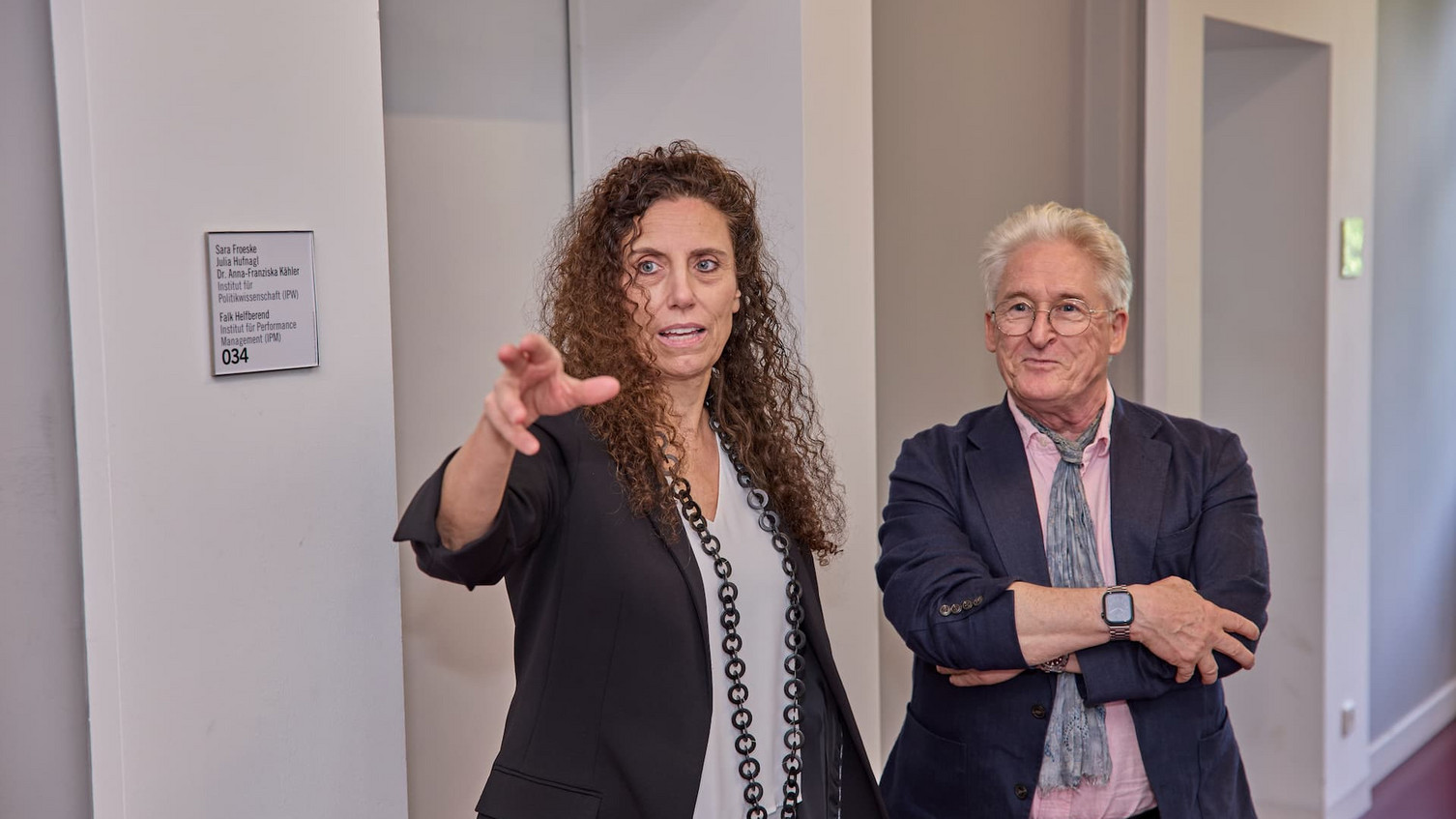
Led by Prof. Dr. Sabine Remdisch of Leuphana University and accompanied by Prof. Dr. Dr. Dr. Michael Shanks, one of Stanford University’s most influential thinkers at the intersection of archaeology, culture, and innovation, the tour took participants through a wide variety of settings—from an AI innovation park to a Celtic museum. The central premise: The conditions for innovation can best be understood by observing them on-site and directly asking the people involved how change is actually taking hold in the age of artificial intelligence.
Shanks’ work examines how organizations create something new and how the spaces and cultures around them shape what can be built in the first place. He provides the program’s overarching theme—by treating culture, history, and innovation as an interconnected whole rather than as separate disciplines. Remdisch, whose research focuses on the conditions for successful innovation, pays particular attention to the psychological factors that shape how individuals and organizations navigate the AI transformation. She anchors the program in the individual and social dimensions of change.
TNCC Tour and Leadership Dialogues: Insights into German Innovation Hubs
From Europe’s largest AI campus—the Innovation Park Artificial Intelligence (IPAI)—and the Campus Founders in Heilbronn, through the Leica factory and the control cabinet manufacturer RITTAL in Asslar, from the Celtic World at Glauberg to the Lower Saxony Ministry of the Interior, Sports, and Digitalization in Hanover, all the way to Leuphana University in Lüneburg, an IKEA store in Hamburg, and the Deep Tech Campus: The week-long innovation tour took the researchers to a wide variety of entrepreneurial and cultural venues.
The goal was to develop a comprehensive understanding of the current state of AI transformation in Germany. These findings will be compiled into a practice-oriented playbook—with actionable guidelines for executives and innovators driving AI-enabled organizational change.
TNCC in Heilbronn: Dialogue at the Intersection of Science, Business, and Innovation
Heilbronn served as a key hub. There, participants visited the Innovation Park Artificial Intelligence (IPAI)—one of Europe’s largest AI campuses, which brings together research, industry, and startups to advance artificial intelligence as a driver of innovation. The program also included a visit to Campus Founders, a leading accelerator and entrepreneurial hub that supports startups and young entrepreneurs in building scalable business models.
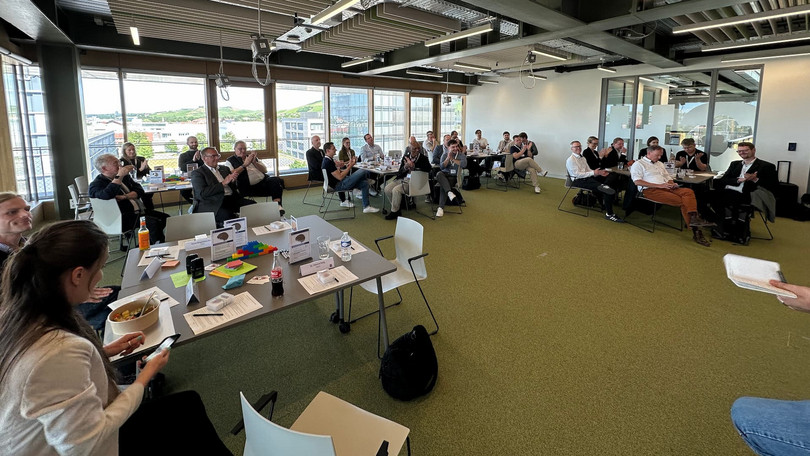
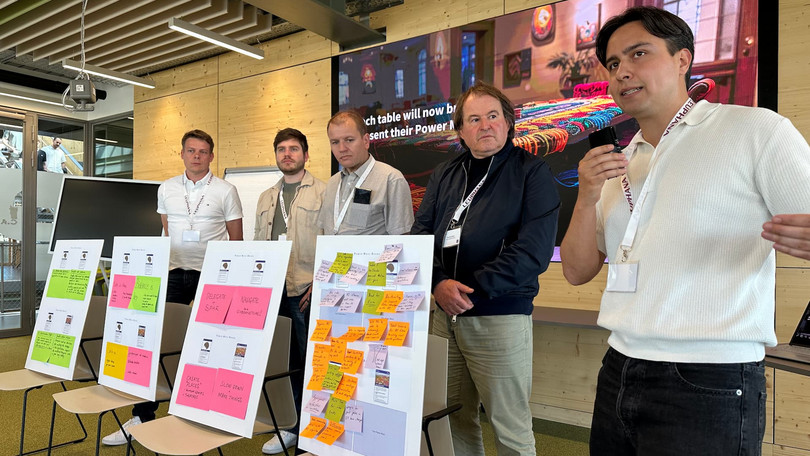
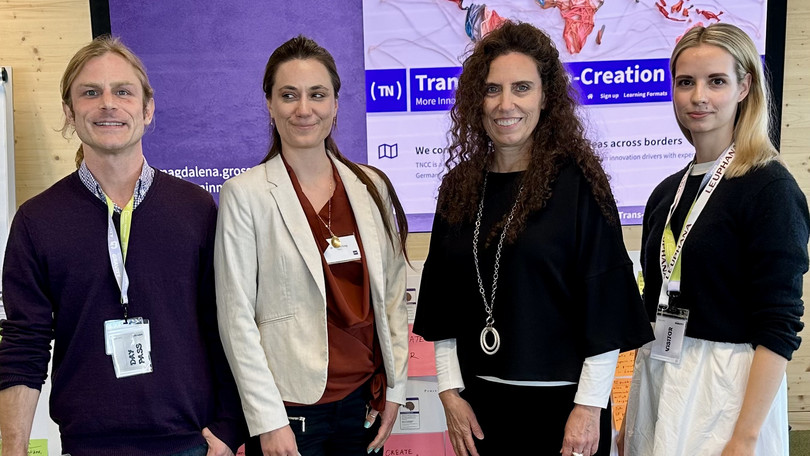
At Campus Founders, which is also represented on the TNCC project advisory board, participants from the current TNCC cohort met with former program participants—the TNCC Ambassadors—as well as representatives from SMEs and startups. A diverse group of about 40 people from various industries and companies of different sizes spent a day engaging in intensive discussions and jointly exploring key future-oriented questions surrounding “Soft AI”—with Prof. Dr. Dr. Dr. Michael Shanks from Stanford University serving as an intellectual sparring partner who shared his research perspective.
Participants discussed future-oriented topics during moderated roundtable sessions. The tables were deliberately mixed to create synergies and foster innovative ideas. Through this interdisciplinary and cross-national exchange, perspectives broadened and understanding of different innovation approaches deepened. This gave rise to unexpected connections and new insights with transformative potential.
A successful kickoff for dialogue at the intersections between established companies, startups, various industries, and the transnational bridge between Silicon Valley/Stanford and Germany/Leuphana—a collaboration that will continue.