
New study shows: politicians underestimate the public's willingness to take action on climate change
2026-08-17 Social psychologist Dr. Timur Sevincer has published a new study that has received a lot of media attention.
Timur Sevincer is a motivation and social psychologist. His main area of research is motivation and self-regulation. In particular, he examines future-oriented self-regulation strategies – their spontaneous use and effects on behavior change - in various domains, including promoting sustainable behavior and fostering positive intergroup relationships. His research involves a wide variety of research questions and designs as well as diverse methods such as physiological measures, implicit measures, cognitive measures, ecological momentary assessment, behavioral observations in the field, large-scale surveys, and analyses of population-level data, and archival records.
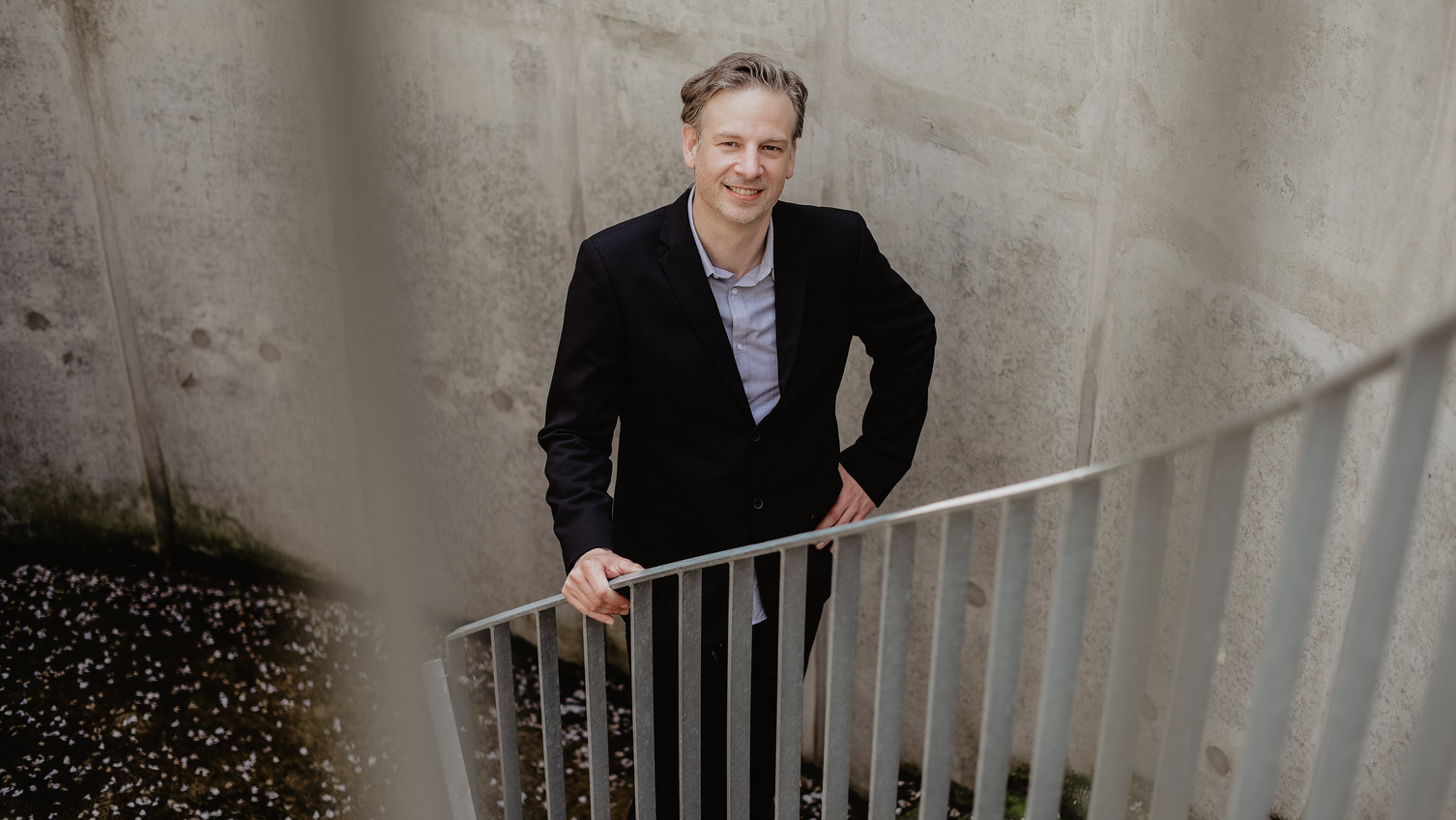
Interview with Dr. Timur Sevincer
Together with colleagues, you recently published a new study in the Nature Portfolio journal Communications Earth & Environment on public support for climate action. Could you briefly explain the main findings of the study?
Prof. Wilhelm Hofmann from Ruhr University Bochum, the two Leuphana students Luisa Hoslowsky and Fenja Styhler, and I investigated how accurately politicians can assess the extent to which the public supports climate action.
To do this, we surveyed a representative sample of around 1,000 people in Germany about their support for climate action: for example, how strongly they perceive climate change as a problem, to what extent they accept government climate policies, and whether they themselves would be willing to contribute. We also surveyed around 1,600 politicians at different levels of government—from the German Bundestag and state parliaments to local politics—and asked them how they thought the public would answer these questions. For comparison, we also asked members of the public how they perceived the attitudes of their fellow citizens.
The central finding is that politicians underestimate the public’s willingness to support climate action. Three findings are particularly interesting. First, this perception gap was even larger among politicians than among members of the public themselves. Second, it was particularly pronounced for politically controversial measures such as regulations and taxes. And third, we found this underestimation across almost all political parties. There were differences between parties, but they were smaller than one might perhaps expect. The perception gap was particularly large among politicians from the AfD.
What causes this misperception?
We did not investigate this directly in our study. However, research in psychology and political science suggests several plausible explanations. One possibility is that negative and particularly vocal voices are disproportionately visible in public discourse. Politicians may therefore get the impression that opposition to climate policies is more widespread than it actually is. This could be amplified by social media, but also by direct contact with particularly engaged citizens. Ten angry messages may be more memorable than a hundred people who quietly support a policy.
There is also a psychological mechanism for which we find evidence in our own data: people tend to project their own attitudes onto others. Politicians who themselves are less supportive of a particular climate policy also tend to estimate public support for that policy as lower.
This is politically interesting because such misperceptions may have consequences. If political decision-makers believe that a policy is highly unpopular with the public, they may be reluctant to propose it or advocate for it openly—even if there is actually greater public support for it than they assume.
From a scientific perspective, are there any recommendations for how these findings should be addressed?
Of course, our study does not tell us which specific climate policies politicians should adopt. These are political decisions that have to be made through democratic processes. Nor do our findings show that the public supports every conceivable climate policy. What we can show, however, is that political decisions may be based on a mistaken assumption: namely, that the public is less willing to support climate action than it actually is. An important first step would therefore be to reduce this perception gap. One way to do this could be to base assessments of public opinion more strongly on systematic and representative data, and less on particularly visible voices on social media, individual messages, or public debates.
Similar perception gaps are known from research on what is called pluralistic ignorance. This refers to situations in which many people share a particular attitude but, at the same time, believe that others share this attitude to a lesser extent. Research in this area has already developed approaches that provide people with more accurate information about what others actually think and support. An interesting next step would therefore be to investigate whether such interventions also work with political decision-makers—and whether they might ultimately influence political decisions.
What are your main research interests, and how did you come to work on these topics?
I have been interested in environmental protection and nature conservation since my school days. At that time, some of the issues at the center of public attention were different from those we focus on today: the ozone hole, acid rain and forest dieback, leaded gasoline, or the severe pollution of rivers such as the Rhine and the Elbe.
What is interesting is that considerable progress has since been made on many of these problems. This is sometimes forgotten, precisely because successful environmental protection can, in a sense, make a problem invisible. If we hardly talk about the ozone hole or leaded gasoline today, that is also because we took action. For me, this carries an important message: environmental problems can be solved, even if solutions often do not happen overnight.
At the time, I supported Greenpeace; today, I am involved with WePlanet. My main scientific interests are motivation, self-regulation, thinking about the future, and social perception. More generally, I am interested in how people translate their goals into actual behavior, but also in how they perceive other people and societal attitudes—and where systematic misperceptions arise. For me, this creates a very natural connection to sustainability research.
In addition, I now also study conflicts between social groups and am involved in science communication.
My academic path has been less straightforward than career paths sometimes appear in retrospect. I have often pursued questions that I found personally interesting or that were particularly relevant to current societal debates. At the same time, chance, encounters in academia, successful grant applications, and new opportunities for collaboration all play an important role. For me, research therefore often emerges at the intersection of long-term interests and opportunities that arise along the way.
How does your research fit into the broader context of Leuphana’s School of Sustainability?
The School of Sustainability brings together different disciplines to understand how sustainable development can be achieved. As a psychologist, I am particularly interested in the human side of this process. My research addresses this at two levels. The first is individual behavior. We can offer sustainable products, provide recycling facilities, or build good cycling infrastructure—all of these conditions have a considerable influence on our behavior. At the same time, people actually have to make use of these opportunities. And we know from psychology that changing behavior is often difficult. This applies to exercising more or spending less time on a smartphone just as much as it does to mobility, diet, or energy consumption. I therefore study the psychological processes that help people translate their intentions into actual behavior.
Together with colleagues and students at Leuphana, I investigate these questions in a variety of areas. With Stefan Schaltegger and Sebastian Wallot, for example, we examined which psychological characteristics help sustainability managers successfully implement change within organizations. With Astrid Kause, I investigated how accurately people can identify which food choices can help reduce biodiversity loss.
Individual behavior change alone, however, will not be sufficient to address challenges such as climate change. We also need structural and political measures. In democracies, implementing such measures in turn depends on whether people accept them—and whether political decision-makers accurately perceive this acceptance. The second level of my research focuses precisely on this intersection between psychology and the broader political context. One example is our recent study examining how politicians perceive public support for climate action.
The second level of this research therefore connects individual psychology with political implementation, especially by examining how accurately politicians perceive public support for climate action and what follows when that perception is wrong.