
“Off to the fields!” – Leuphana students launch a CampusAckerdemie
2026-04-24
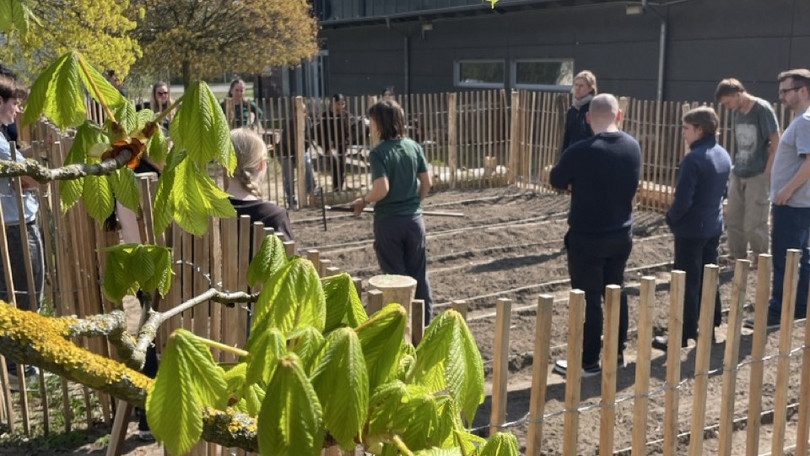
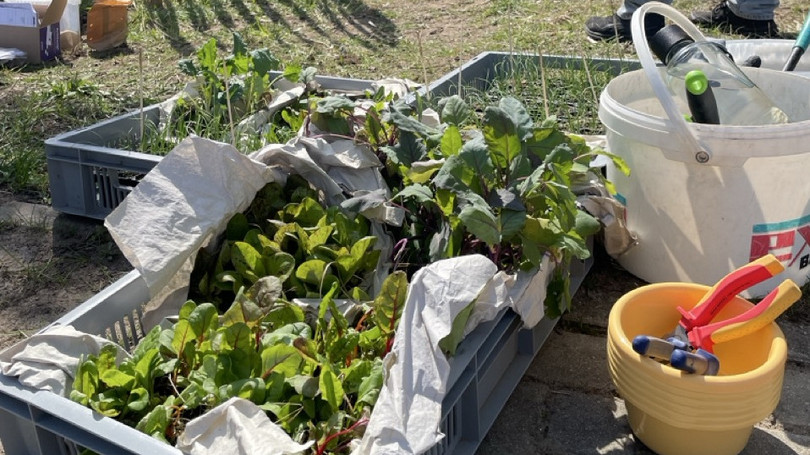
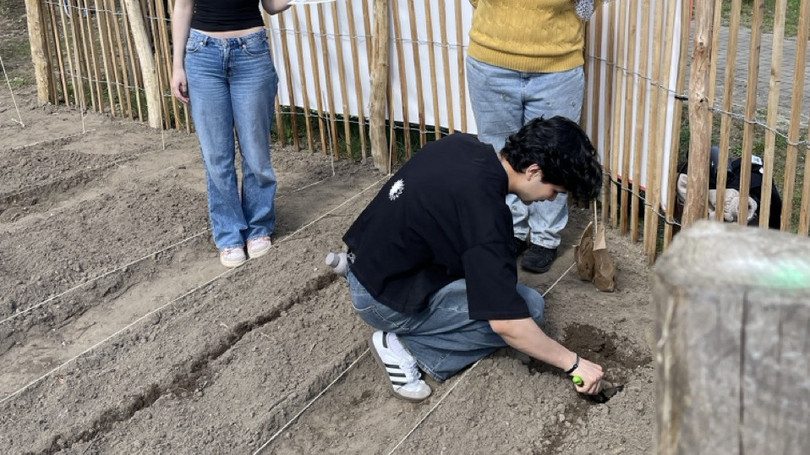
“Do you need any more plants?” “I have a watering can to give away.” “Nope, I’m taking care of the other bed.” A cheerful murmur of voices mingles with birdsong as, under sunny skies and in the spring air, student teachers plant the first seedlings at the CampusAckerdemie. The CampusAckerdemie is the newly established garden on the Leuphana campus, where students learn how to tend a school garden and how they will later work together with students to maintain a plot of land.
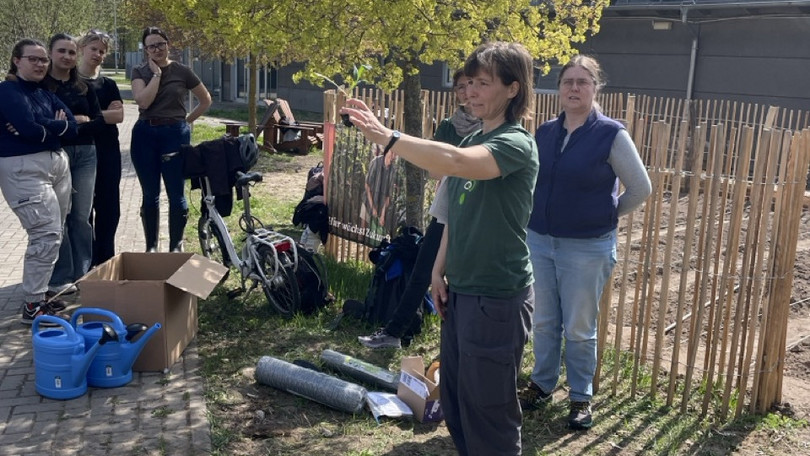
Since March 2026, there has been an open space in the immediate vicinity of Leuphana’s main building where the CampusAckerdemie, an approximately 50-square-meter plot of land, has been established. Starting in the summer semester of 2026, two seminars in teacher training – covering the subjects of general studies and biology – led by instructors Dr. Sabine Richter from the Institute for Education for Sustainable Development and Transdisciplinary Research and Nina Janßen from the Chemistry Institute will begin working in the garden. Katja Frielinghaus, a volunteer garden coach from the Acker association, is assisting the seminar. She explains which plants to use, what seeds to plant, how much space to leave between the plants, and much more. The students learn the agricultural basics of vegetable gardening and acquire all the essential skills needed to effectively set up and maintain a vegetable garden as a sustainable learning space in schools and daycare centers.
Some students are amazed by vegetables they’ve never heard of before, such as black salsify. They immediately pull out their smartphones to look up why it’s called black salsify (for any readers who might not know: it’s because of the root vegetable’s brown-black outer skin, though the flesh underneath is white). When asked how often the newly planted seedlings and seeds should be watered outside of class, Katja Frielinghaus responds with the gardener’s rule: “One weeding saves three waterings.” Regular weeding loosens the soil and breaks up fine capillaries, which reduces the evaporation of soil moisture and allows rainwater to drain away more effectively.
START OF THE INITIATIVE
Staff members of the CampusAckerdemie university program – which follows the motto “Out of the lecture hall, into the field!” from the Acker e.V. association – have reached out to the Faculty of Sustainability on their own initiative, as they aim to establish this program specifically at universities offering teacher training programs in order to reach as many prospective teachers as possible. They assist with the organization of the CampusAcker –from site selection and field setup to supporting materials such as a field-tested seminar plan with sequential modules and learning journals, all the way to a learning platform. The preparation of the site in front of the old Vamos grounds – including soil decontamination and replacement, the picket fence, and the water connection – was financed by Leuphana’s Climate Protection Fund. Leuphana’s contribution to the CampusAckerdemie program, as well as the gardening tools and raised beds that will be set up during the seminars, are funded by the Bingo Environmental Foundation.
Prospective teachers are the main target group for this initiative. In the future, it is planned that interested students of environmental and sustainability sciences will also have the opportunity to explore the topics of school gardens and Education for Sustainable Development (ESD) as part of their coursework.
The seminars now meet once a week at CampusAcker. When the first kohlrabi, lettuce, and peas are ready to be harvested in early summer, there’s sure to be a sense of anticipation about eating the vegetables they’ve grown themselves. In this way, the future teachers learn to develop a personal connection to food production and can later help students do the same as they set up their own school garden.