
Joint Interview on the publication of the book “Umwelt- und Nachhaltigkeitspolitik”
2026-05-11 Joint Interview with Harald Heinrichs and Matthias Fischer on the publication of the book “Umwelt- und Nachhaltigkeitspolitik – Eine kompakte Einführung”
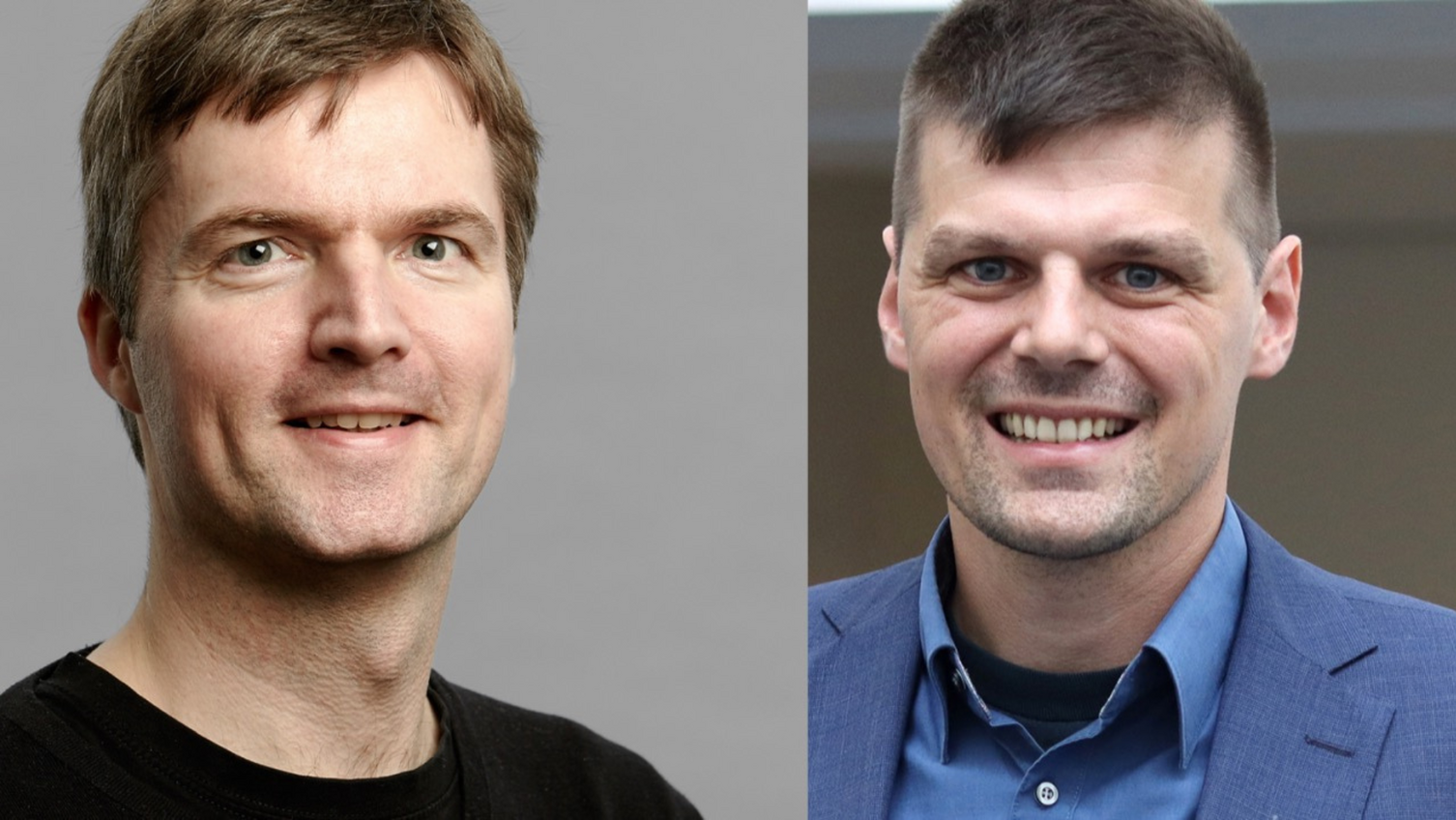
Prof. Dr. Harald Heinrichs, Leuphana School of Sustainability, and Prof. Dr. Matthias Fischer, Hochschule Bochum, have jointly published a book titled “Umwelt- und Nachhaltigkeitspolitik – Eine kompakte Einführung”, “Environmental and Sustainability Policy – A Concise Introduction” with Springer essentials. Matthias Fischer completed his doctorate under Harald Heinrichs at the Leuphana School of Sustainability, focusing on health and sustainability. Their shared research interest has continued ever since and has now resulted in this joint publication.
The Interview
How did this collaboration come about?
Matthias Fischer: Even while I was working on my dissertation, we frequently found ourselves discussing topics that went beyond the scope of my thesis. This shared interest in discourse and power dynamics in environmental and sustainability policy has now brought us together again to present these ideas in a clear and concise format.
Who is this concise book intended for?
Harald Heinrichs: First and foremost, students of political, social, environmental, and sustainability sciences. Beyond that, we are convinced that it can be beneficial for the interested public as well as professionals in the field of environmental and sustainability policy.
Matthias Fischer: Ultimately, the goal is to support people interested in environmental and sustainability policy – who otherwise encounter the topic mainly through the media – by offering a selection of theoretical and conceptual approaches that help them better understand the dynamics and underlying logic of political developments.
And what was the main inspiration for your book?
Harald Heinrichs: Environmental and sustainability policy – and climate policy in particular – has come under pressure due to recent crises such as COVID-19, geopolitical tensions and wars, the associated economic challenges, and shifting political agendas and constellations. The book aims to help strengthen reflection on environmental and sustainability policy, as well as the capacity of actors to take action, based on knowledge from the social and political sciences.
Matthias Fischer: Many people may view the international upheavals we are currently experiencing, as well as the political disputes within our own domestic political landscape, with a sense of frustration and disbelief. Our goal is to offer explanatory frameworks for the behavior of these actors and to highlight the interests and mechanisms influencing them. The idea for the book originally stemmed from discussions with my students. I sensed a need to truly understand in depth why environmental and sustainability policy takes the form we see in concrete policy packages and compromises. At the same time, we didn’t want to completely overwhelm readers with the book’s design. That’s why we opted for a concise introduction; if needed, readers can delve deeper into the recommended reading. We hope that by presenting this information in clear, accessible language, we are meeting this goal.
In your opinion, what are the biggest structural barriers in Germany?
Harald Heinrichs: Right-wing populist movements and organizations, along with fragmented, highly emotional debates – particularly on social media – make it difficult to form opinions and reach decisions in a critical and constructive manner. Democracy thrives on the competition of viewpoints and in-depth substantive debate, but also on the ability to see things from different perspectives and to compromise. Right-wing populist and authoritarian tendencies undermine this and poison political culture. Added to this is ignorance or deliberate rejection of well-established scientific findings and science as a whole. This is particularly problematic in fields such as climate policy, because scientific findings are indispensable for forward-looking policymaking. And with regard to political-administrative decision-making processes in the narrower sense, it can be said that despite progress over the past 20 years or so, sustainability – as a cross-cutting and long-term challenge – has not yet been institutionalized in politics and administration as systematically as would be necessary and possible. Policy tools such as sustainability strategies have lost their significance, and the organizational and cultural infrastructure needed to achieve the global sustainability goals – to which the current federal government is also committed – lags behind what is possible and necessary. Recent discussions on government modernization have focused heavily on digitalization and reducing bureaucracy – this is necessary, but not sufficient when it comes to future viability.
Matthias Fischer: We would argue, however, that sustainability – especially when considering the potential of digitalization – can be readily reconciled with approaches to state modernization. Particularly in light of the diverse international crises, sustainability is actually indispensable as a tool for robust, forward-looking risk and opportunity analysis. For example, considering the optimization and regionalization of supply chains in light of a return to power politics through tariffs and armed conflicts – this is essentially both a means of securing prosperity and a sustainability policy, without requiring an excessive amount of bureaucracy.
What role do the federal states play in the German sustainability framework – and how could greater cooperation between the federal government and the states increase effectiveness?
Harald Heinrichs: Federalism in Germany is complex. Years ago, political scientists identified the “trap of political interdependence” within the multi-level political-administrative system as the reason for the lack of reform capacity. The multifaceted field of environmental and sustainability policy, which is also heavily influenced by EU policy, is particularly affected by this. In the context of recent debates on state modernization, the efficiency and effectiveness of federal structures must be put to the test. The goal should be to develop approaches for “strategic incrementalism,” which combines the positive aspects of incremental policymaking – such as the involvement of different levels and diverse actors – with more transformative aspirations. Sustainability goals and strategies introduced at various levels of the political-administrative system in recent years could be helpful in this regard.
Matthias Fischer: By highlighting various theoretical and conceptual approaches that explain the interaction between different political levels in environmental and sustainability policy, we also aim to provide a more in-depth explanation for the public calls that “politicians” should “just” get something done. Behind the actors lie diverse interests that are negotiated within a complex interplay. This actually represents a constructive approach, but in an increasingly polarized era, it also leads to high pressure within the system and a risk of falling into the “trap” mentioned above. For this reason, it is important to us to at least begin to outline ways in which actors in environmental and sustainability policy can remain capable of engaging in discourse with one another, even when they have different backgrounds.
In your opinion, what is the biggest shortcoming in the current communication of sustainability goals – and how could it be improved?
Harald Heinrichs: The biggest problem is that key political actors are currently barely discussing sustainability goals in the narrower sense of the SDGs. Given the current convergence of diverse acute crises and challenges – in the areas of security, economic, and social policy – there is a lack of communication about the future and positive visions for it. It is essential that social and political actors—and certainly the scientific community as well – communicate the importance of sustainability goals as a guide beyond expert circles in a manner tailored to specific target groups and propose concrete courses of action for addressing current problems in a forward-looking manner.
Matthias Fischer: I think that sustainability policymakers, particularly at the European level, can certainly ask themselves critically whether the previous aspiration to pave the way toward a sustainable era through highly technical sustainability regulations (such as those on sustainability reporting or supply chain legislation) has not instead fueled a dynamic that views sustainability as THE driver of bureaucracy and as the antithesis of economic growth. In this way, many very positive ideas have been reinterpreted as battle cries and as a kind of antithesis to freedom and economic growth. The SDGs and the idea of sustainability itself are actually the exact opposite: a vehicle for ensuring a free life of prosperity within planetary boundaries in the long term. With great potential to ensure both economic prosperity and robust crisis resilience. I believe this argument should be emphasized much more strongly and pursued through the appropriate implementation of incentives.
How can scientists and policymakers work more closely together to truly incorporate research findings into policy?
Harald Heinrichs: The need for scientific expertise is particularly high in environmental and sustainability policy. For example, scientific knowledge is indispensable for identifying and systematically understanding climate change or species loss. Scientific policy advisory bodies are therefore necessary for knowledge transfer, but they are not sufficient, as experts and expert knowledge are used selectively by policymakers. Science is also called upon to engage proactively – and in an accessible manner – in public discourse to ensure that scientific findings inform societal opinion-forming and decision-making processes. Finally, particularly in sustainability research, transdisciplinary formats such as real-world laboratories can also provide opportunities for direct engagement with policymakers. It would be important, however, not to fall into technocratic or expertocratic notions in which science dictates the supposedly correct path for policy. The focus should be on the enlightened interplay of science and politics, knowledge, values, and interests.
Matthias Fischer: I generally observe a high level of interest among people in the political sphere in gaining a deeper understanding of scientific findings through informal discussions. Unfortunately, especially among those who have entered public office, there is often a lack of time to systematically integrate these discussions into the political process. As a result, the involvement of expert knowledge often remains limited to isolated instances. Since the schedules of policymakers aren’t going to clear up anytime soon, fixed, low-barrier exchange formats – such as short, regularly scheduled “design sprints” – between politicians, business representatives, and scientists could be an exciting idea.
What can citizens, students, or companies do to make sustainability policy in Germany more effective – besides voting?
Harald Heinrichs: First of all, elections are central to social power dynamics and policymaking, which is why voting and engaging with political positions in the run-up to elections are so important. Beyond that, everyone can make a variety of active contributions to sustainable development. The spectrum ranges, for example, from thoughtful, politically conscious consumer choices aimed at decarbonization (public transit, electric cars, heat pumps, green electricity) to civic engagement in social and environmental causes, taking advantage of opportunities for citizen participation, or joining petitions and demonstrations. Companies have a wide range of opportunities to proactively contribute to shaping a positive future. Going beyond compliance with legal environmental and sustainability standards, they can refrain from lobbying against environmental and sustainability policies out of short-term business interests and instead contribute constructively with proposals on how, for example, greater environmental and climate protection can be achieved with less bureaucracy. With an eye toward longer-term corporate and economic prospects, the proactive search for sustainable business models that make a positive, regenerative contribution to society and the environment is conceivable. Trade unions, as social partners, are equally called upon to play a role in this effort.
Matthias Fischer: It is crucial for all stakeholders to see themselves as part of society, where the potential for impact is incredibly diverse. In this context, involvement in political parties and direct engagement with decision-makers is certainly a key element. However, participating in participatory initiatives or being an active member of organizations can also be an important way to have a lasting impact on society. For me, the concept of social capital is both fascinating and fruitful: The idea of overcoming social divides by building and maintaining networks and fostering trust—and thereby making a significant contribution to a robust civil society—is, in my view, a crucial foundation for sustainable policymaking.
If you could influence a political decision in the next 12 months: What would be the first measure you would propose?
Harald Heinrichs: In four years, the UN 2030 Agenda for Sustainable Development, with its global Sustainable Development Goals, will come to an end. Like most countries around the world, Germany is unlikely to achieve many of these goals despite some positive developments; recent political developments, such as those in energy and climate policy, are making it even more difficult to meet these targets. A desirable political decision would be to take stock based on scientific evidence and, in the coming year, publicly outline how current policy measures contribute to moving closer to the sustainability goals by 2030, and how it envisions a “Post-2030 Agenda” for the sustainable development of the economy and society under conditions where planetary boundaries have already been exceeded and must be regenerated.
Matthias Fischer: In recent months, even prominent figures in federal politics have taken up long-standing ideas to better harmonize state elections across the federal states, so as not to subject governments to intense pressure every few months through so-called “fateful elections” or “mini-Bundestag elections” – pressure that noticeably curtails reform efforts. I believe a concrete decision in favor of such “midterms” would be sensible in order to shape policies that are sustainable not only in terms of content but also in terms of processes, and to give politicians the opportunity to develop decisions that go beyond the demands of day-to-day politics.
Thank you very much for the interview, Mr. Heinrichs and Mr. Fischer!
Further information
Harald Heinrichs is a sociologist and Professor of Sustainability and Politics at the Leuphana School of Sustainability. His research and teaching focus on sustainability, politics, and society.
Matthias Fischer is Professor of Sustainability Management in Healthcare at the Department of Health Sciences at Hochschule Bochum. His research and teaching focus primarily on sustainability reporting in healthcare as well as on analyzing the broader societal dynamics and tensions of sustainable development. He earned his doctorate (Dr. rer. pol.) at the Leuphana School of Sustainability in the field of health and sustainability and has also taught for many years in the responsibility module of the Leuphana Semester.
Book: “Umwelt- und Nachhaltigkeitspolitik – Eine kompakte Einführung”, published by Springer Essentials